



Bathrooms in the showroom look cold — buyers hesitate
A customer comes to the showroom looking for a bathtub, but sees not a room, but individual items against a neutral background. A cold display doesn't answer the main question: how will this model fit into a bathroom interior, with my tiles and lighting.
So the decision is postponed, and the customer leaves "to think" — most often to a competitor, where they were helped to picture the result.
Choosing sanitaryware is an emotional decision, not just a comparison of specifications. Buyer preferences are shaped by imagery: if a person doesn't see themselves in the future bathroom, they hesitate even over an obviously suitable model.
Managers spend hours trying to convince them, but without a visual example words don't work — what's needed is visual contact with the interior the buyer wants to achieve.
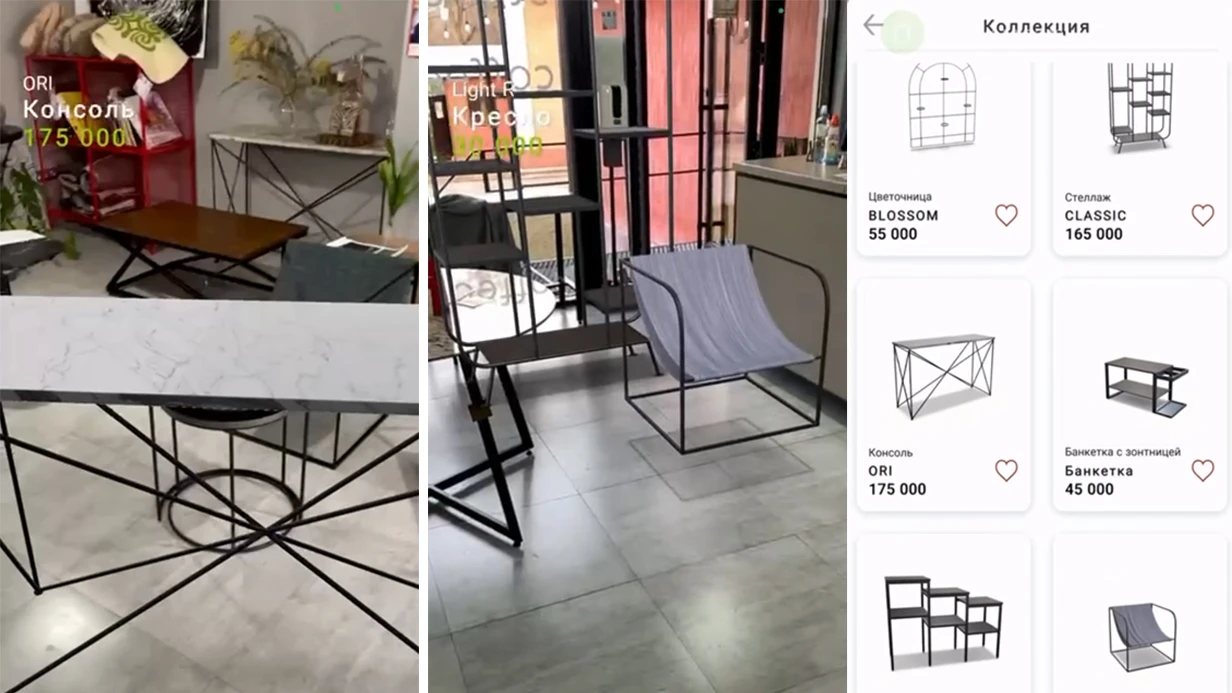
AR bathroom visualization addresses this pain point. The buyer points their smartphone camera at their own bathroom or chooses a standard layout — and sees the selected bathtub, faucet, or shower enclosure right in context.
Not in a catalog and not on a display, but in an interior they envision as their own. This removes the main objection, "how will it look at my place," and turns doubt into confidence.
For you, the result is more decisions made in the showroom, fewer postponed purchases and returns. When a client sees the future bathroom before paying, they are more willing to agree to add-on items and trust recommendations.
AR bathroom visualization becomes part of the sale: it accelerates the conversation, reduces the load on managers, and turns a cold showroom into a space where the buyer is already living in their future bathroom.
Benefits of AR visualization for your business
A sanitaryware buyer makes a decision blindly: they see a bathtub in the display window but cannot picture it in their apartment. A mistake in choosing the shape, color, or size results in a return, lost time, and distrust of the store.
AR visualization removes this fear — the client "tries on" the bathroom against their interior before buying.
We help sanitaryware sellers implement virtual fitting. The result is that the buyer reaches a decision faster and with more confidence, and the business sees increased conversion and fewer returns.
Increased conversion through visual clarity
When a client sees the selected bathtub in their interior, doubts recede. They don't need to mentally fill in the picture — AR shows the combination of colors, sizes, and materials. This turns lengthy deliberation into a purchase decision right in the application.
As a result, the average ticket grows: the buyer is less likely to choose "the cheapest and most neutral" option and more boldly picks the model that truly suits their style.
At the same time, the number of consultations per client decreases — managers spend time on those who are already ready to buy.
Fewer returns and greater trust
The main reason for sanitaryware returns is a mismatch between expectations and reality. The client thought the bathtub would look visually lighter or fit into the niche more precisely, but got something different.
AR visualization solves this problem: the person sees the result before payment, so "didn't like it" returns drop to almost zero.
A satisfied buyer becomes your advocate — recommending the salon to friends and coming back for faucets, showers, and accessories. AR creates the impression of a modern, trusted brand and sets you apart from competitors, where the client still chooses by eye.
AR bathroom visualization formats
AR bathroom visualization is not just one "virtual tour" but a whole set of formats for different tasks.
Some need to show the future interior to a buyer before renovation, others need to engage visitors in the showroom, and still others need to quickly approve a layout with a client.
We match the format to the specific business task so that you get results, not just a "pretty picture."
Below are the main formats we work with and what each one delivers to your business.
| Format | For whom | What it gives the client |
|---|---|---|
| 3D bathroom tour | Design studios, sanitaryware showrooms | Full immersion into the future interior: the client "walks through" the space, sees every detail, and makes a faster purchase decision |
| 360 panorama | Websites, social media, advertising | A spectacular format that engages visitors and increases time on page — more views and inquiries without paying extra for traffic |
| Bathroom layout | Developers, architectural bureaus | A clear arrangement of sanitaryware and furniture for the actual floor area — the client immediately sees that the space is comfortable and functional |
| AR finish fitting | Retail stores, showrooms | The client points their camera at their bathroom and "tries on" tiles or surfacing — fewer returns and more confidence at purchase |
Each format serves its purpose: the 3D tour sells the project as a whole, the 360 panorama works for reach and brand recognition, and AR fitting lowers the barrier to purchase.
We help you choose the right option and produce it with professional equipment — you get a result you can immediately use in sales, advertising, and on your website.
How we implement AR visualization in 5 steps
We handle AR implementation from brief to launch so you don't have to dive into the technical details. You get a tool that shows bathrooms, tiles, faucets, and furniture in the client's real space. Each stage has clear approval points and a deliverable outcome.
-
Brief and task analysis. You describe the scenario: showroom, website, or a surveyor's site visit. We select the format for your sales and audience and set the timeline.
-
Project approval. We create an interface prototype and logic: how the client points the camera, selects a model, and sees dimensions in the room. You make edits before development starts.
-
AR application development. We assemble 3D product models and set up realistic lighting and materials. We use the professional our team stack — performance remains stable even on regular smartphones.
-
Integration and testing. We embed the solution into your website or catalog. We test on different devices to ensure the image aligns accurately with real space.
-
AR launch and training. We deploy the application and show managers how to use visualization in sales conversations. After launch, we update models and add new items.
The entire process takes 3 to 8 weeks. You approve the key stages and get a ready-to-use tool for sales growth.
What an AR visualization project includes
We've structured the AR project so that you get a ready-made sales tool, not a collection of technical details. A complete turnkey package: from 3D bathroom models to staff training and integration with your catalog. Everything is adapted to your product range and client presentation scenarios.
- 3D models of bathrooms and sanitaryware from your catalog — the buyer sees the product in a realistic space, no Photoshop or abstract images, and you get a visual showroom at any time.
- AR module for website or application — the client points their smartphone camera at the catalog or selects tile and immediately sees how it looks on the bathroom walls. This removes the main fear: "but how will it look at my place."
- Integration with your catalog — prices, SKUs, and availability are pulled automatically, and updating the assortment doesn't require a programmer. You always show current products without manual work.
- Staff training — your consultants learn to use AR in 2–3 minutes: they show the client a finished interior, advise on combinations, and guide toward a decision faster. This increases conversion in the salon and at exhibitions.
- Scenarios for different room types — ready-made settings for standard bathrooms, combined bathrooms, and non-standard layouts. You approach each buyer individually.
- Instructions and technical support — after launch, you receive documentation for your team and ongoing support so the tool works reliably during peak sales days.
- Tool performance report — we track the number of launches and inquiries so you can see which products are viewed via AR more than others and where to expand the assortment further.
Case study: sales growth for a sanitaryware manufacturer
A sanitaryware manufacturer approached us with a typical industry challenge: the buyer cannot see how a selected faucet or bathtub will look in their actual space.
Catalogs and 3D renders show the product in isolation, and the client hesitates — will it fit in terms of size, style, and color? Doubts drag out the deal and sometimes end in the customer abandoning the purchase altogether.
We proposed AR visualization: the buyer points their smartphone camera at their bathroom and sees the selected product right in the interior — to scale, with lighting and viewing angle taken into account.
The solution didn't require the company to install complex equipment or train staff: everything works through a web link on the client's smartphone.
AR implementation results
Within two months of launch, the company recorded measurable changes in sales. The average time to make a purchase decision nearly halved — the buyer stopped "going away to think" and started ordering the selected model right away.
The share of repeat visits to the salon increased: AR visualization was used not only by new clients but also by those returning for additional sanitaryware to match an already installed bathtub.
The growth in the average ticket was noted separately: when a client sees how a premium model looks in their interior, they are less likely to economize on appearance. In the first six months of AR visualization, sales of the items involved in selection increased by a quarter.
Conversion from online viewing to an offline visit grew by 30% — people came to the salon already with a decision made.
Client testimonial
"We expected AR to be just a nice gimmick. In reality, we got a working sales tool.
Clients come to the salon with selected models instead of questions like 'how will this look at my place?' For us, that's a direct saving of managers' time and revenue growth without additional discounts. We'll be scaling it to the next collections." — Head of Sales at the manufacturing company.
The company now uses AR visualization in the mobile version of its website and at dealer locations. For us, this case confirms that the technology works not for technology's sake, but for clear business metrics: deal speed, average ticket, and customer loyalty.
How to choose an AR visualization format?
The criteria for choosing AR visualization start not with technology but with the question, "What do you want to achieve in the end?" The goals of visualization are the main guide.
If you need to show a client how a finished bathroom will look in their actual space, a simple AR scenario that runs on a smartphone or tablet is enough.
This format quickly aligns the tile color, bathtub shape, and sanitaryware layout — without unnecessary spending on complex equipment.
When the task is deeper — for example, demonstrating materials, lighting, and textures with maximum realism — the format changes.
The client gets the ability to "walk through" the bathroom, turn on the tap, or look into a cabinet, which removes most questions even before installation. This reduces the number of revisions and speeds up decision-making.
The budget for AR also influences the format, but not directly. For a small showroom, twenty minutes of shooting and a ready-made model library are enough. For a full-scale project with custom design, detailed work is needed — and the budget is planned accordingly. Our task is to find the optimal balance between the desired result and your investment.
There is no "best" format — there is only the one that suits a specific goal. We'll help you decide by offering two or three options with different scenarios and cost estimates, so you can choose the level of immersion that will bring profit.
We rely on professional tools — what matters here is not the prominence of names but a stable result.
Frequently asked questions about AR implementation
You've already seen how augmented reality helps sell furniture, and now you're wondering whether to implement AR for bathroom visualization. Below are answers to the main client questions that clear up doubts.
How much does an AR bathroom visualization project cost?
The cost depends on the number of sanitaryware models, finish options, and the format: a compact 3D catalog or a full-scale fitting in a real space with one-click finish changes.
The final price is quoted after the brief, and we provide a detailed estimate where every line item is transparent. For your business, this pays off through a higher average ticket — the client sees the premium product "in their bathroom" and chooses faster.
What are the implementation timelines?
A typical project for one sanitaryware line takes several weeks. Part of the time goes into model preparation, and part into configuring scenarios for your salon or website.
If you need the launch by a specific date, allow a little buffer — we'll send a stage-by-stage plan with dates so you can track every step.
What are the technical requirements for visitors?
The solution works on modern smartphones and tablets — most users don't need to install anything. In the salon, a single tablet is enough; on the website, the phone camera is used. No special equipment is required: heavy computations are handled on the server side.
We'll also set up integration with your website and accounting system so that client data and preferences automatically flow into your workflows.
What happens after launch?
We provide a warranty on model quality, correct recognition performance, and loading speed. After launch, we stay in touch: we help update the catalog, add new products, and change design solutions. You get not a one-time service but a long-term technology partner invested in the result.
If you still have questions — we'll send a detailed cost calculation and respond within one business day.Launch AR visualization in your catalog today
Launch AR visualization in your catalog today — and your clients will see how the selected bathroom looks right in their interior. This removes the main fear of purchasing, the uncertainty about the result, and brings the order decision closer.
This format holds a buyer's attention many times longer than static catalog photos: the client tries the product on in their apartment, tries it on in their life.
Session time grows, the likelihood of them returning increases, and after the purchase they'll be more willing to tell their friends and family about you. In this way, visualization brings new customers without advertising costs.
To get started, you don't need to wait long. Leave a request for an AR consultation — the specialists at our team will clarify your business goals and propose a solution for your catalog format. Here's what you get right after contacting us:
- A free AR consultation: we'll examine how bathroom visualization fits into your current catalog and boosts sales.
- A calculation of visualization's impact on conversion — based on your product line's numbers, not general forecasts.
- A launch scenario tailored to you: from a showcase for individual collections to full catalog integration.
- A prototype and project start plan within the first week after approval.
- Support for your team at launch and employee training on working with the AR tool.
Leave a request — order AR visualization and show clients that their future bathroom is already ready. Project start is possible as early as this month: just discuss the tasks and choose a convenient integration format.