

Why Guests Leave Without Ordering: AR Menu in a Restaurant Solves the Problem
A guest walks into a restaurant, opens a classic menu — and runs into a familiar problem. There are too few photos, descriptions sound dry, and it's impossible to picture the actual portion size.
The customer hesitates, wastes time choosing, and sometimes leaves altogether — with the same appetite they arrived with. For the restaurant, that means lost revenue and poor service in the guest's eyes.
People choose with their eyes. If a dish can't be "seen" before ordering, the decision takes longer, especially when the menu has many items with unfamiliar names.
In such situations, the guest looks for a safe choice — a dish they already know — while new items go unnoticed. Meanwhile, every such moment is a chance to grab attention and show that your restaurant keeps pace with guest expectations.
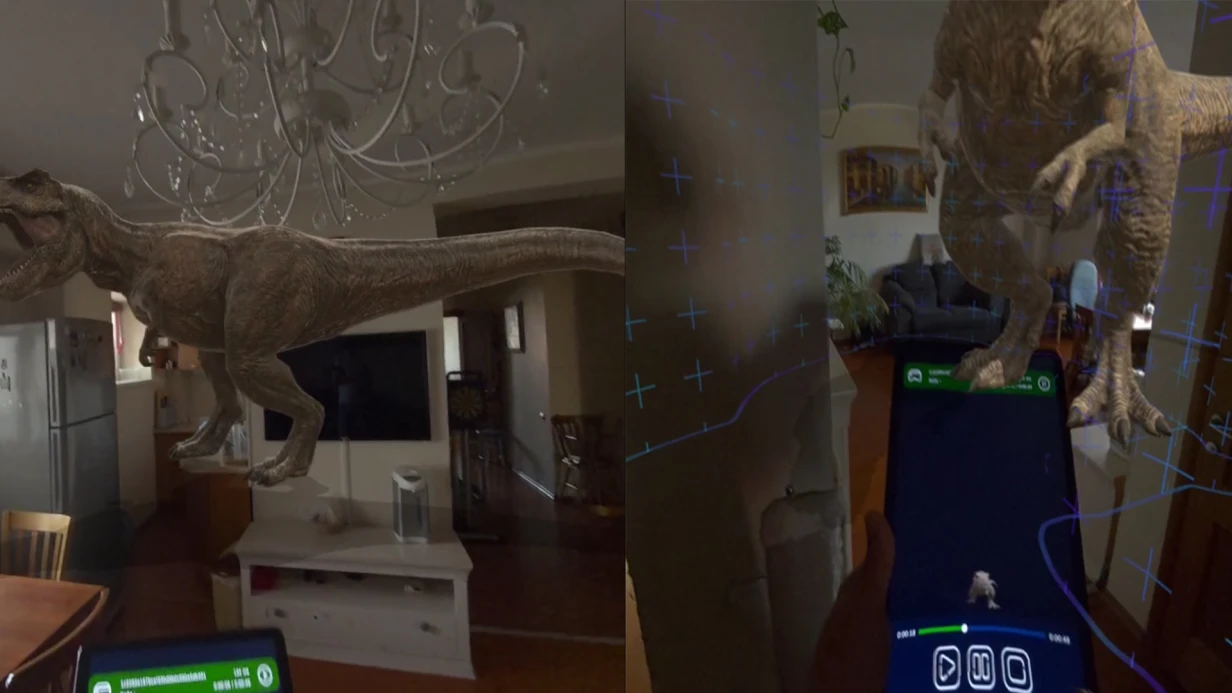
An AR menu in a restaurant changes this scenario. The guest points their smartphone camera at a QR code or a tag on the table — and a three-dimensional image of the dish appears in augmented reality. They can examine it from all sides, assess the texture, portion size, and plate presentation.
An interactive menu makes the selection process visual and engaging: guests stop flipping through pages and start interacting with your items — turning choice into a game rather than a chore.
For the restaurant, it's a way not only to attract guests but also to increase the average check. A beautiful 3D presentation whets the appetite before the dish is even served, reduces doubt, and speeds up ordering.
Guests happily film and share such interactive menus on social media — which is free advertising that brings in new visitors. Augmented reality for a restaurant today is not an expensive experiment but a working tool for increasing loyalty and repeat visits.
We develop such turnkey solutions, from idea to launch, and help ensure that guests feel the difference within the first minutes of their visit.
Benefits of Augmented Reality for Your Establishment
A paper menu no longer surprises guests: pages are flipped through in a minute, and the choice falls on familiar items. Augmented reality turns ordering into a live show — dishes "come to life" above the table, showing texture, presentation, and details. This impression stays with guests and influences their decision.
What an AR menu gives a restaurant:
- Higher average check. Three-dimensional images of desserts and drinks boost appetite and confidence in the choice — guests are more willing to add items to their order.
- Guest engagement. Exploring the menu becomes interactive: guests spend more time looking at dishes, discuss them at the table, and come back to show the effect to others.
- Memorable brand. An unusual format sets the establishment apart from its neighbors on the street. Photos and videos of the AR menu spread across social media, creating free reach and the image of a modern venue.
- Savings on printing. Updating prices, ingredients, and new items takes just a couple of clicks — without reprinting paper menus or spending on print services.
We implement AR menus turnkey: from idea to launch. We'll help you amaze your guests and give them a reason to come back.
AR Menu Formats: Choosing the One That Fits Your Task
The AR format enhances the ordering experience: the guest sees the dish in three dimensions before it even arrives at the table. But before investing in development, it's important to choose the right scenario — the budget, implementation speed, and visitor behavior depend on it. Below are three basic formats we most often implement for restaurants and cafes.
| Format | Who it's for | What it gives the guest |
|---|---|---|
| AR scanner via QR code | Casual cafes, bars, coffee shops | The guest points their smartphone camera at a QR code on the table or in the menu — and sees a 3D model of the dish. No equipment purchase required: it works on visitors' own phones. Increases engagement and the average check through visual appetite. |
| Interactive table | Restaurants with high guest traffic, family establishments | A stationary screen is built into the table or a stand. The guest scrolls through dishes as if on a tablet, sees ingredients and calories, and augmented reality "brings dishes to life" right on the screen. Reduces selection time and lowers the load on waiters. |
| Waiter's tablet | Premium and banquet halls | The waiter shows the guest a 3D presentation of the dish on a tablet before ordering. Speeds up the process, adds an expert touch, and reduces returns due to "it didn't look like that." Works well for signature cuisine and tasting sets. |
If your goal is a quick launch and a low entry barrier, choose the AR scanner: it doesn't require purchasing devices and easily scales to a chain of establishments.
For the "slow" dining format, when a guest spends more than an hour at the table, an interactive table is a better fit — it holds attention and makes the menu part of the interior.
And if the waiter's role as a consultant matters, a tablet becomes a sales tool and increases the average check on high-margin items.
We help you decide on the format at the briefing stage: we analyze the target audience, business size, and service scenario. As a result, you get not just a technical solution but a tool that pays for itself through increased order conversion and repeat visits.
Leave a request — we'll select a format that solves exactly your task and show you how it will work in your establishment.
How the Augmented Reality Launch Works in Your Establishment
We've structured the process so you don't have to deal with technical details. You get a clear plan with milestones — from the first briefing to the moment guests open the AR menu and start ordering.
- Brief and goals. We discuss what the launch needs to achieve: highlight signature dishes, reduce selection time, surprise visitors. You tell us about the establishment and its guests — we propose a solution for your task.
- Plan and budget. We prepare a cost estimate, timelines, and implementation stages for augmented reality. You know in advance how long the AR menu launch will take and which format fits: a separate app, a web version, or integration into an existing system.
- Design and content. We create 3D dish models, animation, and an interface in your restaurant's style. We show intermediate results — you adjust the concept before resources go into development.
- Development and setup. We build the AR menu on professional tools that work reliably across different visitor smartphones. We configure scenarios: camera pointing, dish appearance, ingredient details, and an order button.
- Testing. We test in real conditions: in bright light, in the evening, on different phone models. We iron out the details before your guests go "into battle."
- Launch and training. We install the AR menu, show the team how everything works, and prepare short prompts for waiters. We launch together with you — you're not left alone on the first day.
- Support and growth. After launch, we monitor performance, update models when the menu changes, and suggest improvements based on how guests interact with the augmented reality.
The entire AR launch in a restaurant usually takes 2-4 weeks — the timeline depends on the number of dishes and the complexity of the 3D models.
At every stage, you understand what's already been done and what comes next, and the final demonstration takes place in your establishment, on your devices.
What's Included in the Project Delivery and How We Hand Over the Results
When you order AR menu development from us, you get not just an app but a ready-to-use working tool for your restaurant. The delivery is structured so that after launch you don't depend on us — all documentation, training, and support are already included in the project.
Here's what's included in the AR solution delivery:
- Ready-made AR app — works on visitors' smartphones without installing additional software. The guest points the camera at the menu — and sees 3D dish models, ingredients, allergens, and your brand style.
- Content for the AR menu — 3D models and dish animations that we create to match your interior and kitchen. Each dish looks appetizing and recognizable.
- Instructions and documentation — simple and clear: how to launch the app, how to update content, what to do in an unusual situation. Everything is written in plain language, without technical jargon.
- Staff training — we conduct a short training session for waiters and administrators: how to help guests, how to promote the AR menu, and how to quickly resolve common questions. The training takes no more than an hour.
- Technical support — after launch, we stay in touch: we answer questions, monitor stability, and quickly resolve issues. Support is included in the project cost for the first month.
- Update capability — when the menu changes, you send new items, we update the content and hand over the finished version. Adding a single dish takes a few days, without a full development cycle.
We hand over the results in stages: first you test the app on your end, then we train the team, and only after that do you launch for guests.
Everything we develop is documented and stays with you — you're not bound by strict conditions and can grow the AR menu at any time on your own or with us as a contractor.
Case Study: How One Establishment Increased Repeat Visits by 40%
The client — a chain restaurant, Provence — faced a typical pain point: guests spent 7–10 minutes choosing dishes and only ordered familiar items. New items went unnoticed, and waiters wasted time explaining ingredients.
We proposed replacing paper menus with a mobile AR catalog: the guest points the camera at a QR code — and the dish appears on the table as a 3D projection.
Implementation Results
| Metric | Before Launch | After Launch |
|---|---|---|
| Guest repeat visits | 25% returned within a month | 35% started returning regularly |
| Dish selection time | 7–10 minutes | about 3 minutes |
| Share of new-item orders | 15% of total | 42% |
| Average check | baseline | up 12% |
A month after launch, repeat visits grew by 40% — this gave the establishment a steady flow of guests without extra spending on advertising. Guests tried new items more often, which meant the average check grew. The AR menu itself paid for itself within two months of operation.
Why It Worked
An AR menu turns ordering from a routine into entertainment.
Guests photograph the 3D dishes, share them on social media, and return with friends — to show off "that cool thing." For a restaurant, it's not just flashy technology but a tool that increases reach and retains the audience.
This solution has now been rolled out to all branches of the chain — each restaurant received its own catalog content and the ability to update dishes without reprinting the menu. If you want the same result, we'll adapt this solution to your establishment's format.
Frequently Asked Questions About Augmented Reality Implementation
Implementing an AR menu raises the same questions among restaurant owners: is it hard, is it slow, will we have to train staff. We have been creating AR projects for over 10 years and address these concerns in practice.
Is it hard to implement an AR menu? Do we need to restructure processes?
Implementation doesn't require replacing equipment or restructuring kitchen operations. Guests just point the camera at a QR code — and they see 3D dishes on the table. We handle the entire implementation: from idea to launch.
How long does a project take?
A typical project takes 2–4 weeks. This timeline includes 3D models, programming, and testing. You get a finished solution within a month.
Will we have to train the waiters?
Staff training is 30 minutes of hands-on practice. Showing waiters once how it works is enough — and they're good to go.
What if guests don't understand how to use augmented reality?
Guests don't need to download anything: they point the camera at a QR code and see the menu in reality. The interface is intuitive even for those encountering augmented reality for the first time.
If your question wasn't answered, contact us — we'll tell you how an AR menu can fit your specific restaurant.Get an Individual Cost Calculation for Your Task
Submitting a request and getting a cost calculation is not a "we'll calculate it later" and not a commitment. It's a short conversation after which you know: how much the AR menu costs, how long development will take, and what exactly you'll get at each stage.
After your request, we hold a free briefing: we clarify the concept, the number of dishes on the menu, the types of guest devices, and the establishment's format. Based on this, we prepare an individual project estimate — with a fixed scope of work, timelines, and launch stages.
What you get after submitting a request for AR:
- Free briefing: we break down your task, audience, and AR menu usage scenario.
- Accurate project estimate: a transparent list of work, no hidden surcharges midway.
- Launch timeline: from prototype to publication — clear when the AR menu will be live for guests.
- Content recommendations: how to showcase dishes, update prices, and add new items.
- Business impact assessment: how much faster guests choose dishes and whether the average check grows.
- Answers to questions: what visitors' smartphones need, how to work without the internet, and how to integrate the menu into your current website.
We calculate each project individually: a cafe with 20 menu items and a restaurant with a seasonal menu have different scopes of work and different solutions. After the briefing, you'll receive a document with two or three implementation options and a recommended timeline.
Leave a request — and within one business day, we'll get back to you with questions for the briefing and preliminary timelines. Next — an accurate estimate and launch plan, and within a few weeks, guests will be able to view your dishes in augmented reality.
How to Choose the Right Format for Your Establishment's Specifics?
The AR menu format for a restaurant can't be chosen "one-size-fits-all" — it must follow the specifics of the establishment. Before looking at ready-made solutions, ask yourself three questions: what's the space, what's the cuisine, and who are your guests.
The answers determine not only the look and feel but also how quickly guests will start using the feature and whether they'll come back.
The space dictates the scenario. In a compact cafe with 10–12 tables, pointing the camera at a menu item is enough to see the dish in 3D — no need to move around and no lines.
In a spacious restaurant or gastropub, you can add navigation to a signature area and interactive hints: guests explore the venue themselves and, in the process, stay at the table longer.
The cuisine determines the content. If the menu has complex signature dishes, AR visualization shows the ingredients and textures — the guest understands what they're ordering and returns dishes less often.
For a grill bar or pizzeria, a single tap is enough to show the portion size and key ingredients: speed matters more than detail here.
The audience determines how "bold" the interface will be. For a youth-oriented venue, game mechanics and animations are appropriate; for a family venue, a simple and clear scenario that a guest of any age can handle.
If the audience is mixed, it's worth choosing an option where the AR menu works as an addition rather than a mandatory step in ordering.
The budget shouldn't scare you: you can always start with a pilot version — put a few key items in AR and measure guest reactions.
A successful pilot pays for itself within a couple of months through a higher average check and fewer returns, and after that, the format scales to the entire menu.