


AR for Employee Training: How to Hold Attention and Reduce Errors
Traditional training means lectures, presentations, and tests. Employees passively absorb the material and forget most of it within a week. When a newcomer takes on a real task, they make mistakes that cost time and money. Mentors are forced to repeat themselves, drifting away from their own responsibilities.
The problem is engagement: without hands-on immersion, the brain does not retain information. It is especially difficult in industries where precision matters — manufacturing, logistics, medicine, retail. Mistakes at the start are costly: from spoiled materials to dissatisfied customers.
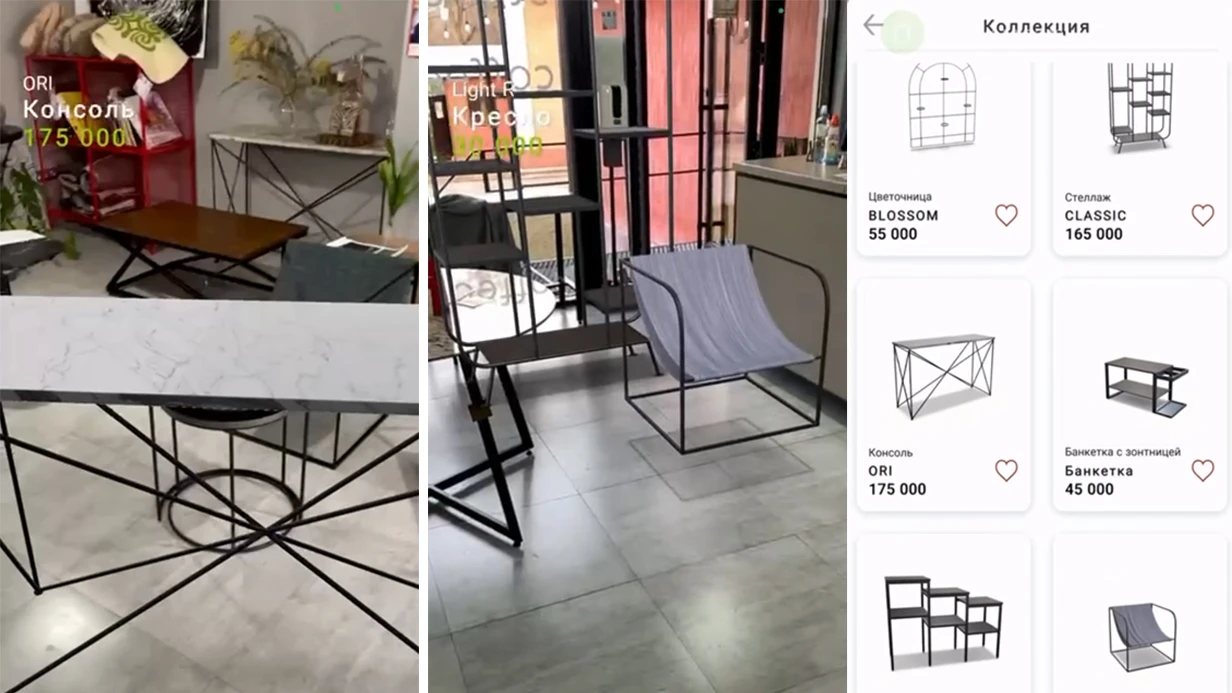
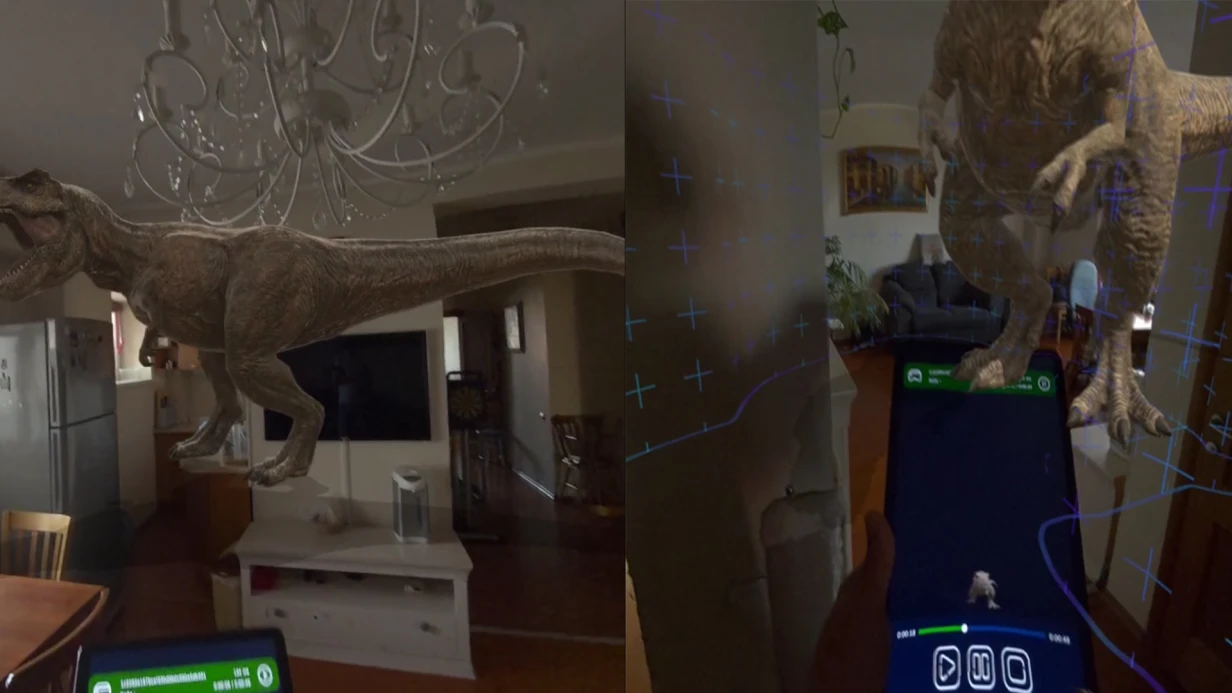
AR training flips this process. An employee puts on an AR device or points a smartphone camera at a work object — and sees step-by-step prompts, diagrams, and warnings. They train in a safe environment, but with realistic scenarios.
This approach boosts training effectiveness: staff onboarding accelerates dramatically, error rates drop, and employee confidence grows.
Implementing AR training does not require restructuring your entire system. We develop a solution around your processes: from simple instructions to complex simulators.
In the end, you get not just a "trendy technology" but a working tool that reduces training costs and improves employee performance.
We are a team and for over 10 years we have been designing and implementing AR/VR solutions for business. We will help you design the scenario, develop the application, and integrate it into your personnel training program. You will see the result: faster onboarding, fewer errors, and higher team engagement.
What AR Training Delivers: Engagement, Speed, and Accuracy
AR training moves employees from passive listeners to active participants. Instead of lectures and slides, there is a scenario where the newcomer interacts with objects, equipment, or processes themselves.
This holds attention far longer than text or video, and the employee truly engages with the material instead of checking their phone.
Training speed also increases: the employee sees prompts and instructions right in their field of view, in a real work setting. There is no need to switch between a manual, a screen, and a physical action — the necessary steps appear at the right moment.
As a result, employees master operations faster, start working independently sooner, and introductory briefing time is reduced.
Operational accuracy improves through clear demonstration of the correct sequence of actions. AR shows exactly how to perform each step, highlights the area of attention, and warns about an error before it affects the outcome.
This is especially valuable where mistakes are expensive: manufacturing, logistics, service, medicine. Even after training, the employee can return to the prompts, reducing the risk of defects and rework.
A separate bonus is motivation. AR training is perceived as a modern and engaging format that adds an element of play and competition. Employees complete such courses more willingly, put them off less often, and share the experience with colleagues.
And lower turnover plus rapid ramp-up to the required level is a direct saving on hiring and onboarding.
Finally, AR training delivers measurable results. You see how much time an employee spent on an exercise, where they made mistakes, which steps cause difficulty, and how performance improved after repeated attempts.
This data lets you objectively assess readiness, adjust the program, and predict when the employee will be ready for independent work.
Each of these benefits alone justifies AR implementation. Together, they turn training from a cost item into a tool that accelerates business processes and improves work quality.
AR Training Formats: From Mobile to Interactive Simulators
AR training is not a single format but a set of tools, each solving its own business task. Some need to prepare new hires quickly, others need to practice actions in a safe environment, and still others need step-by-step guidance right at the workplace. The choice of format directly affects the speed of employee preparation and the launch budget.
Below are the three main formats we work with most often. They differ in reach, depth of immersion, and implementation complexity, so they are matched to a specific task, not used "just because it's trendy."
| Format | Best suited for | What the business gets |
|---|---|---|
| Mobile AR training | Mass training: new hires, sales staff, promotional personnel | Fast launch on standard smartphones, coverage of any group size, easy content updates |
| On-site AR instructions | Assembly, equipment setup, procedures | Fewer errors, faster ramp-up to the required level, step-by-step compliance control |
| Interactive AR simulators | Dangerous, expensive, or rare operations | Safe practice without risks, skill rehearsal, objective performance assessment |
Mobile training works well where employees are distributed: on the shop floor, in the field, in retail. Interactive simulators are chosen when an operation is expensive or dangerous and a mistake cannot be allowed on a real object.
A properly chosen format delivers a measurable result: a 30–40% reduction in induction training or a severalfold decrease in the number of errors. We help determine which format fits your task and develop the scenario for it — from briefing to launch.
Project Stages: From Brief to Launch and Support
We have structured the process so that you understand what is happening at every step and can influence the outcome. Below are the stages of an AR project: from the initial brief to stable system operation.
- Development brief — we capture the training goal, audience, usage scenarios, and success criteria. You receive a document that removes ambiguity and sets the project boundaries.
- Scenario design — we determine how the employee interacts with AR in real working conditions: which steps, prompts, and checks are needed. At this stage, you see the training logic before a single line of code is written.
- Mockup approval — we show interface prototypes and examples of how instructions will be displayed. You approve the visual style and structure, and we adjust it as needed before development begins.
- Development and build — we create the application using professional tools (such as ARCore) and package it for the required devices. This stage is transparent for you: we regularly show working versions and incorporate your feedback.
- Pilot testing — we launch AR training with a small group of employees, collect feedback, and iron out any rough edges. This reduces risks for the full-scale launch.
- AR training launch — we deploy the application on all required devices, train administrators, and hand over the instructions. You receive a working tool, not just a file.
- Technical support and evolution — we monitor stability, update content, and refine scenarios as procedures change. Your employees always work with the current version.
Delivery Package: What You Get After Implementation
After implementation, you are not left alone with the application — we hand over a complete package of materials so your team can run training independently.
Inside is everything needed for operation, development, and knowledge transfer within the company: no "black boxes" and no hidden dependencies.
Here is what is included:
- Project archive with source materials. All versions, mockups, and source code — you own the product and can bring in any contractor for future refinements.
- Source AR content materials. 3D models, scenes, animations — everything needed to update training scenarios without rewriting from scratch.
- Technical documentation. A clear description of the application's architecture and logic, so new team members quickly get up to speed without depending on a single "knowledge holder."
- Instructions for staff. Ready-made guides for administrators and users — they minimize questions at launch and reduce onboarding time.
- Update policy. A clear procedure for releasing new versions and adding training modules. You plan in advance how the system will evolve.
- Training webinar and launch support. We help you run the first groups and answer the team's questions until training settles into a comfortable rhythm.
This package covers the main risks: loss of knowledge when changing contractors, dependence on a single vendor, and a long ramp-up. You receive not just an application but a manageable asset — with clear documentation, clear instructions, and a development plan. From there, the system works toward your training speed and reduced personnel preparation costs.
Case Study: How AR Training Reduced Onboarding Time by 40%
This case study is an example of how AR training stopped being an experiment and became a working tool for reducing onboarding time.
An electrical equipment manufacturer came to us with a typical pain point: new shop-floor hires only reached independent work after two months, and staff turnover could not afford such delays.
We launched an AR project that builds the training process around the actual workstation. The employee sees step-by-step prompts on a tablet screen directly on the machine: the sequence of operations, control points, and warnings about possible errors.
A live instructor is needed only for the first few minutes; after that, the employee works with the system's guidance.
Implementation Results
A month after launch, we recorded measurable changes. Time to independent work fell by 40% — newcomers started working confidently after five weeks instead of eight.
The number of errors in the first shifts dropped by half, and mentors stopped constantly being pulled away to train people.
For the production manager, the main effect was the freed-up hours of experienced staff. Previously, a mentor spent up to three hours a day on one new hire; now it is only shift-start supervision.
An additional benefit is a unified training standard: everyone works from the same proven program, without the "personal style" of different instructors.
Verified Result
This case study received an independent evaluation from specialists at the Institute of Production Technologies and was presented at an industry conference.
We present the methodology for calculating the effect and a detailed description of the solution at an individual meeting — where you can also estimate a preliminary result using your company's figures.
The main takeaway: AR training reduces onboarding time not through "magic technology" but because the newcomer begins doing useful work faster. If you want a similar case for your team, write to us — we will send the full study and propose a pilot scenario.
Frequently Asked Questions About AR Employee Training
Implementing AR training raises natural questions from managers: is it safe for employees, how difficult is it to launch, what does development cost, and will the technology work with the devices they already have. Below we have gathered answers to the key concerns — short and to the point.
We have been developing AR for employee training for over 10 years, so we know which concerns arise most often. We rely on real implementation experience across industries — from retail to manufacturing.
Is AR training safe for employees?
Yes, the technology requires no physical contact and does not strain vision more than ordinary screen work. All scenarios take place in a controlled environment: the employee sees prompts overlaid on a real object rather than being immersed in virtual reality. Risks are eliminated because training is built around short sessions with breaks.
How difficult is it to integrate AR into current processes?
Implementation does not require restructuring business processes. The application is installed on employees' smartphones or tablets, and the launch takes anywhere from a couple of weeks to a month.
We support the project at every stage — from briefing to test launch — so the team keeps working in its usual mode.
How much does AR training development cost?
The cost is calculated after audit and depends on the complexity of the scenario and the number of training modules. There are ready-made solutions that cover typical tasks, and custom developments for unique processes.
In any case, AR training pays for itself: expenses for in-person trainers, venue rental, and the time needed to bring a new employee up to speed are all reduced.
Will the application work on the company's devices?
We design the solution around the devices employees already have. Most modern smartphones and tablets support the technology — there is no need to purchase expensive equipment.
Before development, we audit the device fleet and provide recommendations so the application runs stably on all required models.
How quickly will employees learn to work with AR?
The interface is built like a step-by-step instruction: the employee simply repeats the actions the application shows. It takes no more than 10–15 minutes to learn, and the need for separate staff training disappears. Prompts and visual markers prevent errors before they even happen.
If you still have questions about AR for employee training — contact us, we will explain how it works in practice and help you choose the optimal format for your task.Let's Discuss Your Task? We'll Send an Implementation Plan
Employee training is a constant cost of time and money, and the result is often hard to measure. AR instructions reduce time spent on induction courses and help newcomers reach working performance faster. But to get this effect, you need a clear implementation plan, not just technology.
We suggest starting with a short consultation: you tell us about your tasks, and we send you an implementation plan and a project assessment — with no obligations. The request takes a couple of minutes, after which you receive:
- Consultation on your task: we clarify where AR will deliver a quick effect — from new-hire onboarding to practicing rare scenarios.
- Project assessment: timelines, format, and which scenarios pay off first.
- Implementation plan: a step-by-step route from pilot to scaling across the entire team.
- Pilot launch proposal: you try the technology on a small group, and we measure the results.
- Content recommendations: which instructions and materials are best converted to AR for your industry.
- Support during the pilot: we help gather feedback and adjust the scenarios.
This way, you understand the budget and the benefit before development even starts. No abstract promises — only specifics for your scenarios and clear timelines.
Leave a request on this page — we will respond within one business day, send you the plan, and answer your questions. The decision is then yours.
How to Choose the Right AR Training Format?
Choosing an AR training format starts not with technology but with an answer to a simple question: what task does the training solve, and where will employees apply the skills?
This determines whether it will be a lightweight mobile application on a smartphone or a stationary immersive simulator — and, importantly, how much time and budget the launch will need.
The first criterion is the scale of training and employee mobility. If you need to train hundreds of people across different sites, and the process requires up-to-date instructions right at the workstation, choose mobile AR.
It works on standard smartphones and tablets: the employee points the camera at an object and sees prompts, operation sequences, or error warnings. This is training without leaving the job and without spending on specialized equipment.
The second criterion is the complexity of the scenario and the cost of an error. When it comes to rare emergency situations, work with hazardous equipment, or long processes with dozens of steps where a mistake is expensive, a stationary AR simulator is more effective.
It provides full immersion, the ability to practice to the point of automation, and an objective assessment of employee actions. It is also indispensable when training on a real object is impossible or unsafe.
The third criterion is your company's specifics: staff turnover, the availability of internal instructors, and the distribution of branches. For manufacturing with high personnel rotation, short mobile scenarios that can be quickly updated and relaunched are optimal.
If you have a narrow circle of specialists and rare but critical competencies, an investment in a full simulator pays off through consistently high preparation quality.
Practical advice: a combined approach often gives the best result — mobile AR for initial training and mass induction, and a simulator for practicing complex skills and certification.
We will help you choose the format for your tasks, design the scenarios, and run a pilot on a real task so you can see the effect before a full-scale launch.