

Indoor navigation for visitors: why customers get lost and leave
In large shopping malls, airports, and business centers, visitors get lost far more often than it seems. A person enters the building, sees signs, but at the crucial moment realizes they cannot find the right store or exit.
Navigation in a mall is not just about the convenience of signage, but part of the customer experience: the easier it is to find your way, the more willingly a guest returns and spends time inside.
Losing a visitor is a direct loss of revenue. A guest who wanders around the corridors gets irritated, buys less, or leaves altogether without finding their goal.
Even if they find the desired department, the negative feeling of wasted time carries over to the impression of the space itself. In a competitive environment, that's a reason to choose a neighboring mall or online shopping.
Mobile navigation solves the problem at its root. Instead of studying stands and asking staff for directions, the visitor opens an app and sees a short route to a specific store, cafe, or exit.
Finding a store takes seconds, not minutes, and the person spends energy on shopping, not wandering. This noticeably increases visit satisfaction and the number of repeat visits.
For the building owner, indoor navigation is also a tool for managing visitor flows. You can highlight current promotions, events, and new items along the customer's path, subtly increasing the average ticket.
We address this need: we design mobile navigation for the specific needs of your space, so that visitors don't get lost but come back.
What a mobile AR navigation app provides: 5 key benefits
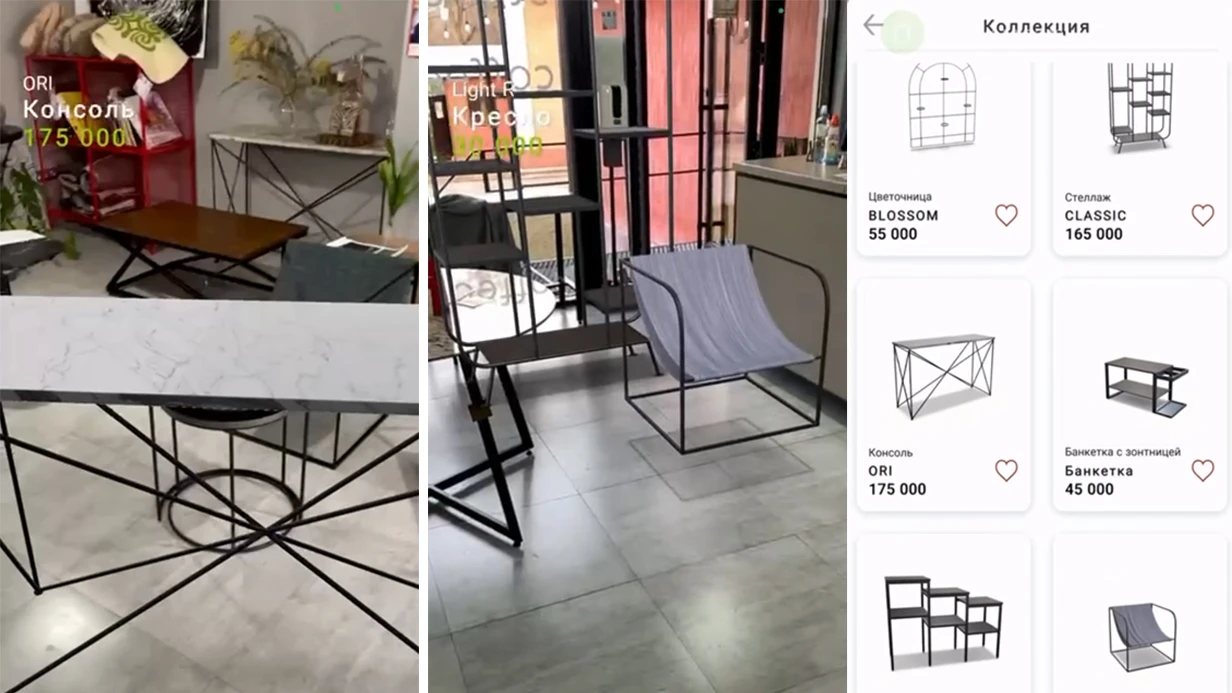
Visitors to shopping malls and offices get lost in navigation: finding the right department takes minutes, and sometimes leads to the person simply leaving. A mobile AR app solves this task right through the smartphone camera — without signs and map kiosks.
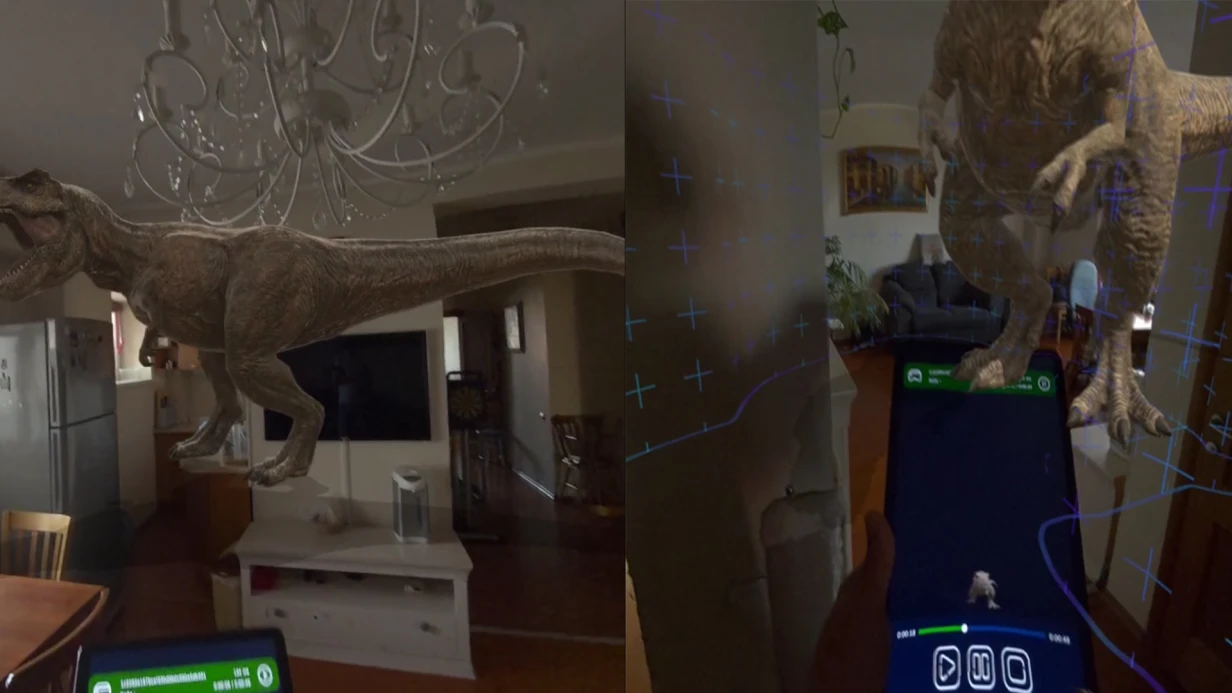
The technology overlays the route onto the image of the real space, and the user sees where to go in real time.
Here are five measurable benefits that business gains from AR navigation:
-
Fast search — arrows over the camera lead to the department or product in just seconds. Search time is reduced, the visitor does not get annoyed and does not leave because of inconvenience.
-
Increased customer loyalty — the app is perceived as care for comfort. People return to a place where it's easy to find their way and recommend it to friends, which increases reach without advertising costs.
-
Increased time in the complex — when there's no fear of getting lost, the guest spends more time in the mall. Every extra hour brings additional impulse purchases and cafe orders.
-
Sales growth — along the way to the destination, the app shows personalized bonuses and promotions. The person sees the offer at the right moment and is more likely to make a purchase.
-
Repeat visits and analytics — you see which zones guests enter, how much time they spend there, and improve tenant placement, while the client gets a memorable experience.
For such tasks, we at our team use a proven solution based on Google ARCore. This technology works on most modern smartphones, so no special inventory is needed for installation — just the visitor's usual device.
Order a demo of AR navigation, and we will prepare an implementation plan for your facility. You will get a clear tool that pays off through increased loyalty and sales, not just an "interesting gimmick."
Indoor navigation formats for your task
Embedded navigation, a standalone app, or a kiosk — each format solves its own task. The main thing is that the visitor can easily find the desired department, office, or product, and your business gets data on movements and time. We choose the format for your scenario: from a single mall to a multi-level business center.
Below are three basic implementation options that can be combined in one space.
| Navigation format | For whom | What it gives the client |
|---|---|---|
| Embedded navigation | Companies that already have a mobile app or website | The visitor doesn't download anything extra — navigation appears inside your service. Convenience grows without additional steps. |
| Standalone mobile app | Malls, museums, parks, campuses with high visitor flow | Your own tool under your brand: map, point search, routes to the desired place. Plus push notifications about promotions and events. |
| Navigation kiosk | Lobbies, reception desks, places where guests don't have a smartphone | An interactive stand with search and route in 30 seconds. Suitable for audiences that don't use apps. |
Formats work easily together: kiosk for quick consultation, standalone app for regular visitors, embedded module for the loyal audience in your service. In any case, you get a unified database of premises that is easy to update when the layout changes.
We will help you choose the optimal format for your task, budget, and audience. We'll show where navigation pays off fastest and implement it so that employees and guests clearly see where to go.
How we create AR navigation: project stages
We structure the work so that at every stage you understand what's happening and what result you'll get. No "black box" — from the first brief to launch and further support of navigation, you stay informed, and we control timelines and quality.
- Brief and immersion in the task — we discuss where the navigation will be used, who your audience is, and which scenarios matter. The output is an understanding of goals and success criteria.
- Space and scenario analysis — we study the layout, key points, and visitor routes. This allows us to lay down convenient movement logic before writing code.
- Prototype and approval — we show how the interface and interaction will look. You see the future product and make edits before expensive development.
- AR navigation development — we create the app itself: clear hints, route overlay on the camera image, search for the desired object. We regularly show intermediate versions.
- Testing and launch — we test navigation in real conditions: on different devices and in your premises. We fix shortcomings, publish the app, and launch it for users.
- Navigation support — after launch, we don't disappear: we update maps, adjust routes when layout changes, monitor stability. You get a reliable tool that evolves with your space.
What's included in the delivery: a complete launch package
You get not just an app, but a ready-made solution for navigating visitors through your space. We take on the entire cycle of work — from route planning to custom styling setup — so you don't have to look for contractors separately.
The delivery package includes:
- Mobile AR navigation app for iOS and Android — with a floor map, precise route directions, and on-screen hints.
- Content and graphic materials: interface design, pictograms, point-of-interest descriptions, photos or 3D objects — all in your corporate style.
- Admin panel for content management: you can independently change names, add new locations, and current announcements without involving developers.
- Server side and database for storing maps and premises information — with backup and data protection.
- Documentation: user guide, administration instructions, content update regulations.
- Staff training: we conduct a demonstration for your team and prepare video instructions so employees quickly master the system.
- Technical support during and after launch: we accompany testing and help quickly fix any possible shortcomings.
As a result, you get a working tool that improves navigation convenience, reduces staff workload, and attracts guests' attention. You don't need to delve into technical details — we are responsible for ensuring the system works stably in your space.
Case study: how we sped up navigation in a mall and increased sales
Shopping mall owners know how visitors get lost among dozens of boutiques: a person looks for the desired store, spends 10–15 minutes wandering, and leaves without making a purchase. Such losses are direct losses for landlords and tenants.
We encountered this task in a large regional mall — let's call it Arcadia — with an area of more than 80,000 sq. m. Guests often asked administrators for directions, and some stores remained unnoticed due to poor location.
We proposed a solution based on a mobile AR app for indoor navigation: the visitor points the camera at the map and sees the route and direction.
Over two months of testing, we achieved significant results: the average time to find a store dropped from 12 to 4 minutes — three times. The number of points visited in one trip increased by 35%, and the share of visitors who returned within a month rose by 18%.
The tenants themselves noted an average revenue increase of 12% — a direct consequence of people finding the right departments more easily and visiting neighboring ones more often.
Investments in navigation paid off faster than expected: the growth of the average ticket and repeat visits covered costs already in the first quarter. For the mall owner, this is not just a "convenient feature" for guests, but a tool for increasing sales and loyalty.
This case confirms: mobile indoor navigation is not a tribute to technology, but a working way to increase revenue and improve visitor experience. We are ready to repeat this result at your facility — from planning to a turnkey app launch.
Answers to frequently asked questions about indoor navigation
Before ordering indoor navigation, any manager has the same questions: how much does it cost, how will it fit into current processes, and will the building need restructuring. We answer the main concerns in advance so you understand how we work and what result you'll get.
How much does AR navigation development cost?
The cost depends on the building area, the number of navigation points, and the depth of integration with your infrastructure. After a short brief, we send an estimate with a precise list of works — it takes into account your budget, from a compact space to a large complex.
Is it difficult to implement navigation in an already operating building?
No, implementation does not require building new structures or changing the layout. We use your floor plans, apply visual markers or QR codes that don't disrupt the design. Installation takes a few days and doesn't disturb visitors.
On what devices does it work?
Navigation works on regular Android and iOS smartphones. The visitor doesn't need to download anything — just point the camera at a marker or scan a QR code, and the route appears on the screen.
What are the launch timelines?
A typical project takes from two to four weeks. First, we visit the site, take measurements, and agree on points; then we prepare content and test navigation in parallel. The solution is launched without stopping your processes.
Order AR navigation development — start with a free brief
To accurately calculate the cost, we need to understand your task: the size of the space, the number of floors, the number of key points, and usage scenarios.
That's why we suggest starting with a free brief — you answer short questions about your facility and goals, and we prepare a transparent calculation.
Leave a request for development, and within one business day we'll send a structured brief.
It includes all the questions we usually clarify at the start: area, layout, number of visitors, whether you need object search or just routes, and on what devices the navigation will work.
Filling it out takes 10–15 minutes but saves weeks of negotiations. After receiving the brief, we analyze the scale and return with an assessment of timelines and budget — without hidden items or abstract "from and to."
What you get after sending the brief:
- Accurate cost calculation for your area and number of navigation points
- Understanding of timelines: from brief to launch in your premises
- Format recommendation: AR over camera or a mixed mode with a map
- List of necessary equipment — usually visitors' smartphones are enough
- Examples of similar indoor navigation projects we've already launched
- Protection against unnecessary costs: we'll suggest what can be simplified without losing quality
Send a request through the form or write to us in a messenger. We'll send the brief, prepare the calculation, and propose the optimal solution for your space.
How to choose the right navigation format?
Choosing a navigation format comes down to three questions: what area, how many visitors, and what you want — simply guide a person to a point or collect data about their route.
For a small space up to 1,000 m², classic signs are enough, but as soon as the area and visitor flow grow, signs stop working. The visitor gets lost, wastes time, and leaves without the needed purchase or service.
When it comes to shopping malls, business centers, exhibitions, and medical clinics, mobile AR navigation is more effective. The guest points the smartphone camera at the space — and sees the route right over the image, rather than trying to match a map with a diagram.
It's based on ARCore, so the visitor doesn't need special equipment — just a phone that everyone already has.
| Format | For whom | What it gives the client |
|---|---|---|
| Classic signs | Small areas, low traffic | Low cost, but no analytics or flexibility |
| Interactive kiosk | Medium areas, traffic above 500 people per day | Helps find an object, but the visitor is tied to the screen |
| AR navigation in smartphone | Large spaces, dense traffic, many destinations | Guides the visitor along a route without a map, collects movement data, updates quickly |
In our projects, AR navigation reduces the time to find the desired point by 30–40% and leads up to 90% of visitors who start the route to their destination.
For business, this means fewer lost customers, higher conversion to target points, and clear analytics: which zones are passed more often, where visitors linger.
If the area is small and the task is simply to orient the guest, signs are enough. But when navigation affects revenue — helps retain the visitor, lead them to the desired department or stand — choose a format that sees the space through the client's eyes. We'll help you pick a solution for your budget and area and launch it quickly.