

Optimizing Production Line Operations: Where Does the Money Go?
A production line stops — and every minute of downtime turns into direct losses: unproduced goods, missed deadlines, forced overtime.
At the same time, a significant portion of losses comes not from equipment breakdowns but from the human factor: waiting for instructions, lengthy searches for the right information, mistakes during setup or changeover.
Managers often notice only obvious downtime, while hidden losses — incorrect actions, unnecessary movements, repeated checks — go unnoticed and are written off as "process quirks."
Operator errors become even more costly when they are detected at the next stage: you have to rework or scrap parts, or stop the line for correction. Even a single error at a complex station can wipe out an entire shift's efficiency.
Classic instructions and training don't help — under time pressure, employees act from memory, and posters and paper regulations don't provide the right prompt at the right moment.
Optimizing production line operations begins with eliminating exactly these losses — the ones that repeat day after day and eat up 20–30% of the working time fund.
When every operator knows precisely what to do at their station and the process is supported by visual prompts, the number of errors drops, changeovers speed up, and onboarding time for new employees shrinks. This is the efficiency that directly affects production costs and delivery consistency.
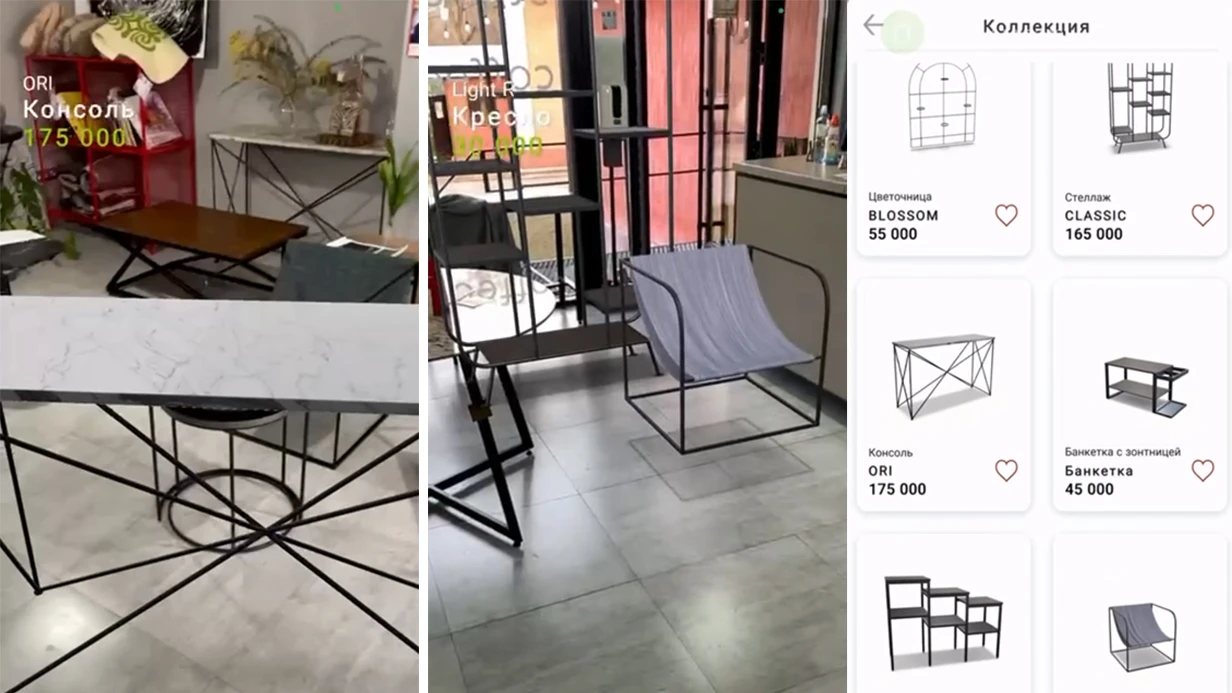
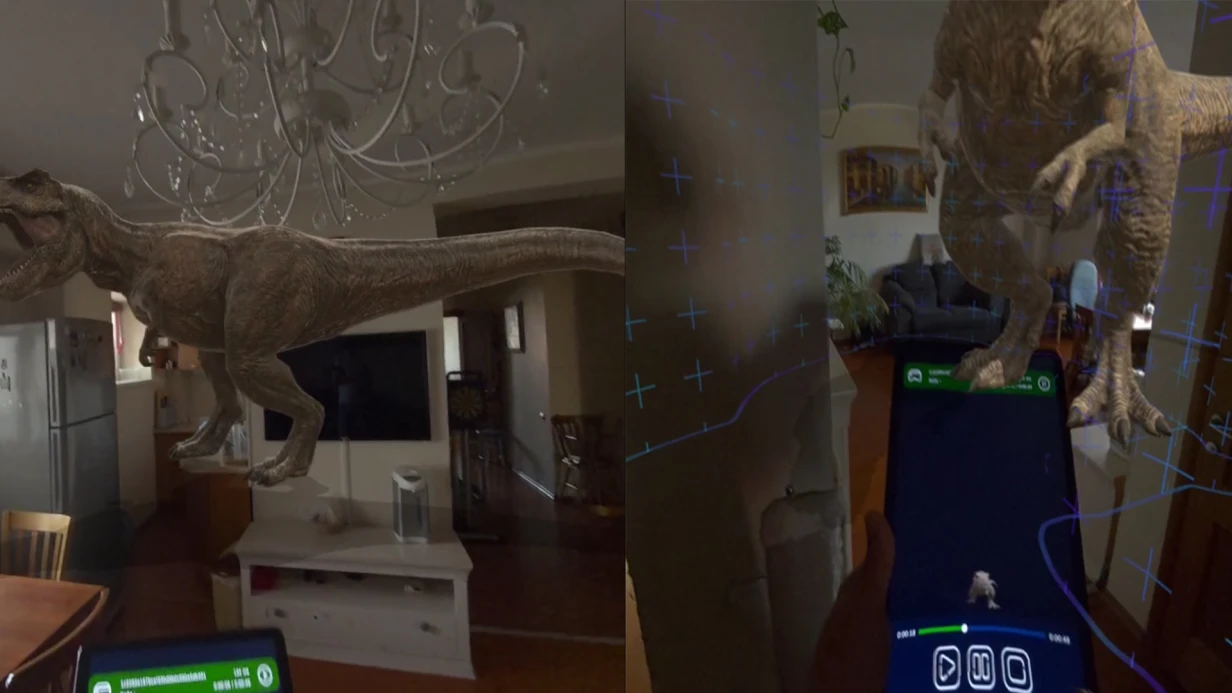
We solve this problem with a mobile AR application that overlays digital instructions directly onto equipment — the operator sees which component to check, which tool to use, and in what order to perform operations.
This is not a replacement for skilled personnel but a tool that eliminates unnecessary movements and reduces the risk of error at every step. As a result, the line experiences less downtime, and managers get a predictable process and measurable growth in output.
What You Get from an AR Application on the Production Floor
Training Personnel Without Halting Production
New employees used to take weeks of internship before joining a shift, and experienced mentors spent up to a third of their time repeating instructions.
The AR application overlays step-by-step prompts directly onto equipment: workers see which operation to perform, with what force, and in what order. Onboarding time is cut by two to three times, and the line keeps running — training no longer competes with production output.
Reducing Defects Through Step-by-Step Control
The human factor remains the leading cause of grade mixing and rework: even an experienced operator can miss a part, a defect, or fatigue after a night shift.
AR checks the result of every action against control points and highlights deviations before the part moves further down the conveyor. Errors are caught on the spot, not at final inspection — defects drop by 20–30% without tightening requirements for personnel.
The same logic applies to equipment changeovers. Instead of hunting for a specialist and reading instructions, the operator gets video prompts: what to unscrew, what to calibrate, and at which step to stop. Changeovers stop being "magic" and become a reproducible process.
Reducing Downtime and Speeding Up Response
Every minute the line stands still is an unproduced batch. The AR application helps operators resolve common faults on their own: the smartphone camera recognizes the component, shows the sequence of actions, and warns about potential risks.
Line personnel resolve 60–70% of minor breakdowns without calling the service department, and experts only connect remotely for complex cases through the same AR environment.
AR as the Digital Standard for Your Production
Instead of paper instructions that live their own life, the plant gets a unified knowledge base: any process change immediately goes into AR scenarios and instantly reaches the operator. This approach scales to new lines and sites without losing training quality.
The client gets not a one-off app but a working tool that pays for itself through increased output and reduced losses.
AR Solution Formats for Your Task
Production lines burden personnel with routine: a newcomer needs to quickly master operations, an experienced worker needs to avoid mistakes in the sequence of actions, and a manager needs to see that everything follows regulations.
AR applications handle these tasks without stopping production or adding instructors. We already use such solutions at real facilities, so we offer three formats for your scenario — choose the one you need or combine them.
| Format | For Whom | Client Benefits |
|---|---|---|
| Personnel Training | New employees, line operators | Cuts time to full productivity, reduces errors in the first weeks of work |
| Operations Support | Workers at complex stations, technicians | Prompts the next step right in front of the operator, eliminates skipped operations |
| Quality Control | Shift supervisors, QC department | Automatically checks results against a checklist and records deviations |
The first format is AR training. Instead of presentations and paper instructions, employees see digital markers on real equipment: what to pick up, where to place it, how to tighten it. Training happens right at the workstation, without leaving the line or spending on simulators.
The second format is AR support. An experienced expert connects through the camera and "sees" the same thing as the employee. They draw prompts on the screen and correct actions in real time — this speeds up handling non-standard situations and reduces downtime.
The third format is AR control: the camera reads the operation result and compares it with the standard. You get objective data on every product unit, not a "rough estimate."
This division lets you start with one scenario and grow functionality as new tasks emerge. There's no need to rebuild the entire system — the formats complement each other and share a common model of your production. We'll advise which one to implement first based on your current workload and growth points.
AR Implementation Stages: How Does Optimization Work?
We've structured the process so you see results at every stage instead of getting a "black box" six months later. Each step is coordinated with you, tied to production tasks, and ends with a measurable improvement: less downtime, faster training, more precise control.
- Brief and Line Audit — we study your site, bottlenecks, and the tasks AR will solve. We record "as-is" metrics: operation times, error rates, training costs.
- Interface Prototype — we show how employees will see prompts and instructions on your real processes. You approve the scenario before development begins, so revisions don't turn into extra budget.
- Technical Solution Approval — we choose the format: smartphones, tablets, or augmented reality glasses. We select hardware that has already proven itself in industry and configure integration with your accounting systems.
- Assembly and Bench Testing — we build a working version and test it in conditions as close to production as possible: lighting, dust, protective gloves. Fixes are made before launch, not after.
- Pilot Launch on a Section — we implement AR on a limited area: 5–10 employees, real shifts. We collect feedback and measure operation times and error counts before and after.
- Launch and Support — we roll out the solution to the entire line, train mentors, and hand over instructions. We provide support and scenario updates as processes change.
The result is a clear project with control points and transparent pricing. You see how optimization affects production already at the pilot stage, and the final rollout happens without stopping the line.
What's Included in the AR Application Delivery
When the project is complete, you get more than "just an app" — you get a ready-made tool for optimizing production line operations.
The delivery includes everything your team needs to start using the AR solution immediately after launch — without downtime and without depending on the developer. Below is the full checklist of what transfers to you after implementation.
- A working AR application built to your scenarios: prompts operators at the line, controls the sequence of actions, reduces defects.
- Administration without programmers — a technologist or shop manager updates instructions and control points through a clear dashboard.
- Documentation that doesn't collect dust: operator and administrator manuals, integration description for the accounting system.
- Team training: sessions for operators and support staff built on data from your lines.
- Integration with accounting: data on speed, defects, and operation completion is sent to the dispatch center in a clear format.
- Full rights to the solution: source code and licenses with no hidden fees — you can develop the application yourself or with a contractor.
- Post-launch support: warranty period and scheduled maintenance — an engineer on call so a failure doesn't stop the line.
This package allows your employees to master new operations faster and make fewer mistakes, while managers see the actual state of processes. That's a delivery after which the AR tool works for your efficiency — not a file sitting on a server.
Real Case Study: AR Solution for Food Production
The food plant "Milk House" came to us with a classic pain point: bottling lines were idle up to 15% of working time. Operators got confused with changeover diagrams, and training new staff took weeks. They needed a solution that doesn't require stopping production and works on standard tablets.
We proposed a mobile AR application: point the camera at the line — and you see a step-by-step prompt: where to put the plug, in what order to replace the nozzles, what parameters to set.
The entire logic is built on a digital instruction that can be updated in a minute without reprinting paper regulations.
Results in 2 months: line downtime dropped by 34%, changeover errors by 61%, and new employee onboarding time fell from 3 weeks to 4 days.
The plant recouped the project in one production cycle, ordered rollouts to two other workshops, and included AR instructions in its work standard.
The main lesson from this case: AR in production is not an experiment but a working tool that pays off quickly. Today this solution serves 12 operators and 6 lines, and updates are made by a technologist without developer involvement.
This case shows how an AR tool becomes part of daily operations and delivers measurable business value.
Answering Questions About AR Implementation
Implementing AR solutions in production usually raises three questions: will it stop the lines, how long until results, and will the investment pay off. Here's how we answer clients at the negotiation stage — briefly and to the point.
Will production need to be stopped for integration?
No, the AR solution works as an additional layer on top of existing processes. We configure it in the background, and employee training happens without interrupting work. Full rollout takes several days and runs in parallel with main production.
How long does development and launch take?
Timelines depend on task complexity. A prototype to test the hypothesis is ready in 2–3 weeks, a full solution in 1–2 months. We set stages and control points in the contract so you know when you'll get a working tool.
What are the costs and when will they pay off?
Cost depends on functionality and scale — it's determined after the brief. The investment pays off through reduced errors, faster onboarding of new employees, and lower downtime. On average, clients see results within the first months after launch.
Who will maintain the solution after launch?
We support the project: update content, adapt it to new tasks, and take responsibility for stability. Technical support is included in the contract, so you don't need to hire a dedicated specialist.
Will we need to purchase new equipment?
No. We use modern mobile devices based on ARKit — in most cases, your employees already have them. No additional devices are needed, so the implementation budget remains predictable.
Order AR Application Development and Get Results
Developing an AR application is not "just technology" — it's a tool that reduces downtime, lowers error rates, and accelerates personnel training. We take the entire journey: from analyzing your production lines to launching the solution and training employees.
The result is a clear interface that works on your team's tablets and smartphones without restructuring current processes.
To help you assess the effect before you start, we offer a free consultation. An engineer and an analyst will visit your site (or hold an online meeting), review one of the typical operations, and show where AR will deliver quick wins. After that, you'll receive an accurate timeline estimate for your task.
What You Get After Reaching Out
- Free consultation — review of your scenario with an engineer and AR applicability assessment in 30 minutes.
- Production line audit — we identify points of time loss and defects that AR prompts can address.
- Savings estimate — we show the effect on specific operations: assembly time, quality control, onboarding of new employees.
- Implementation plan — a step-by-step work schedule with clear control points and dates.
- Interface prototype — before full development, you see how your employees will interact with the application.
- Personnel training — after launch, we conduct briefings and hand over a cheat sheet so the team can start working on day one.
- Post-launch support — we fix issues, add prompts for new operations, and update content without delays.
Each item removes risk from your side. You're not buying "a pig in a poke" — you understand what you're paying for and what result you'll get by a specific date.
Leave a request through the form below — we'll contact you within one business day, answer your questions, and suggest the nearest time for a consultation. The sooner you start, the faster your lines reach new speed without losing quality.
How to Choose the Right AR Format?
The right AR format is determined not by trends but by the specific task on your production line. One solution suits employee training, another works for quality control, a third for remote operator support.
So first, we formulate the goal together: what should change in line operations — fewer errors, faster changeovers, easier onboarding of new staff.
The key selection criteria are site conditions and the use scenario. If the operator needs free hands and constant instruction display, AR glasses are a better fit. If the task is to point the camera at a component and see a prompt on the screen, a mobile application is enough.
We account for lighting, dust levels, the need to work with gloves, and how the solution will fit into your current processes.
Speed of deployment matters too. The mobile format based on ARKit lets you launch a pilot on employees' tablets and smartphones without purchasing additional equipment.
This is a fast way to test the hypothesis and measure the effect: reduced time searching for information, fewer errors, faster training. Based on the pilot results, you make an informed decision about scaling.
We don't sell a ready-made template — we select a format for your task and budget. Our approach is diagnosis first, then a recommendation: which type of AR solution will deliver measurable results on your specific line. You get not a pile of technologies but a clear plan with expected impact and success criteria.