

Sports Equipment Visualization Reduces Returns and Disputes
When a customer sees sports equipment in a photo, doubts creep in: how will the jacket fit, will the gloves pinch, is that the right shade under different lighting. The doubt ends in one of two outcomes — abandoning the purchase or ordering "to try" and returning it.
Each such scenario hurts equipment sales: some orders are lost before checkout, others turn into product returns and disputes with customers, and disputes mean costs for logistics, packaging, and re-sorting.
Uncertainty is the main enemy of conversion in sports retail. Until a person sees the item "on themselves," they trust neither the size chart nor the description.
This is especially noticeable in categories with high return rates — sneakers, team sports equipment, fitness clothing, where fit and freedom of movement make all the difference.
We close this gap with virtual try-on technology. Through a smartphone camera, the customer sees how the equipment looks on them, how it moves in motion, and how it pairs with other items — before making a payment.
This is not an abstract 3D model but an image tied to the real body, which removes the main fears before a purchase.
After this "touch," trust in the purchase grows and returns decrease. People order what truly fits and come back more willingly for their next purchase.
Visualization becomes a sales tool rather than just a nice gimmick: equipment sales grow because the customer sees the product in action.
What You Get: AR Catalog, 3D Try-On, and Brand Awareness Growth
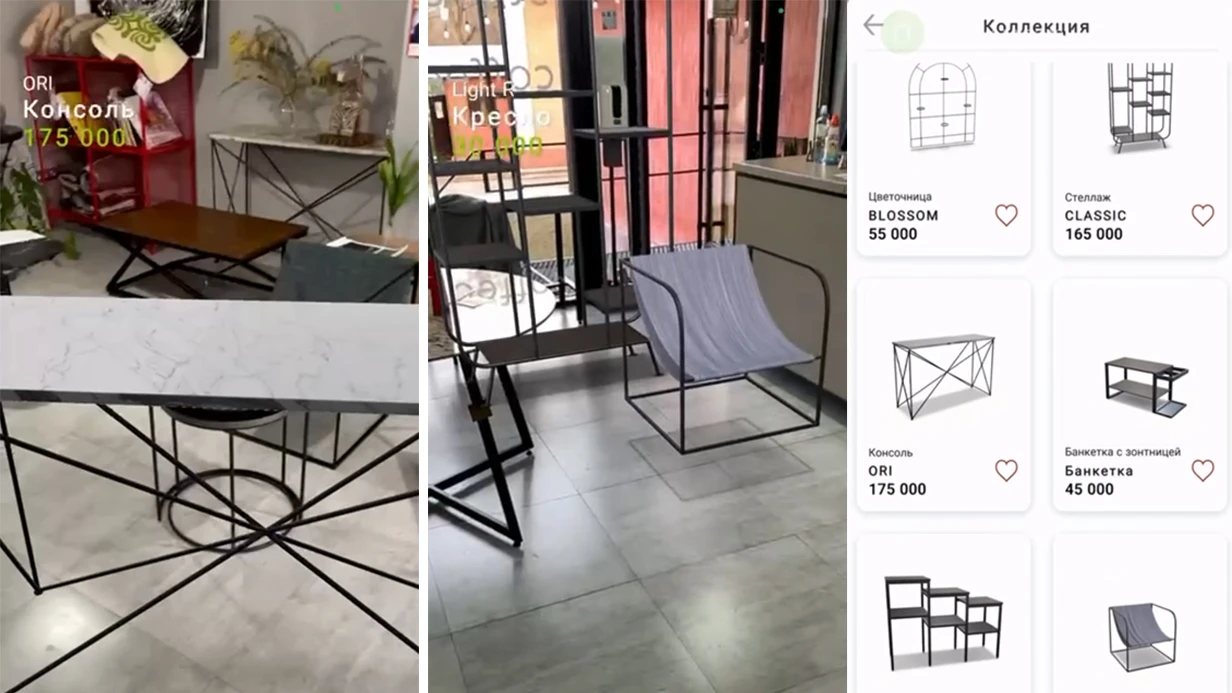
Your customers cannot try on equipment online — because of this they hesitate, postpone a purchase, or return the item. An AR catalog solves this problem: the customer sees how a uniform, helmet, or backpack fits them right in the app. Our team, with 10 years of experience, builds these solutions turnkey.
Higher Conversion
When the customer sees equipment on themselves, doubts fade. They are not guessing from flat images, but assessing size, fit, and color in real time. This nudges them toward an order — and storefront conversion grows.
Fewer Returns
Size mismatch is the main cause of returns in sports stores. AR try-on shows the fit limits before purchase, so the customer orders exactly what will fit. Returns go down, and margin goes up.
Customer Engagement
Interactive viewing of a 3D model holds attention several times longer than an ordinary photo. Shoppers study details, change colors, rotate the product — this boosts interest and time spent on the site.
Brand Recognition
An AR catalog is a reason to spread the word: people share try-on screenshots on social media. Each such post works for your brand and attracts new customers without an advertising budget.
Competitive Advantage
While competitors show flat photos, you give customers an experience no one else offers. It stays in memory, sets the store apart, and builds the image of a modern brand that cares about its customers.
Sports Equipment Display Formats: Try-On, Catalog, Configurator
Sports equipment is sold in different ways: for some, seeing a photo is enough, for others, trying it on matters, and some want to configure a model for themselves. The chosen display format determines how fast the customer decides and how many returns occur. The right scenario helps you sell without pressure or extra steps.
Format Comparison
| Format | For Whom | What It Gives the Customer |
|---|---|---|
| AR try-on | Online stores, brands with a wide size range | The customer sees equipment on themselves without a fitting room — fewer returns, greater confidence in the choice |
| 3D configurator | Manufacturers and custom equipment brands | The customer chooses colors, materials, and labels themselves — gets a unique product and is willing to pay for individuality |
| Virtual catalog | Companies with a broad assortment | The entire collection in one app with quick search and filters — the visitor finds the right model faster |
| Web viewer | Partner sites and online storefronts | 3D models displayed right in the browser — no app installation, wider audience reach |
| Interactive stand | Events, showrooms, exhibitions | Visitors browse models and see specifications themselves — the stand works as an independent salesperson |
Formats can be combined: for example, AR try-on in the catalog and an interactive stand at an exhibition. The main thing is that each one leads to a single action: a purchase or a request. We will help you choose the right format and set up equipment display for your business process.
How a Project Works: Brief, Plan, Approval, Launch
Every project starts by diving into your task. We put together a detailed development brief: what equipment you display, who your audience is, and what result you expect from the app. This lets us lock in goals and timelines so we can move forward without surprises.
Then we proceed through clear stages, and at each one you see the intermediate result and can influence the course of work.
- Development brief — we lock in goals, usage scenarios, and reach expectations. You get a clear work plan, timelines, and an understanding of how the app will fit into your processes.
- Design concept — we show what the app will look like and how your customers will interact with the equipment. You approve the visual style and logic before the main work begins.
- Layout approval — we flesh out screens, texts, and purchase or product selection scenarios. At this stage, revisions are made without reworking the finished product.
- Prototype build — we assemble a working version that can be shown to the team and first users. You see the product in action, check usability, and adjust details.
- App launch — we publish the finished solution, set up support, and train your team. You get a tool that immediately starts working for your customers.
At every stage, you control the outcome: you see in advance how the app will look, which scenarios it covers, and how it affects sales or brand awareness. We are responsible for timelines and quality, and you get a product your business genuinely needs.
What's Included in the Delivery: A Complete Kit for Launching Your AR Solution
We deliver more than just an app — you get a complete working kit that lets your team launch AR visualization of equipment without involving a contractor at every step. Everything needed to start, configure, and further develop the solution is packed into one package.
Here is what's included in the delivery:
-
Source materials. All project files, 3D equipment models, interface mockups, and a product database. This is your property — you can hand it over to another developer at any time or use it within your own team.
-
Training videos. Short clips showing all app usage scenarios, from first launch to customer demonstration. No need to understand AR — just repeat the steps and get the result.
-
Staff manual. Step-by-step guides for sales associates, managers, and administrators. It describes how to open the storefront, switch products, adjust lighting, and prepare the tablet for display. An employee can get oriented in 15 minutes.
-
Post-launch technical support. We stay in touch: we log bugs, answer questions, and help adapt the solution if your tasks change. Average response time is no more than one business day.
-
Content updates. You update the equipment catalog yourself, add new colors and models, and change prices without a developer. A simple admin panel that even a beginner can figure out.
-
Development documentation. A description of how to extend functionality: add new scenes, change display logic, or embed the AR solution into a website. This lowers the cost of future upgrades and keeps you independent.
This kit removes the main risk — dependence on the contractor after project handover. You get not a "black box" but a transparent tool that delivers value immediately: it helps customers try on equipment, boosts engagement, and reduces returns of unsuitable products.
Case Study: AR Try-On Lifted Conversion 1.5x
One of our clients — a sports equipment retail chain SportMarket — faced a typical pain point: customers take a long time to choose but abandon their order at the last moment. The reason is uncertainty about size and fit. Hence the returns and lost sales.
We suggested AR try-on. The customer sees equipment on themselves through a smartphone camera — right in the store's app or on the website, without downloads or complicated settings.
Result in two months: order conversion grew 1.5x, size-related returns dropped by a third. The average check increased — customers added accessories more confidently.
Why It Worked
AR try-on removes the main objection: "what if it doesn't fit." The customer sees the fit, can turn around, choose another size — the decision is made faster and with more confidence.
We used a professional AR platform for precise model overlay on the body. For the store, this is not a "nice gimmick" but a working tool that both customers and sales staff understand.
Business Numbers
- Order conversion +50% in 2 months.
- Size-related returns −30%.
- The store extended the project for the next season.
Today, AR try-on is a permanent sales channel for the client, and we support updates for new collections. Want the same result? Let's discuss your scenario.
How to Choose a Format: Augmented Reality, Virtual Reality, or 3D?
There is no one-size-fits-all answer — the right format depends on your task, target audience, and budget. One business needs a product storefront in an app, another needs an eye-catching presentation at an exhibition.
Once you understand the differences, the decision becomes easy, and we'll help you refine it before work starts.
Augmented reality works best where the customer is already in the real world. They open the smartphone camera and see how sneakers look on their foot or how a sports jacket fits their silhouette.
For sports equipment visualization, this is the most natural choice: nothing needs to be put on, the product is literally tried on the person. This format suits a mobile catalog, offline displays with an AR marker, and integration with an online store.
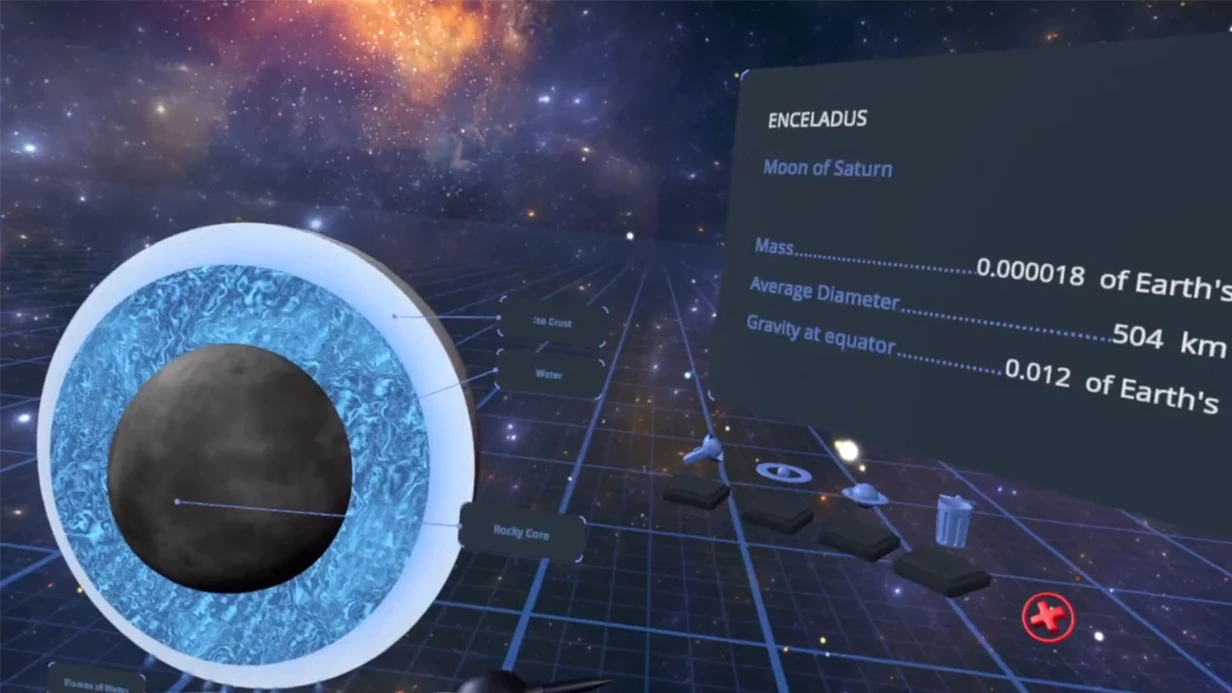
Virtual reality makes sense when you need to completely isolate the viewer from the outside world. If you are presenting a new collection to partners, training staff, or setting up an exhibition zone, VR creates the needed immersion effect.
But it requires headsets, so the audience narrows — it is not a solution for the mass shopper but a tool for presentations and events.
A 3D catalog is the simplest and fastest way to show a product in detail. It works in a regular browser, lets you rotate equipment 360 degrees, and change colors.
If the budget is limited and reach matters, start with it — it covers the basic need to show the product and interest the customer. Later, when you see demand, you can scale up to an AR app.
The main rule: don't choose a format for the sake of technology. First, define who your customer is — a mass shopper with a smartphone (AR or 3D) or a narrow group at a presentation (VR). Assess the project budget and timelines.
During a consultation, we'll analyze your task and suggest the optimal option, taking into account audience expectations and your resources.
Answers to Common Questions About Implementing AR Solutions
We understand that before launching an AR solution, clients have practical questions: how long to wait, which devices everything will work on, how the budget is formed, and what happens after launch. We've collected answers to the most common ones so you can make a decision without uncertainty.
How long does AR app development take?
A typical project takes 4 to 12 weeks depending on complexity. A simple visualization of one product is faster; a full augmented reality catalog takes longer. At the start, we lock in timelines in the plan and stick to them: you always know when you'll get the result.
Which devices will the app work on?
We build apps for modern iPhone and iPad — the devices your audience already uses. We work on Apple's native augmented reality technology, so the app launches stably without additional setup and requires no special knowledge from the customer.
How much does such a project cost?
The cost depends on the number of product items, the complexity of the 3D models, and the required features. At the brief stage, we put together a transparent estimate: you see what you pay for and can adjust the scope to your budget. No hidden fees — the final amount is fixed in the contract.
What happens after launch? Is there support?
Yes, we support the project after release. If the app needs fixes, adaptation to new devices, or content updates — you get support in the agreed format. Many clients order regular maintenance so the AR catalog always stays up to date.
Can the functionality be changed after development starts?
Yes, we work in iterations: first we launch the baseline version, and then you add new features — for example, shoe try-on, color changes, or model comparison. The flexible process lets you respond to feedback from your customers and the market without losing quality.
Let's Discuss Your Project: Get a Cost and Timeline Estimate
Every VR/AR project starts with the question "how much does it cost and how long will it take." To answer precisely, we need to hear your task: which products you plan to display, where your users will be, and what device they hold in their hands.
Outline the task — and we'll prepare a cost and timeline estimate tailored to your business, with no abstract guesses.
During a free consultation, we'll discuss how AR visualization of sports equipment helps customers "try on" a product before purchase, reduces returns, and boosts conversion.
We'll show examples from our projects and tell you which solutions already work in sports retail and adjacent niches. You'll see the result before development starts.
What you get by submitting a request for an estimate:
- A free consultation with an expert — we'll analyze your task and suggest the right AR format.
- A transparent cost and timeline estimate for your scenario, with no hidden fees.
- A demonstration of examples: how equipment visualization looks on the user's screen.
- Integration recommendations: mobile app, web version, or a QR code on the product.
- A clear launch plan — from brief to publication and analytics.
- Post-launch support and the ability to scale the solution to new product categories.
Leave a request for an estimate — we'll call you back within one business day, discuss the details, and show how AR will boost your equipment sales. We'll start with a free consultation, and by the end of it you'll understand whether the solution fits your business.