



Customers Leave Because Choosing a Color Is Too Difficult
Customers come to a paint and finishing materials store with a specific task — to choose a color for a bedroom, kitchen, or living room.
But in front of a shelf with dozens of shades, their determination fades: it's unclear how the tone will look on a large wall, in daylight and evening light, in combination with furniture and flooring.
It is precisely this uncertainty that makes customers leave, postpone their purchase, and often return to competitors where the process is simpler.
The difficulty of choice directly hits revenue: a consultant spends hours with a single buyer, but no decision is made — the order stalls, and revenue is lost.
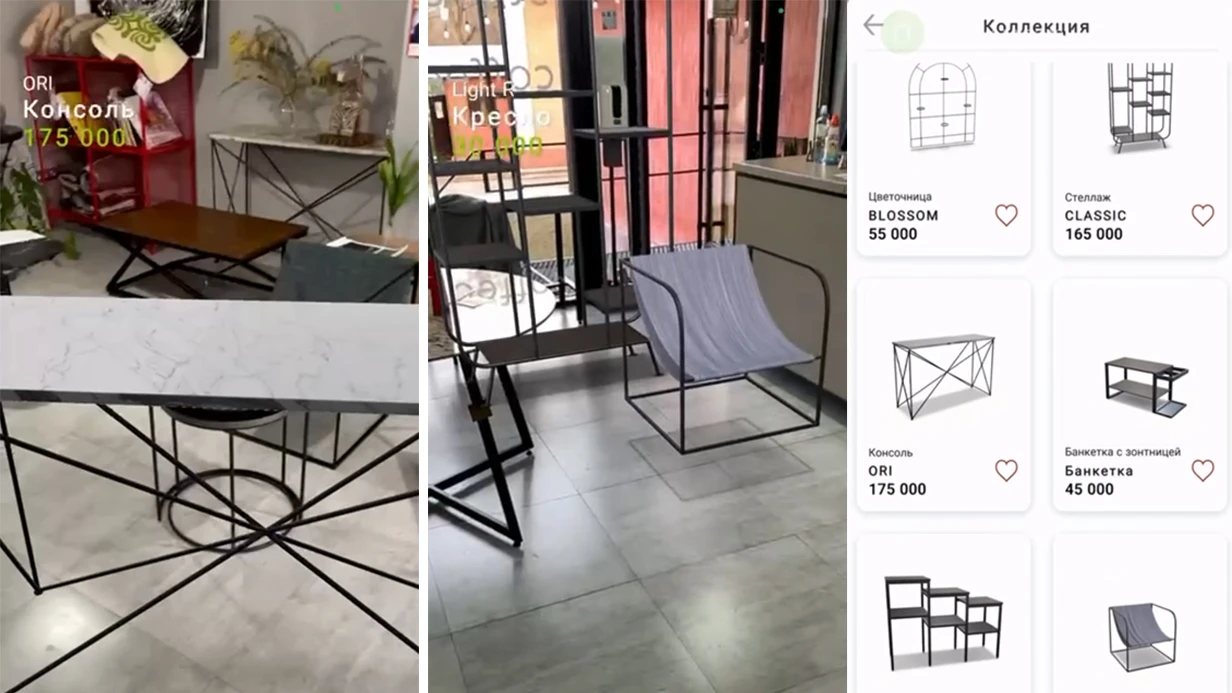
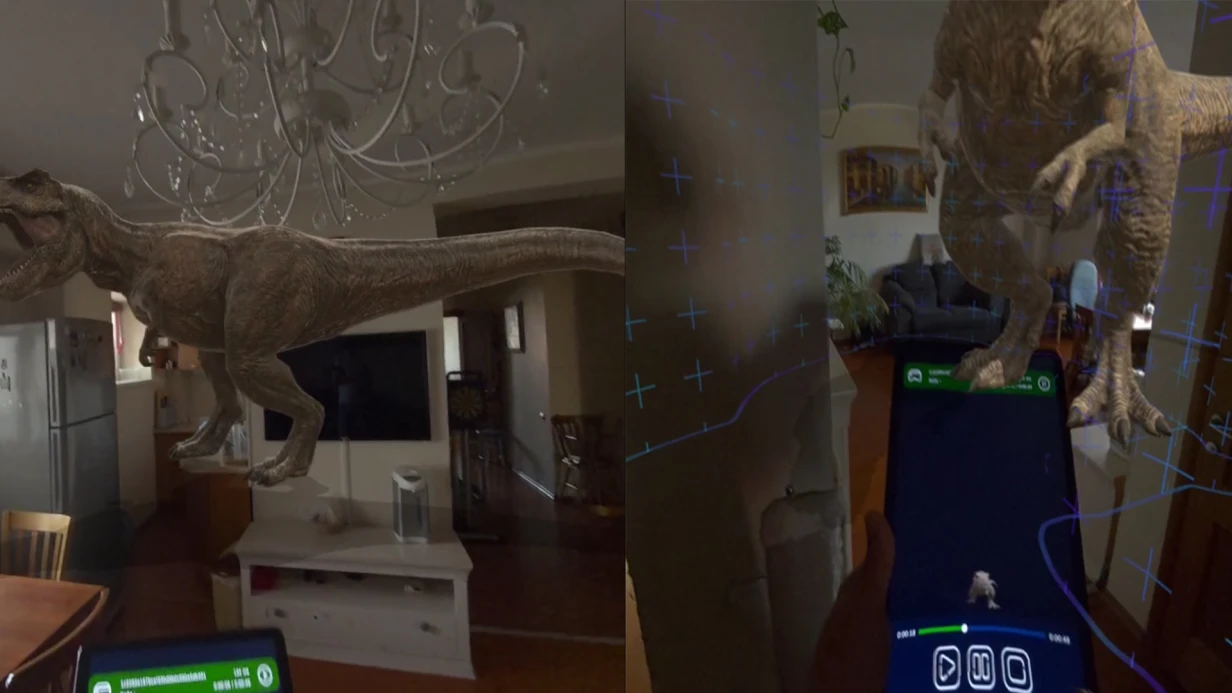
Augmented reality removes the main barrier. A mobile AR app based on ARKit points the smartphone camera at a wall, and the selected shade is overlaid onto the surface in real time.
The buyer immediately sees how the paint or finishing texture looks in their interior — before purchase, without samples and without guessing by eye.
For the business owner, this means higher conversion and average order value: the decision is made in a single visit, and returns and repaints happen far less often.
AR for interiors turns from an experimental technology into a service that sets the store apart from competitors and drives repeat visits. Every such purchase is also a reason for photos and recommendations, which amplifies the brand's reach on social media.
Customers trust a brand that helps them choose right — and come back for their next projects. We develop such apps turnkey: from idea to publication in the app stores, taking into account the specifics of your assortment and the consultation logic at your locations. The app is intuitive and requires no training for staff or customers.
How AR Helps with Finishing Materials
A buyer in a finishing materials store sees dozens of shades and doesn't understand how the color will look in their room. Without a visual example, they postpone the purchase or choose a safe white.
An AR tool resolves this uncertainty: the buyer points their smartphone camera and immediately sees how the paint or coating looks on the wall in real space.
Our team develops mobile AR solutions for paint showrooms and finishing materials stores. We embed material selection into the customer journey — from the app or directly on the sales floor.
This gives the business a measurable result: higher conversion, fewer returns, and greater brand awareness.
Check which tasks AR selection addresses
- [ ] Higher conversion. The buyer doesn't guess — they see the final result before purchasing. Doubt goes away, decisions are made faster and more often.
- [ ] Fewer returns. Choosing the wrong color is one of the main causes of paint and material returns. AR reduces such errors to isolated cases.
- [ ] Brand awareness. An unusual digital service gets talked about and shown to friends. The store becomes a place people visit for the experience, not just for a can of paint.
- [ ] Customer retention. The user saves the chosen color to favorites and comes back to it — a reason for a repeat visit.
- [ ] Consultant time savings. The buyer explores options on their own, and the salesperson steps in once the request is already formed.
This is how AR turns finishing materials selection from a long, painful choice into a fast, clear process. Implementation takes a few weeks and requires no skills from the buyer — only a smartphone.
AR App Formats for Interiors
A buyer doesn't choose paint or finishing based on a catalog picture: in the store they see a small sample, and at home it turns out the color looks completely different.
An AR app solves this problem — it shows how the color and material will look on the actual walls of the future interior before the purchase.
There are several implementation formats, and each solves its own task. Compare them against your customer engagement scenario.
Which format suits your business
| Format | Who it's for | What it gives the customer |
|---|---|---|
| Mobile app | Retail chains, online paint and wallpaper stores | The buyer points the camera at a wall, sees the chosen color in their interior, and makes a more confident decision. Fewer returns due to "wrong shade," more trust in the brand. |
| AR kiosk in the showroom | Paint showrooms, design studios, building supply stores | The visitor "tries on" the finishing on the spot, without samples. The employee sees the customer's choice, suggests complementary products, and places the order right away. |
| Online version with viewing on the website | Material manufacturers, online platforms | The buyer checks the color or texture right from their smartphone without downloading the app. This increases the average order value and reduces the number of purchase abandonments. |
Each format brings the customer to a purchase in its own way. We'll help you choose the option that fits your scale and audience, then develop an app that pays off through higher conversion and fewer returns.
Turnkey AR App Development Stages
We've structured the process so you control every stage and always know what's happening with the project at any moment. You don't need to dive into technical details — you just need to see the result: from the first brief to a finished app your customers will start using. Below are the main stages.
-
Brief and immersion in the task. We gather your requirements: which products to display, how customers should choose the color, and on which devices to launch the app. We lock in the goals and the expected result — to move in the right direction from the start.
-
Prototype and scenario approval. We show what the app will look like and how the user will interact with it: opened the catalog, pointed the camera at a wall, chose a color, viewed material combinations. You approve the logic before development begins — this saves time and budget.
-
Design concept. We design the interface in your brand style: clear product cards, convenient filters, a "view in interior" button. You approve the look, and then we move on to technical implementation.
-
App development. We set up surface recognition, color and material overlay onto the camera image, the product catalog, and a "save the option you like" feature. You receive intermediate versions and see progress.
-
Testing on real devices. We check how the app behaves on different phone models, in different lighting, and in different rooms. We fix errors so your customers don't face technical barriers.
-
Launch and publication. We help you publish the app to the App Store and Google Play or distribute it via a corporate link for store employees. You get a finished product and usage instructions.
-
Support and evolution. We stay in touch after launch: update the catalog, add new materials, and refine features to match your tasks. The app keeps working reliably, and you keep getting results without additional investment in a team.
Implementation Timeline for an AR App for a Store
The implementation timeline for a store's AR app is the first question any business owner faces. Many fear development will drag on for six months and require constant oversight.
In practice, a typical project for paint color and finishing materials selection takes from 3 to 8 weeks — provided the team handles the project turnkey and takes responsibility for the result.
Here are real timelines for typical store tasks:
| Project format | Implementation timeline | What the business gets | | Basic AR app for consultants | 3–4 weeks | A consultant points a smartphone at a sample — the customer immediately sees available colors and textures | | App with color overlay on a real interior photo | 5–7 weeks | The buyer changes wall colors and material combinations in real time and decides faster | | Full turnkey project with catalog integration and request intake | 8–10 weeks | A single solution: color selection, request submission, data transfer to your accounting system |
We lock timelines into the contract and take responsibility for each stage — from requirements to launch. First working versions appear within 2–3 weeks; the remaining time goes to integration and tuning for your sales process. This approach eliminates surprises and lets you plan the budget without hidden costs.
A quick launch doesn't mean reduced functionality. We use well-tuned tools and professional experience, so we move from requirements to implementation without delays.
If you need an exact estimate for your task — send us a description, and we'll prepare a plan with specific dates and a scope of work.
What You Get in the Project Results
You don't get "raw code" — you get a ready-to-use working tool for consultants, sales staff, and customers. We deliver the project as a complete system your team will start using immediately after launch — without involving developers on your side.
Here is the project delivery scope:
- AR app for choosing paint colors and finishing materials — tested on current devices, ready to use in stores and on customers' mobile phones.
- Source code and product rights — you own the solution, can develop it further, and hand it to any contractor team.
- Full documentation — administrator and user guides, a description of the app settings and logic. Everything is written in plain language, without complex technical details.
- Team training — we run a session for sales consultants and marketing: how to demonstrate the solution to a buyer, how to work with the catalog, and how to answer questions.
- Handover to operation — we set up the app on your devices, connect the materials catalog, and help with publication in the app stores.
- Updates and technical support — after launch we stay in touch: fix bugs, adapt the app for new devices, and expand the range of materials.
This package addresses the main business concerns: the app doesn't "hang" after release but keeps delivering value and scales easily to new sales locations and product categories.
You get a working tool, knowledge for your team, and a clear plan for further development — without hidden work or dependence on a specific vendor.
Case Study: A Paint Store After AR Implementation
Paint store owners know the hardest moment in a sale is choosing a color. The customer looks at a small sample, hesitates, leaves to "think it over," and returns a week later asking to exchange the can.
A chain of finishing materials stores came to us with the task of removing this barrier. We developed a mobile AR app for choosing paint colors: the customer points the camera at a wall and sees how the selected shade will look in their room.
The result was noticeable within the first month. The average consultation time dropped from half an hour to ten minutes, the number of returns due to "wrong color" fell threefold, and the share of repeat orders grew by a quarter.
Buyers stopped fearing mistakes: the AR fitting shows the color in their interior under different lighting, including shadows from furniture and windows.
The app is simple to use: the customer scans a QR code on the sales floor, opens the paint catalog, and "tries on" a favorite shade right on the wall.
This removes the main objection — "what if it doesn't fit" — so consultants can discuss the texture and the required volume with the buyer instead of persuading them to make a purchase.
After three months, the chain saw conversion to purchase grow by almost 1.5 times and the average order value increase thanks to complementary products — primers and rollers. The client is now planning to roll out AR selection across all locations.
We support the project: update the catalog, add new surface types, and keep it current across different smartphone models. In the end, the business got a tool that delivers measurable value rather than just another check-the-box app.
How to Choose the Right Format for Your Task?
Choosing a format isn't a matter of preference — it's a matter of the task. The same app can be built as a mobile, stationary, or VR-headset solution.
We start not with technology but with your business goal: how customers will use the product, where it will happen, and what equipment they have access to.
The specific requirements of your scenario determine everything. For example, the task of choosing paint colors and finishing materials for an interior assumes the customer is in a real space — at a store or at home.
They need to point the camera at a wall and see how the chosen color will lie on the surface. Mobile augmented reality is the best fit for this. It works on an ordinary smartphone, requires no additional devices, and delivers an instant result.
If the task is a collaborative interior review with a designer in an office, a large-screen visualization or a VR headset works better. And for a quick demo presentation, a web version is enough.
That's why we always ask a few questions: how many people will use the app simultaneously, on what devices, whether catalog integration is needed, and how you plan to measure the result.
A custom project lets us account for all the nuances of your industry. We don't sell a template solution — we design the format around your tasks and add features competitors don't have when needed.
At the initial consultation, we show examples of similar projects and offer a quick prototype so you can evaluate the convenience firsthand. This way you get not an abstract technology but a tool that solves a specific business problem.
Common Concerns Before Starting a Project
Before starting a project to develop an app for choosing paint colors and finishing materials, clients voice the same concerns. What if the app doesn't work on a customer's device? Who's responsible for failures in the middle of peak sales? And what happens after launch — are you left alone with the product?
These are normal questions — we hear them in every other brief. That's why we work this way: we lock in requirements, show results stage by stage, and test on real devices.
You're not buying a "pig in a poke" — at every stage you can see the app coming to life and what exactly your business will get.
Below are answers to the questions most often asked at the first meeting.
What if the app breaks after launch?
We provide a warranty on the developed code — usually from 6 to 12 months. If something works incorrectly, it's fixed under warranty at no extra charge. We respond to requests within a day, and critical bugs are handled on a priority basis so your sales don't stop.
How will you keep the app working in a year?
You choose the support format: on-demand or an ongoing maintenance contract. We monitor compatibility with new versions of mobile platforms and update the app when needed. You don't need to understand technical details — just call your account manager.
What if our customers don't like the app?
Before launch, we run focus group testing and show you the results. If something is off, we adjust it before you've spent budget on advertising. What's more, you get a tool to change the catalog content and test new hypotheses yourself, without us.
Who will update the color and material catalog?
Your employee does this through a user-friendly admin panel. Training is included in the project: in a day or two, a manager will learn to add new items, change prices, and manage promotions. You won't depend on the developer for day-to-day operations.
Order a Demo for Your Interior
A customer comes to the store but can't imagine how the chosen color will look on the walls of their living room. They flip through dozens of samples, hesitate, and postpone the purchase — this is familiar to anyone who sells paint or finishing materials.
An AR app solves the problem: it shows the color and texture right in the customer's interior through the phone screen. But to understand how it works with your products, you need to see the technology in action.
Order a demo — we'll hold a short online meeting and walk through the customer scenario: how they choose a color, apply it to a wall, switch materials, and save the option they like.
We'll also review your tasks: which products we're promoting, where customers are most often lost, and which app format will deliver the most value.
What you get right after reaching out
- A response within one business day — we'll find a convenient time for the demo.
- A free consultation: we analyze your assortment and growth areas without pushing unnecessary options.
- A project estimate: we name timelines, stages, and required inputs before we start — without surprise "extras" midway through.
- A preparation checklist: which color catalogs, interior photos, and result formats you'll need for the launch.
- Examples of our work in adjacent categories — you'll see what a finished solution looks like and how users receive it.
- A commercial proposal after the demo: scope of work, timelines, and checkpoints for each stage.
This is non-binding: after the meeting you can calmly weigh the decision and compare it with other options. Write or call — let's start with a free review of your case today.