

Digital Twin of a Foundry Workshop — How to Stop Losses at the Plant
In foundry production, profit is built from pennies on every casting, so invisible losses quickly turn into million-dollar damage. Equipment sits idle between operations, defects are detected only after pouring, and changeover for a new part takes weeks. While the problem remains invisible, it eats into profit and slows down the launch of new products.
Dispatchers and managers often learn about downtime only after the shift ends, when the time is already lost. Casting accuracy depends on many parameters that are not linked into a single picture, so workshop management is built on experience rather than facts.
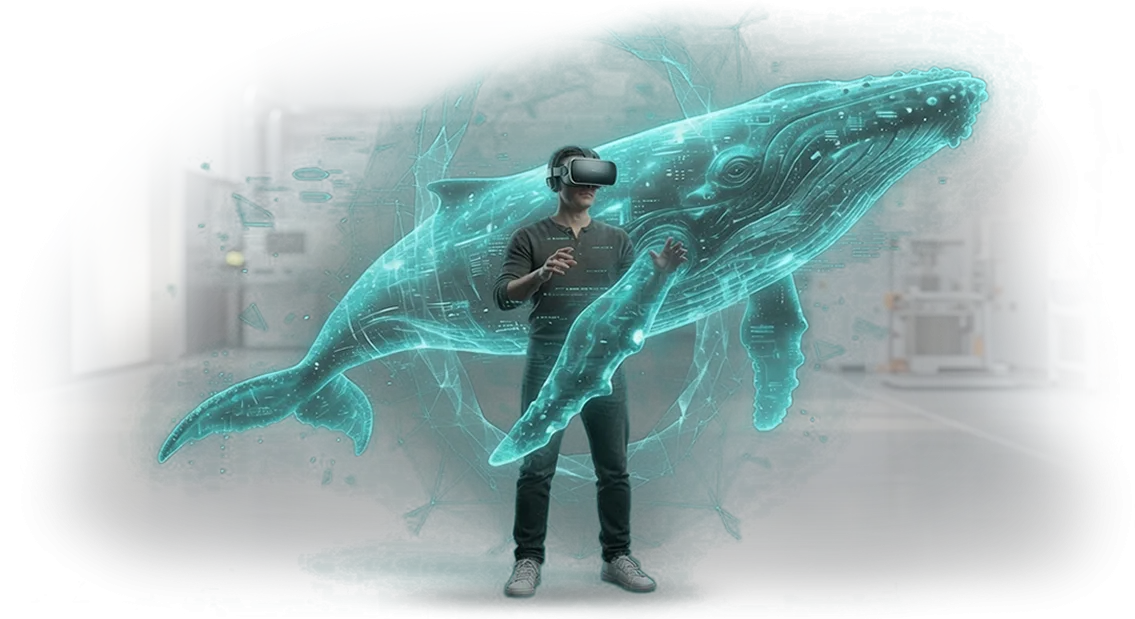
A digital twin removes this gap: it collects data from production areas and shows where foundry losses occur.
We create a digital twin of a foundry workshop tailored to your task: from equipment load monitoring to casting accuracy forecasting. On the dispatcher's screen — a unified picture of production: equipment status, operation duration, deviations from standards.
A manager sees not scattered reports, but a working model of the workshop with bottlenecks and hidden reserves.
Instead of costly experiments on real production, you calculate scenarios in advance: launching a new product, changing melting modes, redistributing load. This reduces equipment downtime, lowers the defect rate, and accelerates the release of new products. This is how a foundry workshop digital twin becomes a profit management tool.
Five Measurable Benefits of a Digital Production Model
A foundry workshop digital twin is not just a 3D model, but a tool that directly affects profit. The first and most tangible benefit is defect reduction: before production even starts, you see bottlenecks and eliminate them on a virtual copy.
In practice, this reduces the share of non-conforming products by 10–15% within the first months, saving materials, time, and stress.
The second benefit is faster launch of new products and line changeovers. Instead of long experiments on real equipment, you work through scenarios in a digital environment.
This cuts production preparation time by 30–40% and allows faster response to orders, which directly improves order turnaround and customer loyalty.
The third benefit is safety and staff training. Newcomers practice actions on a digital twin without risking equipment or health, while experienced employees refine responses to non-standard situations.
The company gets a better-prepared team and reduces the risk of accidents and downtime caused by human error.
The fourth benefit is transparency for investors and management. With a digital workshop model, you can clearly show current processes, bottlenecks, and growth potential without inviting an investor into a hot workshop.
This removes questions like "so what exactly goes on there" and speeds up funding decisions, while also making the business more manageable.
The fifth benefit relates to sales and marketing: a virtual workshop twin is a powerful presentation tool for new clients. You show the customer how their part will be produced, demonstrate quality control and timelines — and this convinces better than any slides. As a result, the number of successful negotiations and the average contract value grow.
Each of these benefits works toward business results, and together they turn a digital workshop model into a paying asset. Contact us — we will show on your example exactly where the efficiency reserve is hidden.
Digital Twin Formats for a Foundry Workshop Based on Your Task
The same workshop can be digitalized in different ways — the question is what task you are solving.
Someone needs to quickly train new operators without risking equipment, someone needs to reduce defects during complex mold setup, and someone wants to see production bottlenecks before they stop the line.
We have prepared three digital twin formats for a foundry workshop, and each addresses its own need.
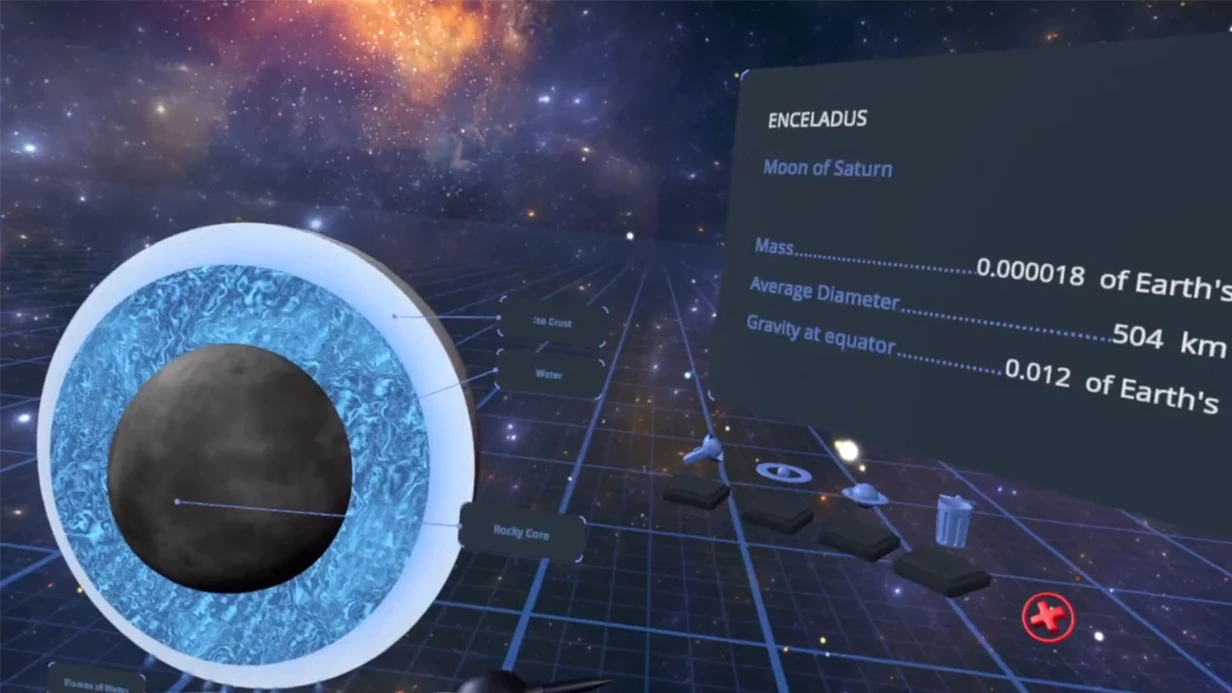
VR trainer for casting — full immersion in a virtual copy of the workshop. The operator goes through all stages "first-hand": metal pouring, temperature control, casting removal.
Such training delivers up to 70% faster skill acquisition compared to briefings, while eliminating injuries and damage to expensive tooling.
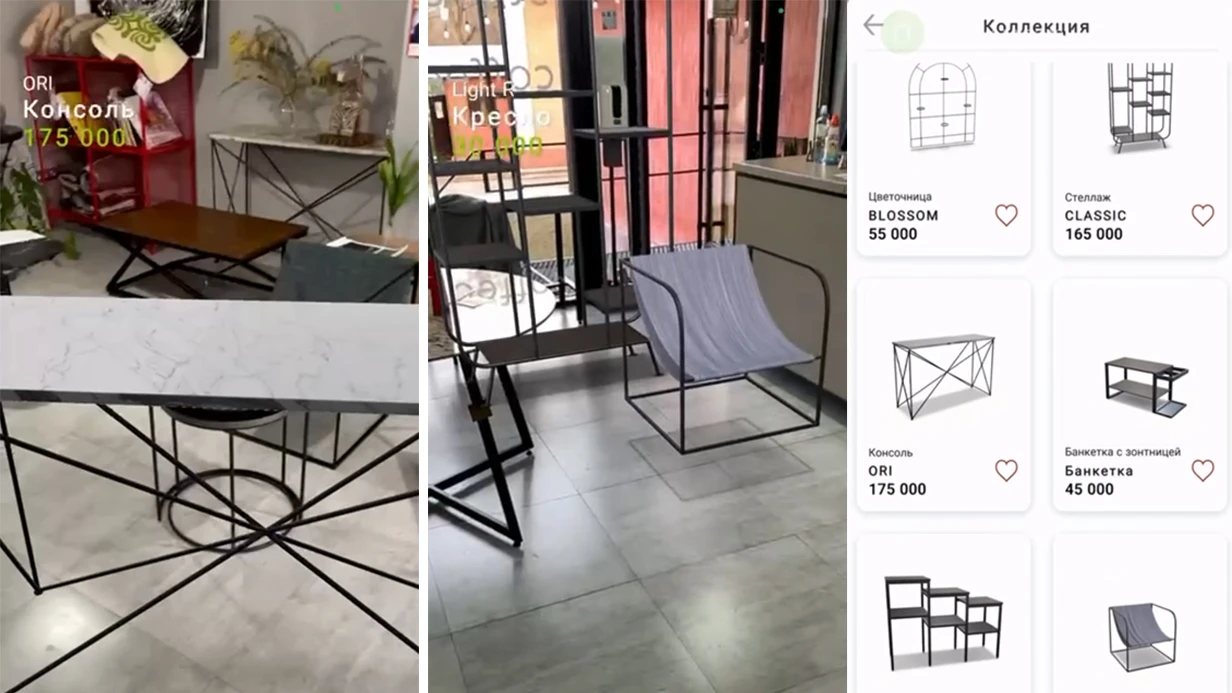
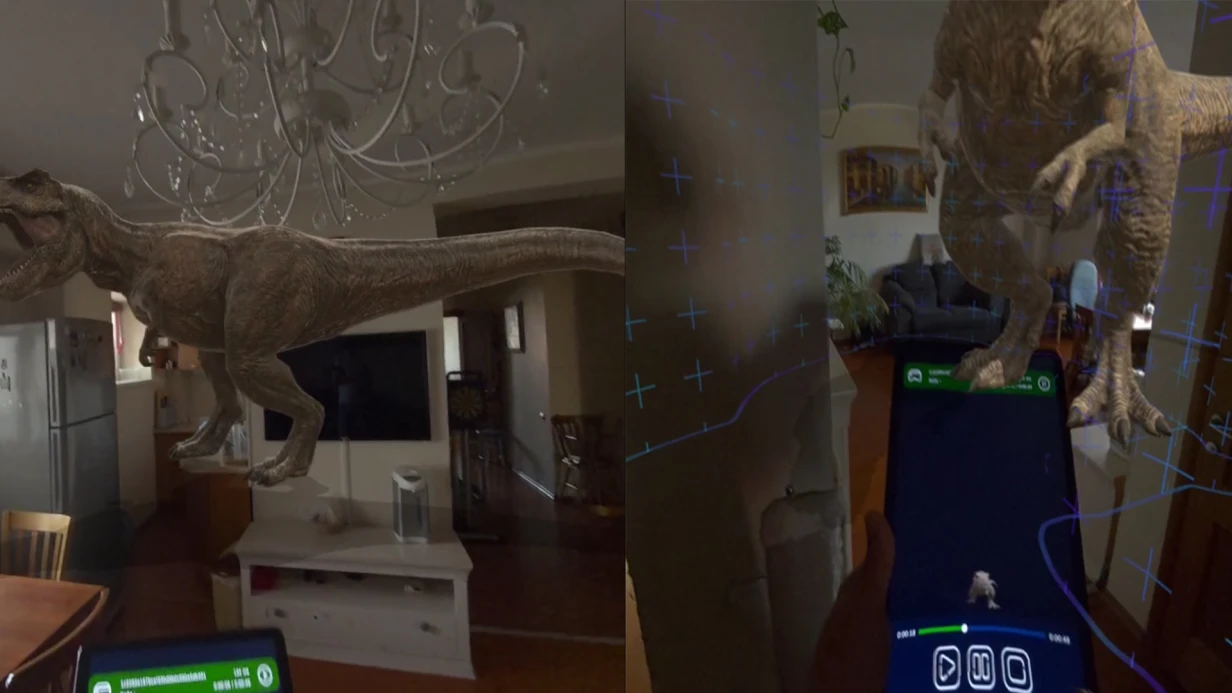
AR hints on the production floor — a digital "helping hand" right at the workplace. Through a tablet or glasses, the employee sees step-by-step instructions, quality checkpoints, and deviation warnings directly on real equipment.
This reduces dependence on the human factor during setup and cuts the number of errors by up to 40% in initial operations.
Digital workshop copy for planning — an interactive production model for managers. On it, you see the load of production areas, material flow, and "bottlenecks" in real time. This format helps make decisions on changeover and expansion without stopping current production.
| Format | For whom | What it gives the client |
|---|---|---|
| VR trainer | Training centers, HR, workshop supervisors | Fast onboarding of newcomers, safe skill practice, independence from equipment downtime |
| AR hints | Process engineers, setup technicians, QC | Reduced defects during setup, quality control "in the moment", fewer errors in routine operations |
| Digital workshop copy | Managers, chief engineers | Process transparency, load optimization, well-founded modernization decisions |
Formats combine easily: for example, an operator first trains on a VR trainer, then uses AR hints on the real line, while the manager sees the big picture on the digital copy. Such an integrated approach delivers results at every stage — from training to operational control.
With any format, you get a system adapted to the specifics of your foundry production, not an abstract product. Please note that we build these solutions based on your actual process flows, so they are used by engineers and operators, not just the IT department. Shall we discuss which format will bring you the most value first?
How the Project Works: From Brief to Launch and Support
A process where every stage brings you closer to a working model
A foundry workshop digital twin is an investment in production management. For it to pay off, the project must follow a clear route: no surprises halfway through and no "sudden" additional budgets.
We structured the process so that at every step you see the result and understand what is happening with your money and deadlines.
It all starts with a brief — a short interview where we break down your task: what exactly needs to be seen in the model, who will use it, and what production problem it solves. Next, a plan with specific stages and dates, agreed upon before work begins.
- Project brief. We gather requirements: implementation goals, control points, model usage formats — from staff training to planning new equipment layout.
- Plan and estimate. We fix the scope of work, timelines, and the result of each stage. You receive a document that makes it easy to control the project.
- Concept approval. We show what the model will look like and how it will work: workshop structure, key objects, interaction scenarios. Approved before development starts.
- Digital twin development. We create a virtual copy of the workshop: equipment, logistics, movement zones, and production data. The model is filled with your real parameters.
- Model deployment at your facility. We roll out the system, connect it to working data, and configure it for users — operators, process engineers, management.
- Team training. We conduct a session with your employees: how to open the model, find the right area, obtain data. No complex training required — everything works intuitively.
- Post-implementation support. We stay in touch: update the model when the workshop changes, answer questions, and help expand functionality.
Why this works
Each stage ends with a concrete result that you personally accept. If something goes wrong at any step — you learn about it before it affects the budget.
We have refined this approach dozens of times, and it allows us to launch digital twins that are actually used on the workshop floor, not shelved.
What Is Included in the Delivery: A Kit for Quick Results
A foundry workshop digital twin is not just a model, but a working tool for staff training, knowledge control, and safe practice of actions. We structure the delivery so you can launch it without lengthy setup and with your own team.
The final kit includes:
- A complete digital copy of the workshop: equipment, melting, pouring, and finishing zones — with a level of detail suited to training tasks, newcomer onboarding, or partner presentations.
- Interactive training scenarios: from introductory briefing to emergency situation practice. Employees act in a safe environment, and mistakes do not lead to production downtime or injuries.
- Digital twin documentation: a description of scene composition, operating logic, and customization options. You understand how the system works and what can be changed without involving developers.
- Instructions for staff and administrators: step-by-step guides on launch, navigation, content updates, and working with training result reports.
- Training materials for your specialists: videos and cheat sheets that help transfer knowledge within the company and avoid dependence on a single contractor.
- Access to updates and technical support during the maintenance period. If the workshop layout changes or new equipment is added, the twin can be developed to meet new tasks.
- Project source materials: you are not tied to a single contractor and can use the model as a foundation for next steps — from digital instructions to virtual tours for clients.
This kit covers the client's core request: not a "model for the sake of a model," but a ready-made asset that delivers value immediately. You get clear documentation, trained staff, and a streamlined process — not a raw product requiring lengthy refinement.
Case Study: How a Digital Model Cut Downtime by 30 Percent
Let us show a concrete example. A foundry workshop of the machine-building plant "Promlit" approached us. It was losing up to 15% of shift time due to equipment downtime and lengthy setup of new batches.
Operators worked with paper instructions, and dispatchers saw the real picture only by the end of the shift — so stoppages were found after the fact.
We developed a digital workshop twin that combined data on machines, blanks, and personnel into a single virtual model.
The manager sees the condition of the area in real time, and operators receive step-by-step workflow scenarios through a VR interface — without needing to stop the line for experiments.
Implementation results
Within the first month of operation, the plant reduced downtime by 30% — confirmed by data from the accounting system.
The new product batch was launched twice as fast because process engineers fine-tuned the workflow in a virtual environment without diverting the workshop from current orders.
Production transparency became an additional bonus: the manager sees the load of each equipment unit, stoppage reasons, and bottleneck zones on a single screen. Decisions are made based on facts, not gut feeling, and the shift plan no longer diverges from reality.
Why it worked
The key was not the digital twin itself, but the regulations built into it. The system prompts the operator with the optimal sequence of actions and warns about risks before a stoppage becomes inevitable.
Six months later, the client ordered an extension of the model to the neighboring workshop. That means the digital twin paid for itself and became a working tool — not a demonstration for management.
How to Choose the Right Format for Your Production Tasks?
The digital twin format is chosen not by technology, but by production task: staff training, route optimization, workshop presentation to investors, or operation control.
The model's scale determines budget and timelines, so the first rule is — do not order "the whole workshop" if the problem is localized to one area.
Most production facilities start with a pilot zone — a furnace department or pouring line. A working prototype appears within 3–4 weeks, you can show it to managers and operators, assess the effect, and only then scale the model to the entire workshop. This approach excludes overpaying for a "model for the sake of a model."
| Format | Suitable for which tasks | What it gives production |
|---|---|---|
| Full workshop twin | Reconstruction planning, investor presentations, comprehensive training | A unified virtual environment for all processes and departments |
| Area or line twin | Operation optimization, bottleneck analysis, training workers of a specific process stage | Fast and measurable results in a limited area |
| Interactive trainer | Introductory briefing, hazardous work authorization, emergency response practice | Reduced injuries and defects, accelerated staff training |
Requirements for launch are minimal: area layout, list of operations, and typical scenarios. We handle digitalization, content, and configuration ourselves — all we need from you is the expertise of your process engineers so the model mirrors the real process.
Selection rule: start with the task, not the scale. Need to eliminate personnel errors — a trainer is enough; need to show the entire workshop to an investor — a full twin is required.
Send us a description of your task, and we will offer a format during a free consultation — without overpaying.
Frequently Asked Questions from Clients Before Project Launch
Before starting a project, clients most often ask about model accuracy, timelines, and guarantees. Below are honest answers to these questions that will help you decide on launching a foundry workshop digital twin.
How accurate will the digital twin be?
The digital copy replicates the real workshop with high detail: main machines, pipelines, work zones. We use engineering drawings and laser scanning as a basis, so the model can be used for staff training, action practice, and change planning.
How long will development take?
The timeline depends on the area and complexity of the objects, but on average the project takes 4–8 weeks. At the start, we fix the stages and budget, and you see intermediate results every week — this allows you to control the process and adjust details.
What happens if new requirements come up during the process?
This is a normal situation. We work in short iterations: we show the result, receive feedback, and make edits to the model. Therefore, changes do not derail the deadline or turn the project into a long build.
What happens after launch if something goes wrong?
We provide warranty support: we update the virtual workshop, adapt content to new equipment, and train your team to work with the platform. You are never left alone with the system.
Order a Digital Model Development — Get an Implementation Plan
Leave a request — and within one business day you will receive an implementation plan for a foundry workshop digital twin. You won't have to dig into technical details: we will conduct the audit ourselves, design the solution, and show how it will affect production.
The plan will include timelines, scope of work, and first steps that can be launched right now — without lengthy approvals or large upfront investments.
So you immediately understand what you are paying for, we include in the implementation plan:
- Brief and analysis of workshop tasks — we identify where the digital model will reduce downtime and losses, and where it will deliver quick results.
- Scope of work — a list of stages from development to launch: which models and scenarios will be created, who is responsible for each step.
- Project cost — a transparent estimate of labor, timelines, and required equipment before work begins, with no mid-project estimate changes.
- Implementation schedule — a phased plan with control points: you see first results within weeks.
- Integration with existing systems — the digital twin does not disrupt current processes but complements them, so the transition happens without stopping production.
- List of contacts and communication channels — we assign a team and designate a single manager you can ask any question.
This is a ready-made roadmap, not an abstract promise. You will know exactly what resources are needed, when measurable results will appear, and how we confirm them.
Ordering a foundry workshop digital twin is simple: send a development request — we will prepare an implementation plan for free and in a short time. After that, you can decide: move forward, clarify details, or postpone the project for now. But in any case, you will have a document you can use to compare proposals and plan your budget.
Leave a request now — and by tomorrow you will know exactly how a digital twin will transform your workshop.