

Your logistics center is losing profit due to slow processes
Every morning at a logistics center begins with a race: you need to receive trucks, distribute cargo across zones, and not disrupt shipments. But in reality, staff errors, equipment downtime, and process inconsistencies eat up to 20–30% of operating profit.
The manager sees the numbers, but does not see exactly where the money is lost—whether in receiving, sorting, or order picking.
Missed deadlines and lost orders are not a coincidence, but a systemic problem. When every employee works from memory or written instructions, and new hires learn for months, errors are inevitable.
Inefficient processes at a logistics center lead to downtime: equipment waits, people redo work, and clients receive cargo later than promised. As a result, both reputation and revenue suffer.
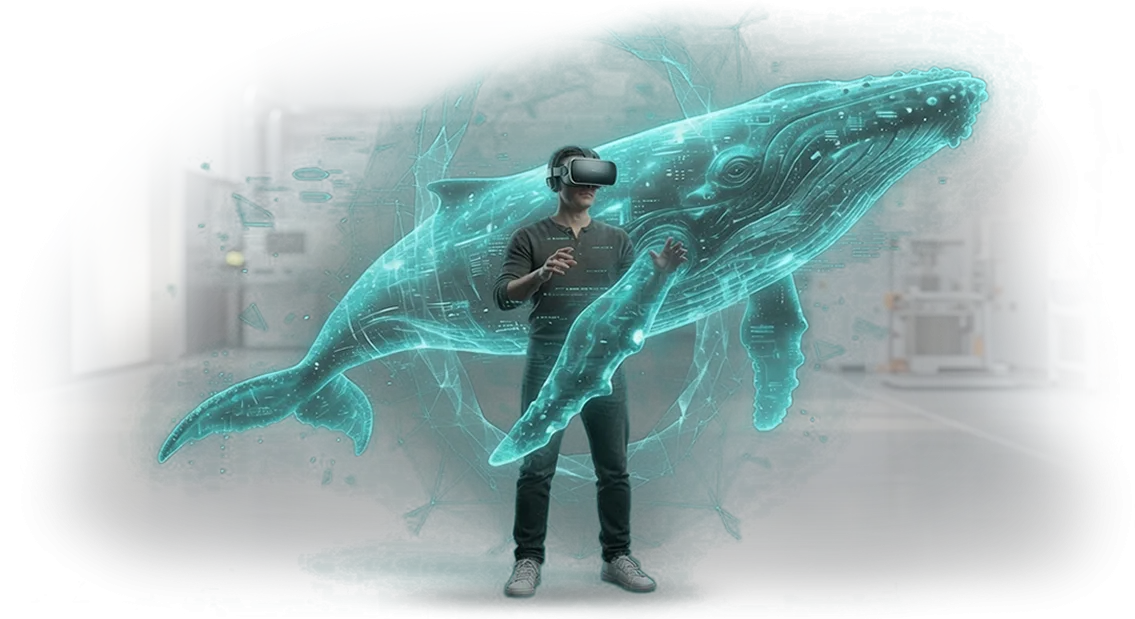
There is a solution—a digital twin of your logistics center. It is a virtual model where you can see every process in real time, find bottlenecks, and train staff without stopping operations.
We help implement such a tool so that profit losses turn into efficiency growth and the logistics center runs like clockwork.
Accuracy, speed, and transparency — the three key outcomes of implementation
For a logistics center, an order error is not just a mistake, but lost money and reputation. The more complex the flow of goods, the higher the cost of manual operations: mix-ups, delays, extra staff movements.
The digital twin turns processes into a manageable model where every deviation is visible and its cause is easy to find.
Order accuracy. We reduce the number of picking and shipping errors. The system checks the employee's actions against the task in real time and warns where an error may occur. This reduces returns and increases customer trust—they receive exactly what they ordered.
Operational speed. New employees master processes faster in a virtual environment without risk to the warehouse and without stopping operations.
Equipment movement routes are optimized, order processing time is reduced, and the center's throughput grows without additional investment.
KPI control and peace of mind for management. All key analytics are collected in a single dashboard: plan fulfillment, zone load, picking accuracy. The manager sees not dry figures, but clear indicators for quick decision-making. It also becomes possible to forecast peak loads and allocate resources in advance.
We develop such solutions using professional equipment and proven modeling tools. In our practice, digital twins of logistics centers pay for themselves by reducing errors and speeding up training.
You get a predictable result and confidence that every order will be handled accurately and on time.
Implementation formats: training simulator, navigation, and a full digital copy
A logistics center is a complex living organism: flows of goods, dozens of employees, equipment, and strict deadlines. Every mistake here has a price—from lost time to a broken contract.
That is why digital technologies are applied where they deliver measurable results: training without downtime, fast navigation across a vast territory, and the ability to “play out” changes before they affect the real warehouse.
Depending on the task, we offer three implementation formats—from a local solution to a full digital copy. The choice depends on what the business needs: faster staff onboarding, better control over movement, or an analytical tool for planning. Below is how each format delivers value.
| Format | Who it is for | What it gives the client |
|---|---|---|
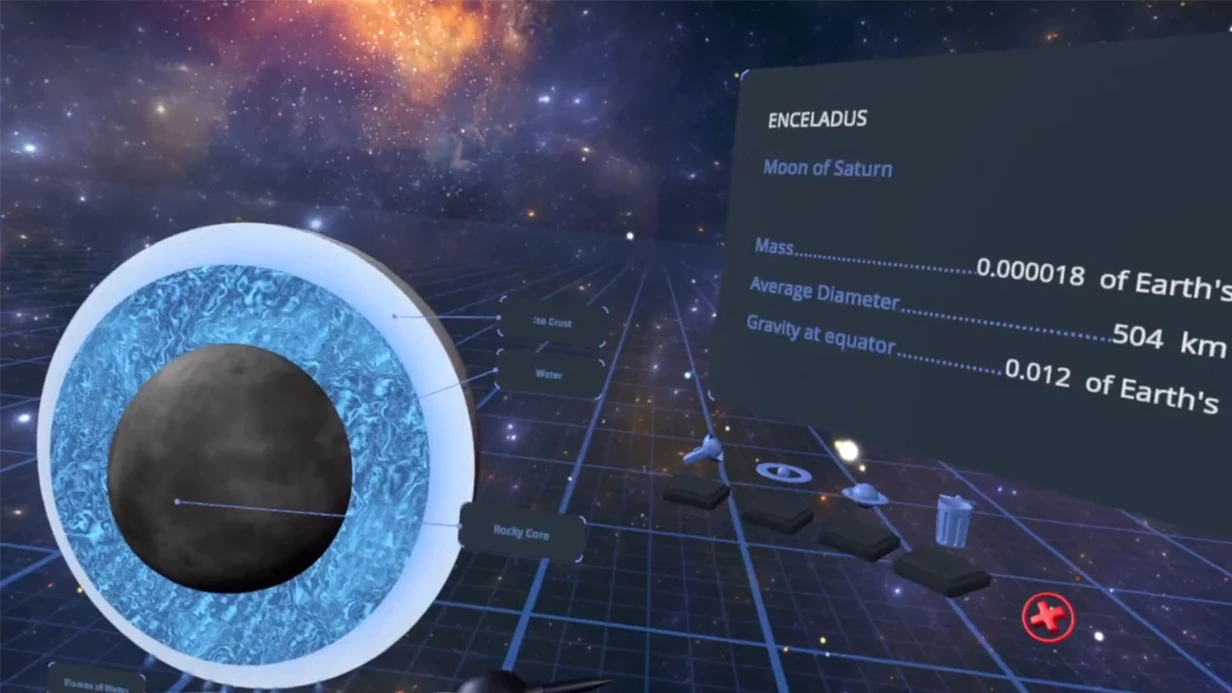
| VR warehouse simulator | For training operators, warehouse staff, and forklift drivers | Employees practice actions without risk to themselves or the goods, the number of errors decreases, and new hires reach a working rhythm faster |
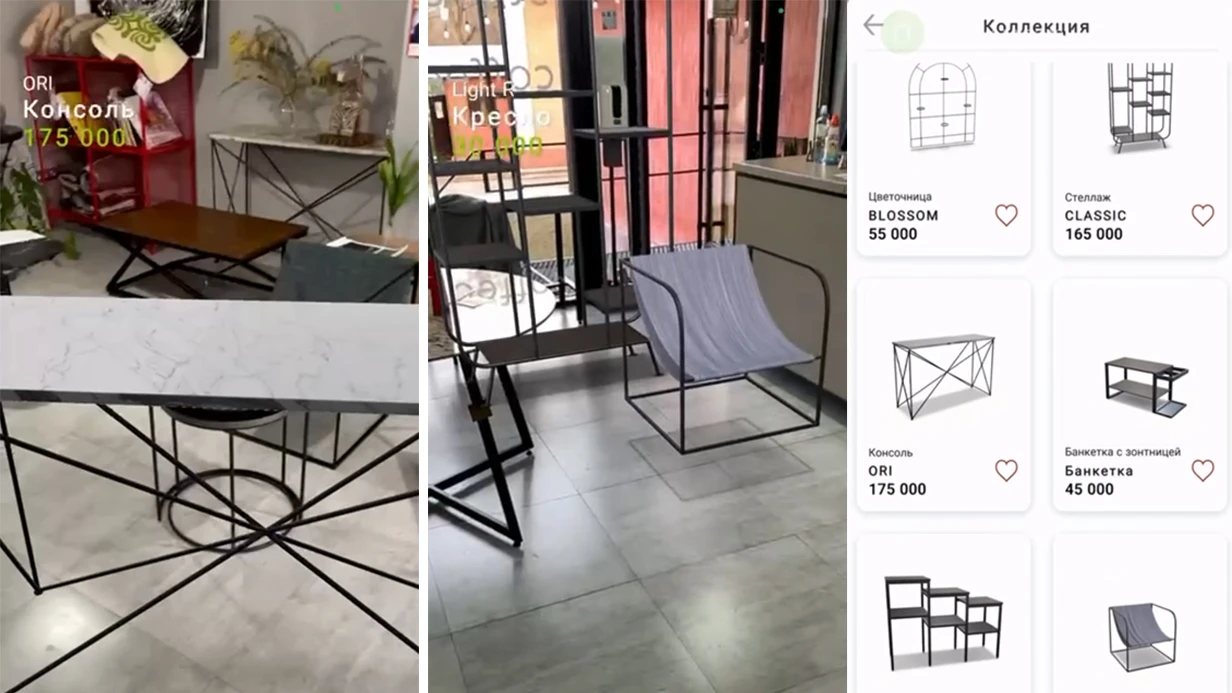
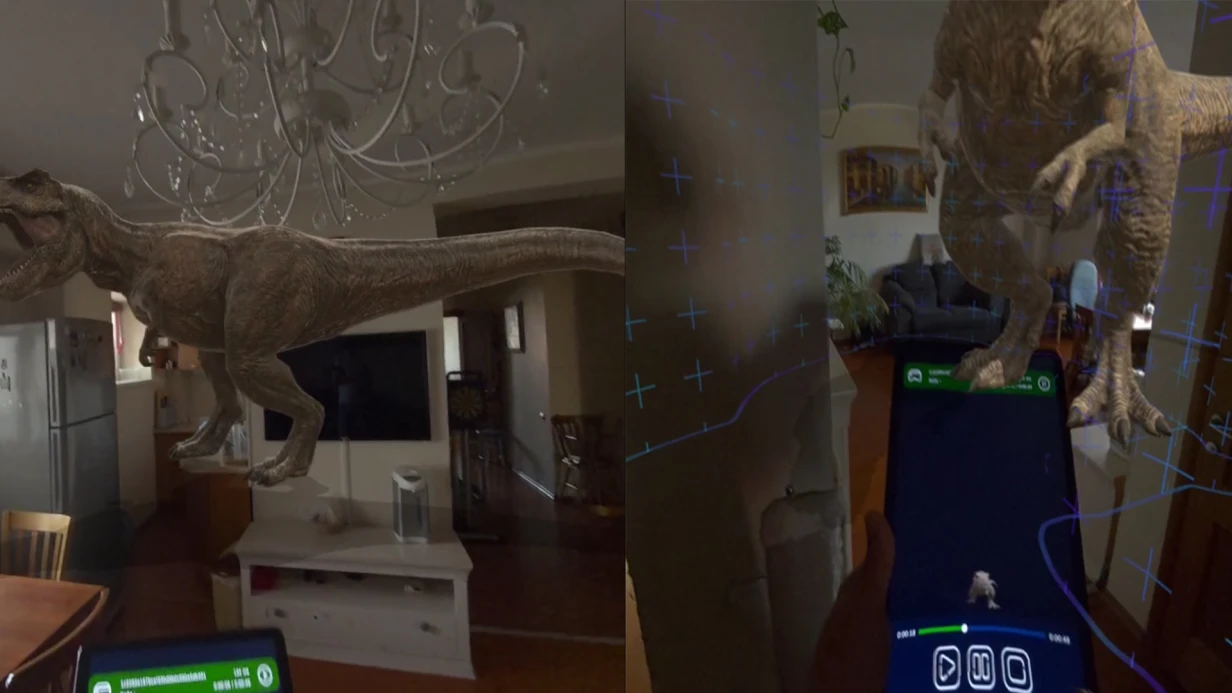
| AR navigation across the facility | For drivers, couriers, new employees, and visitors at large sites | Anyone quickly finds the right zone or receiving point—less downtime, fewer delays, and fewer lost shipments |
| Full digital copy of the center | For managers, analysts, and the planning department | Scenarios can be played out: rack reconfiguration, seasonal peaks, changes to traffic flow—without stopping real operations |
All formats scale to your facility and can be combined into a single system. You can start with a simulator or navigation, and later expand to a full copy—we will design it so that previous solutions do not have to be discarded.
Developing a digital twin of a logistics center: 5 steps
Developing a digital twin of a logistics center is not buying ready-made software; it is a joint project where a clear process matters.
We have gone through dozens of similar implementations and put together a procedure that delivers a working tool without missed deadlines or unexpected surprises. Below are the five development stages your project goes through.
-
Brief and requirements collection. You describe which processes need to be digitized: receiving, storage, shipping, staff movements. We ask the right questions so that the digital twin covers exactly your tasks. As a result, we record the goals and success criteria—you know what you will get.
-
Concept design. We propose the solution architecture: which zones and objects will be in the digital copy, what data it will reflect. You approve the concept before work begins—this removes the risk of “building the wrong thing” and unnecessary costs.
-
Development and content creation. We create a digital copy of your center and populate it with current data. At this stage, you see intermediate versions and can make changes. We work with professional equipment and a proven stack, so the visuals and logic reflect reality.
-
Validation and testing. We test the digital twin against your scenarios: simulate peak loads, check display accuracy. You accept the work based on clear criteria, not on trust. This is the stage where all details are visible and targeted changes are easy to make.
-
Launch and support. We deploy the solution, train your team, hand over documentation, and stay in touch. After launch, we monitor system performance, update data, and refine scenarios—the digital twin lives and evolves together with your center.
What is included in the delivery: model, instructions, training, and support
A digital twin of a logistics center is not just a 3D model—it is a working tool that must integrate into the team's daily processes.
That is why the delivery is structured so that from the very first day you have full control over the facility: from visual inspection to employee training.
We do not hand over a “sort-of-ready” product; we provide a package in which every detail is specified: the model itself, documentation, clear instructions, and support at all stages of implementation.
This addresses the client's main fear—“what do we do when the developer finishes the work?” You gain independence, not dependence on a contractor.
Scope of work: from model to manual
The package includes a detailed model of the logistics center tied to real layouts and engineering networks. The model is adapted to your tasks: staff training, client demonstrations, or practicing cargo movement scenarios.
The model comes with technical documentation and instructions in Russian, written without complex jargon. Any employee—from a warehouse worker to a shift supervisor—can understand the interface in one day, not a week.
Staff training and technical support
We train your team through hands-on sessions: we show real scenarios, how to use the model, how to update data, and how to resolve common issues. After training, employees work independently without constant developer involvement.
Technical support is included in the contract—you are not left alone with a problem. We process requests quickly, and critical issues are handled on a priority basis. This means operational downtime is minimal, and your employees always know who to contact.
What you get in the end
- A digital model of the logistics center, ready for use;
- documentation and instructions in Russian without technical jargon;
- staff training until confident independent work;
- technical support for the entire operational period;
- model adaptation to your tasks: training, presentations, analysis;
- updates and refinements as the layout or processes change;
- transfer of source materials and rights to use the model.
Case study: cut downtime by 30% and accelerated training by 2 times
Reducing downtime and speeding up the time it takes employees to reach target productivity are the main pain points of a logistics center. When onboarding a new hire takes a month, and picking errors slow down shipments, the business loses money every shift.
We solve this with a digital twin: an employee trains in a virtual copy of the warehouse and brings operations to automaticity—without risks to cargo or schedule.
How it happened
The client was an operator with a distribution center employing 200 people. New hires spent three to four weeks learning the warehouse management system and made mistakes in the early days, causing shipments to be delayed.
We deployed a VR simulator based on a digital twin: loading, equipment routes, receiving, and non-standard situations. In it, mistakes have no consequences—so staff master skills faster.
Project results
After launch, staff training became 2 times faster—the time to reach target productivity dropped from one month to two weeks. Staff downtime fell by 30%, and the number of picking errors decreased noticeably: fewer reworks and client complaints. Shipments stay on schedule, and mentoring costs went down.
This implementation case is confirmed by scaling: the client ordered simulators for two more of their warehouses. For a manager, a digital twin of a logistics center is a tool that delivers a fast return on investment by reducing downtime and shortening training.
How to choose the right format for your task?
Choosing a VR/AR/MR format is not a question of “what is trendier,” but of “what will solve a specific logistics center task.” There is no universal solution: the same equipment can be ideal for staff training and useless for presenting a project to investors.
Therefore, the first step is always to clearly define the goal: what do you want to achieve—reduce employee onboarding time, check a warehouse layout before construction, or show a client how the center works at real scale.
Each goal has its own format. If the task is mass staff training and practicing actions in emergency situations, virtual reality is optimal: it completely isolates the employee from the real warehouse and allows an accident or failure to be safely simulated.
If you need to overlay a digital diagram onto a real object—for example, to show storage locations or equipment routes right on the floor—augmented reality is chosen. And mixed reality is suitable when digital objects must interact with the physical environment in real time.
The decisive criterion is the specific requirements of your facility. A logistics center lives by its own rules: large areas, moving equipment, strict safety regulations.
Consider how many people will use the solution simultaneously, whether integration with your accounting system is needed (for example, so that the digital twin displays current stock levels), and how critical centimeter-level accuracy is.
These parameters directly affect development complexity and budget, so they must be planned before work begins.
Equally important are deadlines and staging. If the budget is limited, you do not have to build a full digital twin of the entire center at once—you can start with one area, work out a scenario, measure the result, and scale the solution.
A good contractor will offer such an option rather than push the most expensive configuration. A transparent estimate means you understand what you are paying for at each stage and what business result you will get.
We help you choose the format before development begins: we visit your site, study processes, and listen to your requirements for training, planning, or presentations.
Then we record the goal, target audience, number of users, and site specifics in a brief—and only then propose a solution that fits your budget and delivers a measurable effect.
This way you get not an abstract “technology of the future,” but a working tool for specific logistics center tasks.
Answers to frequent questions about implementation and guarantees
Before implementing a digital twin of a logistics center, every client asks the same questions: who is responsible for breakdowns, what does the warranty cover, and how are deadlines upheld. We hear these questions at every meeting, so we have collected short and honest answers here.
We have been working with digital twins for more than 10 years and are used to taking responsibility for results. Below is the main thing you need to know before starting a project.
What does the warranty cover?
The warranty on our work is 12 months or more. During this time, we fix any errors free of charge, adapt the system to changes in your processes, and remain available for consultations.
What happens if there is a failure?
You simply call us—in critical cases, we connect within an hour. We restore operations, check the causes, and make sure the failure does not happen again.
How are deadlines ensured?
Deadlines are fixed in the contract. If we see risks due to changes in requirements or data, we warn in advance. A typical project takes 4–8 weeks to launch.
Who is responsible for the project?
A dedicated manager guides you from the brief to launch and remains available afterward. They handle all questions and coordinate any changes.
Start your project today: request a consultation
Starting a project with us is easy—request a consultation. We will call you back within one business day, clarify your tasks, and show how a digital twin of a logistics center will solve your specific issues.
On the first call, you will already receive preliminary implementation timelines and understand which processes can be digitized first.
Here is what the path from request to working solution looks like:
- Request — you leave your contact details, the manager contacts you within one business day and answers basic questions.
- Consultation — we discuss goals: staff training, warehouse control, layout planning, or a presentation for investors.
- Audit and analysis — we study your processes, facilities, and data to propose a solution that delivers a measurable result.
- Design — we prepare the use case and development plan, and show a prototype for approval.
- Development — we build the application with a professional team using proven tools and equipment.
- Launch and support — we implement the solution, train employees, hand over documentation, and stay in touch.
You do not just get a “picture in VR”—you get a tool for reducing errors, speeding up employee onboarding, and clearly demonstrating the center's capabilities. The average project timeline is from four weeks, and the scope of work is fixed in the contract.
Request a consultation, and we will propose a solution that pays for itself through optimized daily operations. Start today to see your logistics center in a new format in just one month.