

Digital Twin of Food Production: Why Business Needs Control
Food production loses profit every day due to hidden losses: excess raw material consumption, defects, deviations from formulations, equipment downtime. These losses are often discovered after the fact — at the end of the month, when nothing can be fixed.
Meanwhile, every mistake hits both the cost price and the brand's reputation: product quality directly depends on control at every stage.
Traditional methods — manual checks, spreadsheet reports, scattered sensors — provide a delayed picture. A manager sees the problem only after it has already affected output.
Collecting data alone is not enough: you need a system that connects it all together and shows exactly where production losses occur.
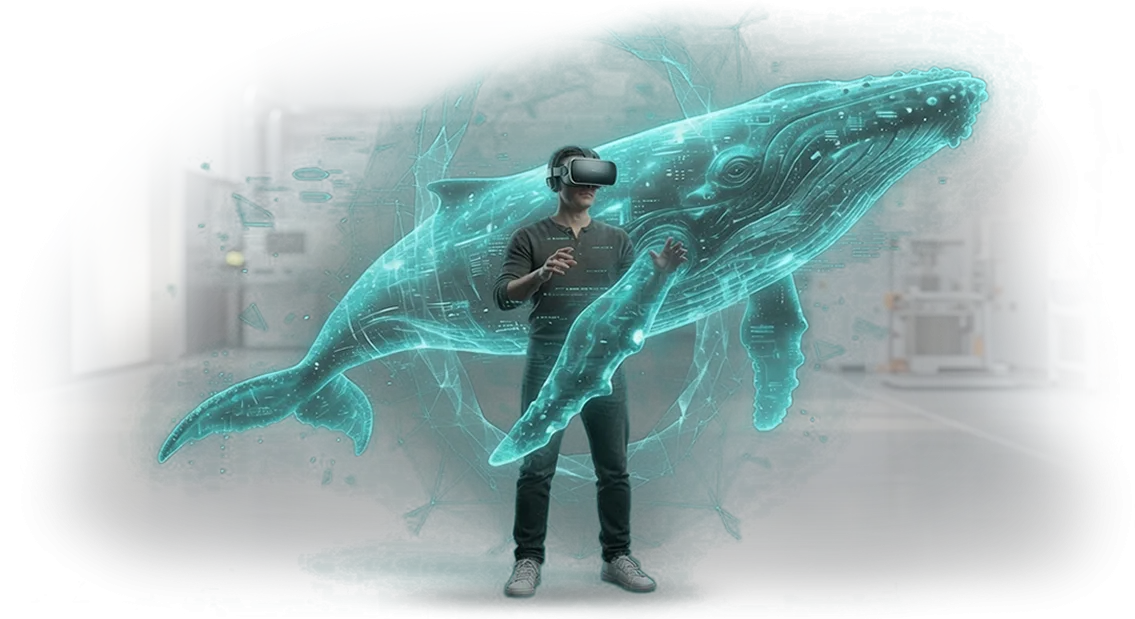
A digital twin of food production solves this problem. It is a virtual model of the enterprise that reflects the state of equipment, the movement of raw materials, and compliance with technological regimes in real time.
The manager gets enterprise control on a screen: sees bottlenecks, predicts risks, and makes decisions before the problem affects the product.
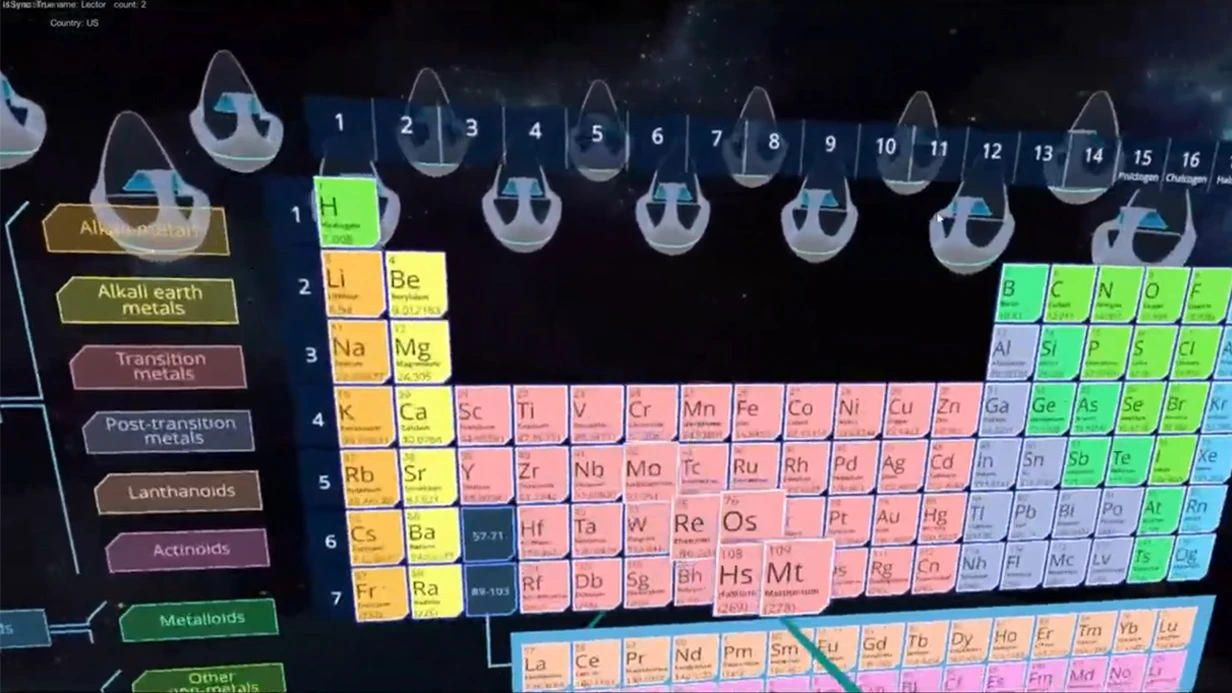
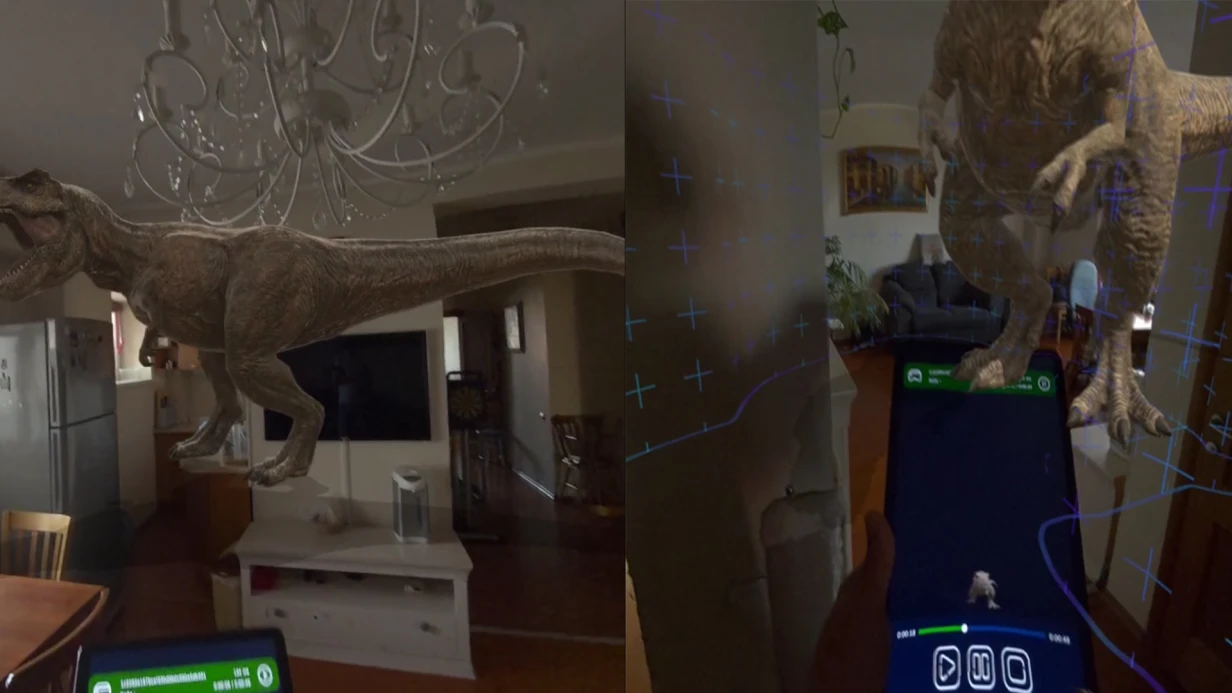
We develop digital twins tailored to the tasks of a specific enterprise. We rely on many years of experience in the food industry and modern VR/AR technologies to make control visual and understandable for everyone — from technologist to director.
This is not an abstract showcase but a working tool that reduces losses and pays back the investment.
What a Digital Twin of Food Production Delivers: Business Impact
A digital twin of food production is a virtual copy of your workshop and all its processes, running in parallel with the real line. For business, it means not just a 3D model but a tool that helps earn more, spend less, and react faster to changes. The business impact consists of three main directions, and each one directly affects profit.
The first and key benefit is loss reduction. On the digital copy, you can simulate a shift, see bottlenecks, check how product yield will change with new settings, and only then transfer changes to the real line.
A mistake that would cost tons of raw materials on the production floor passes without consequences on the twin. This way, you reduce costs before launch, not after a finished batch has been written off.
The second benefit is debugging speed. Instead of stopping the line and experimenting with formulations or modes, your team finds optimal parameters on the virtual model. Everything verified on the twin is implemented on real production on the first attempt.
This cuts the time required to launch new products and change over equipment many times over — meaning the product reaches the shelf faster and generates revenue sooner.
The third benefit is new formats of communication and staff training.
The digital twin becomes a clear instruction manual for operators: employees see their actions and the consequences of mistakes in a safe environment, and managers get a comprehensible picture of processes for discussions with partners or investors.
Training newcomers no longer depends on line load — the internship runs entirely on the virtual copy, with no risk of stopping production.
In summary: a digital twin of food production delivers impact at all levels — from reducing operational losses to accelerating product market entry.
It is not a "toy for engineers" but a working tool that pays for itself through prevented errors, faster decisions, and the team's confidence in every change.
Virtual, Augmented, and Mixed Reality Formats for a Plant
At a plant, each format solves its own task: one trains employees, another accelerates control, the third combines the live workshop with digital data. The difference directly affects the result, so choose a format based on the business task, not the visual appeal.
How to Choose a Format for Your Workshop Task
| Format | For Whom | What It Gives the Client |
|---|---|---|
| Virtual Reality | New employees, line operators | Safe training on a digital copy of the workshop: practicing actions without stopping production and without risk. |
| Augmented Reality | Technologists, engineers, guests | Prompts and indicators directly on equipment: quick parameter checks and clear demonstrations for guests. |
| Mixed Reality | Managers, training centers, clients | Interaction with a digital twin in the real workshop: joint scenarios, remote consultations, assembly control. |
Choosing a format is a matter of economics. You need to practice skills without risk and downtime — choose VR. To speed up work on an operating line — AR will help. To combine live processes and digital data — choose MR or combine formats. We will select an option for your scenario and calculate payback before development starts.
To make sure you do not doubt the result, we use professional equipment and proven tools — for example, the Unity platform to build a unified digital model that works in any format.
See how implementation looks on a food production line — we will send an example during the consultation.
How a Digital Twin Is Developed: Stages and Timelines
A digital twin of food production is not just a 3D model but a working tool for staff training, tours, and practicing emergency situations. We run the project using a transparent scheme: clear stages and agreed timelines at every step. Below is the typical path from brief to working system.
- Brief and audit. We study your process and tasks and record the scope of work. You receive a clear technical specification.
- Plan and timelines. We agree on stages, dates, and responsible persons. The schedule becomes predictable.
- Creation of the 3D copy. We model workshops and equipment. A visual version appears for approval.
- Logic implementation. We add training scenarios, operation simulations, and data visualization. We verify compliance with regulations.
- Testing and refinement. We run the system in your conditions and make adjustments. Ready for launch.
- Launch and implementation. We install the solution and train employees. You accept the finished tool.
- Support and development. We update content, add scenarios, and answer questions. The twin remains relevant.
This approach eliminates unexpected timelines and unnecessary costs, and you control every stage of the digital twin development process.
What Is Included in the Delivery: A Complete Package for Launching a Digital Twin
You receive not just a digital model but a ready-to-use tool. The delivery package is assembled so that the twin starts delivering value from day one: without lengthy setup or waiting for an "outside specialist."
What is included in the project:
- Algorithms and calculation model — reproduce the logic of your production: from raw material acceptance to shipment. Configured to your formulations and standards.
- Digital twin interface — a clear control panel: current indicators, deviations from the plan, forecasts. An employee sees where the problem is and makes decisions in minutes, not after a shift.
- Connection to your data — we configure data exchange with your accounting system and sensors so that the twin works on real figures, not abstract scenarios.
- Instructions and regulations — clear guidelines for the operator, technologist, and manager: how to read signals, when to intervene, how to act in case of deviations.
- Access rights and roles — each employee gets their own level: one sees only their line, another sees the entire workshop picture. Everyone receives exactly the information needed for their tasks.
- Team training — we conduct a practical session with your employees so they immediately start using the twin in daily work.
- Launch support — during the first weeks we stay in touch: we help, answer questions, and adjust settings if needed.
This is not a "box with code" but a turnkey working system. You get a clear control and forecasting tool, employees get clear instructions, and management gets a transparent picture of production. All that remains is to start using it.
Case Study: How a Factory Reduced Losses and Launched Lines Faster
A digital twin in food production is not a "pretty 3D model" but a tool that earns money. Every line stop or changeover error is costly: raw materials, time, contracts with retail chains. These are exactly the losses we address.
A real case: a mid-sized food processing plant approached us with the task of reducing losses at the bottling section and speeding up line changeovers. Traditionally, adjustment took up to several hours, and products made during that period often ended up as rejects.
We built a digital twin of food production where the technologist sees all line components, risk points, and can "simulate" the changeover before touching real equipment.
Implementation Result
Within a month of launching the digital twin, changeover losses were cut threefold, and the process itself takes 20–30 minutes instead of the previous hours.
Operators train on the virtual copy without risking a real batch of product — this reduced defects at the start of shifts and ensured stable quality when introducing new SKUs.
Another less obvious but important effect was the fast launch of new lines. Previously, equipment acceptance and staff training dragged on for weeks.
With the digital twin, the plant's team saw weak spots and bottlenecks in advance, so the launch took only a few days without stopping current production.
The client got the full picture: project payback under a year, and most importantly, production became predictable. The plant's engineers now use the twin themselves for planning and have already ordered an expansion to the neighboring workshop. It is a good sign when clients return after a first successful project.
How to Choose the Right Digital Twin Format for Your Task?
The digital twin format depends not on trends but on the specific task. One client needs a realistic simulator for staff training, another needs an interactive presentation for investors, and a third needs a working tool for line control.
That is why we first determine who will use the twin and how, and only then select the technologies and level of detail.
There are three key selection criteria: goal, audience, and work scenario. The goal — training, sales, control, or demonstration. The audience — operators, technologists, managers, guests. The scenario — individual viewing, group session, or continuous use in production. The answers to these questions immediately eliminate half of the unsuitable formats.
To simplify the choice, we have prepared a comparison table. It contains four typical situations that food industry clients bring to us.
| Format | For What Tasks | What It Gives the Client |
|---|---|---|
| Full workshop copy in virtual reality | Presenting a project to investors, training employees without stopping production | Clarity, safety, savings on rental and consumables |
| Augmented reality on the line | Equipment parameter control, quick access to instructions | Fewer staff errors, faster commissioning |
| Mixed reality for collaborative work | Remote interaction between technologists and the plant | Savings on business travel, instant expertise |
| Light 3D model for website and social media | Marketing, client training, product presentation | Wide reach, 24/7 access without software installation |
The table shows: there is no universal solution, but there are clear patterns. If you need to quickly and cheaply show the product to an external audience — choose a light model.
If the twin will become a working tool for the workshop — invest in a full copy with equipment detail.
We help with the choice during a free consultation: we analyze your task and offer 2–3 formats with estimates of timelines and results. You get a clear comparison in terms of cost and value, not technical characteristics.
A digital twin should pay for itself and solve your business problem — that is exactly how we approach every project.
Common Doubts: Answering Questions About Implementation
The implementation of a digital twin of food production is slowed down not by technology but by unanswered questions. Let us review common doubts: compatibility with processes, timelines, line stops, and guarantees.
Is the digital twin compatible with existing equipment and accounting systems?
We design the solution around your processes, not the other way around. We collect data on line composition, formulations, and accounting programs, then configure the model so that it complements the current infrastructure.
Usually no equipment replacement is required — the twin operates on top of existing systems and uses data already collected from sensors.
How long will implementation take, and will it stop production?
Implementation runs in parallel with the plant's operations: deployment is done on a separate circuit, and checks are performed during technological windows.
The basic contour takes from a few weeks to a couple of months — the exact timeframe depends on the number of lines and data readiness. No line stops are required; during tuning we provide support so the rhythm is not disrupted.
What guarantees do you provide for the result?
We are responsible for the solution working at every stage: we record target indicators in the contract and confirm them step by step on test scenarios. After launch, a team supports the twin — training your specialists and remaining available for improvements. If the indicators are not achieved, we return to design until the desired effect is reached.
Still have doubts? Ask us directly: we will prepare a demonstration on your data and show how the twin works specifically on your production.What You Get After Submitting a Request and How to Start the Project
Starting a project with us is easier than it seems: one call or a request on the website — and we take care of all the organization. You do not dive into technical details; you manage the project through clear steps, controlling timelines and results.
Here is what the path looks like from request to launching the development of a digital twin for your food production:
- You submit a request — we call back within one business day, clarify tasks, and answer questions.
- We conduct a short audit of your production: we determine which processes should be digitized first.
- We prepare a commercial proposal and project plan — with stages, timelines, and expected results.
- We agree on the details, sign the contract, and assign a team to your project.
- We launch development — you get a personal manager and access to the work schedule.
- We show intermediate versions at each stage so you can adjust the course of the project.
Already after the start, you receive a working prototype of a key scenario — for example, staff training or a virtual tour of the workshop. This allows you to see the value of the product in the first weeks, not after all the work is completed.
We work in a way that ensures you always know what is happening with the project. No sudden pauses and unexpected expenses — every next step is agreed with you before it begins.
Submit a request — and take the first step toward a digital twin that will increase production efficiency and promote your brand.