

Digital Twin of a Production Facility: Why Your Business Needs It
A production facility is dozens of equipment units, material flows, warehouses, and personnel that must work as a single mechanism.
But without a digital twin, a manager sees only scattered reports, and production downtime is discovered only after the losses have already become a fact. Every hour of downtime means unproduced goods, missed deadlines, and lost revenue.
Research shows that a significant share of efficiency losses is caused not by breakdowns but by suboptimal loading and invisible bottlenecks. A dispatcher relies on data from the previous shift rather than the current situation. As a result, decisions are made too late, and resource reallocation turns into guesswork.
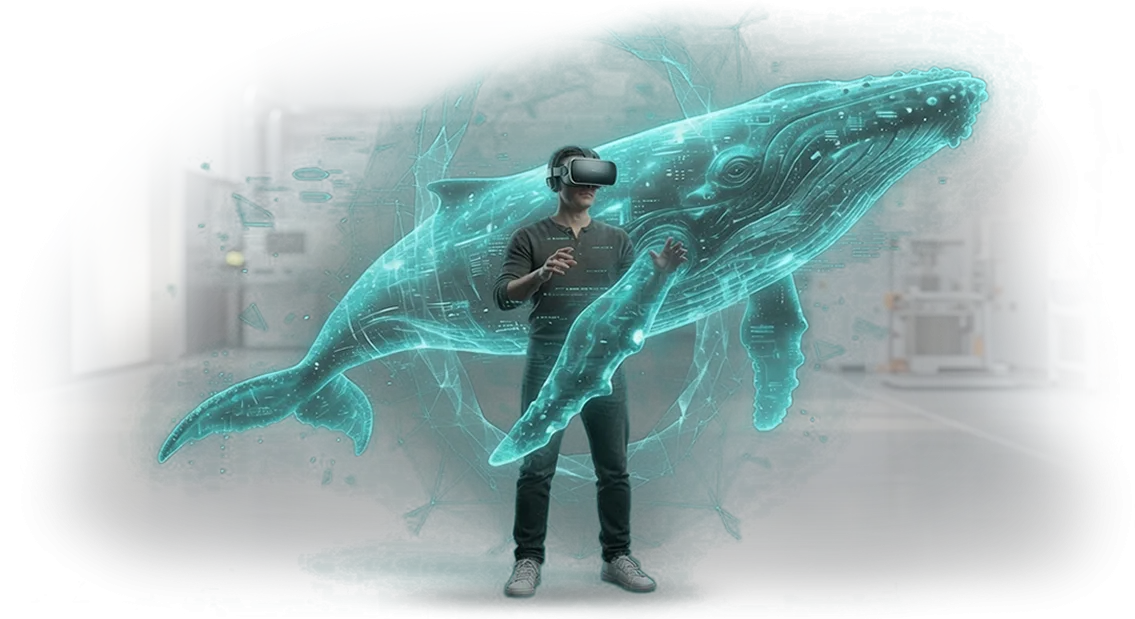
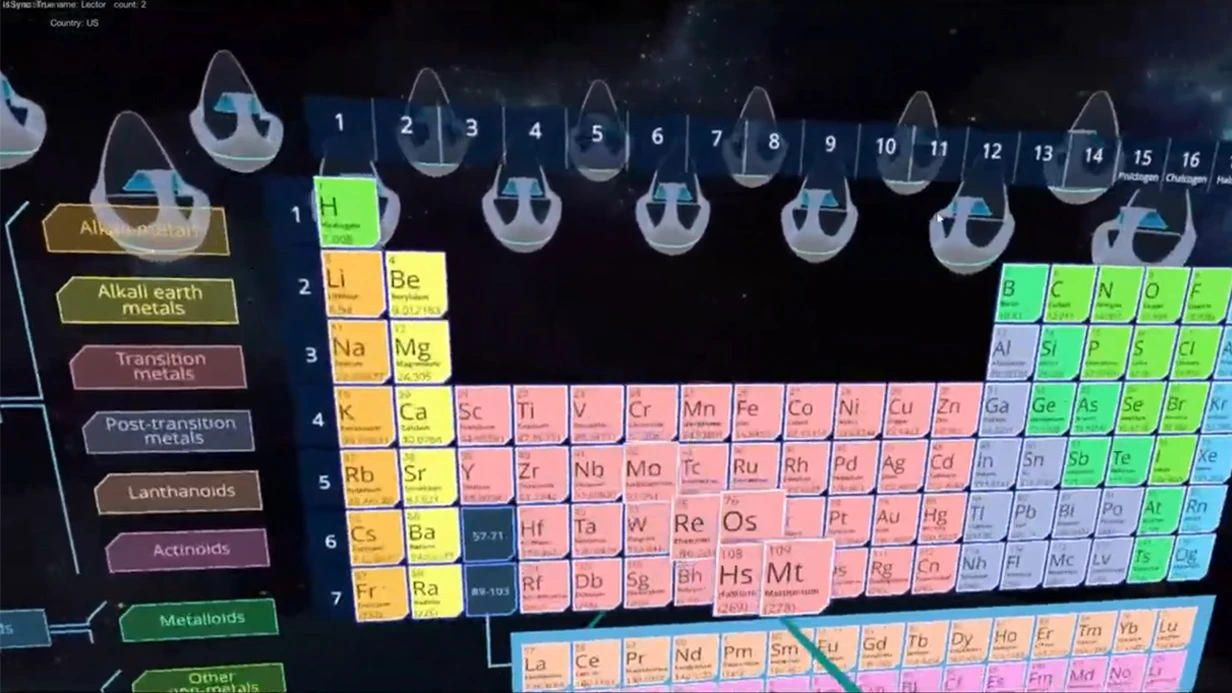
A digital twin of a production facility solves this problem. It is a virtual copy of the enterprise that reflects the state of equipment, line loading, and material movement in real time.
With it, you can test a “what if” scenario without stopping production, see risks in advance, and reduce downtime by 15–20%. Our team have been building such turnkey solutions for 10 years—from data collection to an interface that managers understand.
For a manager, this means transparency: every decision is backed by numbers, not intuition. Below, we explain how the implementation of a digital twin works on a real production site and which metrics improve after launch.
Advantages of VR/AR Solutions for a Production Facility
Implementing VR/AR at a production facility is not a one-off experiment but a consistent transformation where each stage brings a measurable result. Understanding this sequence helps you plan budget and resources, knowing what improvements will come at each step.
First weeks: safety as a foundation. Employees practice emergency and abnormal scenarios in virtual space—without stopping equipment or risking injuries. In the first month alone, the number of minor injuries and errors drops, which means fewer downtimes and unplanned stops. This is a quick effect noticed by both management and employees.
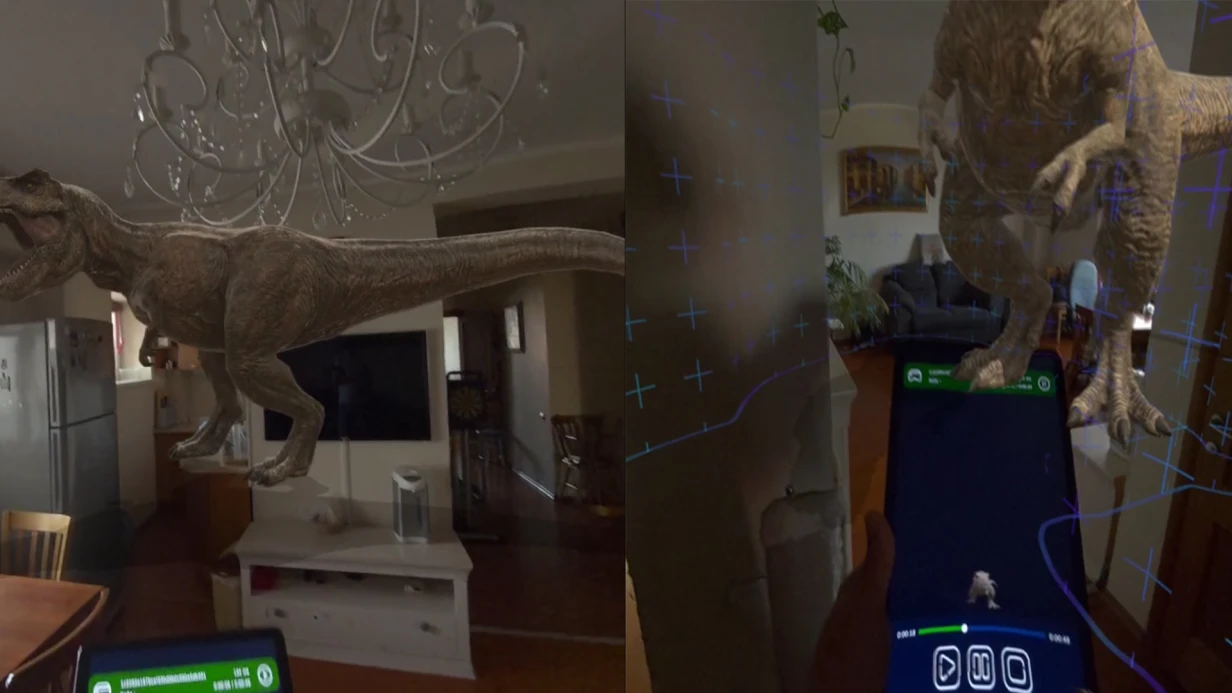
First quarter: operations optimization. Industrial VR/AR turns paper instructions into digital prompts that are overlaid on real equipment. A specialist no longer needs to flip through documents—they see the required component right in their field of view.
Maintenance and setup processes speed up, output per unit of time grows, and firefighting modes become a thing of the past.
Six months to a year: facility performance growth. When digital assistants become a familiar tool, repair and changeover times decrease, and quality control becomes more precise. The facility operates with fewer downtimes, and product shipments reach planned volumes.
At this stage, the company gains data for further improvements, and our team helps rebuild processes without losing productivity.
Long term: scaling and sustainable output. Accumulated experience is transferred to new areas—new employees get up to speed faster, typical errors are eliminated, and facility management becomes more predictable.
The result is systematic growth: first safety, then downtime reduction, and finally—a steady increase in output. VR/AR implementation pays off through reduced costs and increased production volume—exactly what a production owner expects.
VR/AR Implementation Formats for Production Tasks
A production facility means expensive equipment, strict regulations, and a high cost of error. A new employee trains for months, a repair crew spends hours looking for a fault, and a manager sees the picture only through paper reports.
A digital production object removes these gaps: there is no need to stop the line for training, and no need to bring in an expert from another plant for a single operation.
VR/AR formats address different tasks—from training to planning. So we compare them by customer criteria: implementation complexity, speed of results, and area of responsibility.
| Format | For whom | What it gives the client |
|---|---|---|
| VR simulator | New employees, operators of hazardous areas | Skill practice without risk to people or equipment, shorter onboarding time |
| AR instructions | Repair staff, setup technicians | Step-by-step prompts directly on equipment, fewer errors and downtimes |
| Digital twin of the facility | Managers, technologists, planners | Real-time facility status control, wear and load forecasting |
| Remote control | Experts located off-site | Augmented reality video stream, fast problem resolution without travel |
The choice of format depends on the task. If safety and training speed are the priority, choose a VR simulator. If you need to reduce equipment downtime, use AR instructions for repair staff.
And when it comes to comprehensive planning and transparency across the entire facility, the foundation will be a digital twin that combines sensor data and visualizes it for management.
We design a solution for your specific situation: on professional equipment and proven tools, so the result is stable under real operating conditions. At a consultation, we will show which format will pay off faster in your production.
How a Digital Twin Is Developed: Project Stages
Developing a digital twin of a production facility is a project that brings value only with a transparent process. That is why we have structured our work so that at every step you understand what is happening and what result you will get. Below are the stages of VR/AR application development that we go through together with you.
- Application brief. We record the tasks: what the twin should show, who the user is, and which scenarios matter. You receive a document with goals and success criteria.
- Plan and estimate. We propose the solution architecture, timeline, and team composition. You approve the plan—then we work without surprises.
- Scenario design. We develop user journeys: from first launch to equipment operations. We agree on the interface layout and logic.
- Creation of 3D models and environment. We model workshops, lines, and equipment with the required level of detail. You see progress at intermediate iterations.
- Application assembly. We combine models, logic, and interface into a single product. We test scenarios on real devices.
- Launch and support. We deploy the application on your devices or in the cloud and train employees. After launch, we stay in touch for updates and refinements.
As a result, you get not just a 3D model but a tool that reduces downtime, accelerates training, and improves safety. A transparent process and fixed deadlines allow you to control the budget and plan resources.
What You Get After Launching a VR/AR Application
After launching a VR/AR application, you get not just a finished product but a complete package for independent work—from source code to employee training.
This means the digital twin of your production facility becomes your asset, not a “black box” that works only when the developer is present.
Here is what is included in the delivery:
- Application source code—full source code with comments in clear language. You can develop the product with any team or hand it to a contractor without losing quality.
- Technical documentation—clear instructions for installation, configuration, and updates. Your IT department can understand the system without our involvement.
- Personnel training—we conduct training for operators, engineers, and administrators. Employees learn to work with VR/AR interfaces, load new scenes, and quickly solve typical tasks.
- Warranty maintenance—during the warranty period, we fix errors free of charge and adapt the application to equipment updates.
- Administrative panel—a content management tool: you update instructions, add new equipment components, and change training scenarios yourself.
- Development roadmap—a roadmap of enhancements: which modules are worth adding in six months and how that will affect facility efficiency.
This approach eliminates the main customer risk: dependence on a single developer. You get a product that can be operated, modernized, and transferred within your company.
And warranty maintenance removes concerns during the early stages of operation, when staff are just getting used to the new tool.
In the end, you are investing not in a one-off application but in a technological foundation that pays off through faster employee training, fewer errors, and faster adoption of new equipment. Everything you need for launch and development is at your disposal from day one.
Case Study: How a Digital Twin Saved 20% of a Client’s Budget
Our client—the PromTech production facility—planned to modernize its packaging line. According to the preliminary estimate, purchasing new machines and stopping the workshop would eat up almost the entire annual development budget.
Instead of risking money blindly, they decided to first build a digital twin of the machine and the entire technological chain.
Operators, technologists, and production managers ran several scenarios in the virtual environment: format changes, emergency stops, and peak loads. These tests revealed something important: one of the expensive units did not fit into the existing logistics.
There was no need to buy it—it was enough to reconfigure the routes for moving workpieces, and this could be done during a scheduled downtime rather than requiring a separate workshop shutdown.
The result: the client saved about 20% of the project budget and launched the upgraded line two weeks earlier than planned.
The implementation result was confirmed during real operation: downtime losses fell by a third, and the number of operator errors when switching formats dropped to nearly zero. After the launch, the client returned with a request to scale the twin to the facility’s second phase.
An additional bonus was personnel training. While the line had not yet been stopped, employees trained on VR simulators and, by the time of launch, already knew all the abnormal situations. This is how a digital twin of a machine works to save money even before equipment is purchased.
This is a typical VR/AR case for industry: first we identify risks in a virtual environment, then we change real production. This is why production savings stop being a lottery—they become a predictable result, not a coincidence.
How to Choose a VR/AR Format for Your Production Tasks
Choosing a VR/AR format is not a matter of fashion or copying competitors. It is a decision about which production task you are solving: personnel training, remote support, project visualization, or quality control.
The format and development budget depend on this: the same digital twin can become a mobile AR application, a VR simulator, or a web version—with different costs and different effects.
Evaluate three criteria to avoid overpaying. First: who works and where—engineers on the shop floor, managers in the office, clients at an exhibition. Second: what devices you already have—tablets and smartphones, or whether you need to purchase headsets.
Third: how often the data is updated—for daily instructions, a simple AR diagram is enough; for complex scenarios, full immersion is required.
A rare local task does not need an expensive headset, while mass remote training is better covered by an interactive 3D experience running on ordinary computers.
Development cost is not the only criterion. The main expenses often come from maintenance, model updates, and adaptation to new devices.
So before a full launch, it makes sense to build a pilot module: one scenario that can be shown to employees and measured for value—training speed, error reduction, productivity growth. This gives you facts for scaling without spending money on features you do not need.
In short: choose the format based on the task and the user, then calculate the total cost of ownership rather than just the cost of creation.
At the brief stage, we help you determine the right format and, if needed, create a test scenario so you can make a decision before major investment.
Frequent Questions About VR/AR Development and Digital Twins
Before ordering VR/AR or a digital twin of a production facility, clients want to understand timelines, risks, and guarantees. Here are our direct answers to common questions.
How long does VR/AR or digital twin development take?
The timeline depends on the complexity of the task and the number of objects to model. For a typical project, a few months is enough; for a large-scale digital copy of a facility, the timeline is longer.
At the start, we agree on a plan with stages and checkpoints so you know exactly when the project will be ready.
Is the solution compatible with our equipment?
Yes. During an audit, we determine what devices your employees and guests already have and adapt the scenario to them. If professional equipment is needed for the best result, we will indicate that in the estimate in advance—no surprises.
What guarantees do you provide?
The agreement sets out the timeline, scope of work, and acceptance procedure for each stage. After launch, we do not disappear: we support, update content, and advise your team. If shortcomings are identified during pilot operation, we resolve them by mutual agreement.
How is the project cost calculated?
The price depends on the modeling scope, the number of scenarios, and the level of detail. At the beginning of the work, we provide a transparent estimate with a list of tasks. There are no hidden fees—the terms are fixed in the agreement.
Order VR/AR Application Development for Your Production
VR/AR solutions are already changing how industrial enterprises work: they accelerate employee training, reduce equipment setup time, and help present products to clients visually.
To implement such a technology, you do not need to understand the details—you just need to order development from professionals. We handle the project turnkey: from consultation to launch and support.
The path to a working VR/AR application consists of simple steps. Complete this checklist together with us, and you will get a solution that delivers measurable results at your production facility.
- Leave a request for a consultation—tell us which production task you want to solve: training, control, presentation, or a digital twin.
- Have a short brief: we will clarify who will use the application, on what equipment, and in what conditions it will operate.
- Within two business days, receive a cost calculation, timeline, and solution description—transparently, without hidden work.
- Approve the VR/AR implementation plan: we will define the stages, responsible parties, and integration with current processes.
- We will develop a prototype and show it at your sites—you will immediately see how the solution works in a real environment.
- After launch, we will train your team and hand over instructions—employees will start using the application without a long preparation period.
- We continue to support the project: refine functionality, update scenes, and help with equipment.
Ordering VR/AR from our team means getting a clear plan, realistic timelines, and a fixed cost. Leave a request for a consultation—within two days we will prepare a cost calculation and an implementation plan for your production facility.