

Why Poultry Farms Lose Efficiency Without Digital Solutions
Every poultry farm carries hidden losses: from feed overconsumption to flock mortality and equipment downtime.
The problem is that these losses are spread across a vast production area, and it's impossible to see them in full — until they turn into loss figures at the end of the month.
Production efficiency directly depends on how quickly you notice deviations. Employees see individual workshops, team leaders see their own sections, but the full picture comes together too late, when losses have already become irreversible.
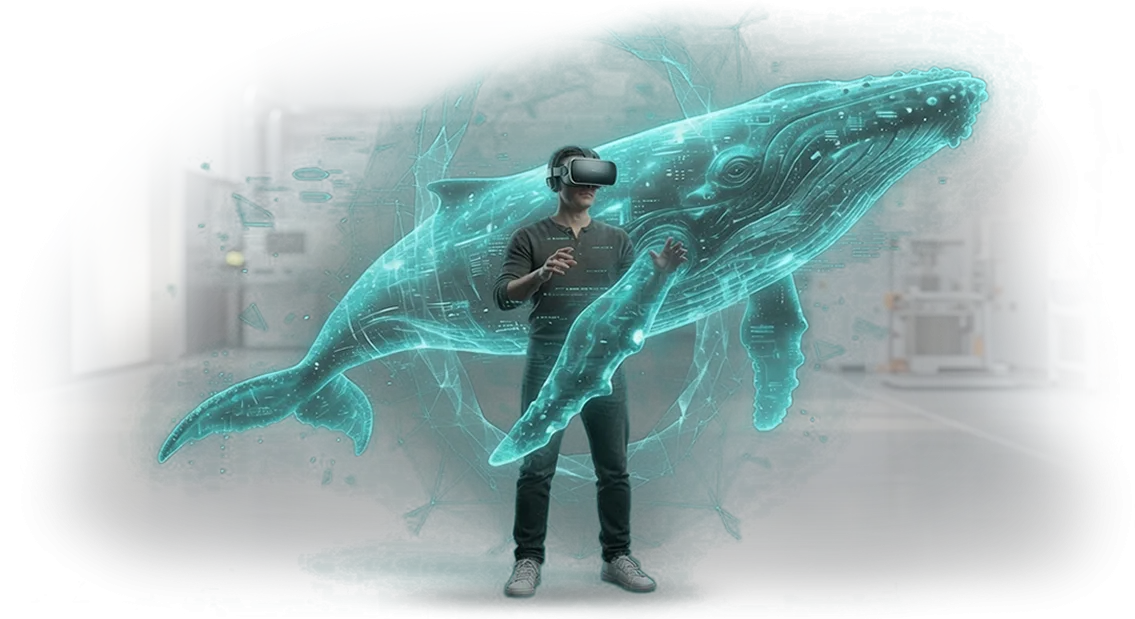
A digital twin of a poultry farm solves this problem. It's a virtual copy of your production in VR/AR, where the state of every workshop, every line, and every batch of birds is reflected in real time.
An employee wearing augmented reality glasses sees the problem area right on the equipment: where the temperature has gone out of range, where a feeding sensor has failed, where the birds are behaving unusually. This cuts reaction time from hours to minutes.
A manager gets a visual management dashboard: workshops, metrics, deviations. Instead of paper reports, a three-dimensional picture of production that shows what needs attention today, not in a week.
The result for the poultry farm is predictability. You see the risks of reduced survival, feed overconsumption, and suboptimal microclimate in advance and take action before it hits your profit.
The staffing issue is also addressed: new employees train on the digital copy without any risk to the flock.
We have been developing such solutions for the agricultural sector for more than ten years and know how to adapt the technology to the tasks of a specific enterprise — from a single workshop to a full production cycle.
Key Benefits of Implementing VR/AR in Production
The first thing a client gets from implementing VR/AR is accelerated staff training without stopping production.
A poultry farm employee enters a virtual copy of the workshop, where they practice operating equipment, learn to recognize deviations in bird behavior, and respond to emergency situations.
Mistakes are made in a safe environment rather than on a real production line, so a newcomer reaches full working capacity several times faster.
The second set of benefits from a digital twin is visual process optimization. A virtual model of the poultry farm collects data from real areas: from feeding and microclimate to internal logistics in the buildings.
A manager sees bottlenecks and can test change scenarios before investing in restructuring. What previously took weeks of trial and error is now calculated in advance.
The third benefit is quality control and standardization of operations. Through AR prompts, staff receive step-by-step instructions right at the workplace: which parameter to check, which door to open, in what order to record the result.
This reduces dependence on the human factor and lowers the risk of losses and technology violations.
Implementing VR/AR also pays off by reducing equipment and raw material costs during training. Instead of consuming real feed, electricity, and risking equipment breakdown, a trainee works with a digital copy.
This is especially important for poultry farms, where downtime or staff errors directly affect production output.
Finally, the digital twin becomes the foundation for planning expansion or modernization of production. You see how capacity utilization, staffing needs, and logistics will change with a new building or line — and make decisions based on facts rather than guesswork.
In aggregate, implementing VR/AR delivers a result that makes clear business sense: increased employee competencies, transparent processes, and reduced costs at every stage.
Digital Twin Formats for a Poultry Farm: What to Choose?
The choice of a digital twin format for a poultry farm directly depends on who will use it and how. If you need to fully immerse a manager or investor in a virtual copy of production, a VR solution is required.
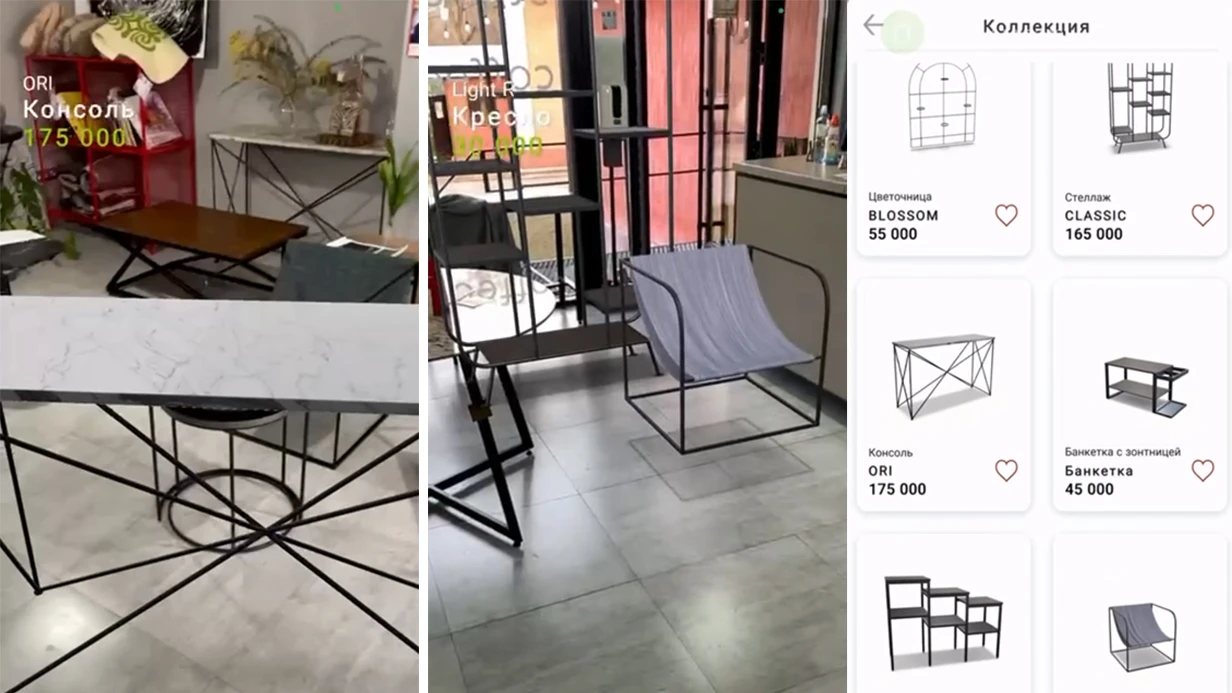
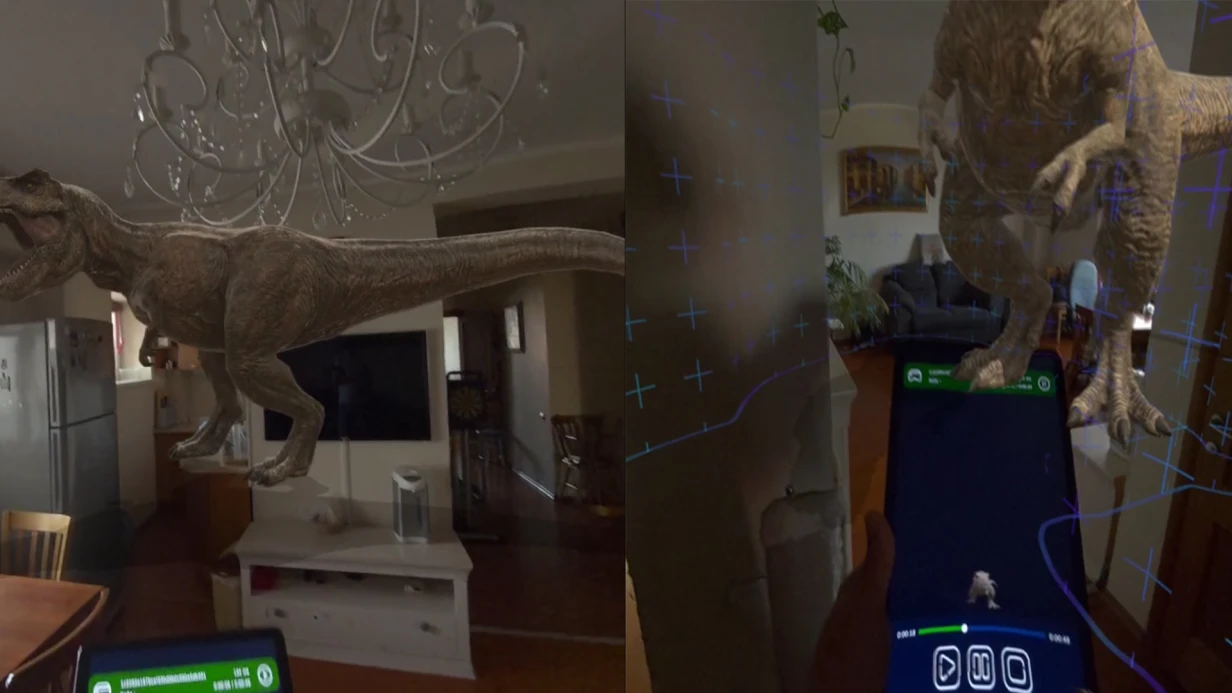
When the priority is to overlay data onto real equipment and help staff right in the workshop, augmented reality comes to the rescue. And for quickly demonstrating the twin to buyers or partners, a mobile version without special glasses is enough.
| Format | For whom | What it gives the client |
|---|---|---|
| VR twin of a poultry farm | Managers, technologists, investors | Full immersion in the layout and logistics, ability to test scenarios without stopping production |
| AR instructions | Staff, maintenance services | Step-by-step prompts on equipment, fewer errors, fast training for new employees |
| Mobile augmented reality | Marketing, sales department | Demonstration of the twin on a tablet or smartphone anywhere — at an exhibition, at a client's site, at a meeting |
The scenarios above are baseline. In practice, it is often beneficial to combine formats: for example, VR is used for staff training and mobile AR for presenting the poultry farm to clients.
The key is not to overpay for unnecessary functionality and to choose a solution that solves a specific task and pays off quickly.
We help define goals and choose the optimal format or a combination of formats. As a result, you get a digital twin that is actually used in day-to-day operations — it boosts brand recognition, simplifies sales, and reduces training costs.
Stages of Working on Your Digital Twin
A digital twin of a poultry farm is a tool that helps manage production, train employees, and reduce risks. To ensure it truly solves your tasks, we have structured the creation process so that you always understand what is happening and what result you will get at each step.
Our team has dozens of such projects behind it, so we identify bottlenecks in advance and offer proven solutions.
The development stages look like this:
-
Brief and task analysis. We study your goals, technological processes, and usage scenarios for the twin. We record requirements and success criteria — this is the foundation for the entire project ahead.
-
Solution design. We define the twin's structure, what data it uses, and which functions are needed first. We propose the optimal option in terms of timeline and budget — without unnecessary spending on unneeded options.
-
Prototype creation. We develop a visual model and basic functionality. You see what the future product will look like and can make edits before the main work begins.
-
Development and integration. We fill the twin with logic, connect real production data, and configure scenarios — from staff training to equipment monitoring. We work in stages, regularly showing intermediate results.
-
Testing and debugging. We verify performance in real situations and fix any issues. We use professional equipment and modern development technologies to guarantee a stable result.
-
Launch and support. We deploy the twin into your infrastructure, train employees, and remain available for enhancements. This approach ensures the digital twin launches within the agreed timeline and operates reliably after project delivery.
What Is Included in the Delivery: A Complete Kit for Launch
When you order a digital twin of a poultry farm, you receive a product ready for operation — not "raw code" and a set of promises. We hand over a kit that allows your team to put the system into daily use without delays and without hiring outside developers.
Every element of the kit addresses a specific business task — from staff training to managing production metrics.
The delivery includes:
- A working digital twin of the poultry farm, adapted to your production and integrated with the enterprise's accounting systems.
- An administrative panel — an interface through which your employees manage scenarios, data, and reports without the involvement of programmers.
- Staff training: detailed regulations, operator instructions, and hands-on training for key users.
- Complete technical documentation: architecture description, settings, update procedures, and troubleshooting actions.
- Source materials and rights to the solution — you remain the owner of the system and can develop it with any contractor.
- Warranty support and a first-year maintenance plan: consultations, priority enhancements, and performance monitoring.
After handover, you don't need to look for external specialists for maintenance: all documentation and access remain with you. The built-in support ensures stable system operation and quick resolution of any issues that arise. This approach guarantees that your investment starts working for you from the very first days.
Real Case Study: Improving Production Efficiency
For the Yuzhny agricultural holding, we developed a digital twin of a poultry farm with 1.2 million birds. The client managed production based on reports twice a day: feed losses and mortality were noticed with a 6–8 hour delay.
The microclimate in the poultry houses changed unevenly, the operator worked blind, and feed conversion and weight gain declined.
The digital twin combined data from climate sensors and automatic feeding lines into a single model of the poultry house. The system compares actual parameters with reference values in real time, forecasts deviations, and highlights causes before they affect production. A manager sees the situation on a control panel: by poultry house, line, and batch.
Results after six months of operation:
- Flock survival increased from 93.4% to 96.1% — fewer losses;
- Feed conversion improved by 4.2% — savings on feed;
- Average daily gain increased by 5.5% — the fattening period was shortened by 2 days.
The solution runs on the our team platform, which supports digital twins without reworking the client's infrastructure. Implementation took four weeks without stopping production. A year later, the client rolled out the solution to three more sites.
For the client, this means transparent management, feed rationing, and production output forecasting. The digital twin paid for itself in 14 months and scales to any enterprise in the industry.
How to Choose the Right Format for Your Tasks?
Start with the business task, not the technology: VR and AR solve different problems, and the choice of solution depends on what you want to achieve — safe training, visual analytics, staff support in the workshop, or a striking presentation of the digital twin.
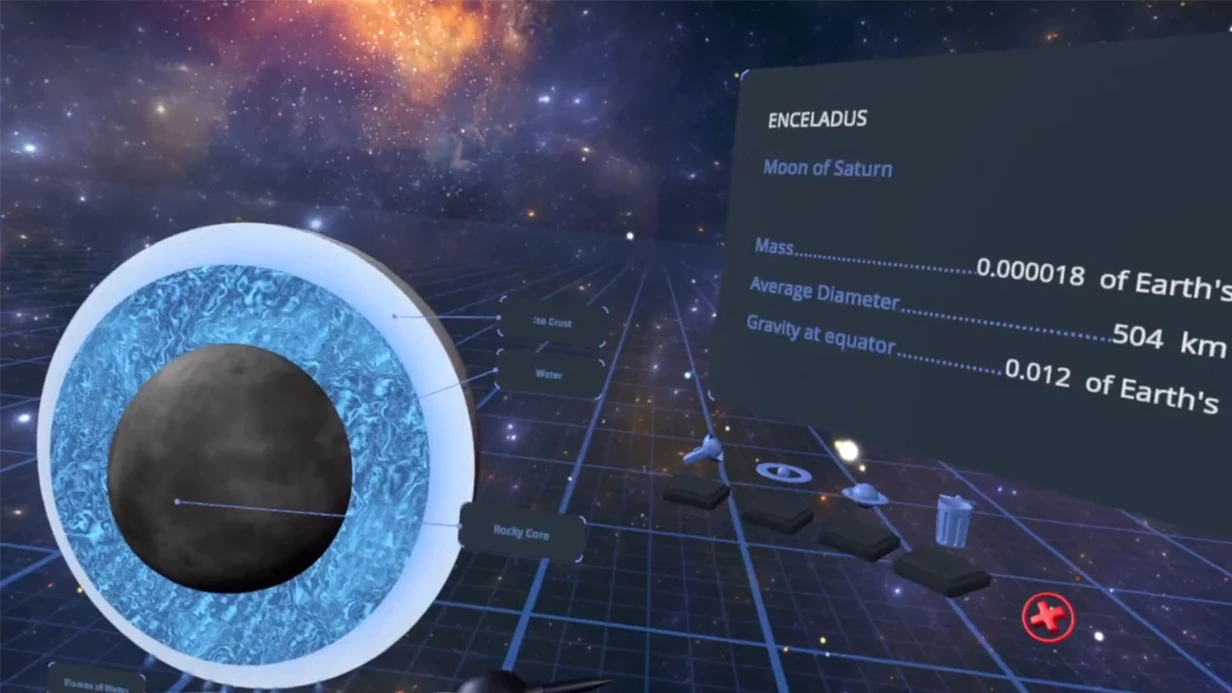
VR fully immerses you in a digital environment and is suitable for training and "as if it were happening on the real facility" scenarios.
AR supplements the real world with data through a smartphone screen or glasses — you see the equipment and immediately get prompts and metrics.
For a poultry farm, the VR/AR choice is usually determined by two typical scenarios. VR is justified when you need to train employees in sanitary standards, work with slaughter lines, or actions in emergency situations — without risk to the birds and without stopping production.
AR is more effective for operational control: parameters of temperature, humidity, or conveyor operation overlaid on the equipment housing help you immediately spot a deviation and make a decision.
In a number of projects, we combine both formats — then management gets both a trainer and a support tool in a single digital twin.
We help you decide on the format, guided by your business tasks: reducing employee onboarding time, lowering accident rates, improving the clarity of reporting, or speeding up scheduled inspections.
At the meeting, we record the goal, and then focus on the scenario that will deliver a measurable result on the pilot site. Importantly, you are not buying "generic VR" or "generic AR" — you get a carefully matched solution for a specific process.
If you're unsure which option is right for you, describe your task — we'll help you choose the format, show a prototype on your data, and give you an honest assessment of where the technology will pay off and where regular software is sufficient.
Frequently Asked Questions and Answers for Those Who Doubt
Doubts before implementing a VR solution are normal. Any manager wants to understand when the project will pay off, what the risks are, and what happens after launch. We have been working with production tasks for years and answer the main questions briefly and to the point.
What are the development timelines for a digital twin?
From task definition to launch takes 4 to 8 weeks — the exact timeline depends on the complexity of the equipment and the number of training scenarios. We fix the stages and dates in the contract so you can plan staff work and production integration in advance.
At each stage, you see the intermediate result and make edits — this eliminates surprises at the end.
How quickly will the project pay off?
The digital twin pays off not through "wow effect" but through concrete production metrics: reduced onboarding time for new employees, fewer errors in equipment maintenance, and reduced downtime.
On average, enterprises reach payback within the first year — through savings on accidents, training, and losses related to the human factor.
What guarantees do you provide?
Guarantees are specified in the contract: we fix the scope of work, timelines, and acceptance criteria. After launch, we support the project — we fix any issues free of charge during the warranty period and remain available for enhancements.
You are not left alone with the product: we are invested in the solution actually working at your production facility.
If you still have doubts, ask us directly. We will show examples of similar implementations, explain whether a digital twin is right for your poultry farm, and calculate the preliminary effect even before you start.Ready to Get a Digital Twin for Your Production?
A digital twin of a poultry farm is not just a 3D model but a working tool that helps you see processes in the workshops, train employees, and quickly find bottlenecks.
With it, you make decisions based on up-to-date data rather than guesswork and reduce losses at every stage of production.
To get started, you don't need to prepare a technical specification or wait for the perfect plan. Leave a request or call us — we will provide a consultation, analyze your task, and offer a format that fits your budget and timeline. Immediately after you reach out, you'll receive:
- a free assessment of your production and potential growth areas from our experts;
- a clear development plan with stages and timelines — no complex jargon;
- a choice of options: a full digital twin or a compact solution for staff training;
- a fixed cost after the first discussion — no hidden payments;
- a prototype demonstration on your real data before the project launch;
- support at all stages: from the first version to training your team.
We have already created digital twins for poultry enterprises and know how to make the product convenient for you specifically. Order development today — and get a tool that will start paying off in the first months of use.
Leave a request on the website or call us: we'll answer your questions, provide timeline guidance, and prepare a commercial proposal within a day.