

Retail chains fall behind competitors due to chaotic processes
A retail chain grows, but processes remain at the level of manual management — orders, deliveries, staff, and inventory in each branch operate in isolation. Management sees only last month's reports, not the real picture of today.
As a result, losses become habitual: the product is in the wrong place, staff are idle, or a customer leaves because of an empty shelf. Competitors who switched to digital management long ago work faster and more accurately — and take the customers away.
The problem isn't the people — it's the lack of a unified system that connects all operations across the retail chain. Decisions are made based on intuition and delayed reports, not on live data. Hence lost revenue, excess costs, and lost customers.
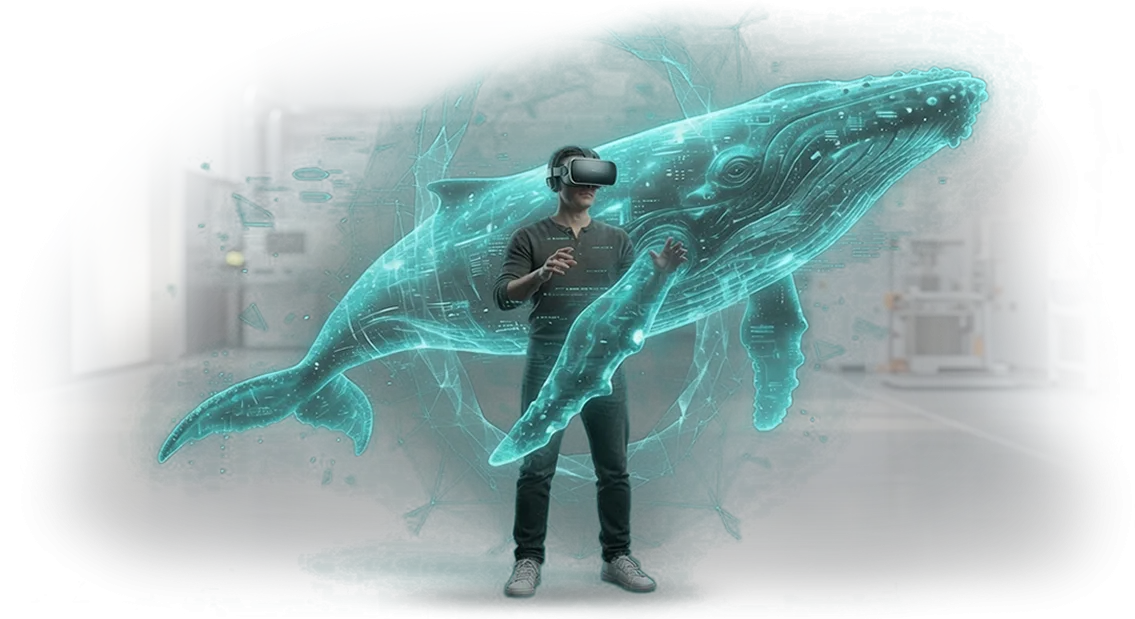
A digital twin closes this gap. We create a virtual copy of the entire retail chain, where every action — from goods receiving to customer behaviour — is reflected in real time. You get operations management at a new level, see bottlenecks, and can change strategy quickly.
That is business efficiency: fewer losses, faster response, stronger competitive position. A retail chain stops being a collection of separate locations — it becomes a single managed organism that delivers consistent results.
How a digital twin increases profit and loyalty
A digital twin of a retail chain is a tool that brings together data on visitor flows, product display, and staff performance. It shows management exactly what to change in each store to grow profit.
Sales growth
The model identifies zones where the store loses customers: empty displays, inconvenient aisles, weak navigation points. The twin suggests how to rearrange shelving and change the customer journey. As a result, average ticket and visitor-to-buyer conversion increase.
Cost reduction
The digital twin evaluates the efficiency of every square metre and every work shift. This helps redistribute staff across the chain's stores and eliminate unjustified expenses — without reducing service levels.
Customer loyalty
A convenient store route, fewer queues, and predictable availability of desired products — these are what make customers come back. Customer loyalty and repeat visit frequency increase.
Fast decisions for management
The twin shows the comparative performance of all chain stores in real time. Problem points are visible immediately, so management decisions are made in hours, not weeks.
Project return on investment
The effect comes from higher revenue and lower operating costs. Even a small improvement in key metrics across the chain pays for the digital twin's development. It's a working tool that returns the investment within the first year of use.
Digital twin formats for a retail chain
A retail chain digital twin solves various tasks: from staff training to customer navigation. Instead of a single "heavy" product, we offer formats for a specific business goal — they can be implemented individually or combined.
| Format | For whom | What it gives the client |
|---|---|---|
| VR staff training | HR and line managers | New employees learn work standards, cash register operations, and product display faster — without risk to the sales floor. Fewer errors in the first weeks, higher staff loyalty. |
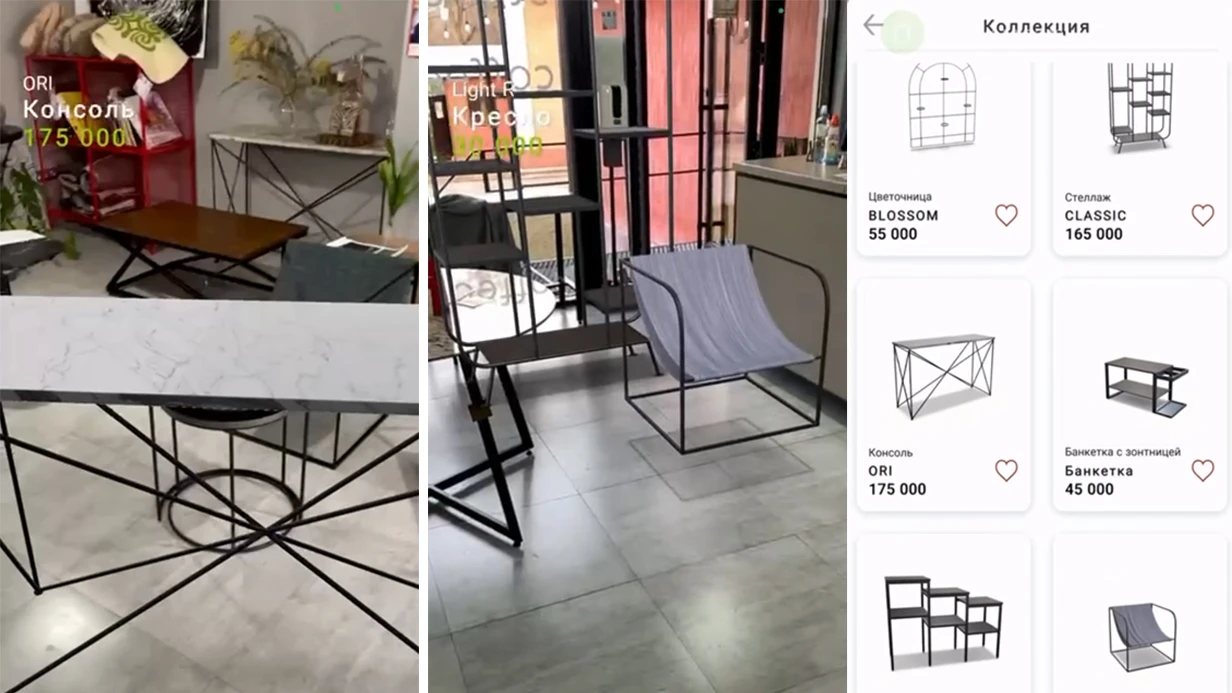
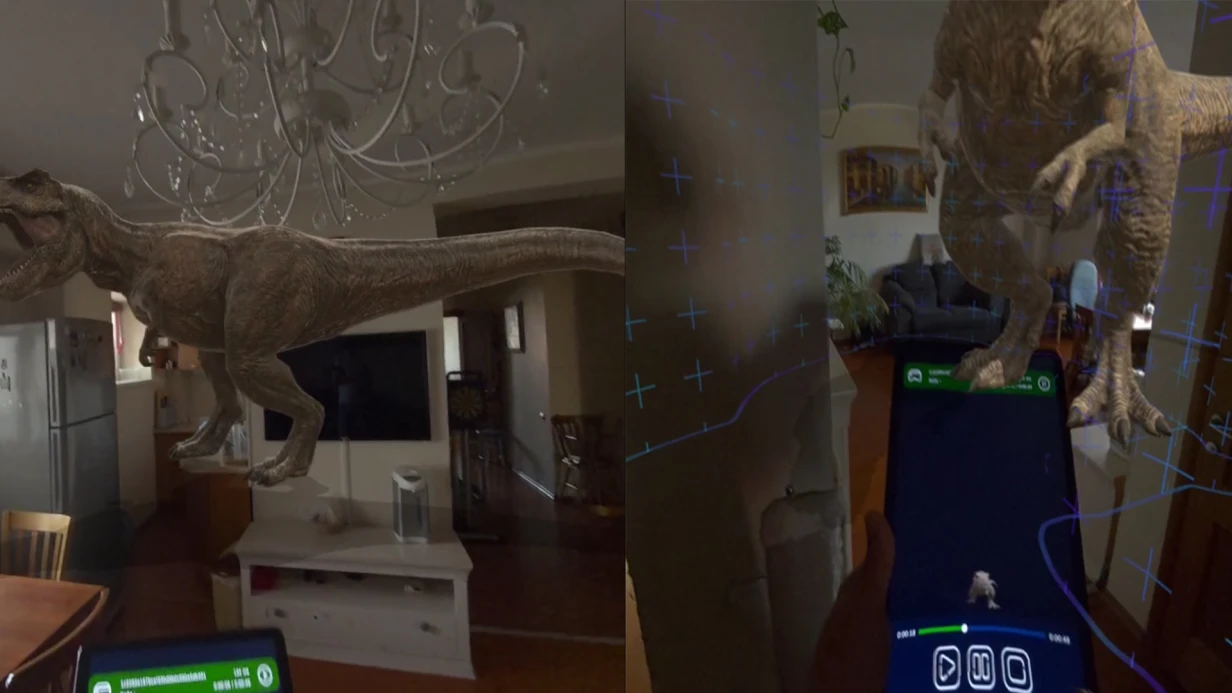
| AR navigation for customers | Marketing and store management | Customers see the route to the desired product through a smartphone screen. Less time searching, more impulse purchases, easier orientation in large spaces. |
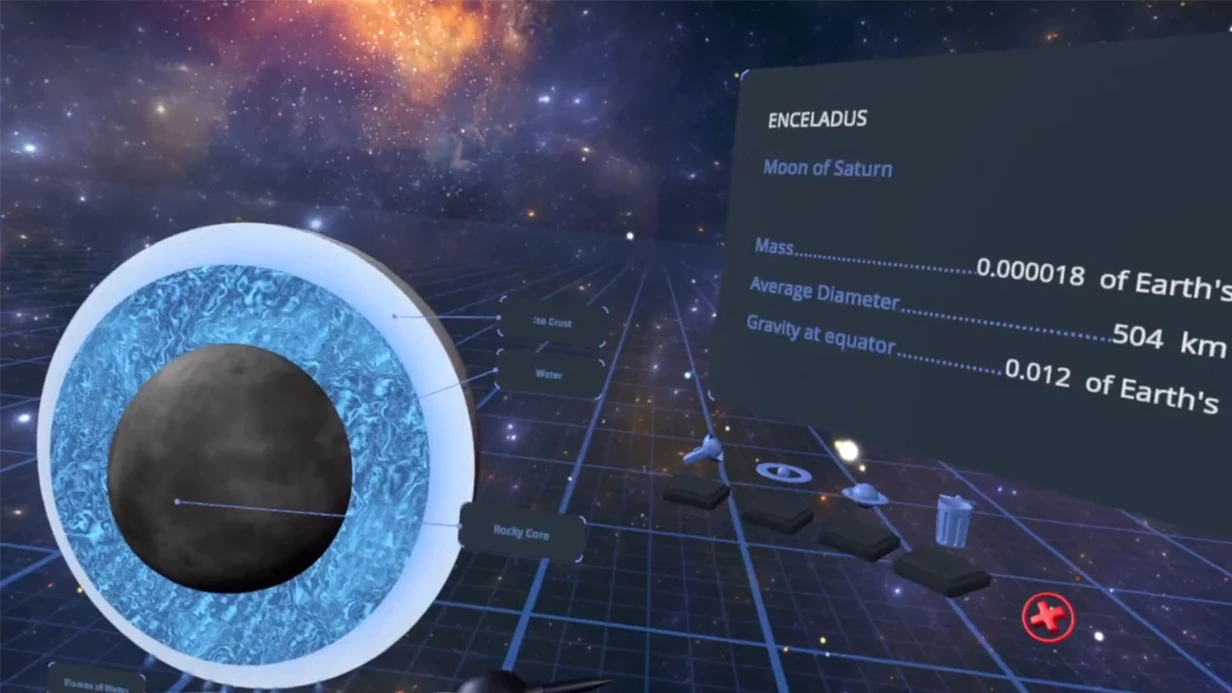
| Interactive displays | Brand managers and merchandisers | The display comes alive: customers can "try on" a product, view its composition, or receive a personalised recommendation. Time at the display and purchase conversion grow. |
| Full digital twin | Chain management and analytics | A unified store copy for planning remodels, logistics, and customer flow analysis. Decisions are made faster and based on data, not guesswork. |
The formats are easy to combine: for example, VR training and the full twin use the same store model, so implementing the second format requires almost no additional development cost. We select the optimal set for your task and budget, and remain on support after launch.
Stages of creating a digital twin: from brief to launch
A retail chain digital twin isn't just an app — it's a working tool for customers and employees. To ensure the result meets your expectations, we run the project according to a clear process with checkpoints at every stage. You always know where the task stands and what you'll receive next.
Work stages
- Brief and task immersion. We study your stores, customer scenarios, and management and marketing goals. We define the objectives: growing awareness, staff training, sales floor navigation, or product selection assistance.
- Plan and preliminary approval. We create a project plan, timeline, and responsibility assignment. We agree on stages so you control the process without surprises.
- Concept and interactive prototype. We show what the virtual store copy will look like: layout, key zones, movement logic, and customer interaction. This is a checkpoint before development.
- Scenario and design approval. You approve the app logic and visual style for your brand. Main implementation then begins.
- Digital twin implementation. We develop the app and connect it to your data: product catalogue, prices, promotions. We work with professional equipment and proven tools — so you get a stable result.
- Testing and launch. We test on different devices, eliminate errors, and train your team. We launch the digital twin in stores or at an event — depending on your goal.
- Support and development. We accompany the solution after launch: update content, add new scenarios, and monitor stability. You get not a one-off project but a continuously working tool.
What the digital twin delivery includes
A retail chain digital twin isn't just a 3D picture — it's a working system for staff training, presentations, and standard compliance control.
So you can use the solution from day one, we've prepared a complete delivery package: everything you need for launch and daily operation without involving developers.
-
VR/AR/MR application — brings together all scenarios: from reviewing a new store to practising service standards. Works on familiar devices, requires no complex setup.
-
Digital content — accurate models of your locations: layout, displays, product zones. Everything is created from your drawings and materials, so the twin closely resembles the real store.
-
Instructions and guides — short, clear references for administrators and staff: how to launch the app, choose a scenario, and work with equipment.
-
Staff training — hands-on sessions for your team. We show how to use the twin in daily tasks, answer questions, and review typical situations.
-
Technical support at launch — we support the first launches, help get things running, and respond quickly to requests. You're not left alone with the system.
-
Update package — when layout, assortment, or standards change, we update the content. The twin always reflects reality.
Case study: how a digital twin changed store operations
A chain of 50 stores, Территория, faced a pain typical of retail: staff turnover and slow onboarding to the required skill level. Every new salesperson trained for weeks on real shifts, making errors in display and customer interactions — costing time and lost revenue.
How training was built
Instead of traditional lectures and tests, we created a digital twin of the store — a virtual copy of the sales floor with real products and customer scenarios.
New employees trained in VR: they practised planograms, learned to handle objections, and selected products for customer requests. They made mistakes safely, in a virtual environment, rather than in front of a live customer.
This approach halved training time: previously a trainee started independent work after four weeks; now it takes two. At the same time, training quality improved: employees operated the cash register more confidently and knew the assortment better.
What changed in the business
In the first six months after implementation, the average transaction value across the chain grew by 18%. Salespeople who completed VR training more actively offered add-on products — a skill that previously took months to develop. Display errors also decreased, reducing write-off losses.
Store managers noted that new hire onboarding became predictable. Instead of unstructured mentoring — a proven programme that is easy to scale to new locations.
The client confirmed that the digital twin pays for itself even at a single-store level and plans to expand its use across the entire chain.
How to choose the right format for your task?
Choosing a digital twin format cannot be correct in isolation from the business goal. The same model can be excellent for staff training and useless for display planning. So the first thing we do is translate your task into concrete usage scenarios.
For example, if you need to speed up opening new locations, a digital store copy with zoning and equipment layout is sufficient. If the task is to test customer behaviour or train staff for non-standard situations, you'll need an interactive model with changeable scenarios.
The more complex the scenario, the more resources go into building the twin — and that's what determines the format choice.
Budget is the second key factor. The point is not to skimp at the expense of the task, but also not to overpay for features that won't be used.
We offer several implementation options with different levels of detail and interactivity, so you can choose the one that gives maximum return for your budget.
Sometimes a lightweight model running on any device is enough; sometimes you need a full virtual store with user action analytics.
You don't need to be a VR/AR specialist to choose a format. We'll conduct a quick analysis ourselves and propose two or three options with descriptions of the effect and scope of work.
Our recommendations are based on retail chain projects, so we know in advance which approach will work in your case.
A digital twin isn't a static 3D model — it's a working tool that can grow with the business. A well-chosen format becomes the foundation for new locations, integrations with accounting systems, and training. We build this in from the start, so you won't have to redo the project in a year.
Start with a simple question: what task should the twin solve one month after launch? The answer determines most decisions. The rest is our work. Tell us about your chain and your goal — we'll select a format that matches both the task and the budget.
Frequently asked questions about digital twins
Before launching a digital twin, a retail chain owner typically asks practical questions: when will it pay off, how will it fit into current processes, what happens to the data, and who will help after launch. We address the main concerns so decisions are made on facts, not intuition.
When will a retail chain digital twin pay for itself?
The effect comes from three sources: layout optimisation, reduced equipment downtime, and higher visitor conversion. First results usually appear after the first calculation quarter — through lower costs for rearrangements and manual layout checks.
We record payback points at the brief stage and include them in the roadmap. The key metric isn't the development cost, but the speed at which the model starts saving managers' time and increasing revenue per square metre.
How difficult is it to integrate the twin with your CRM and 1C?
Integration happens without stopping store operations. We connect to existing systems through standard data exchange mechanisms, so there's no need to change accounting systems or migrate data manually.
We set up two-way exchange: the display receives up-to-date inventory and delivery schedules, while the accounting system receives layout changes and planogram scenarios. Everything happens automatically; the manager continues to work in their familiar interface.
Will we need to train employees and take them away from work?
We design the development so training takes no more than one working day. Employees work in a simple interface with prompts, and we prepare instructions and short videos for each role.
For store managers, we run a 40–60 minute online session — enough to learn "what if" scenarios and get questions answered. There's no disruption: training can be completed at any convenient time, including after the store closes.
How is company and customer data protected?
We work within your network's perimeter: data access is configured by role, and transmission runs over secure channels. An employee sees only the information they need for their tasks — revenue, traffic, and customer personal data are not visible to any contractors.
We sign a confidentiality agreement and undergo your company's security review if required. After the project stage is complete, all access is revoked, and the archive remains only with the system owner.
What guarantees do you provide on the result?
The guarantee is written into the contract: we fix launch timelines, the list of working scenarios, and the metrics the model must deliver. If any function doesn't meet the technical specification, we rework it at our expense.
After project delivery, a support agreement remains — from 3 to 12 months, depending on needs. We don't abandon the client after launch: throughout the support period we answer questions and update the model when store layouts or formats change.
Ready to discuss your project? Leave a request
For a retail chain, a digital twin solves specific business tasks: training staff without taking them off the job, planning sales floors before renovation, and reducing the cost of opening new locations.
To help you understand how this will work in your case, we start with a consultation — we'll review your situation and show where the effect will be greatest.
After your request, you'll receive:
- Expert consultation: we'll clarify your tasks and advise which VR/AR scenarios to implement first.
- Cost estimate: a transparent quotation for your scale — from a pilot project to full rollout across the entire chain.
- Preliminary plan: stages, timeline, responsibilities, and team composition.
- Demo of capabilities: we'll show example solutions for similar tasks, so you see the result before development starts.
- Next steps: we'll define an action plan and offer a convenient collaboration format — remotely or, if needed, with on-site visits.
After submitting a request, you lose nothing: even if you decide to postpone the project, you'll have a clear picture of timeline and budget. If we continue — you'll get a partner who is accountable for the result: from the first discussion to launch and support.
Leave a request — it takes a couple of minutes, and then we'll contact you ourselves to schedule a consultation time.