

What Hinders the Growth of a Sewing Factory and How to Fix It?
Garment production loses profit due to equipment downtime, overproduction, cutting errors, and lengthy changeovers. These losses go unnoticed until they become critical.
A manager often learns about a problem after the fact, when the batch has already been sewn and defects are discovered during quality control.
A digital twin of a sewing factory is an accurate virtual copy of production that collects data from all areas: from the fabric warehouse to finished goods shipping.
In this digital space, you can play out scenarios without stopping real production floors: change line loading, redistribute flows, adjust delivery schedules. You see how each decision will affect timelines, equipment utilisation, and cost before you apply it in practice.
Optimisation based on a digital twin delivers measurable results: shorter changeover time, lower work-in-progress, and reduced fabric waste. Bottlenecks are highlighted automatically, and decisions are made based on facts rather than intuition.
The main effect is predictability. You stop guessing whether production can handle a new order: the digital twin calculates deadlines based on current loading, material availability, and the real output of each line. This lets you take on orders you can actually fulfil and inform clients about timelines in advance.
We implement digital twins for sewing factories with many years of experience in light industry. We help you see the full picture, identify hidden losses, and build optimisation that pays off from the first months.
Benefits of a Digital Twin for a Sewing Factory
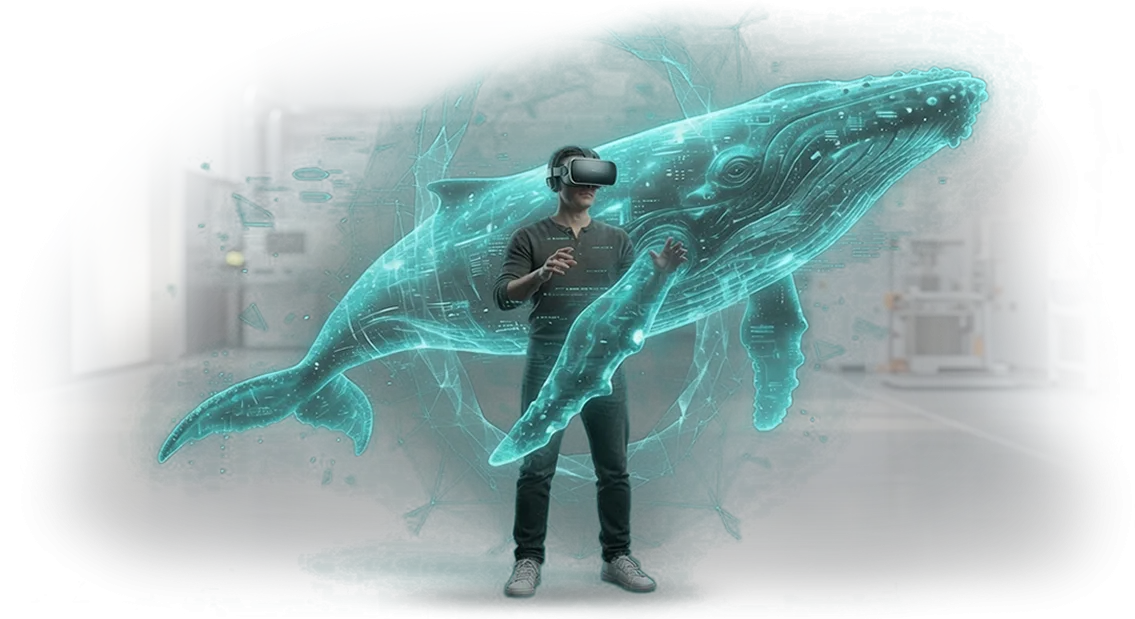
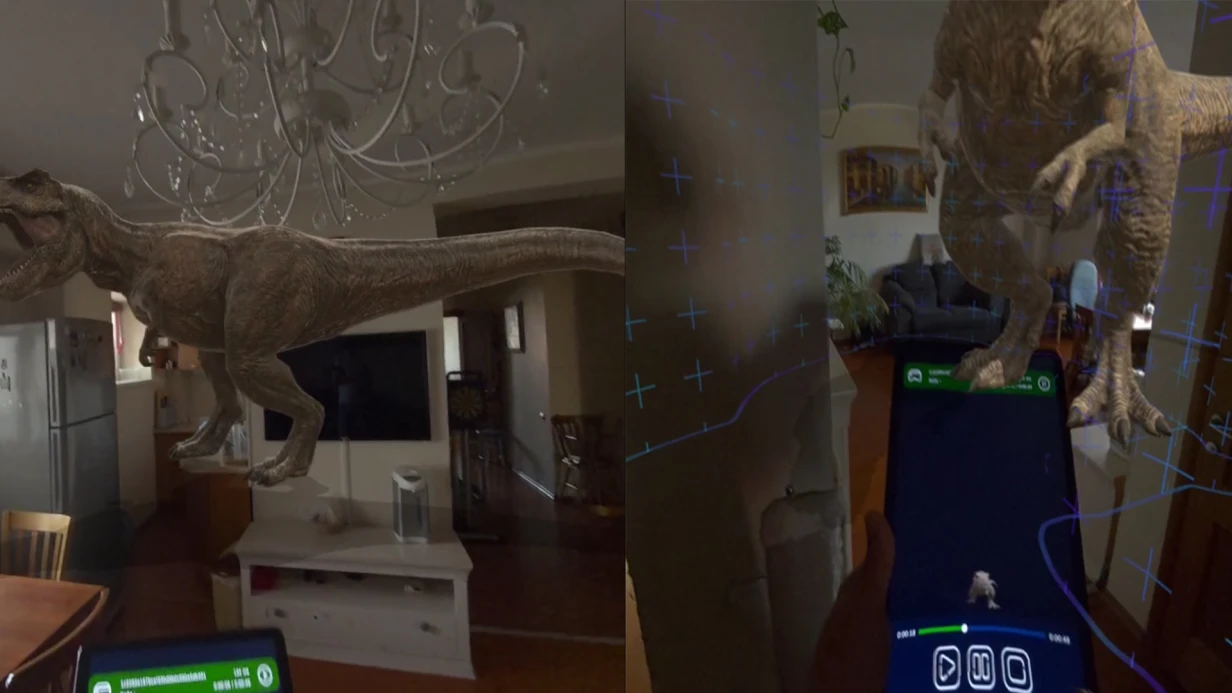
A digital twin of a sewing factory is a VR/AR model of your production in which flows, machines, and employees are visible. our team creates such solutions for your company’s objectives — without stopping the workshop and with a clear business result.
Greater Workshop Efficiency
You see bottlenecks: where there are queues, where there is downtime, and which operation slows down the line. It is easy to test a new layout or flow reconfiguration before making changes. This means less downtime and greater output.
Faster Staff Training
New employees do not have to work on real equipment right away — they train on a digital copy. Mistakes do not lead to defects, and skills are developed faster. Switching to a new product line does not stop the workshop.
Quality Control Without Unnecessary Sewing
In VR, you see the future product “in volume”: fit, seams, and materials. The technologist and the client make edits before the batch is launched. The defect rate and number of re-sewn items drop noticeably.
Client and Partner Trust
A digital twin turns a capability presentation into a vivid demonstration: the client walks through the workshop, looks at products, and approves details. Negotiations move faster, and the factory looks like a technology-driven partner.
VR/AR Solution Formats for Production Needs
For a sewing factory, VR/AR solutions address three different tasks: workshop layout, staff training, and capability presentation. We start not from the technology, but from the result you need — quick launch, fewer errors, or a convincing showcase for investors and clients.
| Format | For whom | What it gives the client |
|---|---|---|
| VR workshop twin | Production manager, technologist | Lets you “walk through” the future workshop before purchasing equipment, check ergonomics, safety, and material flows. Reduces layout errors and approval time |
| VR training simulator for sewing operators | Operators, trainers | Safe training on machines and product assembly without stopping production. New employees integrate faster, fewer defects |
| AR factory presentation | Marketing, sales department, director | A visual showcase of the digital twin to clients and partners. You can demonstrate lines, capacity, and quality without taking people away from work |
Each format is a separate module that can be easily integrated into current processes. If you need full control over production, the formats are combined into a single digital twin of the sewing factory: from room layout to staff training.
We select a solution for your specific task and budget. At a free consultation, we will show examples of completed production projects and help you choose the format that will deliver quick results.
How Digital Twin Development Works: Stages
We build a digital twin of a sewing factory not “for show,” but for the specific tasks of your production.
That is why the first stage is not programming, but immersion in your process: which workshops and equipment need to be reflected, what data to collect, and who will work with the platform.
Then we follow a proven process that delivers a predictable result for every client.
-
Brief and audit. We define the objectives: staff training, production control, factory presentation to clients. We study workshop layouts, machines, and use scenarios — this is the basis for the future model.
-
Design. We determine the level of detail: which zones and operations should be visible. We agree on the interface prototype and operating logic with you, so that the system meets expectations, not just the technical specification.
-
Model development. We create a 3D copy of the factory: rooms, equipment, movement routes. At this stage, you see intermediate versions and make edits — no surprises at the final stage.
-
Data integration. We connect real metrics — from machine operation to workshop loading. The twin becomes a living tool, not just a pretty picture.
-
Testing and launch. We test scenarios: workshop walkthrough, new-hire training, client demonstration. We deploy the system on your devices so it works stably on presentation day.
-
Support and development. We stay in touch after launch. We update the model and add new zones and metrics when production changes.
What You Get in the End
A transparent process with clear stages and approval points — you always know what stage the project is at. And thanks to support, the digital twin works as an investment: after a year it continues to deliver value instead of turning into an outdated presentation.
What Is Included in Delivery and Implementation
When you order a digital twin of a sewing factory from us, you receive not just a 3D model of the workshops, but a ready-to-use solution.
We provide a complete package — from an accurate virtual copy of the enterprise to staff training — so that the system starts delivering value immediately after launch.
-
Accurate 3D factory model — we recreate workshops, equipment, and logistics tied to real dimensions. You see production in volume and can plan changes without stopping work.
-
Integration with your systems — we connect the twin to accounting and management programs so that loading and stock data appear directly in the 3D scene. You do not need to switch between reports.
-
Interactive VR/AR applications — based on the model, we build training simulators for employees, visualisations for clients, and clear instructions for production staff. This is your training and presentation tool in one.
-
Complete documentation — we provide clear operating and update guidelines so your team can maintain the system independently. No “dark areas” in management.
-
Staff training — we conduct practical sessions for administrators, technologists, and managers. We work through usage scenarios on real tasks from your factory.
-
Post-launch support — we stay in touch, quickly fix feedback points, and refine functionality for new tasks. You gain a long-term partner.
As a result, you have a single ecosystem: from the virtual twin to familiar management tools. This reduces training time, lowers errors, and makes production more transparent for management.
Implementation Result: 20% Efficiency Growth
For the production company Shveynyy Standart, we developed a digital twin of a sewing factory — a virtual copy of the workshops where every machine, conveyor, and workstation is displayed in real time.
Before the project, the manager received only evening reports, so losses were seen a day or two later. Now he sees the picture directly during the process, and VR mode lets him “walk through” the workshop from his office and spot a problem area before the line stops.
What Changed
In the first four months after launch, the factory achieved 20% efficiency growth.
These are not our calculations, but the company’s own data: equipment changeover time decreased, balancing the workload between teams became easier, and downtime decreased thanks to precise planning.
The payback period of the digital twin was less than a year. For the client, this means the investment returned faster than IT projects in manufacturing usually do, and the system continues to work as a tool for ongoing savings.
After the first results, the client ordered an expansion of the twin to a second building — that is the main indicator of value.
Why It Worked
The secret is that we did not just make a 3D model. The digital twin is connected to real production data — equipment loading, order statuses, and material balances.
The manager sees not a picture, but a management dashboard with prompts showing exactly where output is being lost.
As a result, managers spend less time gathering information and more time improving processes. Workshop employees receive clear tasks, because the plan is automatically built on the basis of data from the digital copy.
If you want the same predictable result — we start with an audit of your production and show which growth areas can be addressed with a digital twin.
How to Choose the Right Format for Your Task?
Format is not a technical detail, but a way to solve your task: train an employee, show a product to a client, or collect operations statistics.
Therefore, the first step is not “which technology is cooler,” but “what should change after implementation.” If the goal is to reduce errors in garment production, a full virtual reality simulator is convenient.
If you need to show a client how the workshop will look with new equipment, augmented reality on a tablet is enough.
Format requirements come from three questions: who will use it (newcomers or experienced craftspeople), under what conditions (in the workshop, in the office, at an exhibition), and what result is needed (process mastery, presentation, quality control).
The answers immediately eliminate unnecessary options: for example, for training employees with different skill levels, a VR scenario with prompts is better; for a quick client demonstration, an MR mode with a digital model overlaid on real equipment is better.
Budget does not limit the choice to “expensive VR versus cheap AR” — we select the format for the task and offer a pilot that takes 2-4 weeks.
This way you see the real value of the digital twin in one area of the factory, measure the result, and only then decide whether to scale it to the whole workshop. This approach reduces risks and protects you from unnecessary spending.
If you are unsure which format is right for you, start with a short consultation: tell us how your process works today, what the pain points are, and who you plan to involve.
We will offer two or three options with an assessment of effect and cost — so you can make a decision based on numbers, not assumptions.
Frequently Asked Questions About Digital Twins
You trust us with your production data, and we understand that any leak would be costly. That is why security and timeline questions are the first things we hear in meetings with factories. Below we address typical concerns and show how we resolve them.
All projects are carried out in stages: you see results within a few weeks, and full implementation takes from a couple of months. Data is stored on secure servers, access is given only to your specialists, and the project team signs a non-disclosure agreement.
Is it risky to share internal factory data with you?
We sign an NDA and restrict data access to the level needed to work on your project. We place information on secure servers, do not share it with third parties, and do not use it in other projects. After the work is completed, you decide how long we keep copies.
How long does digital twin development take?
It depends on the scale. We show the first version for one workshop within 3-4 weeks, and a basic twin of the entire factory is ready in 2-3 months.
After that, you add training, layout, and analytics modules — the process is iterative, and you pay for new stages only when you are ready to launch them.
Will we be able to maintain the system ourselves?
We train your team, provide clear instructions, and support the project throughout its entire lifecycle. You are not dependent on us: data is stored with you, and we help with updates and refinements on request. If urgent support is needed, we get back to you within one business day.
What happens if the layout or equipment changes?
The digital twin is a living model. We build in an update mechanism so that you can make changes yourself or order them from us.
When machines are rearranged, lines are moved, or new equipment is purchased, the model is adjusted without a complete redo — this saves both time and budget.
Let’s Discuss Your Production Challenge?
A sewing factory’s production is a complex system where every stage affects timelines, quality, and product cost. Before changing the layout, launching a new product line, or training staff, it is useful to see all bottlenecks and test solutions without risk to the real process.
This is exactly what digital twins are created for — accurate virtual copies of the workshop, equipment, and material flows.
We help owners and production managers see the factory down to every machine and workstation — even before money is spent on re-layout, equipment purchases, or hiring.
Our team works with production enterprises and knows the specifics of the sewing industry: timelines, batch production, and quality control.
Leave a request for a free estimate — and within one business day you will receive an answer on how a digital twin solves your particular task.
What you get after contacting us:
- Free consultation with a VR/AR specialist — we will review your situation without obligation.
- Cost and timeline estimate for your scale: number of workshops, lines, and employees.
- Audit of current processes and a list of areas where a digital twin will deliver quick results.
- Demonstration of completed projects for light industry and production.
- Format selection: from a simple 3D layout to a full interactive twin with staff training.
- Step-by-step launch plan with clear results at each stage.
Submit a request through the form — it will take a couple of minutes. Our engineer will clarify the details within one business day and prepare an individual proposal you can discuss with your team.