


Why a Dental Clinic Needs a Digital Twin
Patients choose a clinic based on the level of service and the impression of the first visit.
If booking takes days, the lobby requires waiting, and the attending physician starts the appointment with questioning instead of reviewing the history — the patient moves to the neighbors where everything is well thought out.
Today the dental market is oversaturated, and the winner is not the one with the better equipment, but the one who has built a comfortable customer journey.
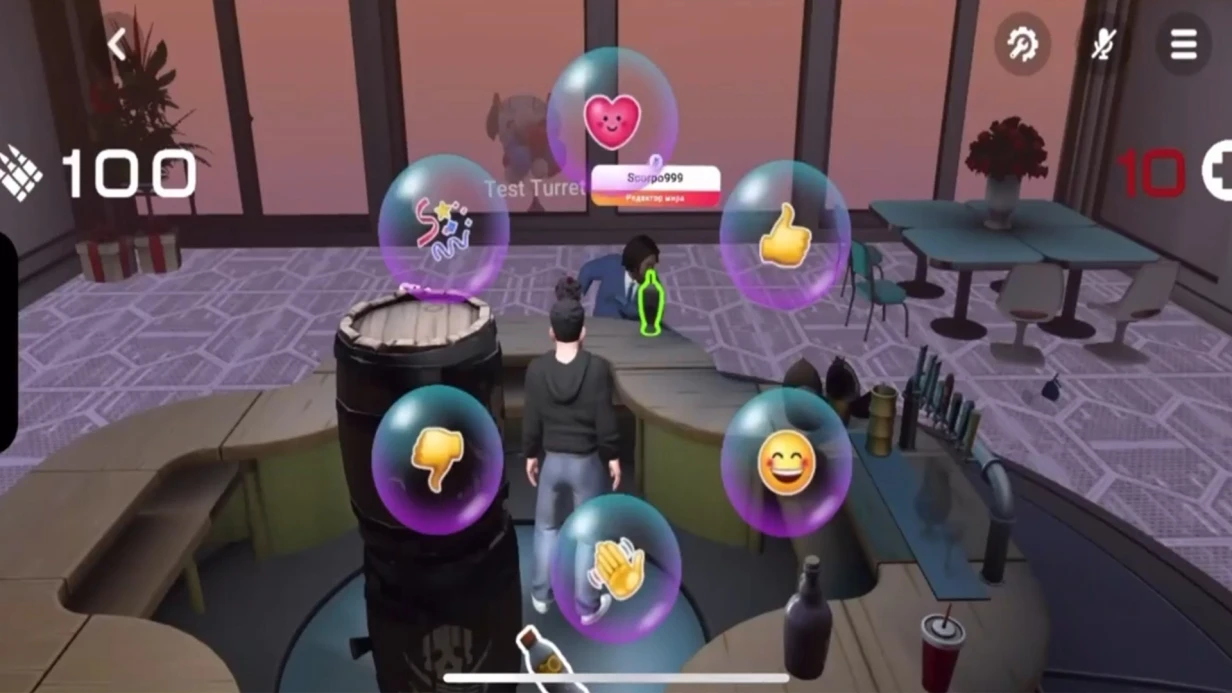
A digital twin of a clinic is a virtual model of your space and processes that works as a modern service tool. Before the visit, the patient «walks» through the rooms, chooses a convenient time, and sees how they will be received.
The administrator and doctor get the full picture: treatment plan, history, preferences, even behavior in the waiting area — everything that helps make service personal.
With a digital twin, you remove the main pain points: queues, misunderstandings, and fear of the unknown. The patient stops seeing the clinic as a «scary place» and arrives prepared, with trust.
This directly affects retention and how often you are recommended to acquaintances — and referrals in dentistry bring more than half of new clients.
From a competitive standpoint, a digital twin sets the clinic apart from dozens of similar offerings. When a potential patient compares options, they choose the one where they see care for themselves as early as the booking stage.
Such an approach is hard to copy quickly — it is a systemic advantage that works for reputation and revenue for years.
We have been developing digital twins for medical and dental clinics for more than 10 years. Our solutions have already helped clients reduce the time needed to onboard new employees, increase bookings from the first visit, and grow the share of repeat requests.
Tell us about your clinic — we will suggest where to start and how to quickly get the first measurable result.
Benefits of VR/AR for Patients and Your Practice
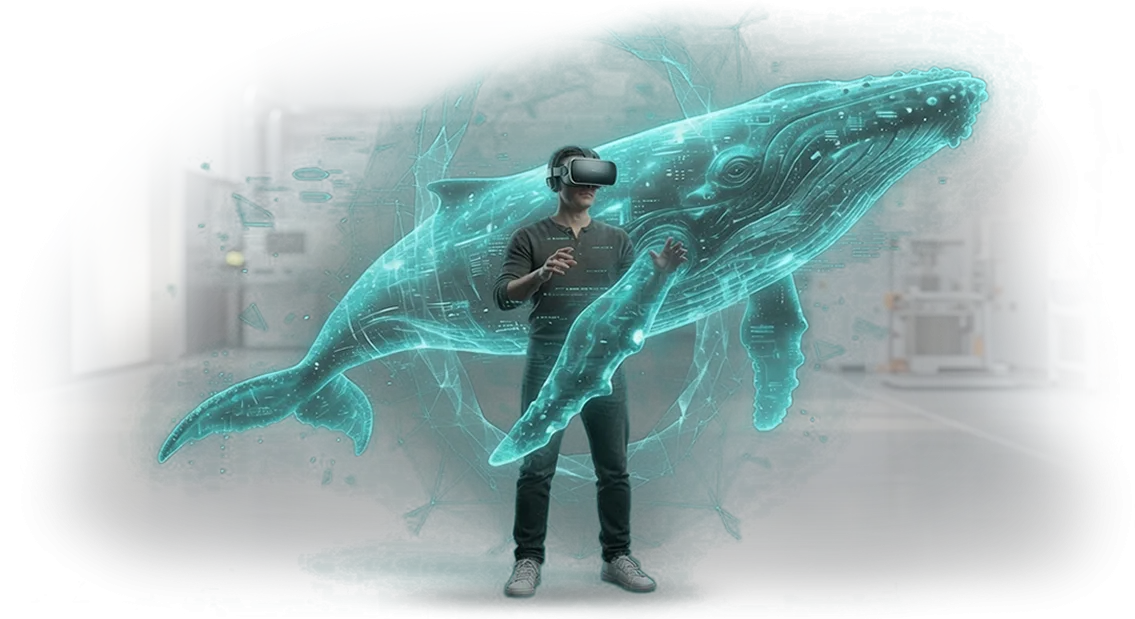
VR and AR change the patient's impression of the visit before they even sit in the chair. Instead of the usual fear of the unknown, a person sees their smile after treatment on the screen, understands each step, and stops worrying. Comfort and predictability are what make patients choose a clinic and come back to it again.
For the practice, this works like a magnet: high-tech experiences are remembered and shared with friends and colleagues. One satisfied patient brings two or three new ones, and the base grows without an additional advertising budget.
At the same time, you occupy the niche of a modern clinic that cares about experiences, not just treatment.
VR glasses during a procedure distract from the sounds of the drill and anxious thoughts, reducing stress and increasing tolerance for long interventions.
AR navigation in the clinic helps new visitors not get lost, and augmented reality during a consultation clearly shows the result before work begins. Each such scenario lowers the barrier to a visit and strengthens trust in the doctor.
The main advantage is increased loyalty without discounts and promotions. A patient returns not because it is cheap, but because it is clear, safe, and interesting.
They willingly leave reviews and become brand ambassadors themselves, while word-of-mouth recommendations remain the most effective way to attract clients in medicine.
By implementing VR/AR, you get not just a nice feature, but a working marketing and service tool: higher conversion from initial inquiry to booking, fewer cancellations and reschedules, more repeat visits and profit from each patient.
The technology pays off through growth in the average check and retention of the base, and your clinic stands out from the neighbors already at the selection stage.
Digital Twin Formats: What to Choose for Your Task
A digital twin of a dental clinic solves different tasks: one is needed to increase appointment bookings, another to train staff, and a third to make a vivid statement about the clinic at an exhibition.
There is no universal format, so we offer three basic options and help you choose the one that matches your goal and audience.
| Format | For whom | What the client gets |
|---|---|---|
| Virtual tour | For new patients, website and social media | Shows the clinic without a visit, reduces anxiety before the first appointment, increases the number of bookings |
| Interactive booth | For exhibitions, open houses, clinic lobby | Attracts visitors' attention, creates a «wow» effect, increases brand awareness |
| Staff training | For administrators, assistants, nurses | Practices service standards in a safe environment, reduces errors, and accelerates onboarding of new employees |
If the main task is a steady flow of new referrals, choose a virtual tour: it works on your website at any time and is suitable for advertising campaigns.
For an event or clinic presentation to partners, an interactive booth works better — it captures attention and stays in guests' memory.
And if the clinic is growing and needs to train the team quickly, the staff training module delivers measurable results without taking people away from work.
The formats are easy to combine. For example, one digital twin can simultaneously be a virtual tour on the website and be used in employee training.
When choosing, we take into account your current goal, budget, and timelines — and offer a solution that pays off through real business metrics: growth in bookings, patient loyalty, and speed of team preparation.
Stages of Developing a VR/AR Solution from Scratch
Developing a digital twin for a dental clinic is a process in which you participate at every step. We do not bring a ready-made «box» at the end — we move together from idea to solution that actually works for your patients and benefits your business. Below are seven stages that every project goes through.
-
Brief and task analysis. We meet with you and break down the goals: what the twin should show — a virtual tour of the clinic, a smile preview, employee training. We analyze the target audience and current processes so that the solution fits into your workflow without disruption.
-
Prototype. We create an interactive draft of the solution that can be viewed on a screen or in VR glasses. You evaluate the logic, move through scenarios, and make edits before the main development begins.
-
Concept approval. We lock in the scenarios, interface, and visual style. You approve the final product vision and receive a clear plan with dates and scope of work.
-
Application development. We fill the twin with content and connect the necessary features and graphics. At this stage, you see intermediate results, so nothing «unexpected» appears at the end of the project.
-
Testing. We test the application together with your employees and first patients. We identify things that could confuse or spoil the impression and fix them before the official launch.
-
Launch. We install the solution in the clinic, configure the equipment, and train staff. You receive a working tool that immediately integrates into patient appointment processes.
-
Support and development. We stay in touch after launch: update content, refine scenarios, consult staff. The digital twin remains relevant even when your clinic changes.
What Is Included in Delivery: The Complete Package
When you order a digital twin for your dental clinic, you get not just a 3D model, but a ready-to-use tool that starts delivering value immediately after launch. We put together a turnkey package — from an accurate copy of your space to staff training and warranty commitments.
Here is what is included in the delivery:
- Digital model of the clinic — an accurate copy of the rooms, lobby, and equipment with the ability to move freely. Patients see the entire space before the visit, and you get a foundation for navigation and presentations.
- Viewing application — works on computers, tablets, smartphones, and VR headsets. Your employees and patients can use the model wherever convenient, without being tied to one device.
- Ready-made usage scenarios — a tour for patients, staff instruction, service demonstrations. You receive materials that can be used right away.
- Integration with your channels — we embed the model into your website, social media, and information kiosks. This extends your audience reach without additional advertising costs.
- Launch and setup — we install the necessary equipment, connect all elements, and test operation in real conditions. You get a working product within the agreed time frame.
- Employee training — we conduct sessions for administrators, doctors, and managers. Your team confidently uses the tool from day one, without a long learning curve.
- Warranty and support — we set the warranty period, stay in touch after launch, update content, and answer questions. You are never left alone with the product.
This package removes all technical concerns from your shoulders. You get a result that you can show patients, partners, and investors — and it works for the clinic's reputation.
Case Study: A Digital Twin for a Dental Clinic
We are sharing a real implementation: for a dental clinic, we created a digital twin that works for patients, staff, and marketing.
Our team our team combined a VR staff training simulator, a 3D tour for the website, and interactive visualization of the treatment plan.
The client received not «technology for technology's sake» but working tools: more bookings, faster employee onboarding, and a higher average check.
The results speak for themselves: in the first two months after launch, the number of inquiries from the website grew by more than 30%, and the share of patients who immediately book an appointment after the VR tour nearly doubled.
An additional effect: training new assistants was reduced from three weeks to five days. The digital twin became a part of daily work, not a «showcase prototype».
Why It Worked
We did not just create a «showcase 3D model for beauty».
The digital twin solved specific business tasks: it showed the patient the future treatment result before procedures began, allowed the administrator to give a clinic tour without leaving the front desk, and gave marketing honest material for promotion. Every element had a measurable goal, which is why the outcome was transparent.
What the Clinic Got
- A convenient sales tool: complex treatment plans are explained in a couple of minutes, and the patient clearly sees «before — after».
- Marketing savings: the VR tour works as a virtual sales manager 24/7, without extra advertising costs.
- Fast employee training: new staff learn clinic standards 3-4 times faster.
- The first modern format in its area — the clinic is discussed and recommended to friends.
Within a few weeks, the client asked to expand the functionality: add an appointment simulation and scenarios for pediatric patients.
Six months later, the clinic ordered a second implementation stage — this is the best indicator that the digital twin justified the investment and became a business growth point.
How to Choose the VR/AR Format for Dentistry?
Choosing a VR/AR format for dentistry begins not with technology, but with the task you want to solve. If your goal is to show the patient the treatment result before the procedure begins, a lightweight AR solution on a smartphone is enough.
If you need to fully immerse a person in the clinic's atmosphere or train staff in complex scenarios, a VR environment is required.
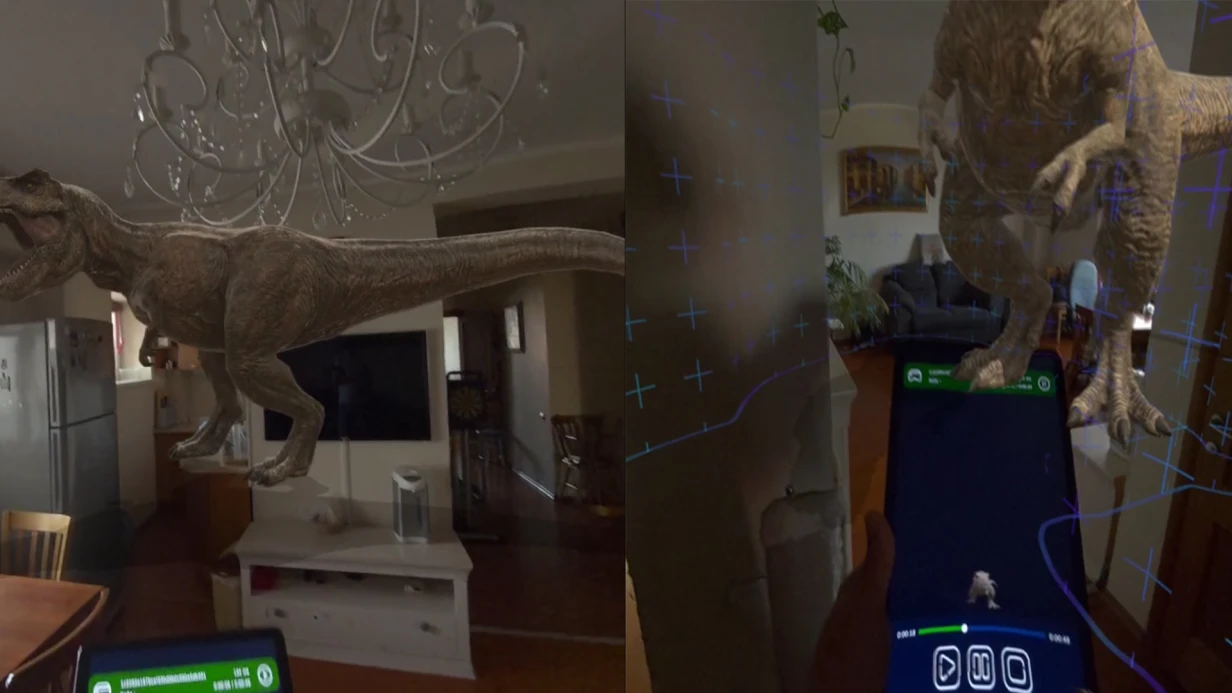
Hybrid scenarios where a digital twin of the clinic is combined with real objects are mixed reality, which is suitable for interactive demonstrations at the administrator's desk or in the lobby.
Before choosing a format, define your target audience. For patients who are afraid of treatment, the best option is VR glasses with relaxing content or a virtual tour of the clinic. This format reduces anxiety and increases trust before the appointment.
For marketing and presentations of the clinic to investors or partners, AR is more convenient: pointing the camera at a mockup or floor plan shows a digital model of the floors, rooms, and equipment.
And for training doctors and assistants, VR simulation is optimal, where you can practice actions in a safe environment without risk to patients.
Another criterion is where the solution will be used. If you need a digital twin of the entire clinic that can be viewed from different angles, choose VR: it gives a full sense of presence and lets you «walk» through the rooms. If it is important to show how new equipment will fit into an existing interior, use AR overlay.
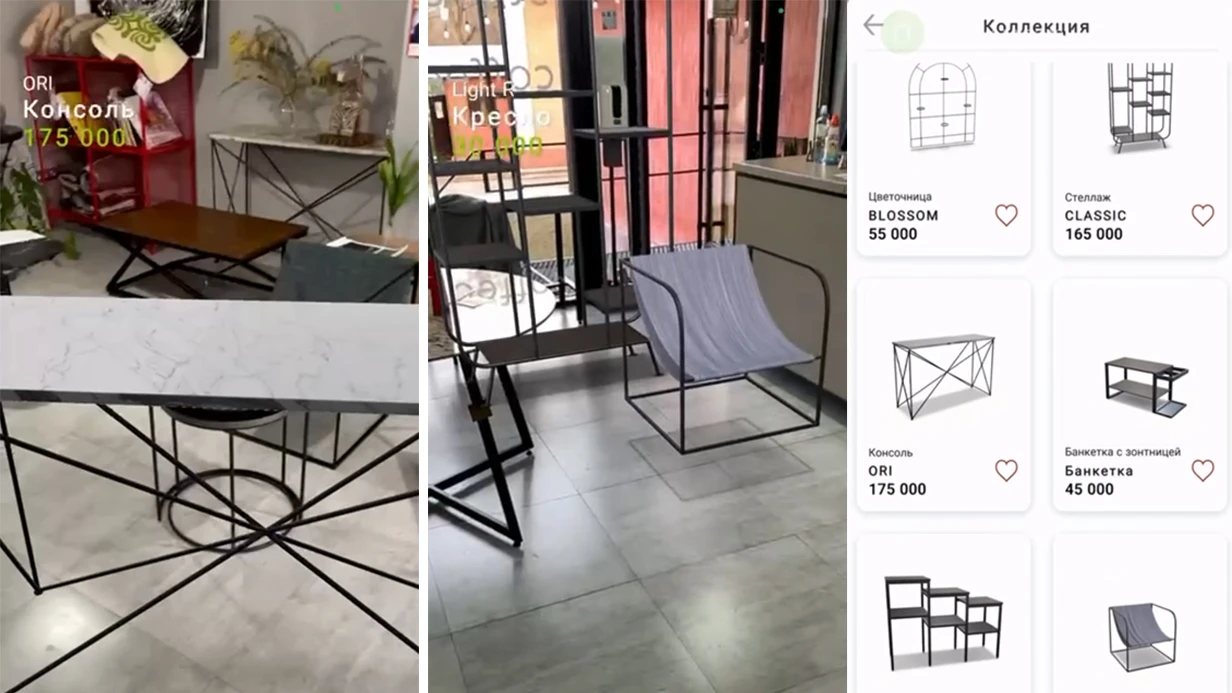
In this case, a patient or manager sees a photorealistic model of a dental chair, tomograph, or sterilizer right in the real room, which helps make decisions about purchases or renovation.
It is important to understand that the formats do not compete with each other. A well-planned strategy often includes a combination: AR for quick demonstrations on social media and the website, VR for deep virtual tours and training, MR for interactive kiosks in the clinic.
We help you choose the right combination for your budget and timelines, and then develop an application that solves exactly your task — from attracting patients to internal staff training.
If you are not sure where to start, begin with a simple AR version of the digital twin: it can be launched in a few weeks and used as a foundation for more complex VR scenarios in the future.
This gives you a quick result, and when you see the return, you develop the project into full immersion. We will recommend the optimal format during a free consultation — just describe the task you want to solve.
Frequently Asked Questions About VR/AR Implementation in Medicine
Medicine is a conservative field, so questions about VR/AR implementation are natural: how difficult is it, is it safe, and will you have to stop seeing patients. We answer the main concerns based on experience from dozens of projects for dental clinics and medical centers.
Implementation does not require restructuring the facility's operations. We carry out integration in stages: analyze tasks, select scenarios, install equipment, and train staff. Patients get the new experience within the first few weeks, not after a long modernization.
Is it difficult to implement VR/AR in a clinic?
It is difficult only if you do it without a partner. We take on the entire cycle — from concept to launch and employee training. For your team, this is a few hours a week for coordination, not a full workload. In the end, you get a working solution, not a six-month experiment.
What happens if the equipment breaks down?
A failure will not stop operations: backup scenarios and fast device replacement are in place. Professional equipment is designed for intensive use, and if a problem occurs, we resolve it remotely or visit the site.
How long does implementation take?
For a single treatment room — from two weeks to a month; for multiple departments — about two months. We work according to a clear plan with milestones so you can see progress. The first scenario is launched in pilot mode, then scaled.
Is it safe for patients?
VR/AR has long been used in medicine. We use certified solutions and consider contraindications: sessions are conducted under staff supervision, and duration is individualized. For dentistry, this reduces anxiety and increases trust.
What support is provided after launch?
You are not left alone with the technology. We support the project: update content, help with new scenarios, and train new employees. On request, we provide analytics so you can see the real benefit to the clinic.
Discuss Your Project: Start with a Free Brief
Let's start with a simple step — a free brief. You tell us about your dental clinic, goals, and audience, and we propose a solution and calculate the cost.
This is not binding: the brief is needed to understand which VR/AR/MR format is right for you — from treatment demonstration to staff training.
Wework remotely and have been helping medical and client-facing businesses launch projects that increase trust and memorability for more than 10 years.
Your request goes to an engineer and a project manager — you get not a template response, but a preliminary analysis tailored to your task.
After the brief, you know the timelines, scope, and cost, and we know how to make the project useful for patients and profitable for the clinic.
After the order, you receive:
- Free consultation — we analyze your situation and answer questions about scenarios and technologies.
- Cost estimate — a transparent quote without hidden fees; you understand what you are paying for.
- Solution plan and architecture — a description of the logic, screens, and user flow, understandable to you and developers.
- Roadmap — work stages, milestones, and launch date.
- Support after launch — we help with the clinic rollout, staff training, and technical support.
Leave a request for a briefing — it will take 10 minutes. After that, we will suggest a time for a call, clarify details, and prepare a proposal. You have nothing to lose but uncertainty: you start the project with a clear plan, timelines, and budget.