

Why an Exhibition Loses Visitors Without a Digital Twin of the Exhibition Center
An exhibition brings guests together for experiences, but a static display does not surprise them. A visitor walks through the hall, looks at the booths, and leaves — without emotion, without a desire to return.
If you don't offer a modern format, exhibition attendance drops with each event, and the budget for attracting guests grows endlessly.
Guests expect the exhibition center to be as alive and tech-enabled as their everyday services. An exhibition that cannot be explored in advance, examined in detail, or revisited after the visit feels outdated.
As a result, you lose not only one-time visitors but also the recurring audience that builds the venue's reputation.
A digital twin of the exhibition center solves this problem. It creates an interactive copy of the exposition accessible to guests even before the visit — for route planning — and during the event it helps them find their way and not miss key booths.
After the exhibition, access remains, and guests return to the virtual space, extending the life of your event.
For organizers, a digital twin means measurable results: more deliberate visits, higher engagement with booths, and an additional source of insight into visitor behavior.
You stop relying on guesswork — you see which exhibition objects truly interest guests and can improve the program from one event to the next.
This approach turns a one-time visit into an ongoing relationship with the brand, and visitor loss into loyalty growth. We help exhibition centers implement a digital twin and retain the audience that previously drifted to competitors.
What a VR/AR Application Gives the Organizer and Exhibitors
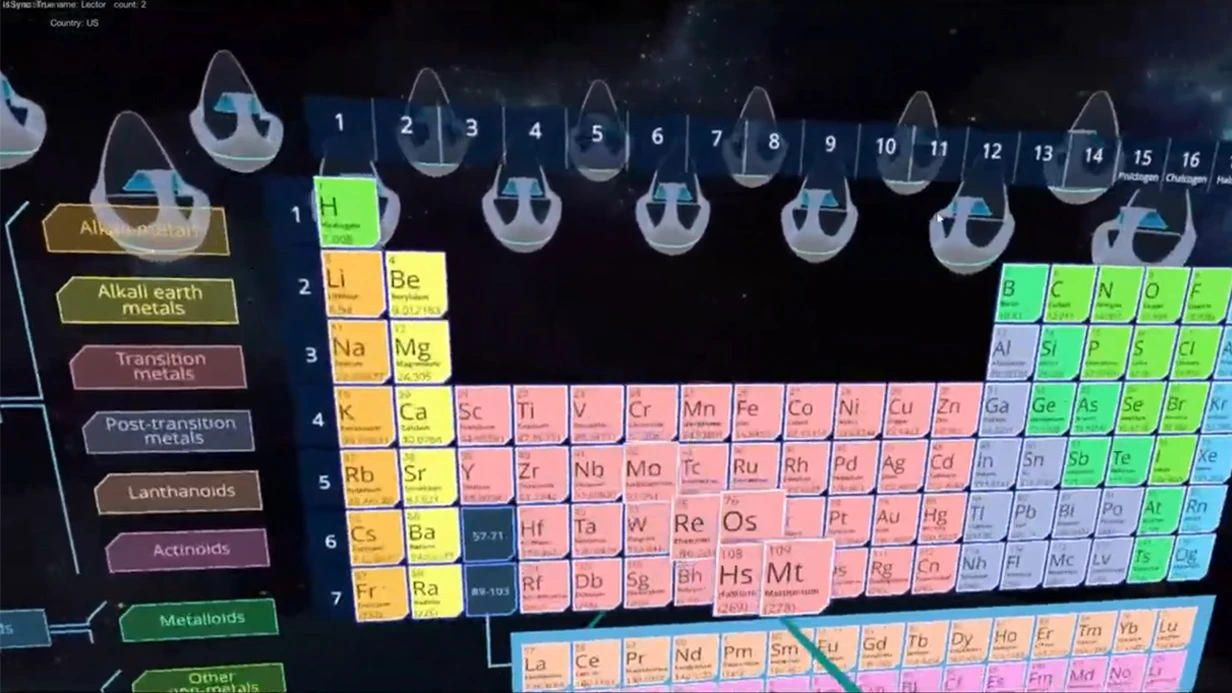
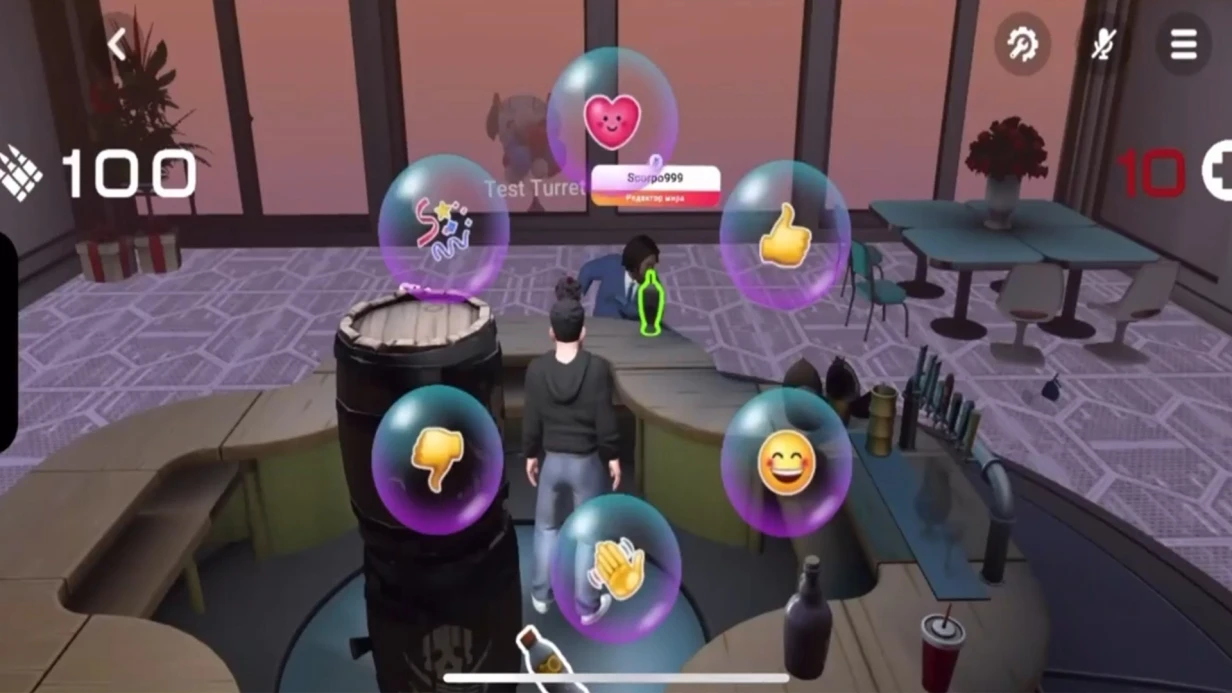
A digital twin of the exhibition center transforms an ordinary tour into active interaction with the exposition.
The organizer gains a new communication channel and data on visitor behavior; exhibitors gain measurable returns on participation; visitors gain a memorable experience.
Visitor Engagement
A monotonous walk through the hall is tiring, while a VR/AR application adds play and unexpected details. Guests linger longer at booths, are more willing to join activities, and share photos on social media. According to the experience of our team, time spent at a booth grows two to three times.
Virtual Tour
The application lets those who could not come see the exposition: dealers from other cities, journalists, potential investors. The virtual tour works around the clock and attracts additional visitors without expanding the exhibition floor.
Visitor Analytics
The digital twin collects data on visitor behavior: which zones generate interest, how much time is spent at a specific exhibit, and which route the majority chooses.
The organizer uses these figures to sell advertising space, while the exhibitor uses them to improve their display.
Leads for Exhibitors
A built-in request form lets a visitor leave their contact right at the booth.
The exhibitor receives a warm lead with information about which product sparked interest, so after the exhibition they can move straight to a substantive conversation without spending time on cold calls.
VR/AR Solution Formats for Exhibition Center Tasks
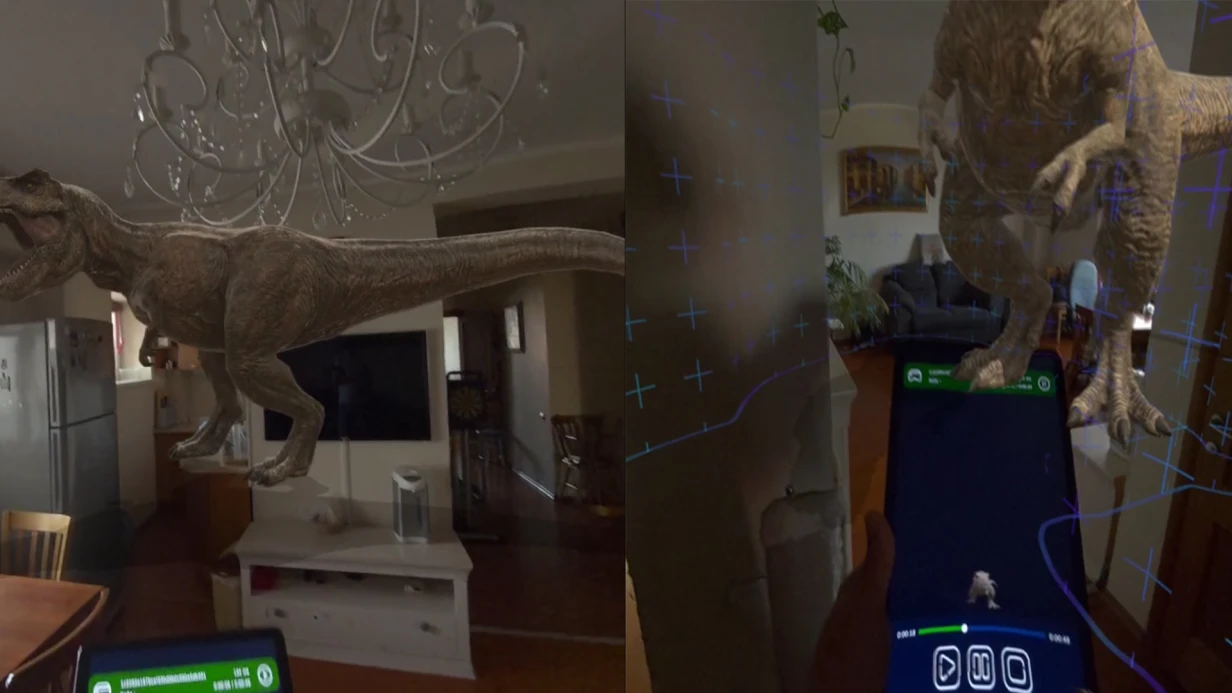
There is no one-size-fits-all format for an exhibition center: VR tour, AR navigation, digital twin, and holographic booth solve different tasks. Some engage remote audiences, others help navigate the venue, and still others turn a display window into an interactive experience.
Our team selects the format based on your goal and audience rather than selling "everything at once."
Below is a comparative overview of the four main formats we implement for exhibition centers. This is a starting point for selection: the specific scenario is finalized during the brief and pilot testing.
| Format | For Whom | What It Gives the Client |
|---|---|---|
| VR Tour | Remote visitors, B2B partners | Shows the space and exhibits without a trip — expands geographic reach and reduces costs for individual presentations |
| AR Navigation | On-site guests | Guides along a route to booths, dining points, and rest areas — increases satisfaction and extends dwell time |
| Digital Twin | Management, architects, tenants | A complete copy of the center for logistics planning and leasing areas — reduces errors during event preparation and saves organizers up to 30% of their time |
| Holographic Booth | Marketing, exhibition participants | Attracts attention and creates a wow effect — amplifies photo and video sharing on social media, boosts brand recognition |
The formats combine easily: the digital twin becomes the foundation for a VR tour, and AR navigation "overlays" holographic zones. The result is a unified digital environment that works both to attract visitors and to manage the venue efficiently.
How Development Works: Project Stages
We structure the process so the client always knows what is happening and what comes next. No "black boxes": each stage of developing a VR solution for an exhibition center ends with a clear deliverable that you see and approve.
- Brief and immersion in the task. We study the exhibition's goals, audience, spatial features, and visiting scenarios. We define what the digital twin should solve: navigation, attention capture, presentation of exhibits.
- Concept and scenario. We propose the structure of the VR space and the logic of movement and interaction. We describe how a visitor will use the solution — from entering the zone to the final action.
- Prototype and approval. We build a working prototype of key screens and mechanics. You see the logic and visual style and make edits before full development starts — this saves time and budget.
- VR application development. We assemble the complete product: fill the twin with content, configure interfaces and integrations with the center's systems. At this stage, the result can already be tested on equipment.
- Testing and final launch. We verify scenarios on real devices, fix any issues, and train your team to work with the system. Then we launch the solution at the venue — everything is ready by the exhibition's opening.
- Post-launch support. We stay in touch: we help update content, add new exhibits, and adapt scenarios for future events.
At each stage, you receive a concrete deliverable: a concept document, a prototype, a test version. That is exactly why VR development runs without missed deadlines — all decisions are agreed upon in advance, and edits are made before they become expensive.
What's Included in the Delivery: Launch Kit
When you order the development of a digital twin, you get not just an application but a complete kit for launch and daily operation. We think of everything — from the solution itself to staff training — so you can focus on your tasks rather than technical details.
- Digital twin application — an interactive tour of the exhibition center with up-to-date information about halls, exhibitions, and events. Visitors get a convenient navigator and engage more deeply with the space.
- Admin panel — a management system through which your employees independently update information: add exhibitions, change descriptions, publish announcements. No need to contact developers for every edit.
- Staff training — we conduct practical sessions for personnel who will work with the digital twin. The team confidently performs all operations after the first training session.
- Detailed instructions and regulations — clear documents in Russian: step-by-step content update scenarios, typical situations, and procedures for non-standard questions.
- Technical support — during agreed hours, our specialists are available and help quickly resolve any issue. You are not left alone with the system after launch.
- Warranty on the solution's operation — for an agreed period, we fix any issues that arise and ensure stable operation of the digital twin without additional payment.
- Launch assistance — we support the first day of operation: check settings and adjust parameters if necessary, answer staff questions.
Case Study: How a Digital Twin Brought a Booth to Life
The International Exhibition Center had a problem: guests walked past information desks, got lost in pavilions, and wasted time searching for the right booth.
The administration wanted to increase engagement and make navigation self-service — without a stream of questions to staff.
We built a digital twin of the exhibition center — an interactive 3D copy of all pavilions with walkways, booths, and rest areas. A visitor sees the center on a large screen or tablet, can "walk" through the halls, find a company by name, and plot a route in 20 seconds.
The twin works both on the website and at kiosks in the lobby — a paper map becomes a point of attraction.
The results exceeded expectations: time spent at a booth grew 4 times (from one minute to four or five), and 70% of guests used the interactive navigation in the first month.
Information desk inquiries dropped by a third, and repeat visits to the exhibition increased — people returned to explore the zones they had missed.
The digital twin became a permanent element of the infrastructure and an analytics source: which zones are more popular, where visitors linger, which booths need reinforcement.
For us, this project is an example of how VR/AR tools solve exhibition business challenges: increased attendance, engagement, and clear navigation. Contact us — we will create a digital twin of your space from concept through launch and analytics.
How to Choose the Right VR/AR Format for Your Venue?
A universal solution for all venues does not exist — what works perfectly for a museum is unnecessary for a convention center, and vice versa. Therefore, the main question is not "which format is better" but "what task does your space face."
First, determine what exactly you want to achieve. If the task is to educate visitors or partners, look at AR navigation and VR tours: they turn getting to know the exposition into a lively experience.
If the goal is to surprise and create a news hook, choose immersive VR zones or digital twins that can be shown on a large screen and on social media. To solve both tasks at once, a combined scenario — which we fine-tune at the design stage — is a good fit.
Budget also has its say, but it is not about "expensive or cheap" — it is about decomposition. Even a limited budget allows you to start with one AR point, assess visitor reaction, and then scale the solution to the whole center.
We always show what makes up the cost of each stage so you understand what you are paying for and what result you will get at every step.
Tell us about your venue and tasks — during the consultation, we will analyze 2-3 suitable formats, estimate their impact and budget, and you will make a decision based on numbers rather than guesses.
Common Client Questions Before Starting
Clients rarely doubt the value of a digital twin for an exhibition center — the question is how it will affect current processes, budget, and timelines. We have gathered the most frequent concerns and briefly explained how we address them in practice.
How long does it take to develop a digital twin?
The timeline depends on the scale: for a single pavilion, 3–4 weeks is usually enough; for a complex with several halls, 2–3 months. We always begin with a free brief, and within a few days we give you the exact launch date.
In parallel, we can run the project in stages: first the key zones, then the rest — so you get results as early as possible.
How is the cost formed and what does it consist of?
The price depends on the floor area, the number of interactive scenarios, and the level of model detail. We finalize the estimate after the brief and do not change it during development unless you add new tasks.
We always offer several options: from a basic digital twin for navigation to a full VR tour with training scenarios for staff.
How difficult is it to integrate the solution into current processes?
Integration happens without stopping the exhibition center's operations. We adapt to your schedule: installation and setup are done at night or during technical days.
Employees do not need to retrain — the interface is intuitive at first glance, and administrators receive short training and instructions.
What equipment is the digital twin compatible with?
The solution works on any modern device: tablets, smartphones, VR headsets, and interactive kiosks. Visitors can launch the tour from their phone via a QR code — nothing to download. On your end, we use standard server equipment that requires no replacement.
If you still have questions, we are ready to answer them in a free consultation. Tell us about your exhibition center, and we will show how a digital twin can enhance the visitor experience and simplify your team's work.Let's Discuss Your Project Today?
Creating a digital twin of an exhibition center requires not only technology but also an understanding of business tasks: how to increase attendance, simplify navigation for guests, and give organizers a tool for managing the space. We are ready to discuss your project, even if it is still at the idea stage.
Leave a request for a free consultation — during a short meeting we will analyze your task, propose a suitable solution, and prepare a preliminary cost and timeline estimate. You will receive a concrete action plan with no obligation on your part.
What is included in the free consultation and estimate:
- Analysis of your exhibition center's tasks and target audience — we understand how a digital twin will benefit you and your clients.
- Selection of the solution format: from a virtual tour to a full interactive space for navigation and interaction with exhibits.
- Assessment of work scope and timelines — you know in advance when the project will be ready and how it fits into your event calendar.
- Transparent estimate with no hidden costs — we fix the price at the contract stage to avoid surprises.
- Recommendations for integration with your processes: how visitors will use the solution, how you can manage content and update data.
- Examples of similar projects and references — we show how we have solved similar tasks for other venues.
We work remotely, so your city does not matter — what matters is the scale of the task. Over years of practice, we have created digital twins for various facilities and know how to turn technology into a clear tool for your team and your guests.
Tell us about your project — and one day after the consultation, you will receive a calculation that you can take into budget planning. Start with a simple step: send a request through the form on the website or contact us in a convenient messenger. We will get back to you within one business day and answer all your questions.