

Clients are leaving for competitors — sales of the residential complex are stagnating
A homebuyer makes a decision not based on a floor plan on paper, but on the feeling that “this is where my family will live.” Photos and drawings don’t convey the scale of the rooms, the light, or the view from the window. Doubt sets in — and the client goes to a competitor who managed to present the property visually.
For the developer, this means stagnating sales of the residential complex while the advertising budget keeps growing.
Managers spend hours in meetings, but the buyer is not ready to pay for something they don’t fully understand: the decision is postponed, the lead goes cold, and the client leaves for those who removed that uncertainty.
We solve this problem with virtual apartment tours: the future resident, wearing a headset or looking at a screen, walks through their apartment, assesses the layout, views, insolation, and changes the finishes.
An interactive property presentation turns abstract square meters into a clear lifestyle image and removes the main objections before the conversation with a manager even starts. This format also convinces buyers from other cities who cannot visit the construction site.
The result is a shorter deal cycle and higher conversion: the client arrives at the sales office already with the feeling that “this is mine.” Sales of the residential complex stop depending on finished showrooms, and the marketing budget works for a clear and desirable product. Virtual apartment tours pay off by reducing time-to-deal and increasing repeat visits.
An interactive property presentation strengthens the positioning of the residential complex and sets it apart from competitors. Buyers share the virtual tour link with their families — decisions are made faster, and project awareness grows without additional ad spend.
What VR/AR gives a developer: loyalty growth, leads, and recognition
A buyer chooses an apartment based on a picture, but truly trusts only their own eyes. Ordinary floor plans and renders don’t convey a sense of space — hence doubts, postponed decisions, and lost deals.
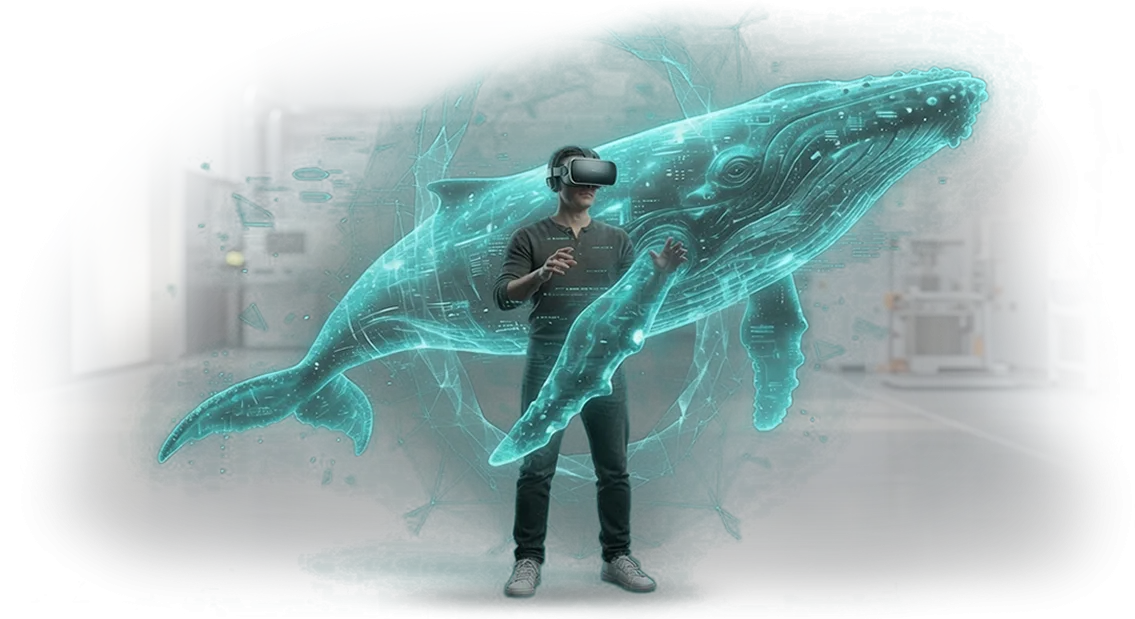
A digital twin of the residential complex in VR/AR removes this barrier: a person sees the building, the apartment, the courtyard, and the views from the windows before construction even starts.
VR for a developer means the ability to keep a client at the property twice as long as at a traditional showing. Immersion in a virtual neighborhood triggers emotions, and emotions turn into loyalty and the desire to come back.
After that experience, a potential buyer is more willing to leave contacts and come for a real viewing, knowing what awaits them.
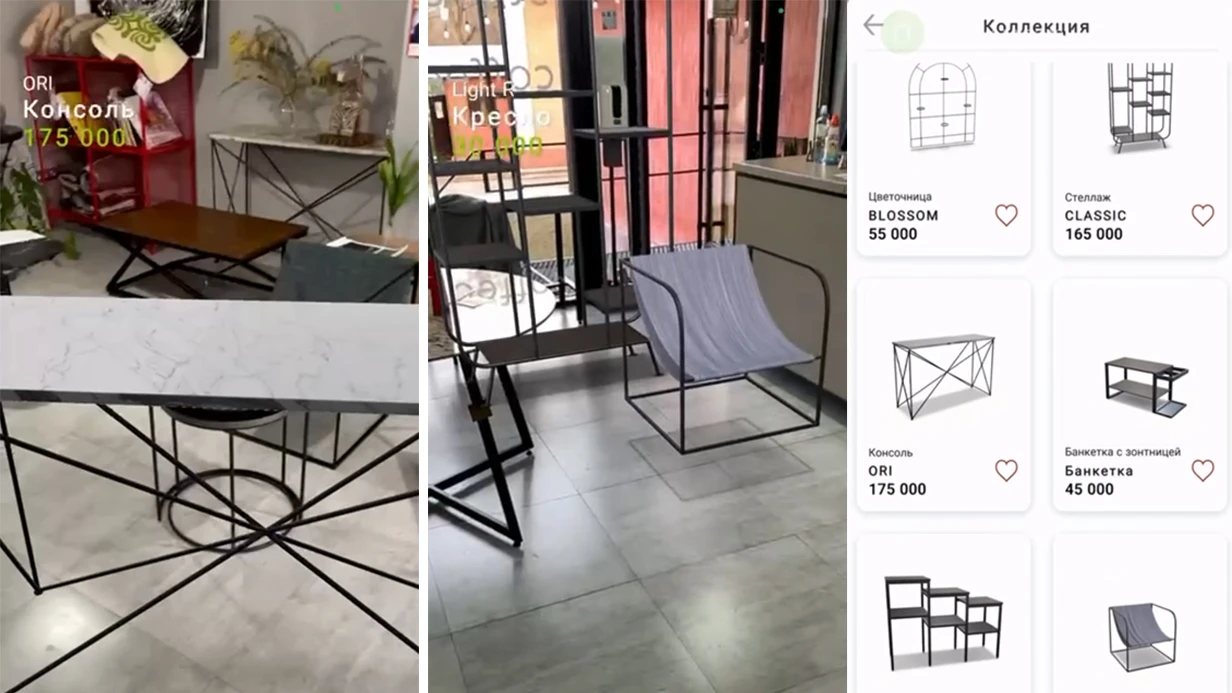
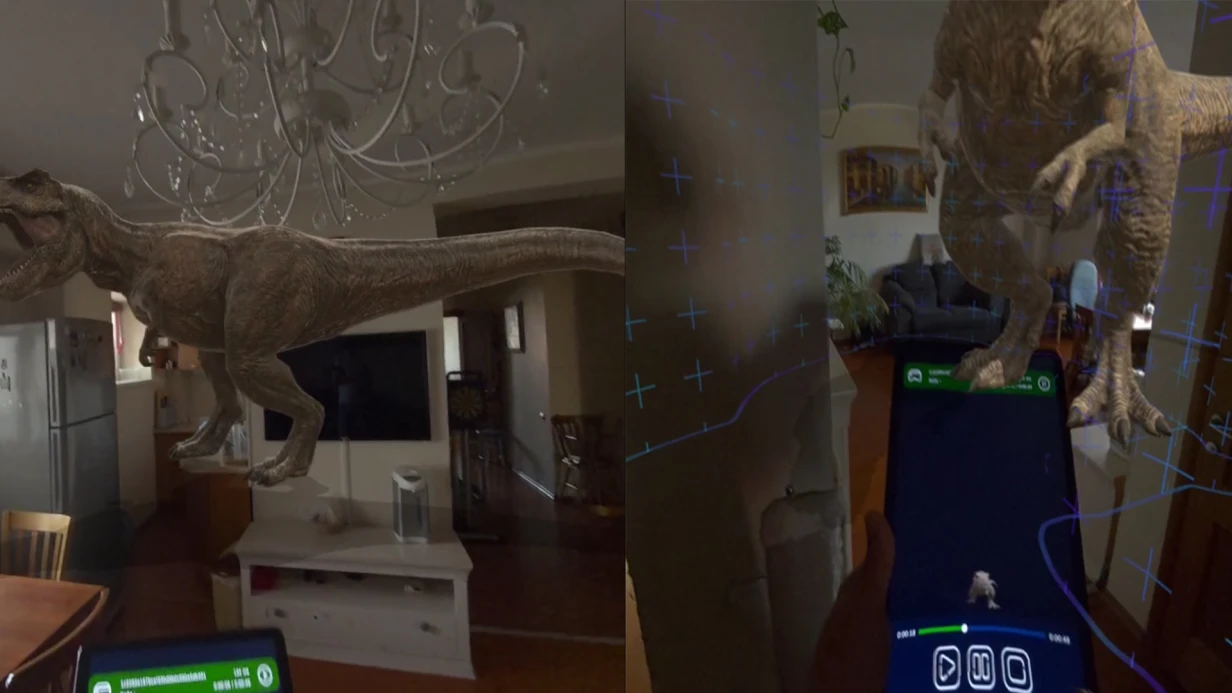
AR in real estate extends reach beyond the sales office. Simply point a smartphone camera at a floor plan or model — and the future apartment “appears” in real space.
This is convenient for clients who can’t visit the construction site and works as a standalone real estate marketing tool: it’s easy to share and requires no complex software installation.
A natural result of this approach is an increase in inquiries. When the client understands the layout, sees the light, ceiling height, and panorama, their objections fade into the background, and the decision matures faster.
For the sales team, this is a ready-made scenario: instead of long explanations — a visual demonstration that leads to booking on its own.
Finally, implementing VR/AR positions the developer as an innovative market player. This raises the company’s status in the eyes of partners and investors and increases mentions in the media and social networks. The developer gains not just a technology but a sustainable image of a leader that attracts demand.
VR/AR/MR solution formats for presenting a residential complex
The choice of format depends on the deal stage and the audience. For a residential complex, some solutions help sell apartments off-plan, while others strengthen trust in the developer at the construction site.
We put together a combination of VR, AR, and MR so that every interaction with the property brings the client closer to a decision.
| Format | For whom | What it delivers |
|---|---|---|
| Virtual tour | Buyers who haven’t visited yet | Shows layouts, views from windows, and infrastructure without visiting the construction site |
| Augmented reality for construction | Clients on site, investors | Overlays the building’s future appearance onto the real structure — floors, facade, and landscaping are visible |
| VR showroom | Sales department, exhibitions, demonstration halls | Immerses visitors in an apartment with finishes and lets them change the layout in a couple of minutes |
| Mixed reality | Partner meetings, management | Combines real space with a 3D model of the neighborhood — you can enter the building and examine engineering solutions |
A virtual tour is the fastest solution: it opens from a phone and reaches everyone who wants to study layouts from anywhere.
Augmented reality for construction removes the main objection, “I don’t understand what will be built”: the client sees the exact future appearance of the building on site.
A VR showroom replaces dozens of physical models — one hall displays a hundred layout options, and staff don’t spend time arranging sample materials.
Mixed reality strengthens trust in serious negotiations: a large-scale projection of the neighborhood appears in a real room, and you can discuss details right inside the digital building.
We help you choose a scenario for your specific residential complex and implement the format that will deliver measurable results at your sales stage.
How the development works: brief, concept, launch, and support
We’ve structured the process so that you always understand what stage your project is at and what happens next. No “black box”: every step is agreed with you and ends with a concrete result. Below are the typical stages of VR project development, which we adapt to your tasks.
-
Development brief. We collect business goals, the visitor profile, and key usage scenarios. You receive a document that captures the objectives and success criteria — all further work is driven by it.
-
Concept and scenarios. We work out the user journey inside the digital twin: what a person sees, does, and remembers. We show a prototype — it becomes clear what the product looks like and how it works before development starts.
-
Work plan. We create a staged plan with checkpoints and allocate the team. You see the timeline and scope of work and understand what each decision affects.
-
Development and interim demos. We break the entire process into short iterations — every few weeks you get a working result. Revisions are made immediately, not at the end, so the outcome matches expectations.
-
Testing and VR project launch. We check scenarios on target devices and fix errors. We prepare everything for launch: install equipment, create instructions, and train on-site staff.
-
Support and evolution. We monitor stability, update content, and add new features. If business tasks change, we refine the product rather than start from scratch.
What’s included in the project delivery for your property
You get not an off-the-shelf application but a working tool for your property. The VR project scope includes everything needed to launch the digital twin of a residential complex and use it day to day.
- Ready-made applications for VR/AR headsets and mobile devices, configured for your property’s needs. The solution starts working immediately after installation — no long refinements.
- Digital content for the residential complex: realistic visualization of facades, layouts, public areas, and infrastructure. Guests and buyers immediately see what the property looks like.
- Integration with up-to-date data: loading floor plans, prices, and documentation. You update the information yourself, without involving developers.
- Staff training on using the application: workshops for sales managers and property staff, so they can confidently conduct tours and answer client questions.
- Documentation and instructions: user guides, demonstration scenario descriptions, and procedures for non-standard situations.
- Technical support and updates: after the application is delivered, we support the project, add new properties, and adjust content as changes arise.
Case study: a virtual tour doubled conversion
Buyers won’t travel to a viewing — that’s the main pain point for developers outside the city. Each trip takes half a day, and many prospects drop off at the booking stage.
To remove that barrier, we built a digital twin of the entire complex for “Severny Kvartal” residential community: a virtual tour with detailed layouts, views from the windows, and a walk through the grounds.
The VR development case started with audience research: families with children value their time and want to see everything before arriving. We created an interactive model that opens right in the browser — no app installation needed.
The client shares a link, and the buyer “walks through” the apartments, changes finishes, and evaluates insolation. For many, that became the deciding factor.
Results
A month after launch, we recorded an increase in real estate sales and a 40% rise in conversion. Viewing requests became more frequent, and the showing itself takes less time — the visitor is already familiar with the layout.
The share of repeat inquiries doubled, and the client returned to us to create a digital twin for a new building.
Every project is adapted to the task: sales, rental, or investor presentation. You get a ready-made tool that pays off through higher conversion and faster deals.
How to choose a VR/AR format for your project?
The choice between VR, AR, and MR is not a matter of technological fashion but of what task the digital format must solve.
If the goal is to show the residential complex so that a person can “walk through” the apartment and feel the scale of the space, full virtual reality immersion will deliver the greatest effect.
If you need to demonstrate how the building will fit into the existing site or embed virtual objects into a real image, augmented reality works better.
Often clients ask what to choose for a project presentation: AR or VR.
The answer depends on the scenario: at an exhibition with a large flow of visitors, a VR zone is more convenient, where each person puts on a headset and in 2–3 minutes explores the apartments, views from windows, and the courtyard.
Augmented reality solves a different problem — showing the property on the real site, “trying it on” the location, and removing objections about placement. This is critical when a person arrives at the construction site and can’t imagine the future scale.
Mixed reality is an intermediate and most flexible option: it allows not only viewing but also interacting with digital elements. For example, changing the layout, finish materials, or furniture options in real time.
For negotiations with a major client or partner, this is a strong argument: the person doesn’t just listen to a presentation but participates in creating their future space.
When it comes to presentation format, a simple rule applies: the same project can be shown across different channels, and the format must match the audience. For investors and executives — a visual VR presentation with an emphasis on renders and layouts.
For end buyers — an AR tool that works from a phone and requires no special equipment. For designers and construction management — an MR model where engineering and finish layers can be easily turned on and off.
We select a format for your task, audience, and demonstration scenario, rather than “selling” one technology. This is not a test run or an experiment: each format works for a clear result — a clear property, removed objections, and a faster purchase decision.
Tell us about your project at a consultation, and we’ll propose an option that works specifically in your case.
Frequently asked questions about implementing game technologies in real estate
Before launching a VR project, clients always have questions about VR projects: development timelines, VR equipment, staff training. We’ve gathered answers to the most common ones so you can understand how the implementation of a residential complex digital twin will go.
What are the development timelines for a VR project for a residential complex?
A typical timeline is from three weeks to three months, depending on the number of layouts, finish options, and scenes. We start with a brief and concept approval, then show intermediate versions. You always see the result at every stage, not just at the end of the project.
What VR equipment do we need to buy?
Usually, one headset and a laptop for the manager are enough. If you don’t have the hardware, we can offer rental or choose the best option for your tasks. For visitors, the equipment is simple and intuitive: put on the headset — and they immediately see the desired apartment.
How do we train employees to work with the digital twin?
We conduct training in two or three hours: managers learn to launch the project, switch layouts, and accompany guests. After the session, they keep short reference guides, and for the first showings we connect remotely and assist in real time.
What if the equipment fails during a presentation?
The project runs autonomously and doesn’t require internet, and typical issues are resolved with a simple restart. For key events, we can be on call online to guarantee smooth operation and peace of mind for your team.
Book a demo — we’ll show you what a residential complex digital twin looks like on simple, affordable equipment and calculate accurate timelines for your project.Discuss a VR/AR project for your property — get a demo and cost estimate
To understand the value of VR/AR for a residential complex, you don’t need to understand the technology — you just need to see the result.
A virtual twin of a not-yet-built property answers buyers’ key questions: what the apartment, courtyard, views from windows, and infrastructure look like. Instead of long explanations, you show the future building, and the client makes a decision faster.
We’ve worked with developers and property owners for over 10 years and know how to turn a digital model into a sales tool. So after a short request, you get not general words but a concrete plan for your property.
What you get after contacting us
- A presentation of VR/AR capabilities with examples of residential complexes similar to yours.
- A cost estimate for VR broken down by stages — no hidden work or forced options.
- An implementation plan: from briefing and source data to launch and training of your team.
- A demo version of one scenario so you can evaluate the result before the full project starts.
- A format recommendation — showcasing in a showroom, on a website, in an app, or on a manager’s tablet.
- Consultation on integration with the sales and marketing departments.
There are no obligations at this stage. You get a transparent estimate, understand which format will deliver the best effect for your residential complex, and make a decision without pressure.
To get started, just send floor plans or a link to the website — everything after that, including turnkey development and full support, is handled on our side.
You can order a VR project right after the first call: we capture the task, prepare a proposal, and within a few days send you a cost estimate and work plan.