

Why Design Studios Lose Orders Without VR/AR Presentations
Design studios spend weeks on a concept, but at the presentation they show flat renders and drawings. The client cannot imagine how the space will look in real life: they doubt the scale, materials, and lighting.
Instead of excitement, there is a pile of questions, and the decision is postponed to “later.” At that moment, the order often goes to a competitor who knows how to sell the idea more impressively.
It is not a matter of design quality but of presentation format. People make decisions with emotions, and a flat image does not deliver the needed impression. They are afraid of making a mistake, so they ask for endless revisions, drag out approval, and ultimately cut the budget. Every week of delay increases the risk that the project will be frozen or canceled.
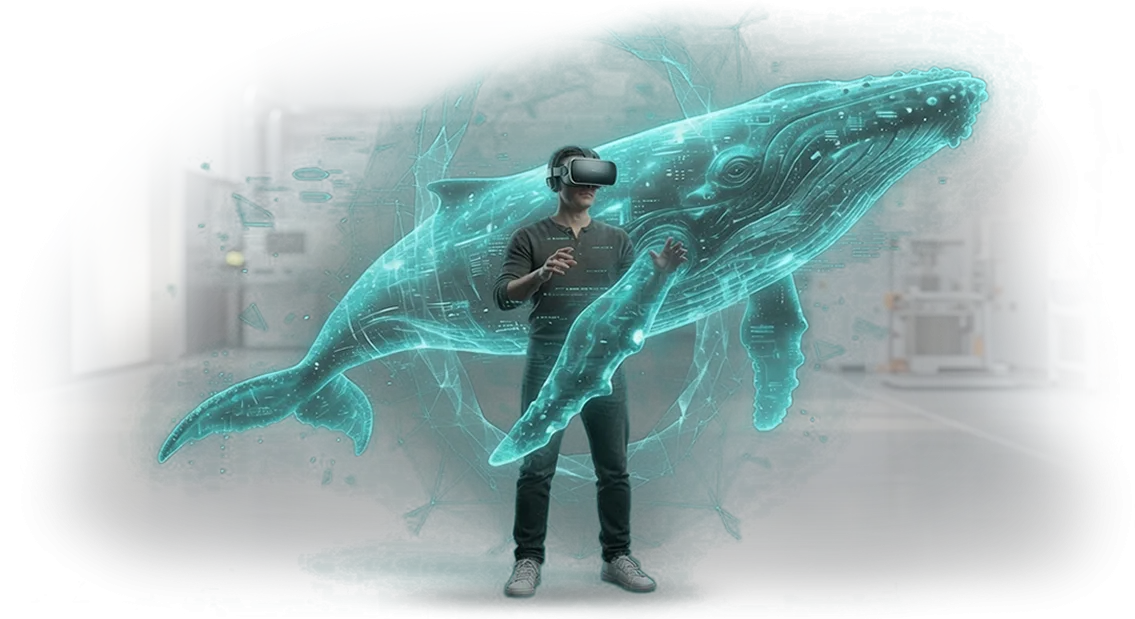
A VR/AR presentation removes this uncertainty. The client puts on a headset and finds themselves inside the future interior: they walk through rooms, evaluate proportions, and change finishes, furniture, and lighting in real time.
This is an interactive project showcase that engages and convinces better than any words. In our projects, we use professional equipment, such as HTC Vive, to convey the space as accurately as possible.
The result is that the studio gets approval faster, hears “we’ll think about it” less often, and can charge a higher price for its services. The client signs the contract not under pressure, but because they have already “lived” in the new space and fallen in love with it. This is a competitive advantage that pays off on the very first large order.
What VR/AR App Development Gives Your Studio
Developing a VR/AR app for your design studio is a way to turn an ordinary project presentation into an event people remember. When a client or guest puts on a headset and finds themselves inside a future interior, it creates an impression that static renders cannot achieve.
The delight of immersion works in your favor—the studio becomes associated with innovation and attention to detail.
Such an app becomes a tool for attracting attention. Visitors to exhibitions, presentations, and open showings share their impressions on social media, tag your brand, and your reach grows without an additional advertising budget. Every such post is a recommendation that brings in new potential clients.
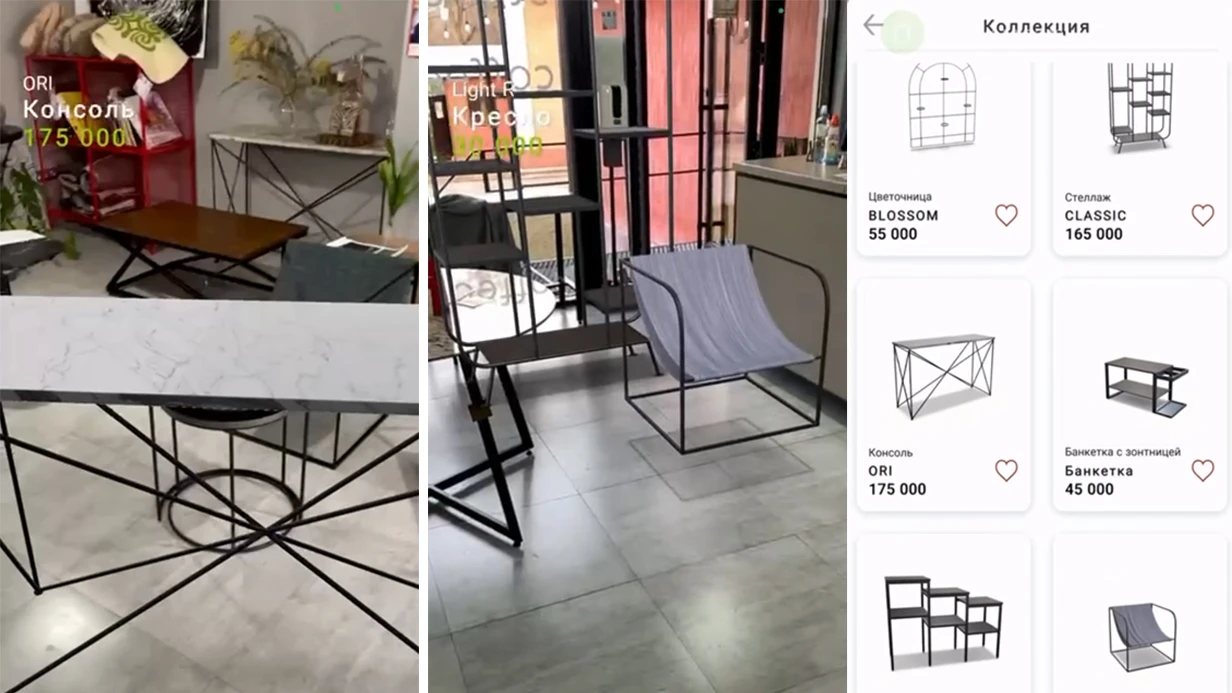
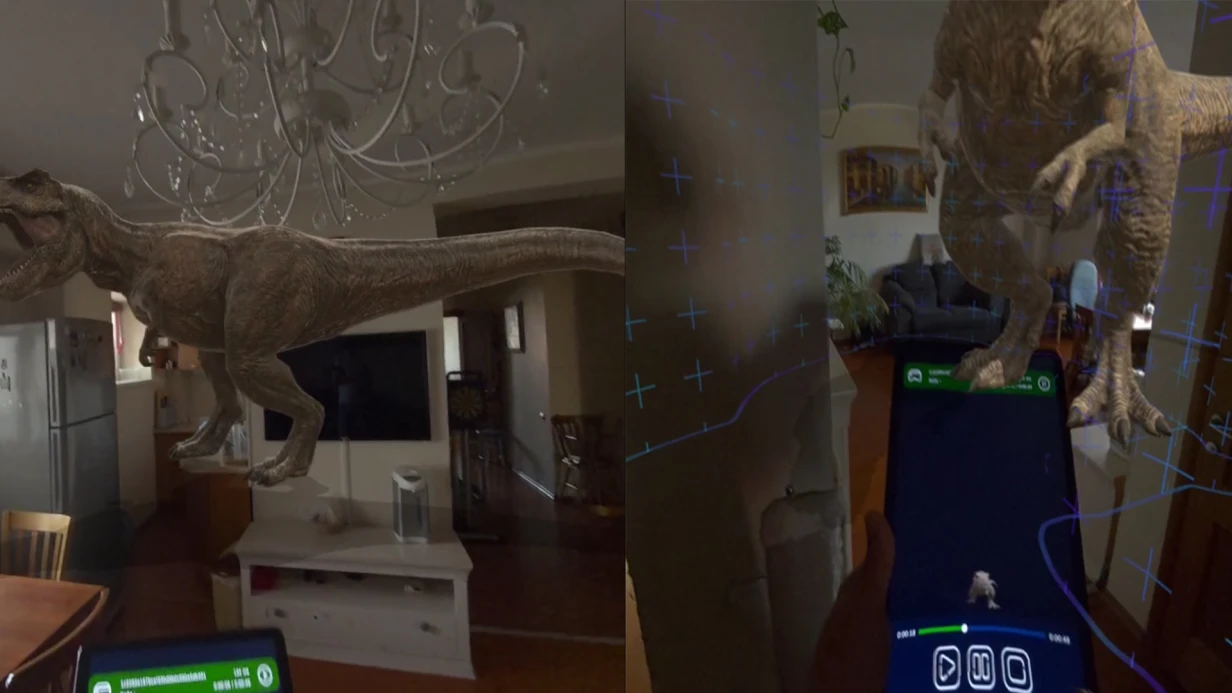
AR mode amplifies the effect: just point a smartphone camera at a model or drawing to see the object in its real environment. This kind of interactivity can be used in negotiations to interest even a skeptical client. It removes barriers and brings the decision to collaborate closer.
Finally, having your own VR/AR solution sets the studio apart from competitors and raises brand value in the eyes of clients. You show that you keep up with the times and are willing to invest in quality presentation of your ideas. Which means you get more inquiries and motivate clients to choose you.
VR/AR Project Formats for Design Studios
A design studio works with different tasks: showing the client a concept before renovation, approving a floor plan without long revisions, presenting a project at an exhibition, or training staff to work in a new space. Each task requires its own VR/AR format—and there is a solution for each.
We do not push one tool; we choose the format for your task. The table below shows typical scenarios that studios bring to us.
Typical formats and tasks
| Format | Purpose | What it gives the studio |
|---|---|---|
| VR presentation in a headset | Show the interior concept to a business owner before work begins | Full immersion in the future space: the client sees scale, light, and materials, and makes decisions faster |
| AR app for a tablet or smartphone | Demonstrate furniture and finish options at the real site | The client sees how items fit into the room without waiting for expensive visualizations |
| MR solution for collaborative work | Approve complex details with engineering teams | A digital layer is overlaid on the real object—errors and utility conflicts become visible immediately |
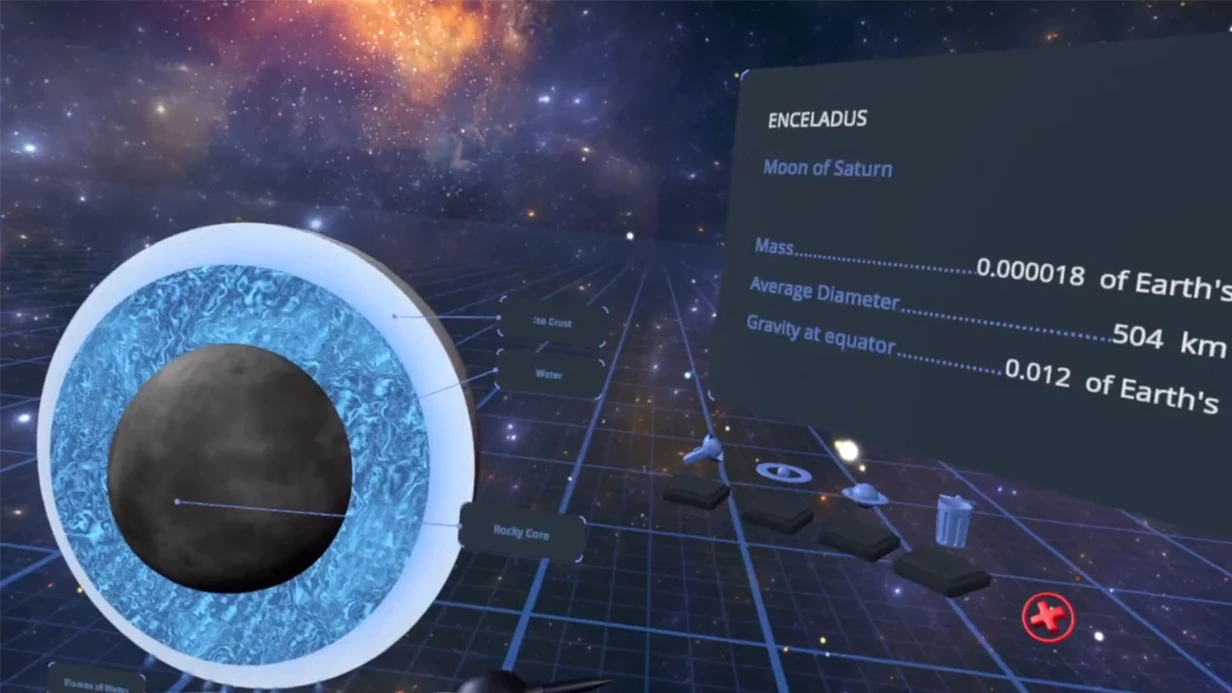
| VR trainer for learning | Prepare staff to work in a new restaurant, hotel, or store | Employees train in a safe environment and arrive on site prepared |
This is not a rigid scheme: within a format, the content can be changed—add interactivity, animation, or multiple layout options. The main thing is that the tool solves your task: speeds up approval, increases project sales, or reduces training time.
If you are not sure which format suits you, tell us about your task. We will suggest the best option and show examples for design studios.
How VR/AR App Development Works
We have structured the process so that you always understand what stage the project is at and what you will get as a result. No “black box”: you participate at key points, approve the outcome, and see how an idea turns into a working application.
- Application brief — we define the tasks: what the product should do, who it is for, and what devices it will run on. You receive an estimate and timeline before work begins.
- Prototype and scenario — we show how the user will interact with the app: screens, logic, and key actions. At this stage, changes are easy to make without extra costs.
- Design concept — we develop the visual style, interface, and atmosphere. Layout approval takes 2–3 iterations, after which we finalize the look.
- Development and build — we create the functionality, connect the elements, and test on real devices. You see intermediate builds and can evaluate progress live.
- Final testing — we check stability, usability, and compatibility with target equipment. We fix everything before launch so that users do not get a “raw” experience.
- App launch — we publish to the right channel: on devices, in the app store, or on a server for download. We prepare instructions for your team.
- Post-launch support — we stay in touch: updates, improvements, and user issue resolution. If something changes in your business, you know who to contact.
This approach has already helped dozens of studios launch VR projects on time and without unnecessary iterations. You control the budget, and we handle the technical side and guarantee the result.
What Is Included in a VR/AR Solution: Full Scope
We build a solution around the design studio’s task—from the first scenario to launch on HTC Vive and similar equipment.
The delivery includes everything needed to work, not just “hardware with a program.” The full scope is fixed in the contract and specification—you know exactly what you receive and what you pay for.
- VR scenario for your task: displaying interiors, materials, or exhibition spaces at 1:1 scale, designed for your clients, not for developers.
- Content and 3D models: we adapt your visualizations or create new scenes with the required mechanics and level of detail.
- Interface and interaction logic: controls are clear even to those wearing a headset for the first time—the client immediately sees the space and can change materials.
- Instructions and documentation: short guides for staff and clients so that launch does not require our specialist to be present.
- Staff training: we conduct hands-on training for your team—we show how to welcome a client, demonstrate the project, and handle common situations.
- Warranty support: bug fixes and updates during the warranty period, plus remote or phone assistance when issues arise.
This scope covers the client’s main risk: you are not left alone with the device. After handover, you have a working digital environment, trained people, and clear instructions—all that remains is to invite clients and present the project.
A day or two after training, employees confidently run demonstrations on their own, and warranty support protects you from sudden failures at the most critical moment.
Case Study: How a VR Presentation Doubled a Studio’s Conversion Rate
Clients came to the design studio Forma with a common pain point: it was hard to approve an interior while looking at static renders. Approval dragged on for weeks, and some projects got stuck at the approval stage.
We suggested closing this stage with a VR presentation on HTC Vive: the client puts on a headset and “steps into” the future space—seeing light, materials, and scale, and walking through the rooms themselves.
In the first three months, the studio conducted more than 40 VR presentations. The conversion rate—the share of projects that reached a contract—doubled.
Approval time shrank from two weeks to two meetings: the client immediately understands what they will get and makes a decision faster.
What changed for the studio
- Conversion from meeting to contract — doubled.
- Project approval time — down 70%: two visits instead of three weeks of back-and-forth.
- Share of repeat inquiries — around 60%: satisfied clients bring their acquaintances.
Client feedback
“Before, we spent weeks explaining what the texture or light would be like. Now the client walks through the apartment themselves and says what to change. It removes objections even before the contract is signed. The prepayment invoice goes out on the day of the presentation,”—studio head.
This case is not isolated. In our practice, VR presentations consistently accelerate sales in complex products, from interiors to industrial equipment. We can help design a demonstration scenario for your service so that the client sees the value. Contact us—we will show a demo on your project and give you implementation timelines.
What to Choose: VR, AR, or MR for Your Task?
There is no short answer like “choose VR”—the choice depends on what exactly you want to show and how your clients will interact with it. If the goal is to present a design project so that the client is inside the future space, VR is the best fit.
Full immersion removes the question “what will it look like in real life,” helps approve the concept faster, and reduces the number of revisions during implementation.
AR works differently: virtual objects are overlaid on the real environment. This is ideal when you need to show how a piece of furniture, a finish, or a light fixture will fit into an existing space.
The client sees the result through a tablet or phone right on site—no mockups or Photoshop. For design studios, this is a convenient tool for quick try-ons and follow-up meetings at the location.
MR is the next level, where virtual objects are not just overlaid but interact with the real world. For example, you move a partition, and the system immediately shows how the lighting and walkways change.
This format suits complex projects with reconfiguration, when you need to test space usage scenarios before renovation begins. For joint discussions with the client, MR provides a live “project–reality” connection.
In practice, we often combine formats: we use VR for emotional impact at a large presentation, and AR or MR for precise decisions on site. There is no “best” technology in itself—there is the one that solves your specific task faster and more clearly.
If you are not sure where to start, we will have a short consultation, review typical studio scenarios, and suggest a format that delivers measurable results from the very first presentation.
Frequently Asked Questions About VR/AR App Development
Design studios come to us with the same request: show the project so that the client feels it, not just sees a picture. A VR presentation solves this task, but typical doubts arise before launch: timelines, investment, implementation complexity, and equipment compatibility. We answer the most common questions honestly, based on experience from dozens of projects.
How long does VR app development take?
A standard scenario takes two to four weeks if we work with your project’s ready-made 3D models. This includes setting up the virtual space, configuring the viewing scenario, and testing on equipment.
If models need to be created from scratch, add time for 3D modeling—usually another two to three weeks. We give an exact timeline after the brief, but in most cases we finish faster than the client expects.
How much does HTC Vive app development cost?
The cost depends on the complexity of the scenario and the number of models, not on an hourly rate. We select a solution for your budget: from a compact showroom for one project to a full object library that can be expanded.
The main point is that you receive a fixed estimate before work begins. No hidden charges or surprises along the way: the price is fixed in the contract, and you understand the total cost from day one.
Is it hard to integrate VR into a studio’s workflow?
No. Our apps launch with one button, and the interface is clear even for those wearing a headset for the first time. Your manager can run the presentation for the client without needing a technical specialist.
We also train employees in one short session and provide a simple guide. Equipment—HTC Vive or other popular headsets—is set up remotely, and our specialist is available on presentation day if backup is needed.
Will the app work specifically on HTC Vive?
Yes. We fine-tune every project on the target headset—this is part of mandatory testing before delivery. You will not receive a “raw” version: we check controller response, image smoothness, and stability during long sessions.
If you plan to use other equipment, that is no problem either. We adapt the project to the required headsets and configure it so the result looks equally good on any of them.
If you still have questions, ask us directly—we will answer specifically and, if needed, show examples of projects for design studios.Order VR/AR App Development for Your Task
Design studio clients choose with their eyes, not from descriptions. A VR presentation shows the interior, light, materials, and scale before construction even begins—the client sees the future project and makes decisions faster. This reduces the number of revisions and makes your portfolio more convincing.
Turnkey development removes all technical concerns from you. We handle the scenario, equipment selection, assembly, and setup, and you get a ready-made tool for working with clients. You just need to describe the task—we take care of the rest.
What you get right after placing an order:
- Free VR consultation: we analyze your task and suggest the right format—showroom, client presentation, or training tour.
- A precise work plan and timeline for your project—you understand the stages and budget before the start.
- A demo scenario at an early stage—you see the logic of the future app and make changes without rework.
- Equipment adaptation: from stationary VR headsets to mobile solutions for on-site presentations.
- Training for your team—employees run client sessions independently.
- A guarantee on the result and support after launch—we stay with you after project delivery.
Leave a request—this does not obligate you in any way. We will contact you within one business day, clarify your task, and offer a development plan for your project.