

VR for Electronics and Semiconductors: Why You Lose Orders Without It
In the electronics and semiconductor industry, it is impossible to show a product "in person" — microchips, boards, and components are too small for an impactful presentation. A buyer who cannot see the product hesitates: will this chip really solve their problem?
While you describe specifications with text and flat images, competitors are already letting clients "get hands-on" with the product in virtual reality — and winning the order.
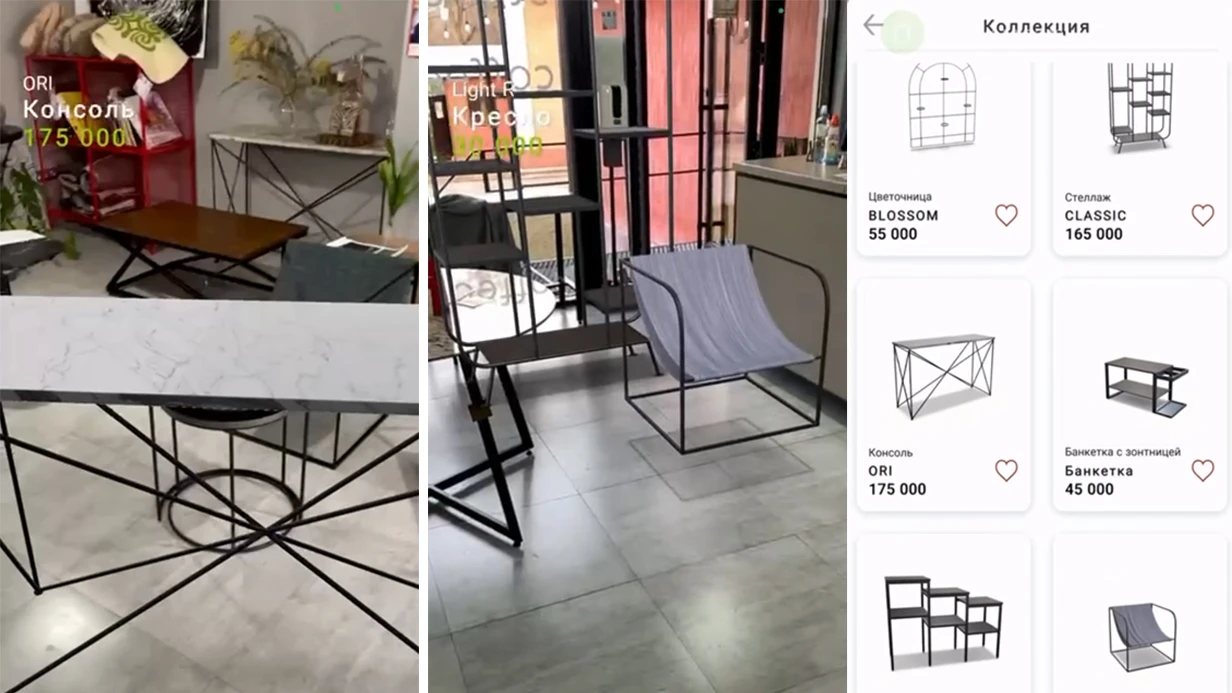
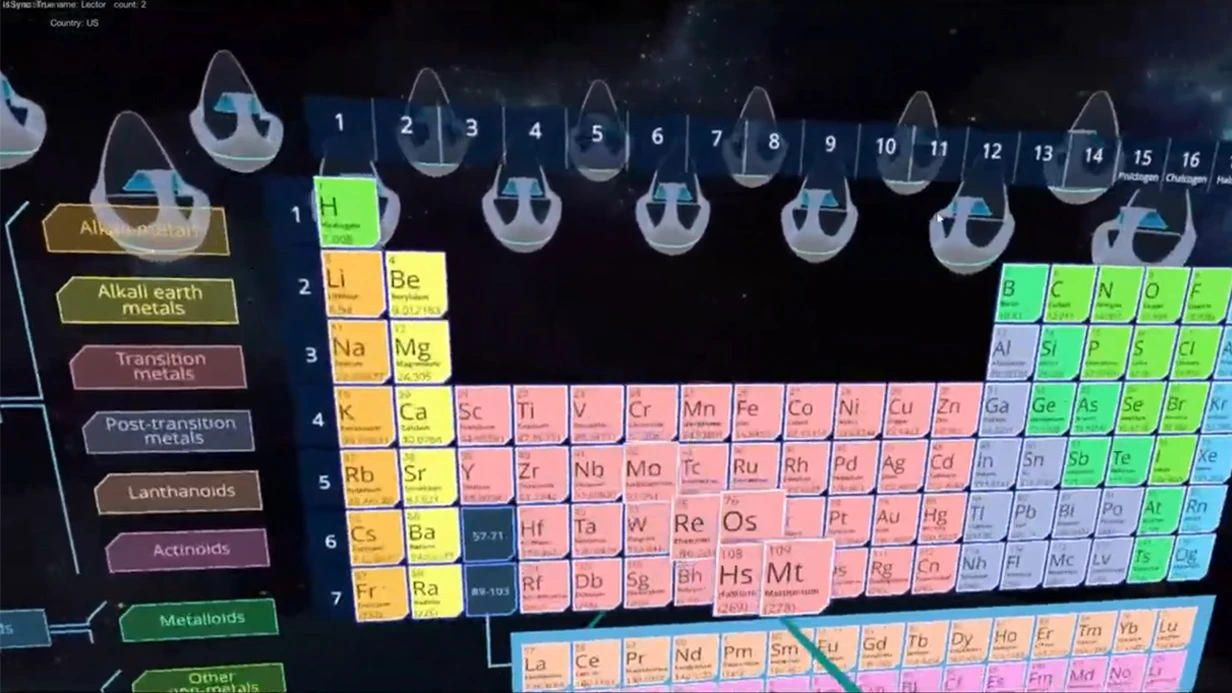
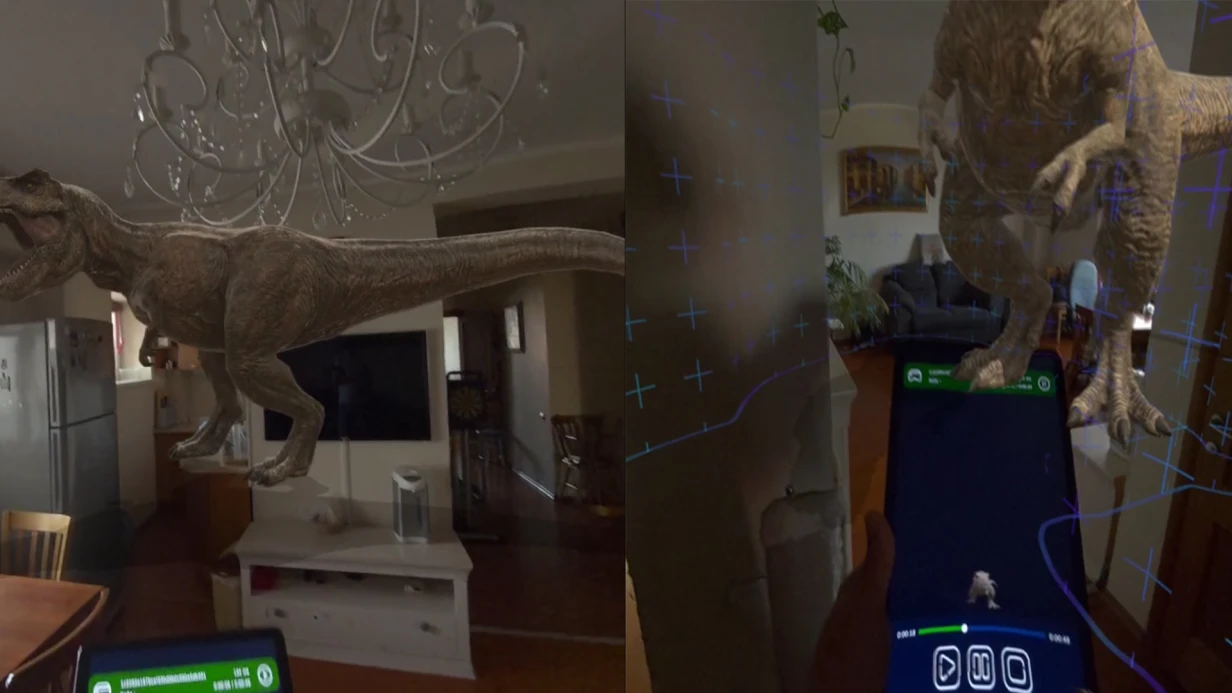
VR development for electronics and semiconductors changes the game. Instead of a PDF catalog, you offer an interactive 3D model that reveals the internal structure, scale, layout, and even simulated operation.
The client builds the stand themselves, runs processes, and sees how your component behaves inside their device. This removes objections at the sales stage and shortens the deal cycle.
We have been creating VR solutions for industry for 10 years, so we understand how to turn technology into an argument for your sales department. We don't overload clients with technical details — we deliver the visual clarity that convinces.
When an engineer or procurement specialist sees that your sensor fits their board precisely, the price question takes a back seat.
Without VR development, you are forced to ship samples to trade shows, arrange demonstrations every time, and spend weeks on approval. With virtual reality, you have a unified presentation system that works online from anywhere in the world.
Show your product to dozens of customers simultaneously — and don't hand the market to those who are already doing this.
If your company manufactures electronics or semiconductor components, missing out on VR means giving orders to competitors. Book a demonstration — see how your product looks through the client's eyes and see for yourself: it works.
What Implementing VR Development Brings to Your Production Cycle
Implementing VR in electronics and semiconductor manufacturing means being able to see the product before it ever exists in metal. Engineers, marketing, and customers examine parts, boards, and enclosures in full volume, rotate them, and look inside.
This removes misunderstandings between departments and reduces the number of errors in the early stages.
Savings on mockups and prototypes: physical samples are expensive and slow to produce, while a VR model replaces them in many tasks. You can check ergonomics, assembly convenience, and visual perception. As a result, the company spends less budget on materials and pilot batch production.
Faster approvals: when all participants see the same 3D model before them, disputes disappear. You make changes right during the meeting, and everyone immediately understands how it looks. Design and construction approval takes weeks, not months.
Staff training reaches a new level. New employees master assembly operations in virtual reality without risking expensive equipment or creating defects.
Onboarding time decreases while training quality improves — especially when working with microelectronics and complex technological processes.
Finally, product presentation. At an exhibition or a meeting with a partner, you show not a photograph but a live interactive model that can be examined from every angle. This increases brand recognition and strengthens trust in the company — and that leads to new contracts.
VR Development Formats for Electronics and Semiconductors
In electronics and semiconductors, the product is hard to show in person: microchips are smaller than a fingernail, and production lines cost millions. VR is a ladder of formats: from quick 3D visualization to a full simulator that replaces real equipment.
The client's goal is not to launch the "coolest tech toy" but to solve a specific business task: show a chip in every detail, train an engineer to work with a line, impress a partner at an exhibition. That is why we match the format to the task, not the other way around.
Below is a summary table of VR formats for typical requests from electronics manufacturers and distributors. Use it as a cheat sheet: if you find your scenario, we have already done something similar and can show you case studies.
| Format | Who It's For | What It Gives the Client |
|---|---|---|
| 3D product visualization | Sales and marketing department | Show the product in detail without a physical sample, speed up presentations |
| Virtual exposition | Distributors, trade shows | Replace a booth, attract attention, collect contacts |
| VR assembly trainer | Engineers, service teams | Train without risk to equipment, reduce costs |
| Production simulator | Process engineers, shop floor managers | Practice the cycle, verify skills before line access |
We implement all these formats on professional equipment, including HTC Vive. The platform choice is driven by your task and budget. We test the scenario with real users, refine usability, and polish it to stable performance. In the end, you get a tool that immediately integrates into sales, training, or marketing.
VR Development Project Stages: From Scratch to Launch
We put the process on a clear track: you always know what stage the project is at, what has been done, and what comes next. No "black boxes" and no sudden delays — every step ends with a concrete result you can see and approve.
This is especially important for electronics and semiconductors: the cost of error is high, and the launch of training or a presentation cannot be postponed.
This approach works because we first lock down the tasks and acceptance criteria, and only then write code and polish details.
- Brief and task audit. We discuss which audience the VR solution is for: employee training, virtual product demonstration, or an interactive exhibition booth. We record scenarios, your hardware constraints, and success criteria.
- Prototype and scenario. We build an interactive mockup. You see how the user will move and interact with objects, and you make edits before full development begins.
- Design and logic approval. We approve the visual style, movement scheme, interface, and hint logic. After this stage, edits concern only details, not the concept.
- Full version development. We program interactions, connect your 3D models, training materials, and analytics system. We work on professional equipment — so the result runs stably on your VR kits.
- Testing and debugging. We check scenarios together with your specialists, fix errors, and achieve smooth performance so there are no crashes at the most critical moment.
- Launch and setup. We install the application on your HTC Vive, train your employees, and hand over operating instructions.
- Support and enhancements. We stay in touch: we make edits promptly, monitor performance, and expand functionality as the task grows.
Transparency goes both ways: after each stage, you receive a short report and understand what has been done and how many resources remain. This way you control the budget and know exactly when the project will be ready for use.
In the end, you get not a "presentation prototype" but a working tool embedded in your business processes: accelerated engineer training, compelling sales of complex equipment, or an interactive booth that sets you apart from competitors.
We handle the technical side, and you focus on the results. If you want to estimate timelines for your task, we will send an approximate plan within a day of the brief.
What Is Included in the Delivery of a VR Project for an Industrial Client
After the final stage, you receive not just a working VR project but a complete package for independent ownership and further development.
We transfer all assets, rights, and support — so you stay independent from the developer and can modify, scale, and update the solution with your own team or with our assistance.
- Working project result — a polished application deployed on your equipment and verified against real production tasks.
- Complete source code and project files — all deliverables stay with you, no "closed" modules that make you dependent on the contractor.
- Exclusive rights — formalized documents for using, modifying, and replicating the solution for your production purposes.
- Technical documentation — a description of the architecture, scenarios, and settings that your engineers and IT specialists can understand.
- Instructions for employees — simple guides for startup and daily use, so implementation does not require the developer's constant presence.
- Administrator's guide — procedures for updates, backup, and diagnostics that keep the system running without downtime.
- Training for your team — a dedicated session where we transfer knowledge on configuration and support, including a review of real working situations.
- Post-launch support — warranty support and a direct communication channel for consultations and subsequent enhancements.
In the end, you receive not a "handed off and forgotten" product but an asset that works for you: it accelerates staff training, reduces the number of errors, and cuts downtime. Everything needed for full use and further development is already in the package.
Case Study: VR Demonstration Accelerated Approvals and Increased Sales
For a semiconductor component manufacturer, every day of delay in launching a new product means lost market share.
Previously, design approval took weeks: engineers, process technologists, and marketing gathered for meetings, studied drawings, and waited for pilot samples.
Clients deciding on purchases saw only the device enclosure — the internal architecture remained a "black box" to them.
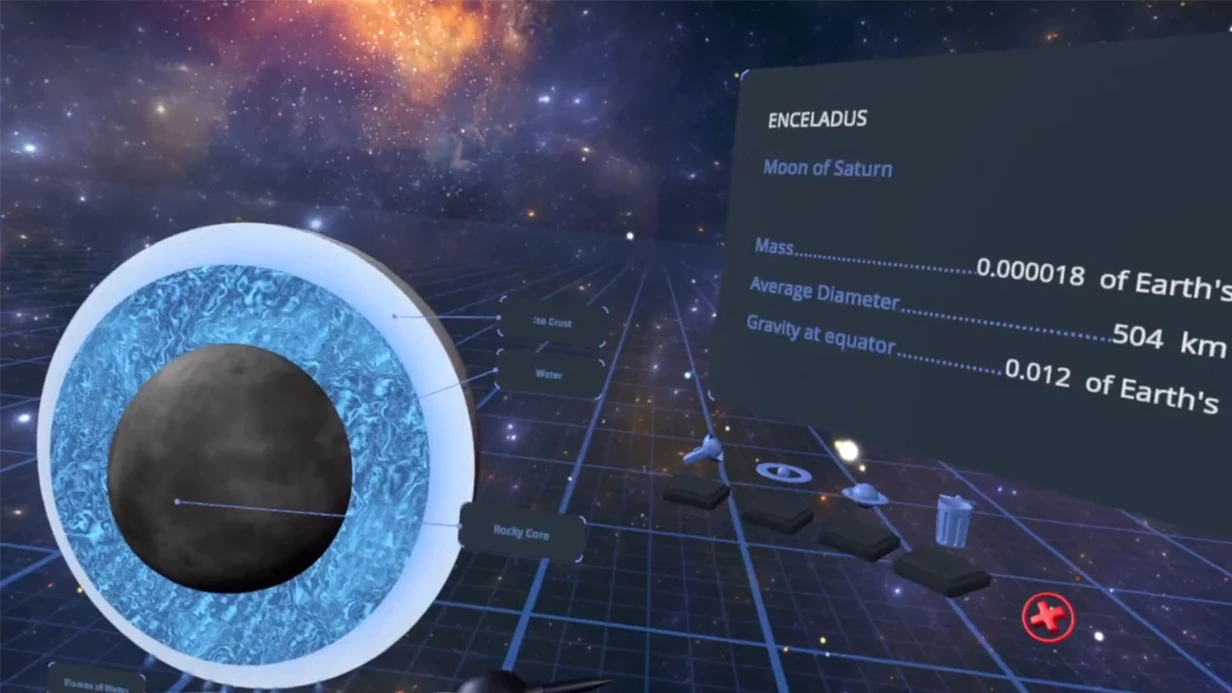
We replaced this process with a VR demonstration on the HTC Vive headset. In the virtual environment, the product can be taken apart down to individual components, heat zones can be examined, and operation can be simulated in different modes — without a physical sample.
The demonstration was run for several cities at once, saving up to two weeks per project by eliminating business travel.
The implementation results proved measurable: the approval cycle was reduced from three weeks to four days, and conversion from initial demonstration to order increased by 40%. Clients began making decisions faster because they could see the product clearly.
After this, the customer ordered a virtual showroom for the entire product line — the demonstration became a permanent sales tool.
Implementation Results
- Specification approval time reduced from 21 days to 4 days.
- Sales conversion increased by 40% after switching to VR demo.
- Budget savings on business travel and pilot samples — up to 30% per project.
- Repeat order for showroom development — confirmation of economic efficiency.
This case study shows: VR tools for electronics pay for themselves within the first months and become part of the regular sales and approval process. If you need to speed up product time-to-market and make your presentations more convincing — let's discuss your scenario.
How to Choose the Right VR Development Format for Your Tasks?
Choosing a VR development format starts with the task, not with trendy technology. For electronics and semiconductors, this could be demonstrating a complex device at an exhibition, training engineers to work with equipment, or visualizing a chip's internal structure for clients.
Each task requires its own approach: a short interactive video for a booth, a full-fledged trainer with step-by-step instructions, or a detailed product overview that can be examined from every angle.
The key selection criteria are goal, place of use, audience, budget, and timeline. If you need to attract visitors' attention at a conference, a lightweight solution that launches in a minute and requires no special preparation will work.
If the goal is to train employees, you need a scenario with stages and action control. And for selling complex electronics, a detailed model that users can explore at their own pace works better.
We help you navigate these options even before development starts. At a preliminary meeting, we analyze your task, audience, and expected result, then propose a format that fits your budget and timeline.
With ten years of experience in VR/AR/MR, we understand which solutions genuinely deliver value in electronics and semiconductors, and we don't offer anything superfluous.
The right format is one that produces measurable business results: increased recognition, more qualified leads, or reduced training time. Describe your situation — we will help you choose the optimal option without diving into technical details.
Frequently Asked Questions About VR Development for Manufacturing
Electronics and semiconductor manufacturing is an environment where the cost of error is high.
So it is no surprise that executives have questions: will the equipment break down, will VR fit into already-running processes, how long will implementation take, and will it require shutting down the shop floor. Below we answer the most common concerns — briefly and to the point.
These are not abstract promises but answers based on experience from implementations in industrial companies. If your question is not on the list — just write to us, and we will analyze your specific situation.
How reliable is VR equipment in a production environment?
The VR headsets we use belong to the professional line and are designed for intensive use. For the electronics industry, this means stable operation throughout a full working day without overheating or failures.
Failure of an individual component is a rare case, but even then you don't stop the process: we have backup kits and contractual service support.
Is VR development compatible with our equipment and software?
We do not connect VR directly to your machine or production line. The VR system operates as an autonomous layer on top of existing processes — it receives data from your engineering systems or works with its own database.
Therefore, compatibility is ensured at the scenario level: we adapt the virtual space to your models, process flows, and regulations. Integration happens without changing your current software.
Will production stop during implementation?
Implementation typically runs in parallel with current operations. We build and configure the solution in our environment, send you a demo, and you approve the result. Launch at the production site takes one working day — you just need to allocate a break between shifts. No conveyor stoppage is required.
What if employees can't handle the new technology?
We design VR interfaces for production to be as simple as possible: all the employee needs to do is put on the headset and follow the prompts. Training takes 15–20 minutes and happens right on site.
For complex scenarios, there is a hint system and a "master" mode that guides the operator step by step. Resistance to new technology decreases when people immediately see the benefit: fewer errors, faster training, clear visual control.
Who will maintain and update the system after launch?
We deliver the system with a complete set of documentation, but you are not left alone with the technology. A support agreement is signed: we update content, add new scenarios, and respond to requests.
If built-in digital support does not resolve an issue within an hour, our engineer gets involved. You always know who is responsible for system performance and within what timeframe.
Discuss Your Task and Get a Custom VR Proposal
Electronics and semiconductor manufacturing involves complex products that often don't physically exist yet when you need to show them to a customer or train employees.
A VR solution removes this limitation: you demonstrate the product in detail, perform virtual assembly, and safely practice operations before series production begins. The result — lower prototype costs and faster time-to-market.
We create not just a "picture" but a working tool for your task: exhibition presentation, staff training, sales support, or project defense before investors.
You don't need to write a technical specification — just describe the situation in your own words, and we'll take care of the rest.
Leave a request for a consultation — an engineer and a manager from our team will contact you within one business day. They will clarify the task, suggest implementation options, and prepare an individual cost estimate.
When you contact us, you get:
- Free project cost calculation — no hidden fees or obligations.
- Direct consultation with developers — ask questions about VR capabilities before launch.
- Clear timelines — we'll state realistic stages and the launch date before the contract is signed.
- Examples of similar projects for your industry — see the quality and functionality on real case studies.
- A solution tailored to your scenario — from a short customer demonstration to a comprehensive staff training program.
Tell us about your task, and we will propose a format that delivers measurable results: increased recognition, reduced training costs, or higher sales conversion. Leave a request — we will respond quickly, offer options, and calculate the cost.