

Why fitness clubs lose clients and how to fix it
Every fitness club owner faces the same problem: a couple of months after signing up for a membership, some clients stop coming. Workouts become routine, motivation drops, and the person finds a reason to stay home.
Attendance declines, and the club loses revenue from renewals and that lively atmosphere that attracts new members.
Competition among gyms is growing, and the standard set of machines and group programs no longer surprises anyone. People come for emotions but get the same treadmills as in the neighboring club. Retaining a client is hard — they need something they don't have at home or at competitors.
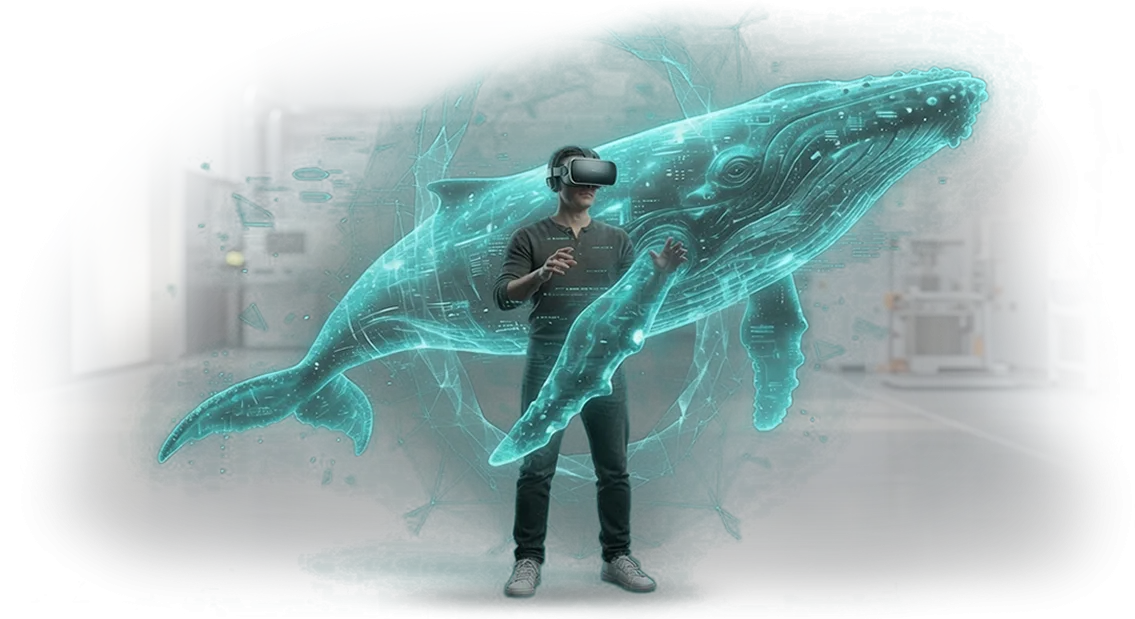
This is where VR for fitness helps. Virtual reality turns a workout into a game: the person doesn't count minutes until the end of the set but experiences a story, moves, and wants to come back.
It's a working tool for engaging visitors — it increases training regularity and gives the club a reason for new offers.
We develop turnkey VR solutions for fitness clubs. Professional equipment and fine-tuned workout scenarios let you launch a virtual reality zone without downtime or complex setup.
As a result, the club gets not a "room with headsets" but a direction that solves the client retention problem and sets you apart from competitors.
What results a VR/AR solution brings to your business
VR workouts are no longer exotic: they have become a tool that changes a fitness club's economics. Clients look for new experiences, and standard cardio and strength programs no longer hold their attention.
Implementing immersive formats covers this need — you get not just a "gimmick" but a working mechanism for growing key metrics.
First of all, a VR zone increases attendance. The format attracts those who are intimidated by regular gyms: beginners, teenagers, office workers. A person comes "just to try" and stays for regular workouts — this expands the funnel and increases visit frequency. Those who already train also come back more often to pass a new level or beat their record.
The second result is brand recognition. VR sessions look impressive, so guests film videos themselves and post them on social media. Each such post works as free advertising: the club gets talked about, people tell their friends, and it stands out from its neighbors. Ultimately, this builds the image of a modern venue people want to bring their friends to.
The third benefit is quality fitness leads. A VR workout is a natural demonstration of the club's capabilities without pushy sales. After a trial session, you get a contact and a reason for dialogue: offer a personal program, a membership, or a next visit. This approach converts curiosity into real sales.
Finally, a VR/AR solution creates additional revenue. You can sell one-time VR sessions, include them in premium memberships, or rent out the zone for corporate events.
The average check grows: clients gladly pay extra for a unique experience, while the cost of one session remains low.
We help implement VR/AR turnkey — from scenario selection to staff training. You get not equipment but a ready-made tool that pays off through increased attendance, leads, and revenue.
VR application formats for fitness clubs: choosing for your needs
Visitors come to a fitness club for results and emotions. However, standard machines quickly get boring, and gym overcrowding leads to attrition. Virtual reality for fitness solves both problems: it turns routine into a game and allows more workouts in the same space. The key is to choose a format that matches your audience and goals.
Below are the typical VR formats we implement in clubs. They differ in workout load, scenario, and user profile, so they are selected individually for each club. We focus on your tasks: attracting new clients, retaining existing ones, or launching a separate paid direction.
| VR Format | Who it's for inside the club | What it gives the client |
|---|---|---|
| VR racing | Young visitors, adrenaline lovers, corporate groups | A peak of emotions and competitive excitement — guests come back and bring friends |
| VR boxing | Club members who need an intense cardio workout | Burning calories without monotony, training reaction and coordination |
| VR meditation | Visitors after workouts, women 25+, office workers | Stress relief, recovery — expands the club's audience with "non-athletic" clients |
| Interactive workouts | All categories, including beginners and people without experience | A universal format: every session is a scenario, and the trainer sees progress in real time |
This structure lets the club cover the needs of different segments: someone wants thrill, someone wants calm recovery. And you get not just entertainment but a tool that increases the time a guest spends in the club and the number of weekly visits.
We help choose a format and adapt it to your space, traffic, and goals — so VR works for your business from day one.
How VR application development works: a step-by-step plan for the client
Developing a VR application for a fitness club is not a "black box" but a transparent process where you participate at every stage. We structured the work so you see results early on and understand what you're paying for. Below is the step-by-step plan projects follow: from the first conversation to ongoing support.
-
Initial discussion and audit. We study your club: audience, premises features, training goals. We determine which VR workout format suits you and set expectations for timeline and budget.
-
Concept approval. We prepare workout scenarios, exercise structure, and visual style. You approve the plan before development begins — this eliminates unnecessary rework and surprises at the final stage.
-
Product development. We create the VR application on professional equipment, adapting it to your club's space. We include the technical aspects of safe training: zone control, pauses, and settings for each user.
-
Testing and polishing. We check the application for usability and quality — we bring in the club's first visitors to gather feedback. We make adjustments, fine-tuning session difficulty and duration.
-
Launch and training. We integrate the VR zone into the schedule and train trainers and administrators. We advise on announcing the new feature so you attract clients in the first month.
-
Support and development. We stay in touch: we update content, add new workouts, and monitor equipment stability. You get a working system without technical worries.
This approach lets you launch VR workouts without disrupting the club's core operations and quickly achieve results — from first tests to a steady flow of visitors.
What is included in the VR solution delivery for the client
You get not just an application but a complete turnkey VR direction. The package includes everything needed for launch and daily operation: from equipment tuned down to the last detail to trained staff who confidently work with the system from day one.
- Ready-made VR application for fitness clubs: well-designed workout scenarios that keep clients' interest and motivate them to return.
- HTC Vive equipment set, assembled and tested for your zone — you don't need to buy anything extra or look for contractors.
- Turnkey installation and setup: everything works on launch day; all that's left is opening the doors to visitors.
- Clear instructions for staff: how to greet a guest, start a session, help with the VR headset, and handle typical situations.
- Staff training: administrators and trainers learn to manage the system in a couple of hours without interrupting their current tasks.
- Equipment warranty and technical support for the entire cooperation period — you won't be left alone with a breakdown.
- Application updates: we regularly add new workouts and scenarios so clients are interested in coming back again and again.
In essence, we handle the entire technical side, and you get a working service that generates revenue in the first weeks. All you need to do is invite clients and manage gym utilization.
Case study: how a VR application on HTC Vive brought clients back to the gym
Many fitness clubs face the same problem: after the first months, attendance drops, clients find excuses and stop coming. We helped one such club break this cycle by offering a non-standard workout format based on HTC Vive.
What changed after the launch
Instead of fighting for every client with discounts, we developed a VR application with short game-like workouts. We installed it in a separate zone of the club, and it immediately became a point of attraction: guests lined up to try virtual boxing or a dance battle.
After three months, repeat visits grew by 35%, and the average check by 20%. Trainers noticed that clients who tried VR workouts started coming more often and were more willing to return.
The club also got free marketing: visitors filmed the experience and shared it on social media, bringing in new guests.
Why this format pays off
VR workouts are emotion and novelty. A person comes not for a boring cardio session but for a game that unnoticeably delivers a solid workout load. For the club, this is a way to stand out from competitors and give clients a compelling reason to return.
We handle the turnkey development: we select scenarios for your gym's audience, configure the equipment, and train the staff. Tell us about your club — we'll prepare a solution that will bring clients back to the gym.
How to choose a VR solution format for specific requirements?
Every fitness club works with different tasks: someone needs to liven up the waiting area, someone needs to add a service for personal training, and someone wants to stand out from competitors with a new group class format.
A standard catalog solution doesn't always fit here — the room area, foot traffic, and visitors' age and fitness level all matter. That's why we answer like this: first we analyze your specific situation, and only then propose a configuration that will deliver results.
For example, small studios with limited space work well with a compact single-station VR zone with short 10–15 minute sessions. This lets you serve client flow without queues and without interfering with main workouts.
For spacious clubs with high foot traffic, it makes sense to install several stations and organize booking — then the new entertainment becomes a full-fledged direction that drives additional membership sales.
Adaptation also applies to the audience. If beginners come to you, the interface should be as simple as possible, and scenarios safe and intuitive. For advanced athletes, we add complex training modes with a competitive element.
We also consider the budget: you can start with a single complex, test demand, and gradually expand the zone — without large one-time investments.
As a result, an individual solution is not just "VR in the club" but a tool that solves your task: increases loyalty, attracts new guests, and raises the average check.
After the audit, we propose a scenario for your square footage and flow, support the launch, and adjust settings to your preferences. This way you get a predictable result rather than a boxed product that may not suit your visitors.
Frequently asked questions about VR application development for business
Before launching a VR direction in a fitness club, business owners ask the same questions: how much the development will cost, how quickly the project will pay off, and whether they'll have to deal with complex technology. We answer the main concerns — briefly and without technical details.
How much does VR application development cost?
The cost depends on the number of scenarios, the number of zones involved, and integration with the club's system. But before starting work, we calculate the economics: you get a payback calculation, not just a quote. This way you understand over what period the project will return its investment.
What are the development timelines?
A typical project takes from a couple of weeks to two or three months. Exact timelines depend on scenario complexity and room readiness. At the brief stage, we define a plan with milestones so you can see the launch date and control every step.
How quickly will VR pay off in a fitness club?
VR trainers increase the club's appeal and average check: guests eagerly try new formats. We calculate payback based on equipment utilization and session cost.
Usually, the project becomes profitable within a few months — we give an accurate forecast after learning about your club.
Is VR equipment difficult to use?
Operation comes down to simple steps: the administrator selects the desired scenario, the guest puts on the headset and follows the prompts. We train the staff and provide clear instructions. Support stays in touch — trainers don't need to become engineers.
Ready to discuss a VR project for your gym? Leave a request
Implementing VR in the gym is not about buying expensive equipment — it's a tool that brings new clients and increases the average check. But to get this effect, it's important to choose the right scenarios, workout load, and session format. We've already walked this path with dozens of clubs — and we're ready to walk it with you.
Leave a request for a VR consultation — we'll discuss for free how a VR zone fits into your format, which workouts will be in demand among your visitors, and how quickly the project will pay off.
We'll also send a VR cost estimate — taking into account the number of headsets, the gym area, and your tasks. And if you want to see everything live, we'll organize a pilot demonstration right in your club.
What is included in the request:
- Free consultation — we analyze your goals and audience and suggest suitable VR workout scenarios.
- VR project cost estimate for your gym — no hidden fees or complications, a transparent quote.
- Equipment and game scenario selection — for your space, visitor count, and budget.
- Pilot demonstration — we'll show a VR workout to your guests, and you'll see their reaction with your own eyes.
- Clear launch plan — timelines, stages, responsible parties, and a list of what you need to prepare on your end.
- Post-launch support — staff training, content updates, technical assistance.
Fill out the form — and we'll contact you within one business day. We'll discuss, calculate, and demonstrate. The rest is up to you.