

VR Solutions for the Mining Industry: When Simulators Are Outdated
Every year, mining enterprises lose time and money on personnel training, but the greatest cost is the risk to life.
Briefings, paper regulations, and outdated simulators do not reproduce the real environment: smoke, equipment failure, or an emergency situation at the working face.
An employee encounters an emergency scenario for the first time already on site — and then the price of a mistake becomes catastrophic.
Add to this a shortage of experienced personnel. Young specialists need to be brought up to speed quickly, and there are not enough mentors. Training takes weeks, while staff turnover forces you to start over.
The enterprise loses productivity, and the safety department loses control over the level of preparedness. That is why VR for the mining industry is no longer an experiment: it has become a working tool that saves time and reduces the number of incidents.
VR simulators for miners make it possible to practice actions in a safe virtual environment, repeating a scenario as many times as needed to build muscle memory.
The employee does not learn from a picture but through personal action: inspecting equipment, making decisions, and responding to an emergency. The result is a faster path to a working shift, fewer errors in real conditions, and higher staff confidence.
We help mining enterprises implement such solutions turnkey — from scenario to launch and ongoing support.
VR Training for the Mining Industry: Fewer Accidents
Reducing Injuries Through Emergency Scenario Practice
VR training for miners makes it possible to practice the most dangerous situations without risking lives: collapses, smoke, equipment failure. The employee learns to act automatically rather than encountering an emergency underground for the first time. As a result, the number of accidents and related downtime decreases within the first few months.
Faster Transition of Employees to a Working Shift
The simulator shortens the training period from weeks to several days. A newcomer masters routes, signs, and regulations in a virtual copy of the mine without waiting for an available mentor. This accelerates training and helps close the staffing needs of a section faster.
Objective Skills Assessment
The system records every action of the worker: reaction time, precision of operations, compliance with technology. Results are compared against a benchmark, so skills assessment does not depend on the instructor's subjective opinion. This makes it easier to identify gaps and allow only well-prepared people to work.
Increased Productivity of Mining Operations
Employees trained in VR make fewer mistakes and operate equipment with greater confidence. This reduces downtime and improves output and the quality of shift assignments. Investment in a virtual simulator pays off through stable section performance.
VR Application Formats for Mining Production Tasks
Not all mining production tasks can be solved with one format: the same equipment requires different approaches — from safe training to visual instructions right at the site.
We select a format for each specific task so that you get a measurable result: less downtime, faster ramp-up, lower risk of errors.
| Format | For Whom / Task | What the Client Gets |
|---|---|---|
| Fully immersive VR simulator | Training mining equipment operators, practicing emergency situations | Safe practice without stopping production: the worker gains experience on complex scenarios, while the enterprise reduces accident rates and consumable costs |
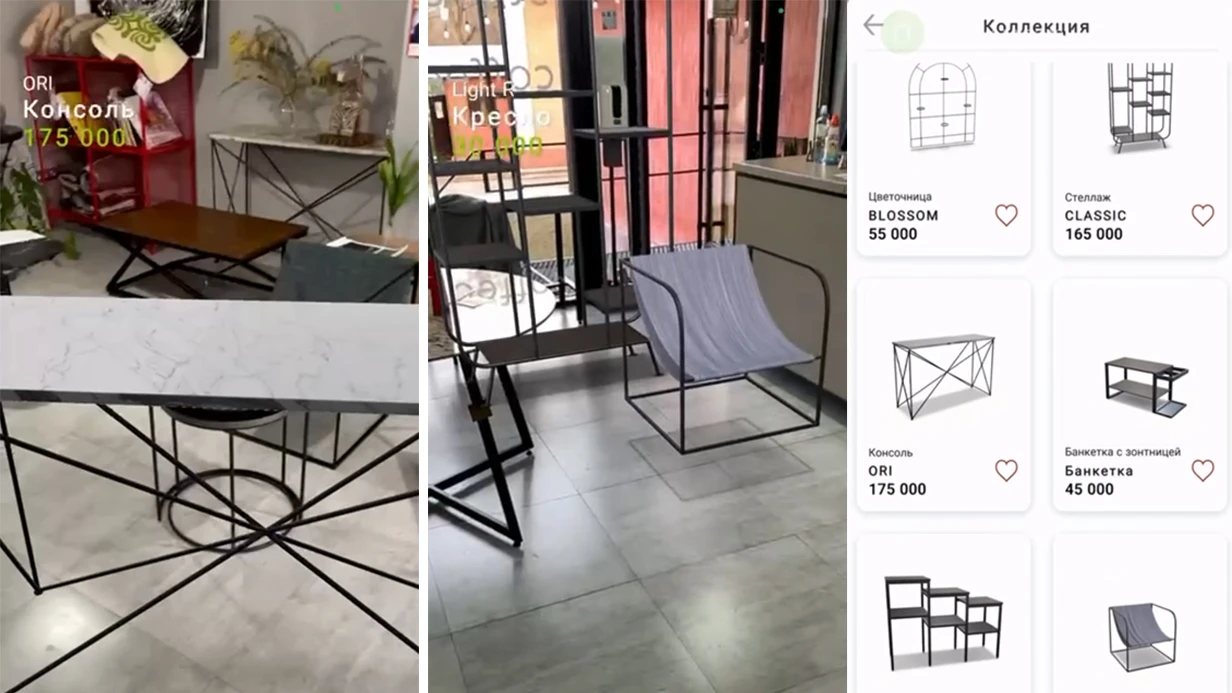
| AR instructions on equipment | Maintenance crews, servicing of machines and mechanisms | Step-by-step prompts directly on components: less time searching for diagrams, human-factor errors eliminated, no paper regulations needed |
| MR equipment engineering | Engineers, designers, chief mechanic departments | Collaborative work with a 3D model at real scale: you can see how a part will fit into an existing assembly before it is manufactured — savings on mockups and rework |
| VR simulation of a process flow | Process engineers, mine surveyors, dispatchers | Testing different mining and processing scenarios "as if live": you find bottlenecks and test solutions without stopping production |
The table shows: a format is not an end in itself but a tool for your task. We help you choose the technology that pays off in your conditions and take responsibility for its implementation — from prototype to operation at live sites.
How a Project Unfolds: From Brief to Launch
Conventional VR simulator development looks like a "black box" to the client: it is unclear what happens between the brief and launch, when edits can be made, and who is responsible for the result.
We structure our work differently: six transparent stages with checkpoints where you see intermediate results and make decisions.
- Brief and task immersion. We study your regulations, typical employee errors, and training requirements. We define the simulator's goals, target audience, and success criteria — so everyone understands where we are heading.
- Scenario approval. We develop a detailed training scenario: what actions the employee performs, which errors are practiced, and how feedback looks. You approve the scenario before development begins — this eliminates rework at later stages.
- Prototype and environment design. We create the simulator's visual style based on your documentation and photo or video materials from the site. The prototype lets you evaluate the atmosphere and interface before the main work begins.
- VR application development. We build an interactive environment using professional equipment and proven tools. Already at this stage, you see working versions of the simulator and can test individual mechanics.
- Simulator testing. We run validation with your specialists — instructors and future trainees. We collect feedback and adjust difficulty, logic, and interface before launch. You get a stable version without "raw" scenarios.
- VR implementation in industry. We help with equipment installation, train your instructors, and hand over documentation. After launch, we stay in touch: updates, refinements, and technical support are covered by the contract.
Each stage ends with a checkpoint that you personally approve. That way, you always know what stage the project is at and what comes next — no "black box" and no surprises with deadlines.
What Is Included in a VR Simulator Delivery
When ordering a VR simulator for the mining industry, you receive a complete training system, not just an application. The delivery scope is transparent in advance: we include everything needed for launch and day-to-day operation — from scenarios to support. You will not have to order additional services or look for specialists elsewhere.
- Scenarios and virtual environments — we model mining sections, emergency situations, work with equipment, and safety compliance actions. Scenarios are adapted to your internal regulations and typical employee errors.
- Training methodology — a set of materials for instructors: training programs, session instructions, skills assessment criteria, and reporting templates. The instructor does not need to develop a program — it is already prepared.
- VR documentation — user manuals, setup instructions, and equipment maintenance regulations. All documentation is provided in electronic and printed form so that employees can quickly find the information they need.
- Modification rights — you receive the rights to modify scenarios for your own tasks. This means you can change training situations or add new ones without being required to place an order with the contractor.
- Simulator support — regular content updates, technical support, and an on-site visit by a specialist when necessary. The simulator is always operational, and downtime does not disrupt the training schedule.
- Team training — we conduct orientation demonstrations for instructors and answer employee questions. Staff begin working with the simulator immediately, without a long learning curve.
This complete scope eliminates hidden work and additional expenses. You receive a working tool, a methodological foundation, and support — everything needed for VR training to improve employee safety and productivity from day one.
Case Study: VR Simulator Implementation at a Mining Enterprise
A mining company was looking for a way to shorten the onboarding time for new employees and reduce the number of errors when working with equipment. The conventional approach — lectures and shifts with a mentor — did not provide a full picture of actions in emergency situations.
We proposed supplementing training with a VR simulator based on HTC Vive: professional equipment with precise motion tracking, and a virtual environment that fully replicates real conditions.
The simulator includes scenarios that are difficult to practice at an actual site due to risk or cost: emergency stops, fires, smoke. The employee performs operations in a virtual copy of the section and receives instant feedback. Errors do not lead to injuries, and repetitions can be done as many times as needed.
We ran a pilot project with one crew and compared the results against a control group. Initial training time was reduced by a third — from two weeks to nine days.
The number of errors in practical tests fell by nearly half, and employees performed more confidently in the safety exam. Mentors began spending less time on routine explanations.
The enterprise's manager noted: "We expected VR to be useful, but the difference was significant.
People adapt faster at the real site, and the number of incidents caused by personnel has decreased." The client expanded the program to other sections and ordered additional scenarios.
How to Choose a VR Format for Your Task?
Choosing VR for your task is the question we hear most often. Training an employee to act in an emergency is one thing; showing an investor the scale of a future enterprise is another.
Therefore, the main selection criterion is not how "impressive" the technology is, but what should change after the experience.
If the goal is personnel training, you need a full simulation with realistic scenarios and feedback. The employee practices actions in a safe environment, receives an assessment, and corrects errors before they become real.
For the mining industry, this most often means practicing safety rules and behavior in emergency situations — where the price of a mistake is too high for "live" training.
If the task is presenting a project to investors, partners, or government bodies, the format is different. Here, visual clarity and a short scenario matter: an enterprise overview, key facilities, and emphasis on benefits.
Such an experience lasts a few minutes but leaves an impression that no video presentation can match.
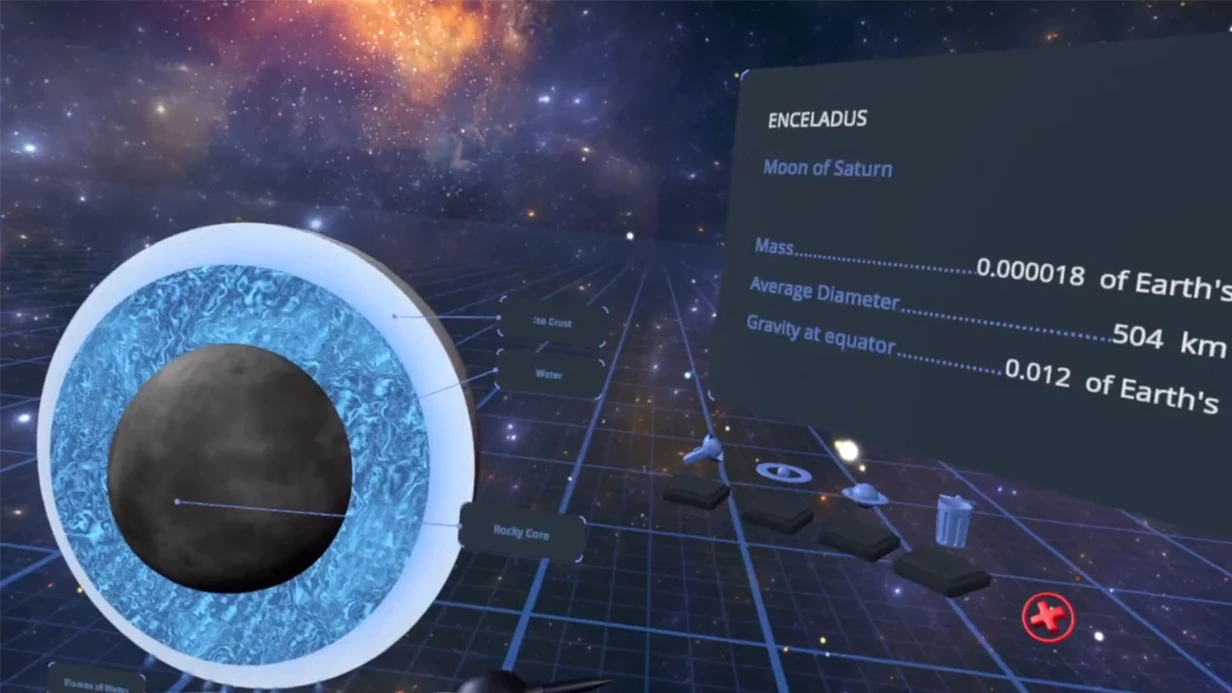
For work with equipment, interactive machine study is chosen: detailed inspection of components, breakdown of the design, and sequence of operations.
This is convenient at the procurement stage, when introducing new mining equipment, or when preparing operators and maintenance personnel — without disrupting the production schedule.
In all cases, we start with a task analysis: we define the audience, scenario, and success criterion, and only then propose the format and scope.
This way, you get a solution for your goal rather than "technology for its own sake." Describe your situation — we will recommend a format that will work for you.
Frequently Asked Questions and Client Concerns
Clients in the mining industry do not ask about the capabilities of virtual reality but about reliability: what happens if the simulator breaks down, who will provide a replacement, and will employee training stop. These are the right questions — the safety and continuity of personnel training depend on them.
Below, we examine the most common concerns — just as we address them in negotiations.
What happens to training if the VR equipment fails?
Training will not stop. We design the program so that you have a backup set or spare modules — this is included at the delivery stage. If one device breaks, classes continue on another, and the faulty unit is replaced according to the procedure. Maximum downtime is a few working days, and it does not disrupt the training schedule.
Who is responsible for support and how quickly do they respond?
Support is included in the contract and works remotely: you submit a request, we diagnose the problem and help resolve it without an on-site visit. If equipment replacement is needed, we arrange delivery.
Average response time is fixed in the SLA so that you know the timelines in advance rather than relying on promises.
What guarantees do you provide on the simulator?
The warranty covers both the software and the professional equipment. If faults occur within the warranty period due to our fault, we fix them at our expense. For mining enterprises, this means the training budget will not suffer from unplanned repair costs.
How are training scenarios updated?
Scenarios are not a static recording. After implementation, we support the simulator: we update training situations, add new inputs, and account for changes in your regulations.
Updates are installed remotely, without stopping enterprise operations and without involving your specialists.
Do we need to hire a separate employee for maintenance?
No. We handle maintenance ourselves: you work with a single contractor responsible for both the training setup and the technical side. Your employees do not need to understand the system's architecture — a basic startup guide that we provide at the beginning is sufficient.
If you still have a question we have not answered, feel free to ask us directly. We will explain how we will build support specifically around your schedule and regulations, and show examples of implementations in the mining industry.Order a VR Solution for Your Production Facility
Implementing VR solutions at a mining enterprise is not an experiment but a working tool for reducing risks and costs. The sooner you launch a pilot scenario, the faster your specialists will stop learning from mistakes that cost too much.
We will help you move from an idea to a working solution without involving your IT team in technical details.
Leave a request for a consultation — and within one business day you will receive a cost estimate for a VR project tailored to your tasks.
We will analyze your specific scenario, propose an implementation option that accounts for your equipment and processes, and show the projected effect: from reduced training time to lower accident rates.
What you receive immediately after your inquiry:
- Preliminary cost estimate for the VR application — no hidden conditions or fine print, clear for budgeting purposes.
- Commercial proposal with the scope of work, timelines, and stages — convenient for internal company approval.
- A scenario for the first VR module — for example, practicing emergency response or training in equipment operation.
- An implementation plan that accounts for your shift schedule and calendar: where to place the VR zone and how many employees to involve.
- Results assessment — what training metrics you will be able to measure after a month and how they will affect occupational safety.
To receive all of this, fill out a simple form or call us — we will clarify the details in 10 minutes and prepare a tailored proposal.
The conversation does not obligate you to place an order: we first demonstrate the value for your enterprise, and only then discuss collaboration.
Start with a short VR consultation — it is the first step toward your employees mastering hazardous skills without risk and your enterprise gaining measurable benefits. Leave a request now, and we will prepare materials specifically for your production facility.
Translate the above into English. Preserve structure exactly.