

Mechanical Engineering Without VR: How to Sell What Hasn't Been Produced Yet?
Selling a machine tool or production line often resembles a blind deal: the client can't touch the equipment, see it in operation, or assess its scale.
While the product hasn't been manufactured yet or sits at a factory thousands of kilometers away, the manager shows drawings and a 3D model on a laptop — and hopes for the client's imagination.
But imagination is a poor salesperson: if the director hasn't "seen" the machine tool in his own workshop, the budget stalls.
Every failed demonstration means lost orders and missed revenue. A competitor who lets the client "walk around" the equipment and start it with one button takes the contract before the price is even discussed.
In mechanical engineering, the winner isn't the one with better specifications on paper, but the one who shows the product in action faster and more vividly.
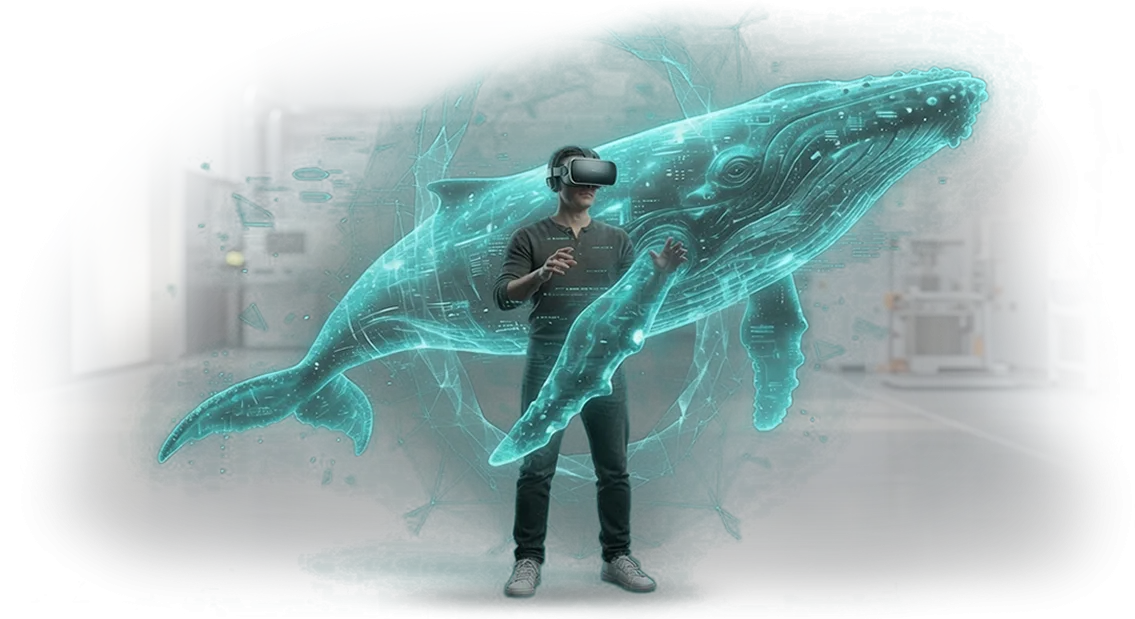
Virtual reality closes this gap. We develop VR applications for HTC Vive, where the client in a headset walks around the machine tool, looks into the working units, starts the machining cycle, and sees the finished part — before the first unit has even left the assembly line.
Such a product demonstration removes the main objection, "but how will this work for us?" and significantly shortens the sales cycle.
our team has been doing visualization for industry for over 10 years: from interactive catalogs to full-scale VR workshops. We handle all turnkey development — all you have to do is invite the client to a demonstration.
This turns an ordinary presentation into an event, after which the price question takes a back seat.
What a VR/AR/MR Application Will Give Your Production
At a mechanical engineering facility, the main challenge is showing the client a future product before it exists. Drawings and renders don't give the full picture, and manufacturing a physical prototype costs time and money.
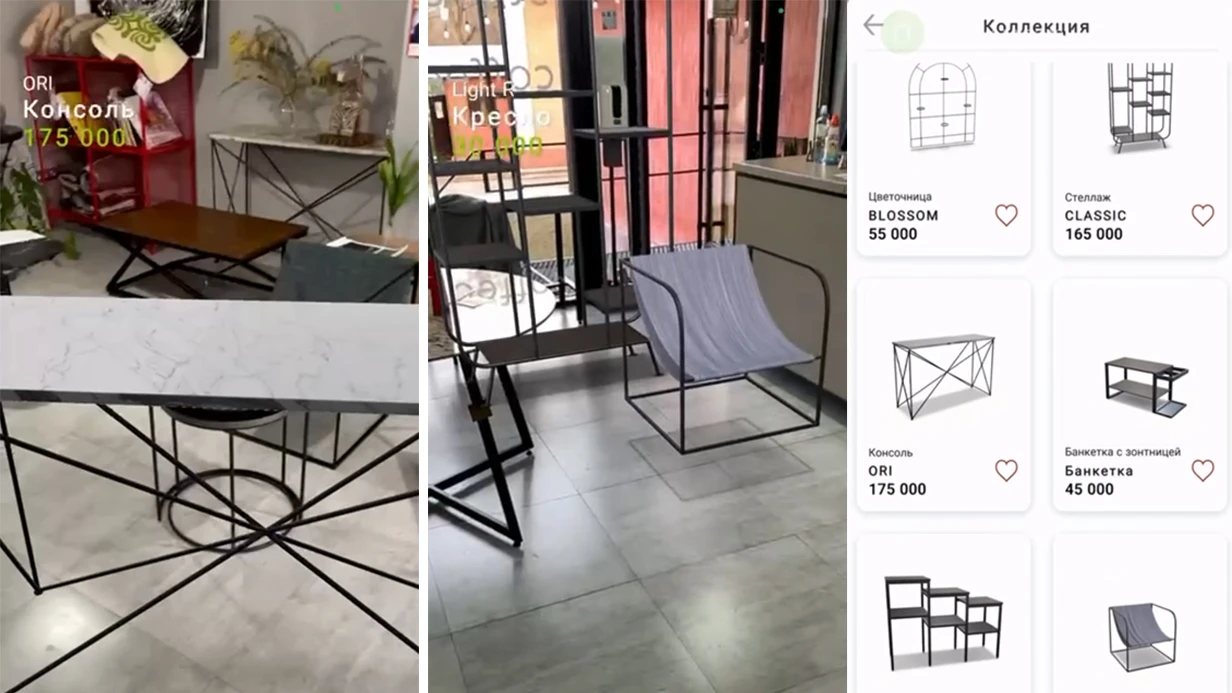
A VR/AR/MR application solves this problem: you get a full-fledged virtual model that can be examined from all sides, at real scale, and even in working motion.
Visual clarity directly affects the speed of approvals. When key decision-makers see the product "live" rather than on a flat screen, revisions are made before production starts, not during it. This shortens the development cycle and eliminates costly rework.
What's more, all participants in the process — design engineers, process engineers, clients — see the same object without discrepancies.
Savings on prototypes become a measurable business result: part of the physical samples is replaced by virtual ones, while the quality of decisions doesn't suffer.
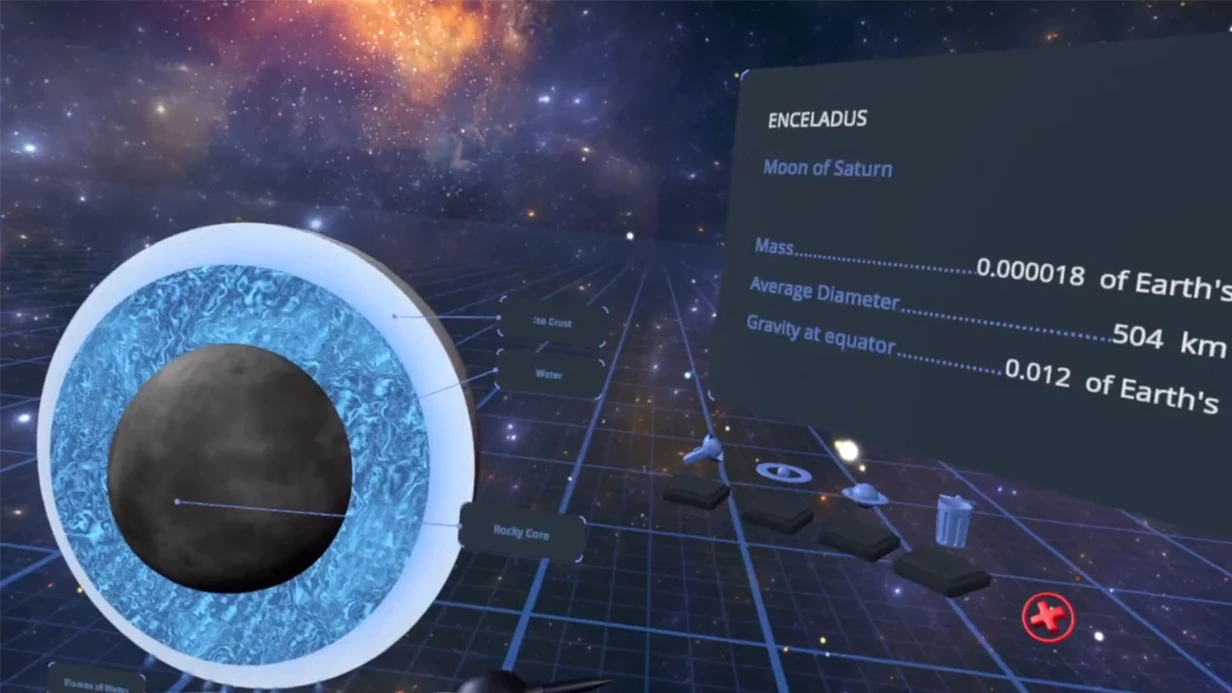
Staff training is another area where the advantages of VR are obvious. New employees can safely practice operations on complex equipment without risking either themselves or the machine tools. Experienced workers master new technological processes faster.
With this approach, you improve the team's qualifications without stopping production and without extra spending on consumables.
Sales growth comes from a convincing demonstration of the company's capabilities. Instead of dry specifications, you show the client an interactive image of the product, its internal structure, and its design advantages.
This is especially important at exhibitions and when working with foreign partners: visual clarity helps overcome the language barrier and speeds up decision-making. Buyers are more willing to work with a supplier who can show a product rather than describe it in tables.
Finally, there's the company's image. Using VR/AR/MR shows that your production keeps pace with the times and implements global best practices. This builds trust with clients and investors and sets you apart from competitors.
In sum, the technology works for every key business area: from engineering preparation to marketing and sales.
VR Solution Formats for Mechanical Engineering: Choose for Your Task
In mechanical engineering, it's hard to show large-scale equipment or a technological process at full size. Traditional presentations and drawings don't give the buyer a sense of the product's real dimensions and capabilities.
VR solutions remove this limitation: the client sees the product at full scale and even "interacts" with it. This is especially important when selling complex machinery, where the cost of a wrong choice is high and the impression made in the first seconds decides a lot.
We develop virtual formats for the tasks of mechanical engineering enterprises and work on professional HTC Vive equipment. This ensures a stable, smooth picture, and employees and clients quickly get used to the controls. Below are the basic formats most often chosen by our clients.
| Format | For whom | What it gives the client |
|---|---|---|
| VR presentation | Sales department, marketing | Visual product demonstration at exhibitions and negotiations; increased interest and brand recall |
| Virtual tour | Clients, partners, investors | Remote exploration of a workshop or line without business trips; saving time and budget |
| VR training | New employees, engineers, technologists | Safe practice of operations without production downtime; faster onboarding |
We adapt each format to your specifics — from a single machine tool to an entire plant. We help define the goals and choose the right option, set up the scenario, and test it on real users.
If you need a non-standard scenario — for example, several specialists viewing an object together — we'll discuss it during a consultation.
Stages of Creating a VR Solution: From Brief to Launch
Creating a VR solution is a transparent route with checkpoints, not a "black box." We fix the stages and timelines so you can see what's happening with the project and influence the outcome in time.
- Brief and immersion in the task. We find out which production or training task VR will solve: staff training, equipment demonstration, assembly control.
- Concept and plan. We propose a scenario, functions, and a list of the required 3D models and instructions. We agree on the timeline and the result.
- Prototype approval. We show a diagram of the future interface. You make edits before the main development begins — this saves budget.
- Application development. We build the VR environment, connect models, and configure prompts and controllers. We show intermediate versions every few days.
- Testing on your equipment. We check how the solution works on target devices, including HTC Vive. We fix any issues before launch.
- Launch and training. We install the application, set up the VR area, and teach your team to use the solution.
- Support and development. We update content, add new scenarios, and help expand the project to other workshops.
This way, each stage ends with sign-off: you know what you're paying for and what you get at the output.
What's Included in a VR Project Delivery: A Complete Kit for the Sales Department
A buyer of mechanical engineering products makes decisions not from drawings, but from a vivid demonstration. That's why a VR project for the sales department isn't just an application — it's a ready-made sales tool. We deliver a complete package that your team can start working with immediately after installation.
What's Included in the Delivery
- Ready-made VR application for HTC Vive: a virtual sample of your product — a machine tool, line, unit, or workshop — with the ability to inspect it at real scale. The client sees the device, its components, and the operating principle without a physical sample ever being produced.
- Source project files: you're not dependent on the developer. Any changes — new modifications, options, colors — can be made by your own specialists or any contractor team you choose.
- User documentation: instructions for launching, setting up, and operating the solution for employees without technical training. The sales department quickly gets up to speed and starts demonstrating the products.
- Manager training: we run a session where your salespeople practice the demonstration scenario — from the first seconds in virtual space to answering client questions. After the training, every manager confidently runs presentations on their own.
- Technical support during the maintenance period: we promptly answer questions, help with updates, and adapt content to new tasks. We guarantee stable operation on the equipment you use.
- Promotional materials for exhibition stands: short videos recorded in VR — usable on your website, in presentations, and on social media to spark client interest before a face-to-face meeting.
So you get not an "app in a vacuum" but a working kit for the sales department: from a ready-made demonstration to training and support. The project pays for itself through faster deals and reduced costs on samples, transportation, and business trips.
Case Study: VR Presentation of Parts Delivered 40% Sales Growth
For mechanical engineering enterprises, the biggest pain at exhibitions is showing complex products so the client understands their value within a minute. Catalogs and drawings don't convey scale, and transporting samples to the booth is expensive and not always possible.
The buyer makes a decision during the booth visit — if they haven't seen and understood the product, the contact is lost.
How It Went
We built a VR presentation for the Protech plant, which exhibited industrial parts and assemblies at an industry trade show. Instead of physical samples, they set up a VR station based on HTC Vive at the booth.
A visitor put on the headset and found themselves inside a 3D model of the product: they could inspect it from all sides, look inside the mechanism, take it apart into components, and see how the part works in an assembly. No other format delivers that level of clarity.
Results the Client Achieved
Over two days of the exhibition, more than 300 potential clients went through the VR presentation. The average time at the booth grew from 30 seconds to 5–7 minutes — people were genuinely engaged and called the manager over for a conversation themselves. The sales department received contacts only from interested visitors, not random passersby.
Three months later, the company recorded a 40% sales increase for the product group demonstrated in VR. The client didn't just recoup the project — they came back to us for a new solution: now the VR presentation is used to train dealers and internal sales staff.
This confirms: the right tool for demonstrating complex products delivers measurable business results.
Frequently Asked Questions About VR Solutions in Mechanical Engineering
Before ordering a VR solution for mechanical engineering, production staff and executives have the same questions: how to fit the technology into existing processes, how long implementation will take, and whether staff will need retraining. We answer the common doubts — without technical jargon, only what affects your work.
How does VR fit into current production if we already have schematics and CAD models?
A VR solution doesn't replace familiar tools — it complements them. Your models and drawings remain the foundation; we configure the system to work with existing data.
Nothing changes for employees in their everyday tasks: VR is used at specific stages — assembly verification, staff training, client presentations.
How long does implementation take? Will it stop production?
Implementation runs in parallel with your processes, not instead of them. A typical project — from requirements approval to launch — takes several weeks. We work in convenient time windows and coordinate the schedule with your production plan. Downtime is excluded: training and setup happen before the solution is handed over for use.
Our employees haven't worked with VR. How do we train them?
Training is built into the project. We run a short hands-on session: operators and technologists master the VR scenario in 15–20 minutes.
The interface is adapted to your tasks — there's no "entry barrier." Within a week, staff works independently, and if needed, you receive instructions and session recordings.
When will we see a tangible result from VR in mechanical engineering?
The effect shows up in the very first training cycle: new employees master operations faster, assembly errors decrease, and the product inspection process speeds up several times.
The exact figures depend on the task, but most projects pay for themselves within a few months through reduced defects and faster training.
Order VR/AR/MR Development for Your Business
Start with a short request — that's enough for us to assess the task and propose the first solution options. Then you'll get not "later" and "maybe," but a concrete plan, timeline, and development cost for your specific task.
When you come to us, you get:
- Cost estimate within 1–2 days — an accurate quote without hidden surcharges or "fine print" in the contract.
- Individual consultation — we analyze where VR/AR will really reduce costs and where a simple 3D video is enough.
- Prototype of the key scenario — you see how the solution will work before full development.
- A clear implementation plan — stages, timeline, responsible owners: you know what's happening each week.
- Work with your models — we integrate your CAD data without making you redo the engineering documentation.
- Guaranteed result — we fix the requirements in the technical specification and take responsibility for meeting them.
The first step is a 15-minute conversation, during which we clarify the task and send a preliminary estimate. Everything after that happens only after your decision — no forced stages.
How to Choose a VR Format for the Specific Needs of Your Mechanical Engineering Operation?
Choosing a VR format isn't a question of "which equipment is cooler" but "which specific production task are you solving?" Agreed: training a new operator on a complex assembly and showing a client a workshop that doesn't exist yet are different scenarios, and they require different approaches.
There's no universal "one-size-fits-all" solution in mechanical engineering, so we don't start with a quote, but with an analysis of your processes: the technological chain, staff skill levels, typical errors, and bottlenecks.
If your pain is long onboarding and high turnover, a VR simulator with step-by-step prompts will cut the training period several times over: a newcomer practices actions in a safe digital environment, with no risk to equipment and no line stoppage.
If the task is quality control of complex assemblies, you need a format that overlays digital instructions onto the real part: the operator sees exactly where to mount each element, and the system instantly verifies correctness.
And for client negotiations or tenders, a virtual showcase format is ideal — the future machine tool or line "comes to life" before the production stage.
Ultimately, a properly selected format isn't just convenience but direct savings: you don't overpay for unnecessary functionality and cut the time to launch the solution.
With 10+ years of experience, we've done dozens of selections for industrial enterprises and know what questions to ask at the start.
We analyze your process and propose a specific VR scenario — with a precise description of the business result, implementation timeline, and expected impact. Tell us about your task — and we'll recommend the format that solves it with maximum return.