

Education Demands a New Approach: How to Hold Students' Attention
Today's students live in an environment where information is delivered dynamically: short videos, games, social media. A traditional lesson with a textbook and presentation loses the battle for attention before it even begins.
The brain is already tuned to faster, more vivid stimuli, so concentration drops within the first few minutes. Schools and universities are competing not only with classmates, but with an entire entertainment industry that offers instant rewards.
The result is superficial memorization, lower academic performance, and a loss of interest in the subject. Teachers are forced to spend more time maintaining discipline than explaining the material. This is a familiar situation for many schools, colleges, and universities. While students get distracted by their phones, the educational program loses its value.
Education needs interactive lessons where material can not just be seen, but experienced. Virtual reality transports the student inside the topic: run an experiment, find yourself in a historical event, examine an object in detail. This way, students' attention is held through action and curiosity, not coercion.
Modern learning formats are becoming a competitive advantage: they increase engagement and help achieve measurable results. We create VR solutions for education — from idea to implementation, with a clear methodology and technical support. This addresses the core challenge — to win back students' attention and make learning effective.
What Education with VR/AR Delivers: Five Measurable Outcomes
Genuine interest and engagement in every lesson
Traditional lectures hold students' attention for a few minutes at most, while VR scenarios turn the material into a game: the student explores, moves, interacts — and doesn't get distracted by their phone. Our team builds such scenarios tailored to the specific subject.
Learning outcomes: the key points stick
Hands-on experience is absorbed better than reading or listening. In VR, the student performs actions themselves, so the material stays in memory for a long time. This is especially valuable for complex topics that cannot be demonstrated with words alone.
Safe practice without equipment costs
VR makes it possible to conduct lab work and training without risk and without purchasing expensive materials. A mistake costs nothing — it can be repeated and analyzed. For the educational institution, this means budget savings and less instructor time spent.
Growing recognition for the educational institution
Modern VR lessons give people a reason to talk about you: parents, students, and partners see that learning is keeping pace with the times. Such classes are eagerly shared on social media, providing free exposure for the admissions campaign.
Measurable performance indicators
The application shows how each student works through the material: how many attempts, where they made mistakes, what they mastered. The instructor gets data on each student and group, rather than an average across the class. This helps adjust the program in time and proves VR's effectiveness in education to leadership.
VR Project Formats: From a Short Lesson to a Virtual Laboratory
Educational tasks vary in depth and duration: one thing is to get a prospective student interested in a profession in 10 minutes, another is to build a skill to the point of confident action.
The VR project format depends on this, so we first analyze the learning goal, the audience, and the lesson scenario.
The table below shows three main formats that cover most educational scenarios: from a short introduction to regular work in a virtual environment.
Which format to choose
| Format | Who it's for | What it delivers for the client |
|---|---|---|
| Short VR demo | Schools, open days, career guidance | A vivid introduction to the topic, increased interest in the program, first emotions and impressions |
| Full VR lesson | Colleges, training centers | Systematic study of the topic, knowledge assessment, engagement of the entire group |
| Virtual laboratory | Universities, corporate training | Experiments without consumables or risks, repeated practice, resource savings |
The format directly affects cost, timelines, and instructor workload — but most importantly, it affects achieving the learning outcome.
We help you select the right option for your task and audience, and we design the scenario so that VR becomes part of the curriculum rather than a one-off entertainment.
How a VR Solution Is Launched: From Brief to Support
Launching a VR solution for education is not buying a "box," but a step-by-step process in which you understand what is happening at each stage and what you are paying for. We work as a partner: we answer questions, suggest solutions, and keep you updated on timelines. Below is the typical path a project takes from the first meeting to stable use in the classroom.
- Brief and immersion in the task. You tell us which discipline and audience the VR solution is for and what educational outcomes you want to achieve. We study your materials and propose a usage scenario.
- Plan and estimate. We fix the implementation stages, timelines, and scope of work. You know in advance what you will receive and when — with no hidden costs or surprise revisions.
- Concept approval. We present the structure of the VR lesson or trainer, discuss the interface and interaction logic. We make adjustments before active development begins.
- Implementation and testing. We build the application, test it on your equipment (for example, HTC Vive), and refine the scenario based on your feedback. You see intermediate versions and monitor progress.
- Launch and training. We install the system, set up the equipment, and provide a brief orientation for instructors. You receive clear instructions — lessons can begin on the very day of launch.
- Technical support. After project delivery, we stay in touch: we help with setup, update content, and quickly resolve any issues. Average response time is no more than one business day, so you are never left alone with a problem.
This approach lets you launch VR without chaos or rework: every stage has a measurable result, and you stay in control of the process.
At the VR launch stage, we hand over a complete set of documents and short guides for instructors so that the technology fits naturally into the learning process.
In the end, you get a working tool that is used from the very first lesson — not an "exhibit" in the corner of the classroom.
What's Included in the Delivery of a VR Project for an Educational Institution
When it comes to implementing VR in an educational institution, it's important to understand: delivering the application is only part of the work.
To ensure the technology is actually used in classes, the client receives a complete package of materials, so instructors don't need to be programmers or VR specialists. We think ahead about how you will integrate VR into the curriculum and leave you with all the tools to do so.
The delivery package includes:
- A ready-to-use VR application adapted to specific learning goals and audience: it is configured for your scenarios and runs on equipment already available at the institution.
- Methodological guides for instructors: detailed lesson instructions for each topic — from the introductory session to assessment tasks, with times, roles, and evaluation criteria.
- Student quick guides: how to use the headset, controllers, and in-app navigation so that the lesson starts without organizational delays.
- Instructor training: a hands-on workshop format after which everyone can independently run a lesson and resolve common issues.
- Classroom preparation checklists: how to arrange equipment, organize space, and set up workstations so that lessons run safely and comfortably.
- Technical maintenance instructions: simple procedures for administrators and action plans for common malfunctions.
- Source materials and project documentation: this provides independence — you can expand the program, add new topics, or reuse content in other courses.
This package turns VR from an experiment into a working tool for the learning process. Instructors quickly settle into a rhythm, students get a consistent experience, and administration is not tied to constant consultations with the contractor.
Case Study: A Virtual Laboratory Boosted Student Performance
Students often lose motivation when lab work comes down to formulas on the board and endless theory. A technical university approached us where, in the second year, more than half the group was failing the organic chemistry exam.
The instructors saw the problem — real hands-on practice was needed, but there wasn't enough classroom time or consumable materials for actual equipment.
How the implementation went
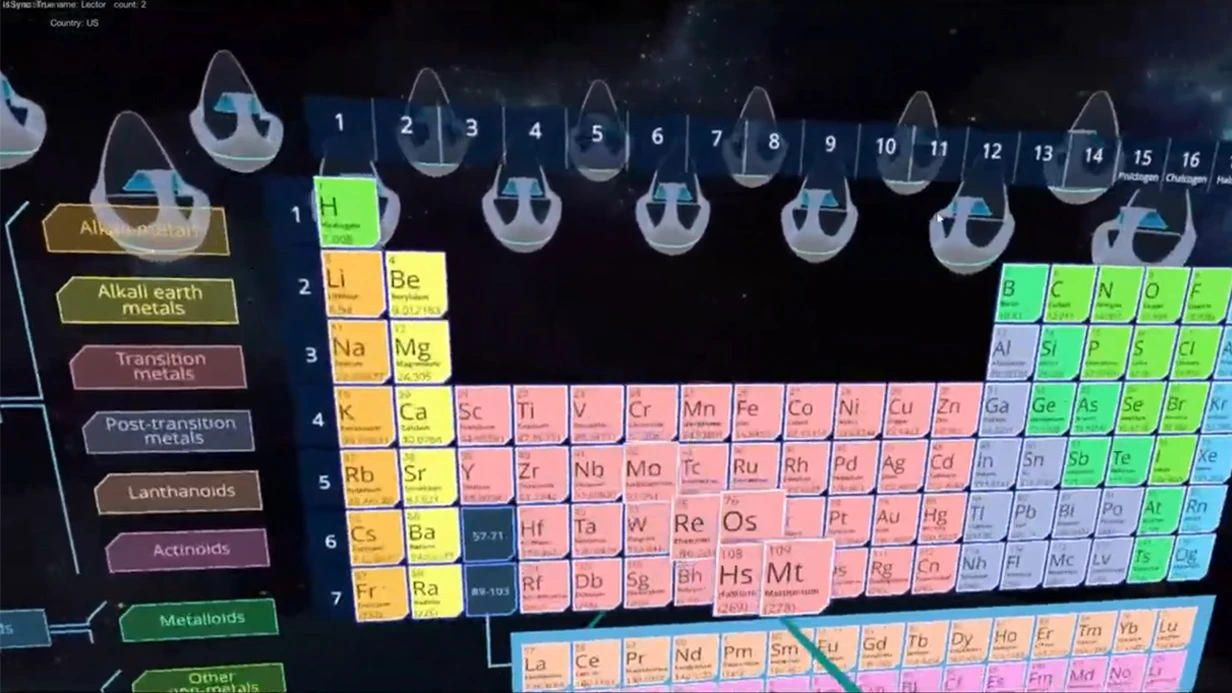
We developed a virtual laboratory that simulates a full lab practicum. Students worked on professional HTC Vive VR equipment: assembling setups, mixing substances, and observing reactions — without risk to themselves or extra costs for the department.
The instructor could see each student's actions on their own computer and could offer hints or correct mistakes right during the class.
What this delivered for the university
In the first month, the VR laboratory was used by an experimental group — their results were compared with a regular group. The average score rose by 23%, and the share of students passing the exam on the first attempt increased from 65% to 86%.
Students stayed in the virtual laboratory twice as long as planned — they wanted to try different scenarios and take reactions all the way to the result.
Over two months, 180 students went through the simulation, and the department almost completely stopped spending time preparing the physical practicum.
Instructors noticed that questions during lectures became deeper and more specific: students began working not with abstract concepts, but with real processes. The university recognized the practical value and ordered a second module — now for physics.
How to Choose the Right VR/AR Format for Your Curriculum?
To choose the right VR/AR format for your curriculum, don't start with technology — start with educational goals.
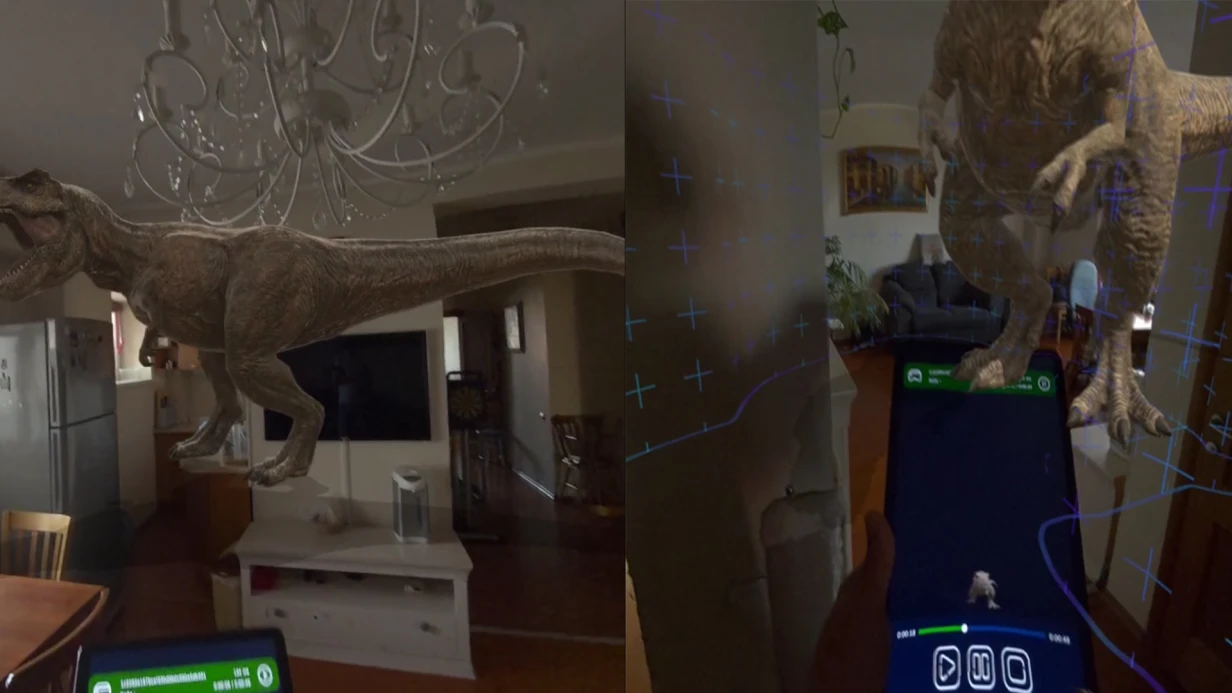
Each format addresses its own set of scenarios: VR immerses users in a virtual environment and suits complex skill practice, AR overlays digital objects onto reality and requires no special space, MR combines both approaches for team projects.
There is no one-size-fits-all option, but the right choice is determined by three criteria: the age and level of the students, the technical equipment of the classroom, and the learning outcome you want to measure.
Assess which scenario dominates your program: visual demonstration of theoretical models, hands-on skill practice, or collaborative student work. This determines whether you should invest in VR headsets, tablets with AR markers, or mixed reality. Here is a reference table for choosing the implementation format:
| Format | For which curriculum tasks | What it delivers for students and instructors |
|---|---|---|
| VR | Studying processes that cannot be shown in the classroom: anatomy, physics, history, complex equipment | Full immersion, increased concentration, safe skill practice |
| AR | Lectures and seminars where real objects need to be supplemented with diagrams or models | Quick information overlay, no classroom re-equipment required |
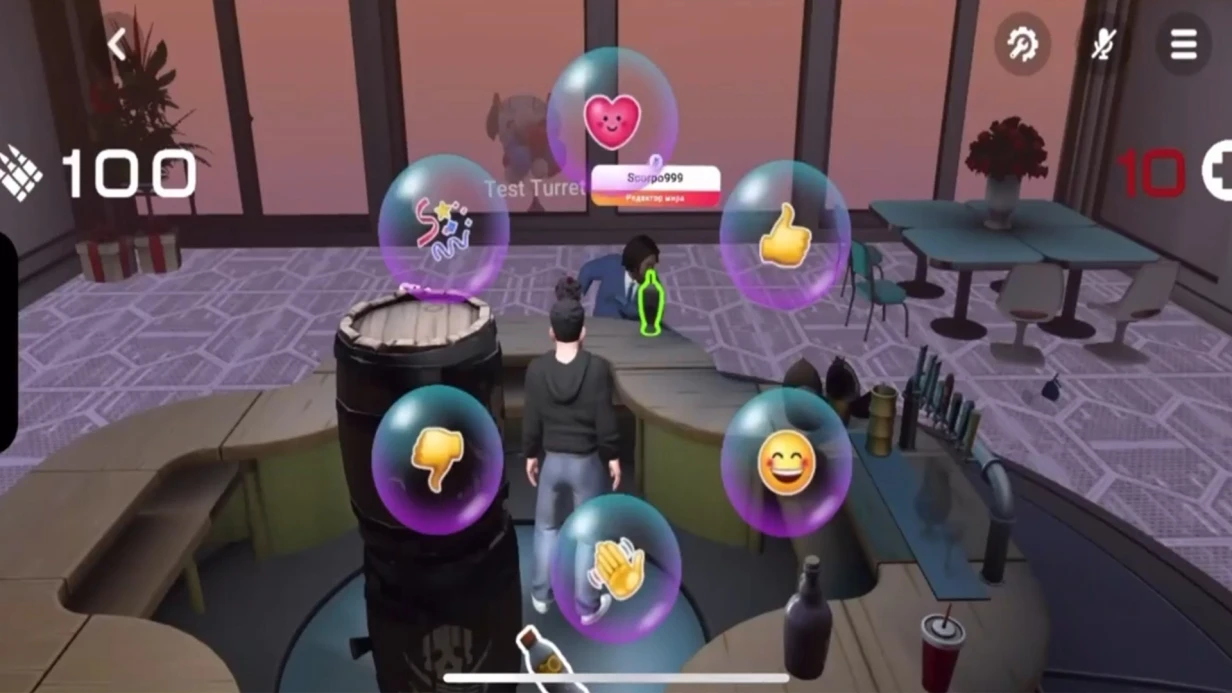
| MR | Lab work and team projects with interaction between multiple students | Simultaneous work with virtual and real objects, development of soft skills |
This is not a rigid classification, but a starting point. We help you decide on the implementation format based on an analysis of your curriculum and infrastructure: we run a pilot launch with a cohort of students, collect feedback, and refine the solution into a full course.
This approach eliminates unnecessary expenses and guarantees that the technology genuinely improves academic performance, not merely serves as a fancy visual.
If you're unsure where to start, leave a request for a consultation. We'll show you examples of implementations in educational institutions, help you choose the right format, and calculate a budget tailored to your program's goals.
Addressing Common Client Concerns
Implementing VR in education is a significant step, and clients often have the same concerns. What if the headsets break? Will the instructor manage unfamiliar technology? Could the technology harm students?
We have worked with educational institutions for many years, so we know: most fears disappear after the first lesson. Below, we address the most common concerns — honestly and to the point.
What if the VR equipment fails?
Any technology can break down, and we are prepared for that. We provide a warranty on all devices and handle technical maintenance ourselves.
In the event of a malfunction, we arrange repair or replacement within 2-3 business days, and we keep backup kits on hand — so the learning process is not interrupted. You won't have to search for an engineer or wait indefinitely.
Is it difficult for instructors to learn the VR application?
The interfaces in our projects are intuitive: most actions can be performed from the very first lesson. We provide short training, hand out methodological guides, and offer support during the first few classes.
The instructor doesn't need to be a programmer — confident computer skills are enough. Typically, instructors are fully comfortable within 1-2 lessons.
Is VR safe for students?
Safety is a priority. We follow recommendations for session duration, build in breaks, and adapt scenarios for different age groups. The equipment is checked before every lesson, and the application contains no abrupt visual effects.
If a child has specific health considerations, shorter session formats can be used — we'll help structure the schedule.
Will there be technical support after launch?
Yes, support does not end with project delivery. We stay in touch: we answer instructors' questions, update applications promptly, and resolve technical issues. You will have a dedicated communication channel with our team, so VR work is never interrupted by small matters.
Shall We Discuss a VR Project for Your Educational Institution? Leave a Request
VR learning implementation is already delivering measurable results in educational institutions: students engage more deeply, and material is absorbed faster.
But to achieve this effect, you need a clear plan tailored to your specifics — with a budget, timelines, and stages, not abstract promises. It all starts with a simple request, charting the path from idea to working scenarios in your classrooms.
Leave a request — we'll get in touch, carefully review the educational institution's goals, and discuss which VR scenario would deliver the maximum result for students and instructors.
You won't get generic presentations, but concrete implementation options that account for your learning process, physical resources, and objectives.
What the first step includes:
- An individual consultation — we answer all your questions about VR learning and analyze your specific case.
- A review of learning scenarios — we propose the right virtual reality format: simulations, interactive labs, training modules.
- A preliminary assessment of resources and timelines — we give you a realistic scope of work and stages, without technical jargon.
- A demonstration of solutions — we show examples of VR projects from the education sector so you can see the possible outcome.
- Recommendations for a pilot launch — we help you start with a small group of students to evaluate the effect before scaling.
- A step-by-step implementation plan — we outline the next steps from testing to full-scale use.
Every consultation is a move toward a concrete result. You gain clarity: how VR will fit into your teaching, what is needed for launch, and how long it will take.
Leave a request now — and this week we will hold an initial meeting, prepare an action plan, and discuss the optimal implementation strategy for your educational institution. The VR project is closer than it seems — just take the first step.