

Why Film and Video Production Need VR Solutions
Today's viewers are spoiled for choice: it's nearly impossible to hold their attention with ordinary linear video. In seconds, they decide whether to keep watching or switch to other content.
That's why film and video production needs solutions that turn passive viewing into active participation — and here VR becomes a powerful tool, not just a technology for the future.
VR opens up scenarios for the film industry that classic shooting cannot deliver. Interactive videos let viewers influence how the story unfolds: choose the camera angle, make decisions for the protagonist, explore the world.
This holds attention far longer and makes people return to see alternative story branches. For content producers, this is a direct path to higher engagement and repeat views.
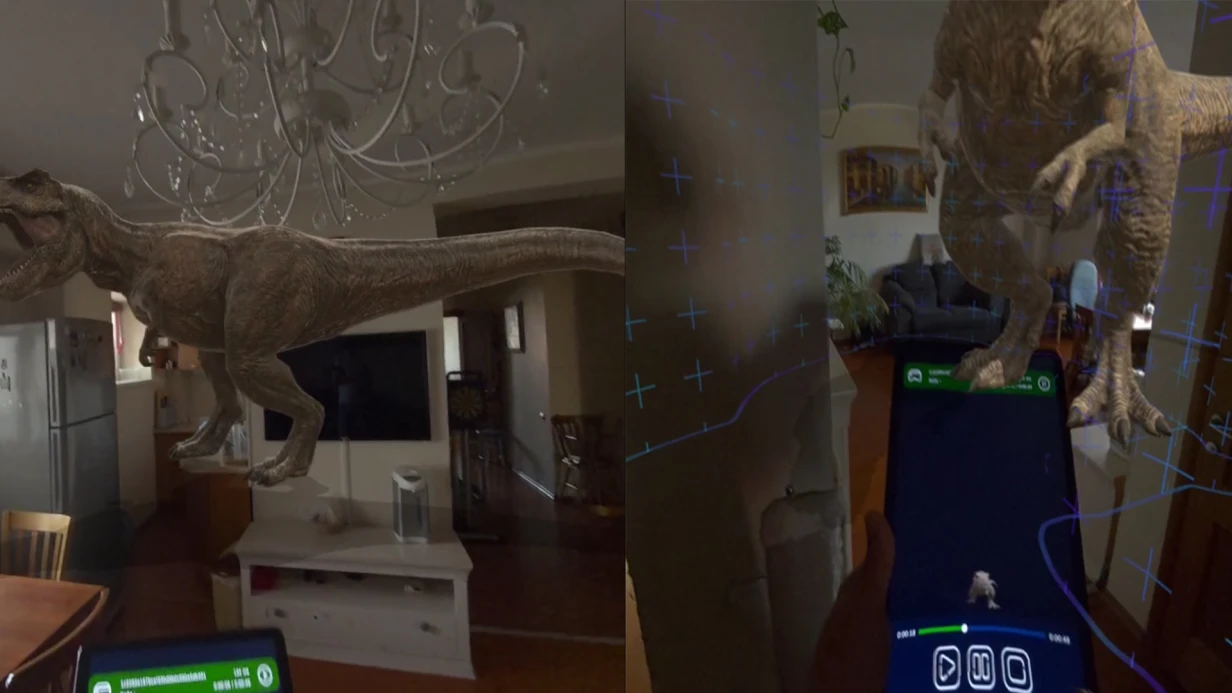
Immersive content for film and video creates a sense of presence that even the highest-quality screen cannot provide. The viewer doesn't just watch — they are inside the scene, looking around, feeling the scale.
Such projects trigger strong emotions and word of mouth, which means free reach even before the official release.
For production studios and production companies, this is also a competitive advantage. Clients increasingly ask not for "just another video" but for an experience that will be remembered.
Those who offer interactive videos and VR formats win tenders, get more press mentions, and can sell content at a higher price — because the value for the audience is obvious.
That is why VR solutions for the film industry are not an experimental option but a necessary part of a modern production strategy. We help implement them quickly and with business goals in mind: from concept and storyboard to the finished product and viewer engagement analytics.
If you're wondering how to retain your audience and stand out from competitors, start by discussing the script.
What Benefits VR/AR Give a Film Crew
A film crew gets more from VR/AR than just a nice picture — it's a working tool that saves hours on set and enhances the impression of the finished product.
Virtual reality is no longer an exotic novelty; it is now an accessible way to surprise viewers and speed up your own processes. Below is a checklist of the main benefits you gain when integrating VR/AR into film and video production.
-
Higher viewer engagement. VR/AR lets the viewer step inside the story instead of watching from the sidelines. Such projects get many times more views and discussions than regular videos, which means greater reach, recognition, and return on production investment.
-
Time savings on set. Virtual sets and VR rehearsals allow you to check lighting, camera angles, and blocking before heading to the location. Mistakes are fixed in minutes instead of breaking the schedule, which noticeably reduces production cost.
-
New presentation formats. AR layers on top of real video add interactivity: the viewer chooses what to look at. The brand gets an extra minute of attention, and the video gains viral potential through a unique experience.
-
Clarity for the client. By showing the scene in VR before editing, you approve the project faster. The client sees the final picture rather than dull storyboards, so revisions take days, not weeks.
-
Repeat business. Projects with VR/AR stand out from competitors, so clients return more often and bring in new customers. According to our data, such projects generate up to a third of repeat inquiries.
For shooting, we use professional HTC Vive equipment — this gives the team a stable image and accurate motion tracking when blending reality with graphics. This checklist is a starting point for bringing VR/AR into your projects.
We will help you go from idea to finished product, take responsibility for the result, and support your team after project delivery.
VR Application Formats for the Film Industry
Film and video compete for viewer attention, so an ordinary video is no longer enough: it gets scrolled past in a couple of seconds. The VR format turns viewing into a personal event — a person doesn't just watch, they find themselves inside the story.
The task is to choose the right format for your goal, and we will help you do that without unnecessary experiments.
Main Formats We Work With
| Format | Who It's For | What It Gives the Client |
|---|---|---|
| Interactive VR film | Distributors, online cinemas, festivals | The viewer chooses the story branch — retention and repeat views grow |
| VR advertising (360° video) | Brands and ad campaigns | Full immersion in the brand story: higher memorability and viral reach |
| Virtual tour of a film set | Production studios, location owners | Clients see the set before filming begins and make decisions faster |
| Virtual cinema | Distributors, premieres, festival projects | A premiere without borders: viewers from different cities watch the film together |
We implement each format on professional equipment — for example, HTC Vive. This ensures a stable picture and accurate motion tracking so the viewer enjoys the experience instead of feeling discomfort.
If you're not sure which format suits you best, we'll show you a demo on your own material and calculate the scope of work. Bring us your task, and we'll advise on what will bring more reach, emotion, and repeat inquiries.
How a VR Application Development Project Works
For a business ordering its first VR project, the process may seem complex and unpredictable. In reality, it's a standard path of seven stages, at each of which you understand what is happening, how much time is left, and what result you'll get.
We've refined this process across dozens of projects — from interactive presentations to training simulations.
- Brief and task. We discuss the goals: what the viewer needs, what reaction you want to achieve, and where the application will be used. We come out with a clear plan and timeline estimate.
- Concept and script. We define how a person will interact with the virtual world. We agree on key points to avoid rework at the final stage.
- Design and environment. We create the visual style, interface prototypes, and 3D models. You see what the future world will look like and can make changes before development begins.
- Development. We program the mechanics, assemble scenes, and integrate sound. We work on professional equipment and up-to-date engines to ensure stable performance without lag on the client's devices.
- Test launch. We show a working version and collect feedback. This is where fine-tuning happens — we adjust logic, speed up response, and check control usability.
- Launch and setup. We install the application on the required devices and conduct training for your team. You get a finished product, not a "raw" prototype.
- Support and evolution. After launch, we stay in touch: we help with updates and develop content for new tasks. You can grow the application together with us.
The entire project is managed transparently: you see timelines, stages, and intermediate results. This lets you get a high-quality VR product without surprises and keep the budget under control at every stage.
What's Included in a VR Solution Delivery for Production
What's included in a VR solution delivery for production You receive a complete package for your task — from equipment to setup and launch. No DIY assembly and no lengthy troubleshooting: we deliver, connect, show you how it works.
Here's what is included in a VR solution delivery for film and video production:
- Equipment matched to your task. We select professional VR systems based on your venue, number of participants, and type of shooting. No need to search and compare — you get a package that fits perfectly.
- Setup and calibration. We install and calibrate the system for your space. No "dead zones": everything works right away, from the first launch.
- Ready-made software. We install the software your specific scenario needs — shooting, training, presentation, production. No unnecessary options or complicated interfaces.
- Training for your team. We conduct onboarding: operators, directors, and venue managers will be able to power up and run the solution without constant developer support.
- On-site launch and verification. We travel to your location and run a test session together with you. We make sure everything works under real shooting conditions.
- Post-launch support. We stay in touch: we advise, help with adjustments, and respond quickly to questions. You're never left alone with the equipment.
This kind of VR delivery package eliminates the biggest risk — a slow launch. You don't get "a box of hardware"; you get a working solution you can use on day one. And if the project changes, we reconfigure it for new tasks.
Case Study: How a VR Application Brought a Video Shoot to Life
Shooting a commercial involves dozens of people on set, a rented pavilion, and lighting that takes hours to adjust. If a concept error is discovered only at the editing stage, the cost of reshoots multiplies.
The client needs a predictable result before filming begins, and the director needs to understand how the camera will behave in a set that hasn't been built yet.
The Task and the Solution
A production studio came to us: they had an upcoming commercial shoot for a major brand with a multi-layered scene, special effects, and precise camera movement timing.
The storyboard couldn't be approved with the client — static images didn't convey the feel of the scene, and revisions dragged on for weeks.
We proposed immersion instead of pictures: we built a VR application on HTC Vive where the director and the client put on the headset and find themselves inside a virtual set.
There, they can walk around the scene, change camera angles, see how the light falls and how the camera moves — without abstract diagrams and long explanations. Decisions are made in minutes because everyone sees the same "frame" instead of arguing over words.
The Result
The concept was approved in a single meeting instead of three. On set, the virtual scene became a reference for the filming crew: lighting was set from the first take, and the camera operator already knew the camera trajectory in advance. The commercial was shot in two days instead of the planned five, and no reshoots were needed.
For the studio, this meant budget savings and a stronger reputation: the client got clarity and speed, and the producer got a guarantee that paid camera days wouldn't be wasted.
After the first project, the studio ordered VR scenes for two more shoots — immersion into the future frame became part of their standard preparation process.
How to Choose the Right VR Application Format for Your Task?
A VR application format should be chosen not by trendy fads but by what problem it solves on the set or in distribution. The main thing is to understand what should happen after the viewer puts on the headset: watch a finished scene, explore an object, or take part in a process.
To preview a complex scene in advance and approve it with the director, a virtual film set is the right fit — it helps evaluate camera angles and lighting before filming and reduces the number of reshoots.
For presenting a finished product to investors or partners, a virtual cinema hall is more effective: the viewer is fully immersed in the story and isn't distracted by external factors.
If the goal is to engage the audience and create a sense of presence, it's worth choosing an interactive format where the viewer controls the script themselves.
This option works well for teasers, advertising, and educational films: engagement grows, and the video starts getting rewatched and shared.
To avoid getting lost in the options, it's enough to define the main goal of the project: sell, train, approve, or impress. We select the format based on that, and only then develop the script and content. This approach eliminates unnecessary back-and-forth and helps deliver a predictable result on time.
The project timeline and budget depend directly on the format choice. We help clients navigate this at the initial discussion stage: we break down the task, show the strengths of each option, and propose a solution that achieves the desired result without unnecessary costs.
In the end, you get not just an application but a tool that works toward your goal — from concept approval to the premiere.
Frequently Asked Questions About Ordering VR Solutions
Most doubts arise not around the technology but around process organization: how a VR solution fits into a shoot, who is responsible for the result, and whether timelines will slip.
We develop applications for film and video production on professional headsets — from scene previsualization to reviewing captured footage — and we're used to resolving these questions before the project even starts.
How long does VR application development take?
Timelines depend on the task: a scene preview can be assembled in a few days, while a full solution for a film crew's workflow takes a few weeks.
At the start, we lock stages and dates into the contract so you can see progress and rest assured you'll stay on the production schedule.
What guarantees do you provide?
We guarantee that the application will work on your equipment and that your team will be able to use it. We train directors, camera operators, and editors, and hand over instructions. If we find any discrepancies with the script during testing, we fix them before launch, not after.
Do we need to buy our own VR headsets?
No, for shooting and previews it's enough to rent a couple of devices. We'll help you choose equipment for your tasks and budget: different configurations are needed for reviewing a scene on set versus viewing footage in the editing room.
How do you fit into our production cycle?
We start with a brief: we review the script, timelines, source formats, and the result you specifically need. Then we show intermediate versions — from a rough draft to the final build — so you can make adjustments without waiting for the whole project to be delivered.
If you still have questions about your specific use case, get in touch with us. We'll explain how a VR solution fits into your preparation and post-production process and offer an option that suits your budget.Ready to Discuss Your VR Solution Project?
We understand: a VR solution for film and video is not an experiment but a working tool for your production. To make it deliver results, the task needs to be discussed in advance — timelines, reach, and use cases.
That's why we invite you to a free consultation — we'll explain how a VR solution fits into your process and what it will give your viewers.
At the meeting, we'll break down your project at key points and show you what the collaboration will look like. This is how it usually goes:
- Brief and task analysis — we listen to how you work now, what you want to change, and which scenes and effects you need.
- Prototype and script — within 1–2 weeks, we show how VR will be used on set or in post-production.
- Production — the team creates content and configures equipment for your filming process.
- Testing with your team — we verify that the solution is comfortable for directors, camera operators, and editors.
- Launch and support — we integrate it into your workflow, train employees, and stay in touch.
You can order a VR solution right after the first consultation — we'll prepare a commercial proposal with precise timelines and a clear scope of work. You can discuss the project in whatever format suits you: an online call, an in-person meeting, or correspondence.
Don't put it off: the sooner we start, the sooner your VR solution starts delivering results. Book a consultation — we'll analyze your task and suggest the right format. It takes 30 minutes and costs nothing.