

Clients Are Switching to Competitors — VR/AR/MR for Biopharmaceuticals and CDMO
In biopharmaceuticals and CDMO, decisions are made after a long vetting process: partners review certificates, audit facilities, and evaluate technologies.
But an ordinary presentation or video cannot convey the scale of production, the cleanliness of zones, or the reliability of processes — and these are exactly what become the deciding arguments when choosing a contract site. The client hesitates, stalls, or goes to a competitor that presented itself more convincingly.
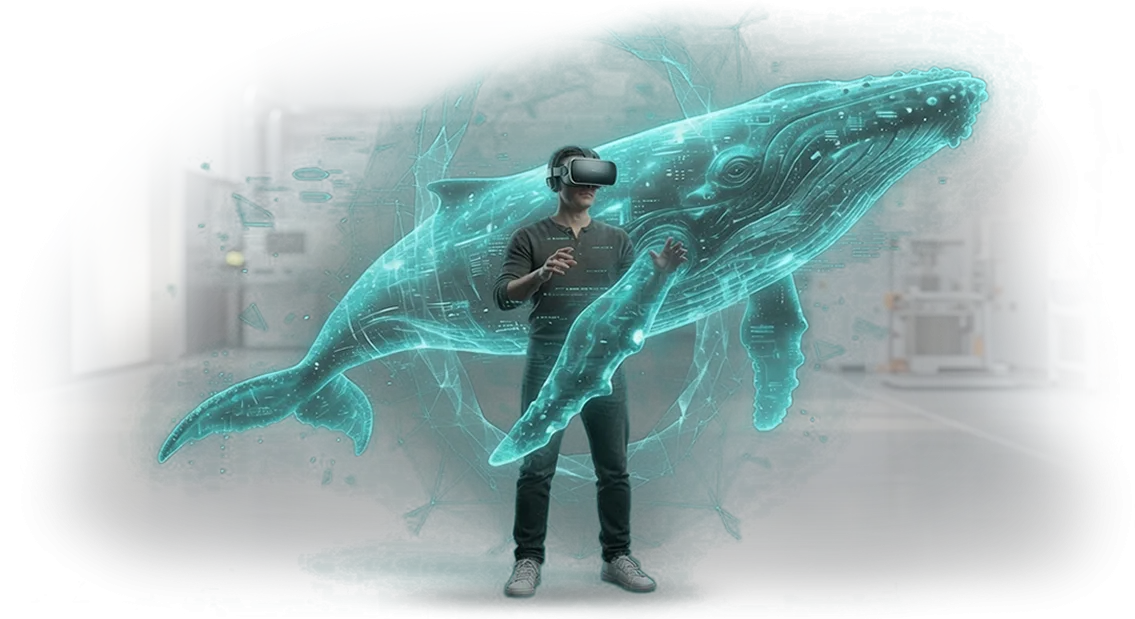
VR/AR/MR changes this dynamic. A virtual tour of production lets you show clients cleanrooms, operating lines, and GMP compliance without them ever visiting the site.
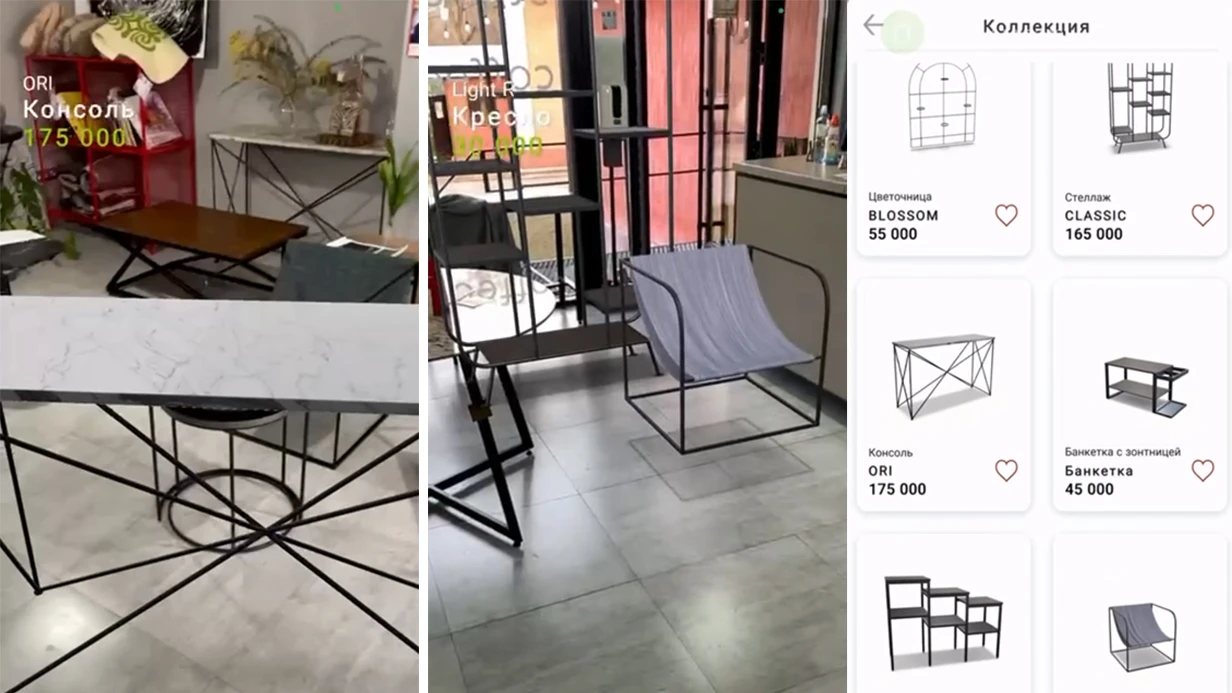
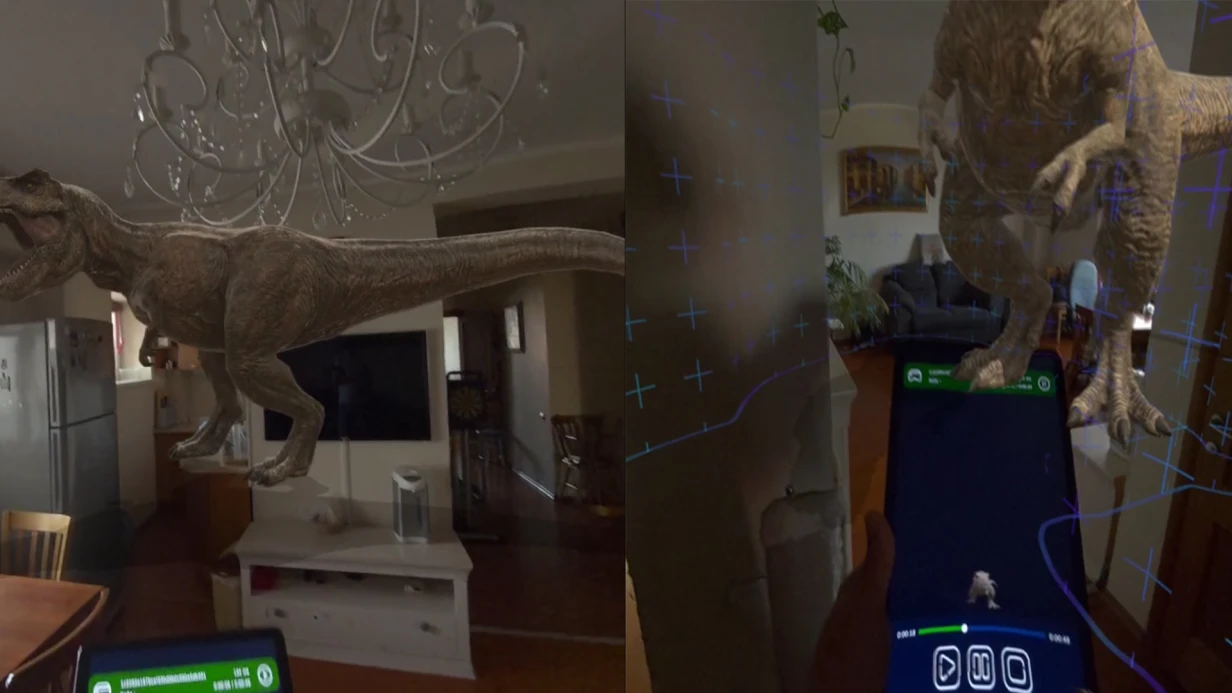
An AR layer adds the necessary data on top of real equipment, while an MR scenario lets participants jointly "walk through" the process — from raw material intake to finished dosage form release.
For biopharmaceuticals and CDMO, this is not just "nice 3D graphics" but a tool for building trust and accelerating sales.
Implementing VR shortens the approval cycle: instead of spending weeks organizing visits, the client gets tangible proof of your capabilities in a single session. It also solves employee training — complex operations and rare situations can be safely practiced in a scenario.
our team has been implementing such projects for manufacturers and contract organizations for over ten years.
We combine industry knowledge of biopharmaceuticals with mature development tools, so clients get not a prototype but a working solution that is immediately used in sales and training.
What You Get from Implementing VR/AR/MR in Production
In biopharmaceuticals and CDMO, the cost of error is especially high: every inaccuracy on the production floor can cost a product batch and your reputation. GMP compliance makes staff training long and expensive.
Virtual and augmented reality solve this problem: employees get a safe environment to practice skills, and the company gets measurable results.
Faster training and fewer errors. Instead of lectures and diagrams — immersion in realistic scenarios. A new employee masters processes in days that used to take months.
Practicing actions in VR reduces the number of errors in real production because the skill is solidified before ever stepping onto the line.
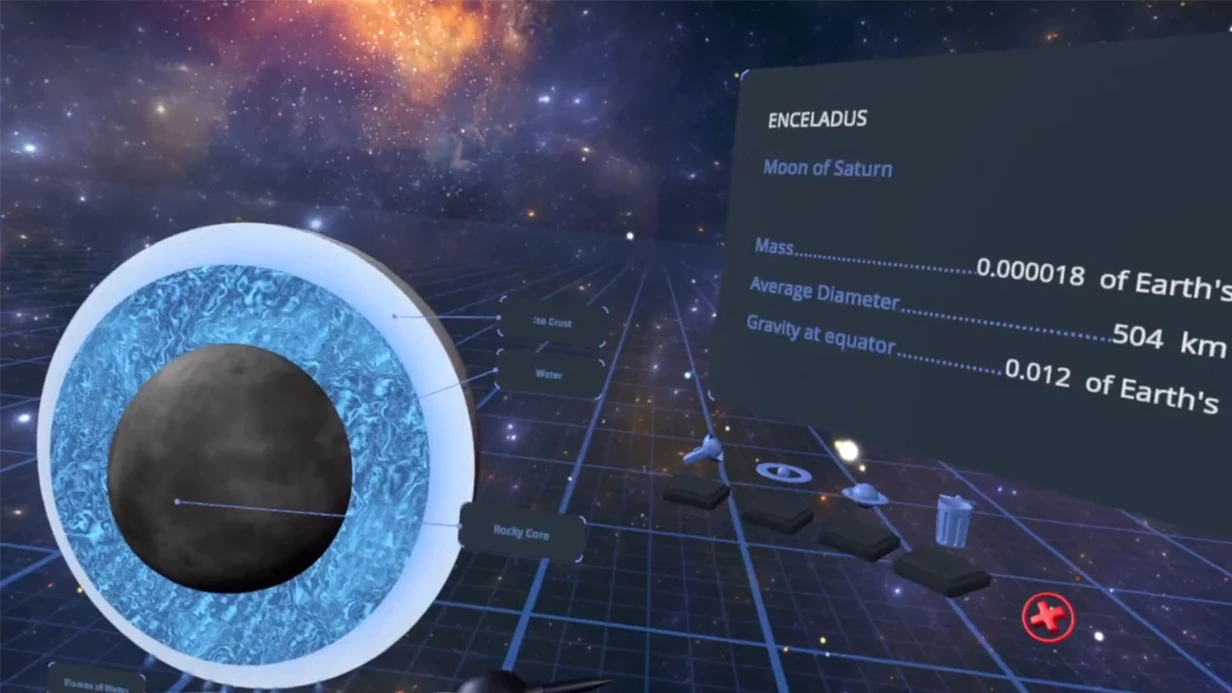
Better visuals for presentations and client work. AR tools let you show equipment, packaging, or molecular processes in 3D without using physical samples. This is convenient in negotiations with CDMO clients: they see the product and technology without lengthy site tours.
Brand recognition and innovator image. Companies that adopt VR/AR first are perceived as leaders. This attracts both clients and top talent. Word-of-mouth from unusual training increases visibility.
Competitive advantage is built from all of the above: faster training, less waste, compelling presentations, and a modern image. Competitors using traditional methods lose out both in speed and in the quality of workforce preparation.
And the technology is already accessible: we design solutions for Meta Quest and other professional equipment that easily integrates into existing processes.
VR/AR/MR Formats for Biopharmaceuticals and CDMO
In biopharmaceuticals and CDMO, each format solves a specific task. Training an employee to work in a cleanroom is one thing; showing a client the production line without stopping the process is another.
Choosing the right format determines the outcome: speed of implementation, safety, and partner trust.
| Format | Who it's for | What it gives the client |
|---|---|---|
| VR simulators | Operators, technologists, quality department | Practicing procedures with zero risk to production. Employees onboard faster and make fewer mistakes in real work. |
| AR instructions | Engineers, maintenance teams, inspectors | Step-by-step prompts right in their field of view. Less time spent searching for information, no skipped steps during maintenance and control. |
| MR visualization | Commercial team, management, clients | A clear demonstration of production lines and cleanrooms. MR helps present capabilities without stopping production and close deals faster. |
The key point is not to implement "virtualization for its own sake" but to match the format to the specific task. VR simulators cover training and certification, AR instructions cover process control, and MR visualization covers external communications and sales.
We work on professional hardware and select devices based on the scenario. This keeps results stable even under heavy load: we train employee groups, support the launch, and take into account the specifics of your procedures.
How a VR/AR/MR Development Project Works: 7 Steps
You get a turnkey project — from brief to launch. The process is designed so you control every stage and know what you'll get: employee training, practice of technological operations, or process demonstrations for clients.
-
Brief and task immersion. We listen to what business goal stands behind VR: onboarding new employees, upskilling, sales, or production presentations. We clarify how many people will be trained, what skills need to be practiced, and which scenarios are critical.
-
Scenario development. Together with your technologists and methodologists, we write the training scenario: steps, actions, possible errors, and their hints. This document becomes the foundation for all further work.
-
Concept approval. We show a prototype — what the user sees and how they move through the scenario. You provide feedback, and we finalize the scope and acceptance criteria. At this stage we change the scenario, not "the rendered picture."
-
Application development. We build the VR module: production line visualization, simulators, instructions, action tracking — everything your process needs. We work on professional equipment, so the result is stable on your employees' devices.
-
Test site. You and your employees try the application. We collect feedback: what is inconvenient, what is unclear, where an additional hint is needed. We make improvements before rolling it out to all devices.
-
Launch. We install the VR environment on the hardware, configure user accounts, and train internal administrators. You receive a complete scheme for integrating the application into daily work — from receiving a device to submitting a session report.
-
Ongoing support. We help with questions, update scenarios if your technological process changes, and develop new modules. One partner for the entire cycle — no need to search for contractors at every stage.
Each step ends with a deliverable — you see progress and control the budget. Our pharmaceutical and CDMO clients have already gone through this process: from initial tests to regular staff training on VR simulators.
What's Included in a VR/AR/MR Solution Delivery
You get a complete workable package, not just a program. The delivery includes all components — from the application to employee training — so you implement the solution quickly and without additional contractors.
- A ready application tailored to your tasks: practicing procedures, emergency response scenarios, or presenting production processes in a virtual environment.
- 3D content developed for your site: realistic models of equipment, rooms, and key zones — employees recognize the work environment and transfer skills to real practice faster.
- Instructions and training materials for administrators, instructors, and end users — clear guidance on launching scenarios, tracking progress, and making changes.
- Personnel training: we conduct a workshop for your trainers so they can use the system independently and onboard new employees without us.
- Technical support during implementation: we support the launch, answer questions, and quickly resolve any issues.
- Updates and content improvements: when procedures change or new processes appear, we extend the virtual scenarios to meet current needs.
- Implementation plan and result evaluation criteria: we define in advance how to measure training effectiveness and which metrics to track.
This approach removes the burden from your team: you get not a raw product, but a working turnkey system. Staff start training within the first days after handover, and you see the result — reduced training time and fewer process errors.
Case Study: VR Training Cut Onboarding Time by 40% at a Pharma Company
Training production line operators is one of the most expensive processes in pharma. A newcomer must master dozens of operations, remember the sequence, and have no room for error: the cost of a wrong action is a ruined batch or a stopped line.
The classic "mentor + manual" approach takes weeks, and the outcome depends heavily on human factors.
We offered a sterile drug manufacturer a VR simulator for their filling line operators. Instead of working with real equipment, a newcomer enters a digital copy of the shop floor and safely practices every stage — from tooling preparation to emergency situations. Mistakes have no consequences, but they build the right skills.
Main result — 40% less time spent on training
After the simulator was introduced, operator onboarding time dropped by 40%. Training no longer blocks the launch of new shifts: trainees hit the line confident, and mentors spend time on subtle nuances instead of repeating the basics.
Head of Production: "We expected VR to be something modern but not much more. What we got was a measurable effect: operator training became almost twice as fast, and the number of errors during product changeovers dropped noticeably. For us, that's direct savings on every batch."
The company also noted fewer errors during equipment changeover — employees remember the workflow through muscle memory rather than cheat sheets.
The system tracks each trainee's progress and shows which operations are harder, allowing the training program to be fine-tuned precisely.
Why this case matters
This is not a one-off story but proven practice for regulated manufacturing. VR training fits into the existing training system without stopping the shop floor and requires no special hardware — the same Meta Quest headsets are used as in other corporate scenarios. The company is already scaling the solution to nearby lines.
How to Choose the Right VR/AR/MR Format for Your Task?
The answer is simple: selecting VR/AR/MR starts not with technology but with the business task. The same equipment can solve different scenarios — operator training, product presentations to clients, or deal support at an expo.
So we choose the format based on three criteria: who the participant is, what action is needed, and what result the business expects.
Here is a quick reference guide: it helps you navigate even before the brief.
| Format | Who it's for | What it gives the client |
|---|---|---|
| VR application | Employees who need to learn to work with a system or process | Safe skill practice without stopping production, faster onboarding to target performance |
| AR application | Trade show visitors, event guests, medical representatives | A clear demonstration of how a drug or device works right at the booth — no samples or mechanics needed |
| MR application | Team during a new process launch, auditors, partners | Real equipment combined with digital hints — fewer errors and easier quality control |
If the task is to show a remote production site, we choose a virtual tour: guests are taken to the clean production area on video without putting on sterile suits.
If a complex CDMO technology needs explaining, AR overlays diagrams directly onto a physical sample, and the client understands the process in minutes instead of a half-hour presentation.
If the goal is to polish employee actions, VR provides repeatable training without consuming reagents.
For more than 10 years, we have helped biopharmaceuticals and CDMO choose the right format for a specific result — from internal training to supporting major tenders. Send us your task — we'll propose a format that solves it faster and more simply than others.
Frequently Asked Questions About Implementing VR/AR/MR in Pharma Production
Implementing VR/AR/MR in pharma production raises questions: will it disrupt deadlines, will processes need restructuring, will employees cope? We answer the main concerns so you can assess the solution's readiness.
How long does it take to implement a VR simulator?
A basic training scenario is launched in 2–3 weeks; a comprehensive solution integrated with a learning management system takes 2–3 months. The exact timeline is set after the brief and does not change during the process.
Will this stop production?
No. Training runs in parallel — in a separate room or right at the workstation, without stopping lines. Data is synchronized with your existing LMS or internal reporting.
Is it hard for employees to learn VR?
The interface is intuitive, and basic actions take 10–15 minutes to master. No special skills are needed — the employee puts on a headset and follows the prompts. Simplified modes are available for older age groups.
What if the equipment breaks down?
We provide round-the-clock technical support, replacement of a faulty device within two business days, and substitute equipment during repairs. The warranty lasts for the entire period of use.
Is there proven effectiveness for pharma?
VR simulators cut training time by up to 40% and improve procedure retention by practicing actions in a safe environment. Pilot projects at production sites show a reduction in errors when following procedures.
Leave a Request — Let's Discuss Options for Your Project
Leave a request, and we'll work out where VR/AR/MR will deliver the biggest impact for your specific production facility or research center.
Staff training, procedure practice, remote inspections — in every one of these scenarios, immersive technology reduces costs and increases accuracy. To turn an idea into a working tool, the task needs to be properly defined — we'll help you do that in a 30-minute consultation.
After your request, you will receive:
- A free brief — we structure your needs, user scenarios, and project success criteria.
- A timeline estimate — you'll know how long development will take for your tasks and when the pilot will start.
- A format recommendation — which option (VR, AR, or MR) solves the task most effectively and why.
- An implementation plan — a step-by-step path from pilot to scaling across multiple sites.
- A consultation with an engineer and a producer — we'll discuss details, risks, and expectations.
- A scope of work calculation — what's included in the project and what falls outside it.
- Integration recommendations for your training systems and documentation.
We work remotely with clients across different time zones, so the request is the first step toward a predictable result. No obligations: the brief and consultation are free and commit you to nothing.
Leave a request on the website — and we'll come back with concrete options for your project. We'll discuss the format, timeline, and next steps so you can make decisions based on facts, not assumptions. It will take 15 minutes — and save you weeks of negotiations and clarifications.