

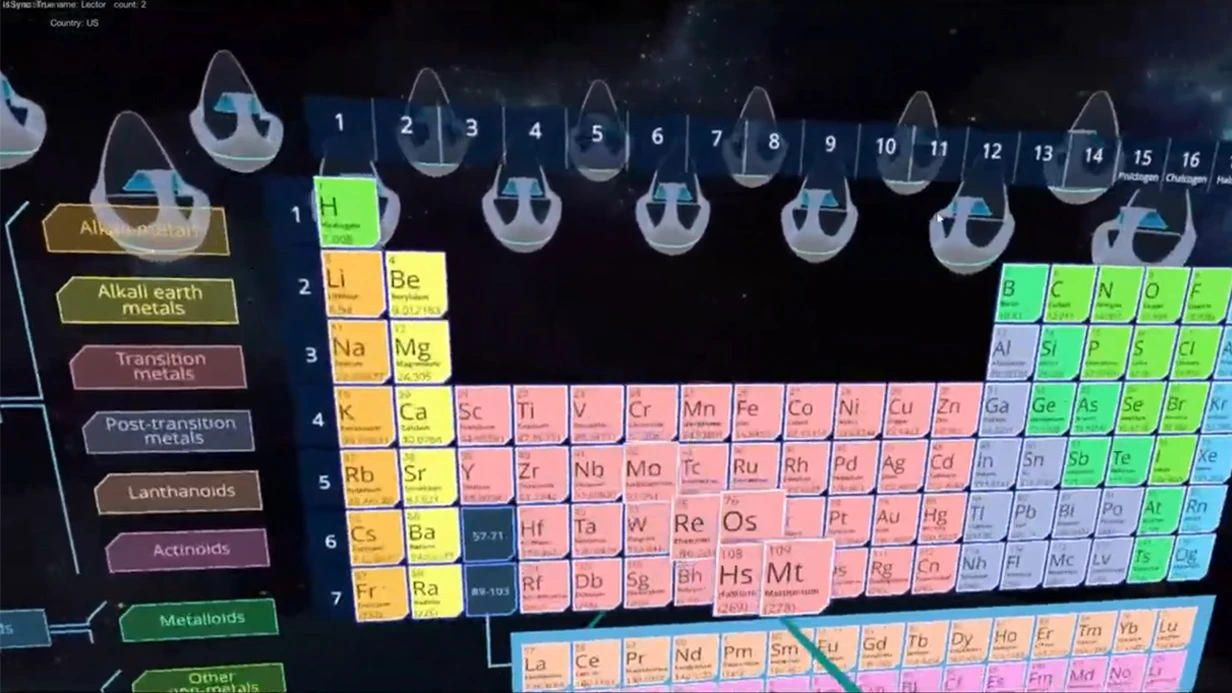
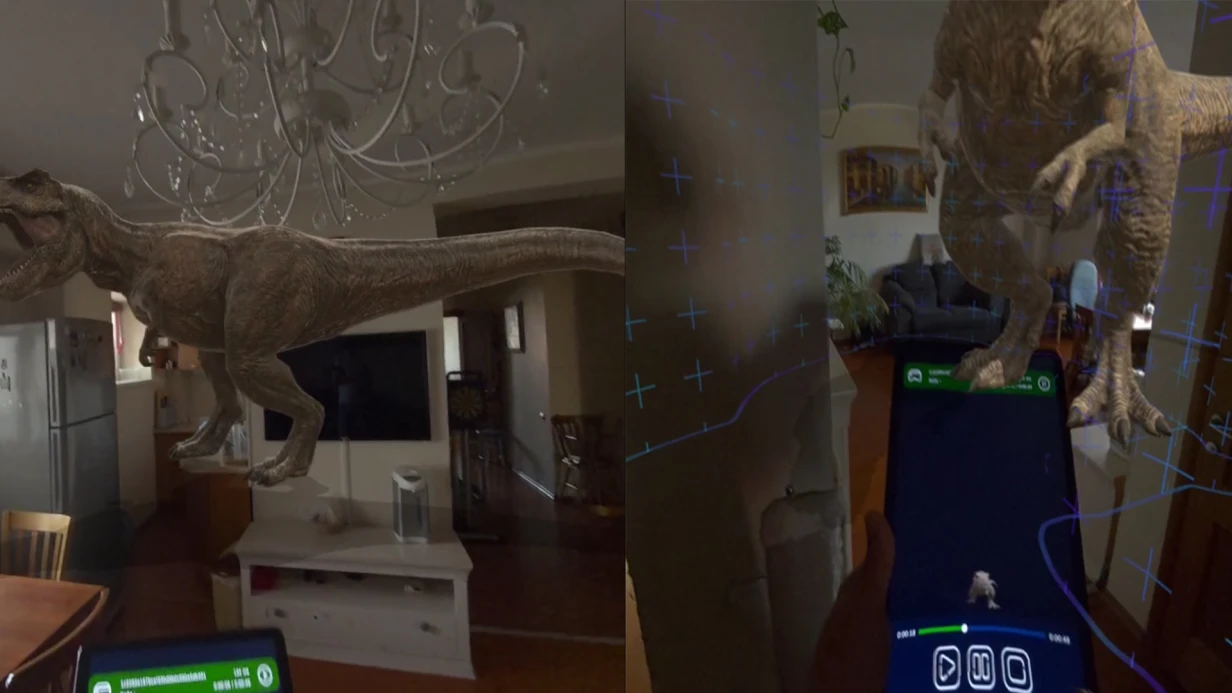
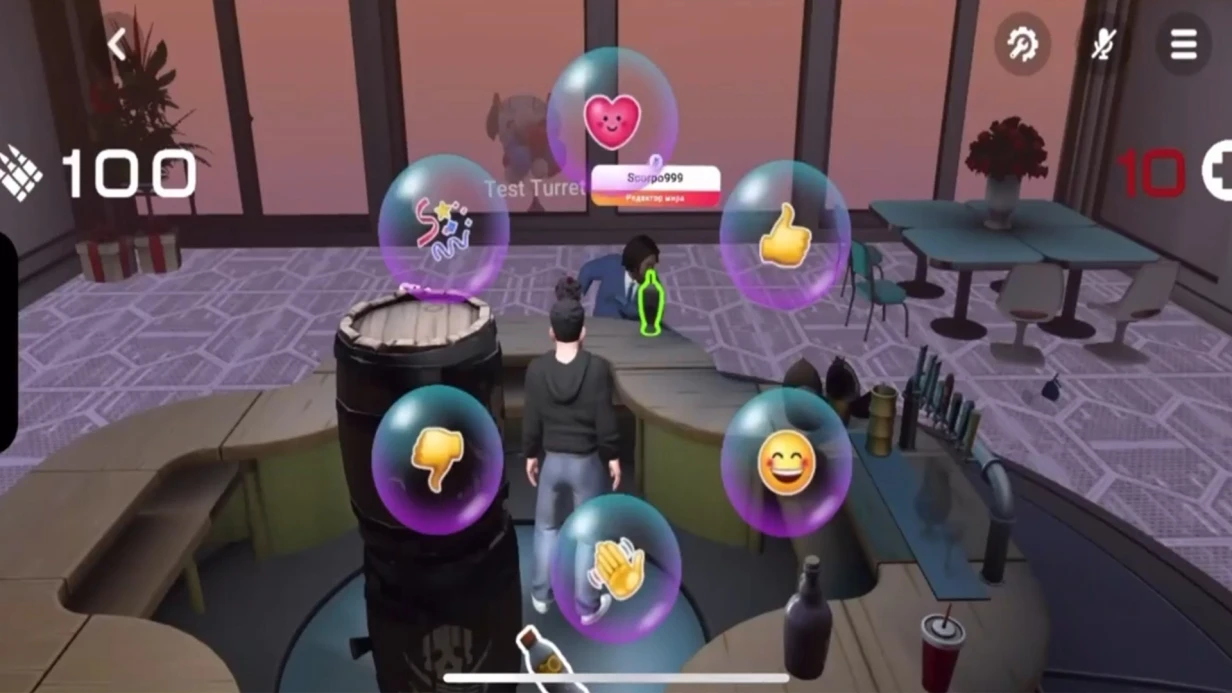
Finance: why clients choose VR technology?
The financial sector is one of the most conservative, and this is increasingly becoming a problem rather than an advantage. Banks, insurance companies, and investment services lose clients not because of rates or fees, but because of the same “gray” service.
When a service appears nearby that surprises and stays in memory, clients go there—even if the terms are slightly worse.
VR for banks solves this pain point. Instead of a standard mobile app or website, clients get a space where they can “walk through” a digital branch, see their portfolio in volume, choose an insurance plan, or test a new product before its mass launch.
Such client experience in finance cannot be copied—it cannot be repeated on a website or in an ordinary app.
Innovation in finance today is not only about new payment technologies, but also about formats that change the conversation with clients. Complex products—mortgages, insurance, investments—can be shown clearly and visually, without piles of documents and boring slides.
Clients see where their money goes, understand the risks, and feel trust. And trust is the main currency of the financial sector, from which repeat sales and recommendations are born.
We develop VR applications for banks turnkey: from idea and prototype to launch and ongoing support. We help turn conservatism into a deliberate advantage and give clients an experience they come back for.
What benefits do businesses get from VR/AR solutions?
The benefits of VR/AR for business lie not in a “pretty picture” but in measurable results: increased engagement, higher conversion, and faster employee training.
We choose the format for the task—from a virtual showcase to a negotiation simulator—and immediately build in metrics to evaluate the effect.
The main benefit is increased conversion. Instead of a flat photo, clients see the product in volume: they examine it from all sides, change configurations, and “use” it in a realistic scenario. This removes objections, and visitors move faster to inquiry or purchase.
The second benefit is staff training. A VR simulator models complex client situations without risking reputation. Employees practice handling objections, presentations, and sales until they become second nature.
According to PwC, VR training takes 4 times less time and increases confidence in applying skills—which directly affects the average transaction value.
The third benefit is product visualization and brand awareness. An immersive experience is memorable and sparks discussion: visitors share photos and videos, and the brand earns free reach long after the event. For financial services, this is a way to explain complex products simply and visually.
Expert setup is crucial here: without a proper scenario, even the best VR remains a mere attraction. We design scenarios so that every experience ends with a target action: a contact, a booking, an application. We turn these benefits into numbers in your report.
VR/AR formats for specific company tasks
The VR/AR solution format is chosen for a specific business task, not the other way around. In finance this is especially noticeable: complex products, long deals, and a high cost of error.
A properly chosen format shortens the client path from discovery to decision and turns a presentation into a visual experience.
VR presentations let you show a product to an investor or partner before launch, AR simulators help polish employee skills without risking real operations, and MR showrooms combine digital data with the physical space of an office or exhibition. Below are the typical scenarios we implement most often.
| Format | For whom | What it gives the client |
|---|---|---|
| VR presentation | Investment companies, banks, insurers | Visual product demonstration before release; higher engagement in negotiations |
| AR simulator | Training centers, HR, sales departments | Fast employee training and scenario practice without risk to real operations |
| MR showroom | Exhibition stands, sales offices | Combining physical space with digital data; attracting attention and increasing time at the stand |
We select the format for your task: from a short VR demo at a client meeting to an ongoing AR simulator for the whole team. At a consultation, we will examine which format will deliver the maximum effect for your particular product.
Stages of creating a VR solution for the financial sector
Any VR project in the financial sector begins with the question: how to implement VR quickly and get a measurable result for the business?
We structure the work so that you see every stage and control the timeline, and intermediate results are approved at checkpoints—with no surprises at the final stage.
-
Brief and immersion in the task. You tell us which processes you want to address: onboarding new employees, training on internal systems, or interactive presentations for clients. We ask the right questions, study your specifics, and determine the usage scenario.
-
Plan and turnkey project estimate. Based on the brief, we create a plan: development stages, timelines, control points, and team composition. You get a transparent estimate and an understanding of how the VR solution will be integrated into your existing infrastructure.
-
Approval of the concept and scenarios. We show a prototype of the future interface and the interaction logic. You approve the scenario before active development begins—this saves budget and eliminates rework.
-
VR solution development. Our specialists build the application using professional tools. For the financial sector, we pay special attention to data security and operational stability so that employees get an uninterrupted experience.
-
Testing and launch. We test the solution with real users, work through failure scenarios, and adapt the interface to your employees. After launch, you receive a ready-to-use system, and we provide documentation and instructions.
-
Support and evolution. The VR project continues to live: we update content, add new scenarios, and monitor performance. You can count on fast support and technical refinements as your tasks grow.
What is included in the delivery of a ready VR/AR project
We deliver a VR/AR project as a complete package, not just an application. It includes everything needed for employees of a financial company to start working from day one—without lengthy setup or third-party specialists.
What is included in the package:
- An application configured for your task and for a specific headset—from Meta Quest to professional systems.
- An interface that any user can understand: large elements, hints, and familiar logic.
- Documentation: launch instructions, user guide, and safe operation rules.
- Staff training—on-site or remotely, using real scenarios from your company.
- Post-delivery support: we help with settings and quickly answer questions.
We especially emphasize documentation and training: they turn the delivery into a working tool. The instructions are written without technical jargon, and training is based on the operations employees face every day.
“We ordered VR training for cashiers. We thought we would have to figure it out ourselves—instead we got everything turnkey: a clear interface, two days of training, and confident staff performance. Documentation and support are excellent,”—head of the retail division at a client bank.
Case study: how we increased conversion for a bank
Bank clients rarely read product terms—they need to quickly understand what suits them. Regular websites overload with information, and live consultation is not always available.
We proposed solving this problem through immersion: the client enters a virtual office and chooses their own scenario for getting to know the services.
A virtual office for a bank
We developed a VR application for Financial Bank that replaced the standard promo zone in branches. A visitor puts on a headset and finds themselves in a comfortable office where they can visually compare deposits, loans, and investment products.
An avatar-consultant explains the terms, and at the end the client leaves an application without leaving the virtual environment.
For the bank, this is not an “attraction” but a full communication channel. A session lasts about seven minutes, during which a person manages to explore 3–4 products—more than in a conversation with a manager.
Technically, we work on professional equipment: smooth graphics, a clear interface, and no overload or dizziness.
Results the bank saw in reporting
In the first quarter, the bank measured the effect. Engagement grew immediately: visitors went to the VR zone on their own and spent less time in line. Most importantly, conversion to product applications rose by 38% compared with regular promo stands. Repeat visits also increased: clients brought friends to show them “that office.”
“We expected short-term hype, but we got a working sales tool. Clients don’t just have fun—they explore products and leave applications. Conversion in the VR-consultant scenario is a third higher than with a live manager,”—says the head of retail development.
How to choose a VR/AR format for your goals?
The main question we hear from financial companies is: “What is the difference between VR and AR, and what should we choose?” The answer depends not on trendy technologies but on the specific business task and audience.
One format suits employee training, another suits the visual presentation of products to clients, and a third suits complex negotiations and collaborative work.
If the goal is deep immersion and risk-free skill practice, choose VR. For example, training beginners on investment tools or practicing client communication scenarios in a virtual environment.
Employees do not just read the rules—they experience the situation, so the material is absorbed faster and stays in memory longer.
AR is appropriate when you need to supplement the real world with digital data: point a smartphone camera at a chart or product and see an explanation, forecast, or animation.
This is convenient for clients in a branch or at an exhibition—they interact with the object themselves and get instant clarity. No special equipment is required; a regular mobile device is enough.
The third option is MR, mixed reality, where virtual objects coexist with physical space and participants. It suits architectural presentations, office planning, or collaborative review of a model by several specialists.
In finance, this can be used for visualizing analytical portfolio data when a team discusses strategy around a volumetric model.
To choose the right criterion, ask three questions: who is the user (client or employee), where does the interaction happen (in a branch, at a conference, at a workstation), and what action should be the result (understood, learned, decided).
The answers immediately narrow the options to one format. And if you are unsure, it is better to start with a small demo on the target audience: five minutes of testing gives more information than a month of studying specifications.
We help you choose a format for your task, not the other way around, and we always start with a prototype that can be quickly tested with real users and only then scaled.
Common questions about VR/AR implementation for business
Implementing VR/AR in the financial sector naturally raises questions—from timelines to real returns. That is normal: new technologies require transparent answers, and we are ready to give them.
Complexity. Many worry that VR/AR will disrupt familiar work processes. In practice, we design the solution so that it integrates into current operations without stopping work.
Employees adapt quickly, and we handle all the technical side—from equipment selection to integration with your systems. The result is a predictable transition without chaos.
Timelines. A clear plan and phased delivery help launch the project on the agreed dates. We fix deadlines and stages in the contract, and regular demos show intermediate results. You see the progress and don’t worry that the process will become a “black box.”
Return on investment. The effect is measured by business metrics: faster employee training, higher client conversion, and greater brand recognition. Usually the project pays off through time savings and growth in key metrics. We calculate concrete figures for your scenario at the brief stage.
Quality. We work on professional equipment and use proven development tools, and before launch we conduct full testing aligned with your objectives. That is why the result looks complete and works stably in real conditions—with no surprises at critical moments.
What happens if something breaks after launch?
We remain available after the project is delivered. In any case, support is provided: consultations, prompt recovery, and updates for new tasks. For critical scenarios, you can set response-time standards. The warranty and support plan are specified in the contract so that you feel confident.
Let’s discuss your VR/AR project? What you will get
The financial sector values precision and reliability. VR solutions for banks, insurers, and investment companies pay off when the project is thoughtfully designed from the start—from format to target audience.
That is why we begin with a free discussion of your task: you tell us about your goals, we propose a working mechanism, and we show how the technology will deliver measurable results.
Leave a request on the website—and at the next meeting you will receive the full package needed to make a decision. No abstract promises, only specifics for your business.
- Consultation with an expert—we analyze your task, audience, and VR/AR usage scenario in the financial niche.
- Project cost estimation—we assess the scope of work, timelines, and budget so that you understand what you are investing in.
- Demo prototype—we show the key mechanics of the future solution using an agreed example, not just “in words.”
- Cost estimate and phased plan—a transparent breakdown by stages with clear results for each step.
- Format recommendations—we advise which type of VR/AR/MR suits your clients or employees: training, presentation, virtual office.
- Risk and benefit assessment—we tell you where the technology will genuinely speed up processes or increase reach, and where it is unnecessary.
- Post-launch support—we stay in touch to refine the solution based on the first weeks of use.
After that, you simply decide whether to continue or not. No obligations, only value for your business. Fill out the form on the page, and we will contact you within one business day to arrange a convenient time for the consultation.