

Rehabilitation of disabled people and veterans: current methods don't work
Current methods of rehabilitating disabled people and veterans often hit a wall: the patient performs the same repetitive exercises, loses motivation, and progress slows down.
Physical therapy, exercise therapy, and psychological counseling produce results, but they are not always stable and take a long time.
The problem is especially acute for disabled people and veterans — after severe injuries and stress, it is hard for a person to believe in their own recovery. And when they are made to repeat the same movements for years, the brain stops engaging in the process. Staff burn out, and patients become disillusioned.
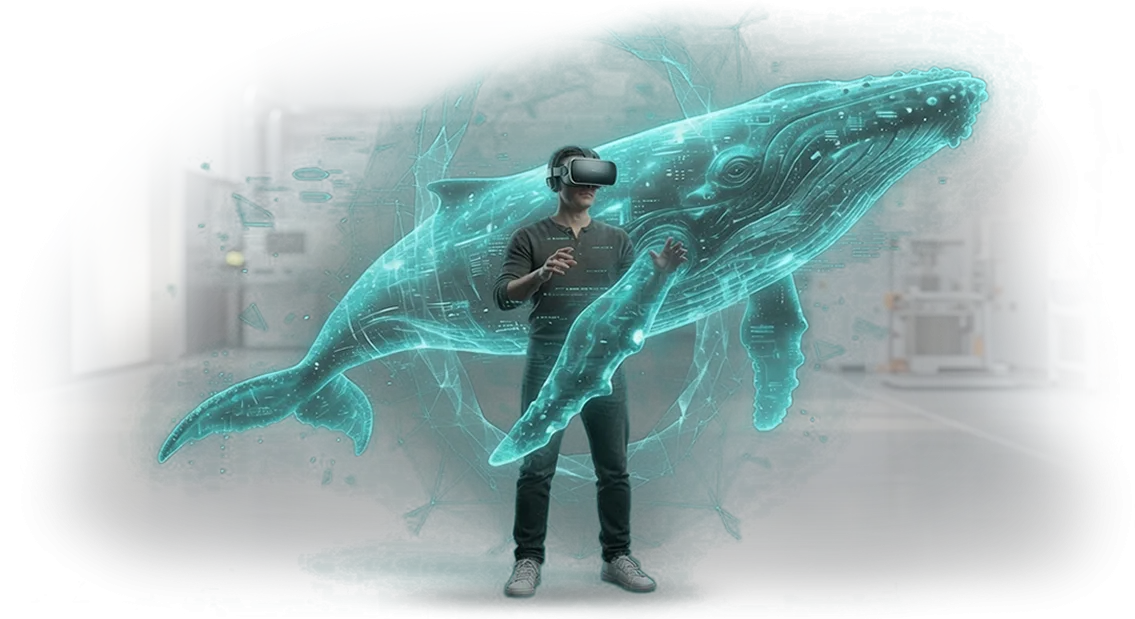
VR rehabilitation changes this. By immersing a person in a virtual environment with a clear task, we get them to move naturally and with interest. Game mechanics provide instant feedback, and the doctor sees accurate progress indicators. As a result, recovery happens faster, and the patient themselves wants to return to sessions.
That is why we develop VR applications for Meta Quest for rehabilitation centers, hospitals, and foundations. You get a tool that turns boring procedures into a clear process with measurable results.
This shortens rehabilitation timelines, increases successful discharge rates, and strengthens the institution's reputation. And we handle the entire technology side — from idea to launch.
What VR rehabilitation based on Meta Quest gives you: 5 measurable benefits
VR rehabilitation based on Meta Quest turns recovery after injuries and surgeries into a controlled process with clear metrics. Instead of "we just did exercises" — specific progress numbers that both the doctor and the patient can see.
Below are five measurable benefits confirmed in our practice of rehabilitating disabled people and veterans.
Patient engagement
Game-like presentation and scenarios tailored to specific tasks hold attention for 20–30 minutes without losing motivation. The patient performs more repetitions because they are interested, and regularity directly accelerates recovery.
Training precision
The system records range of motion, speed, and symmetry of actions, eliminating the "roughly right" nature of ordinary sessions. The doctor sees objective data, not just the patient's words — this improves the quality of the rehabilitation plan.
Ease for doctors
Setting up a scenario takes minutes, and management happens from a single interface. The specialist does not need to be a technical expert: all routine operations are automated, and interchangeable programs adapt to each patient.
Measurable progress
Ready-made reports show dynamics for each function: from joint mobility to reaction speed and stability. These numbers can be used in medical documentation and for clear motivation — the patient sees that their efforts are producing results.
Safety and scalability
Training takes place in a virtual environment without the risk of falls or overload. One equipment set serves different patients, and changing programs takes only a few minutes — the clinic expands the scope of care without additional resources.
This approach gives a rehabilitation center a measurable outcome: higher engagement, more accurate diagnostics, simpler staff workflows.
We configure scenarios for the patient's specific tasks and support the process at every stage — from the first test to a sustained improvement in indicators.
VR program formats for your center
Each rehabilitation center works with its own audience: veterans with combat experience, people after stroke, patients with limited mobility. There is no universal VR program for everyone — what helps some may not suit others. That is why we offer three collaboration formats.
They differ in launch speed, depth of customization, and level of investment. Below is a comparison so you can immediately see which path suits your center.
Format comparison
| Format | Who it is for | What the client gets |
|---|---|---|
| Ready-made solution | Centers that need to launch VR rehabilitation quickly without lengthy setup | A proven program that can be implemented within a few days |
| Custom development | Centers with a unique methodology or a specific audience | A VR program that precisely follows your protocols and exercises |
| Hybrid format | Centers that want to combine speed and uniqueness | A base solution refined for the specific tasks of your patients |
These are not rigid limits but guidelines. If you have an original methodology, we start with custom development. If you need to test VR in a department, choose the ready-made solution. And over time, you can switch to the hybrid model by adding your own scenarios to the base program.
Choosing a format begins with a free analysis of your tasks. We study which patients are undergoing rehabilitation, which exercises are already used, and where VR will enhance results. Then we propose the optimal option — without pushing unnecessary features. You get a program that fits into your center rather than forcing you to rebuild around it.
How VR application development works: 6 steps
Developing a VR application for rehabilitation is not a "black box." We guide you along a clear six-step route, and at each stage you understand what is happening, when intermediate results will be ready, and exactly what is being approved.
It is important to us that you control the process and see how your requirements turn into a working product.
-
Brief and task immersion. We study your patients, the specifics of rehabilitation programs, and technical capabilities. We define goals: which movements we train and how we measure progress. Deliverable: a requirements document and preliminary timelines.
-
Scenario prototype. We build a demo version of one exercise or scenario. You see how a person interacts with the virtual environment and can adjust the mechanics before full development begins. This reduces the risk of rework.
-
Concept approval. We present the design, session structure, and control methods. We make changes based on your feedback. We approve the final version — after this, the main development begins.
-
Development and content. We create all scenarios, a progress tracking system, and interfaces for the specialist. You regularly receive builds for testing and can monitor progress.
-
Testing with patients. We conduct pilot sessions with the target group. We collect feedback from patients and rehabilitation specialists, refining usability and effectiveness. Deliverable: a stable version.
-
Launch and support. We install the application on your equipment and train staff. After launch, we stay in touch: we update content, fix issues, and help you expand the program.
We agree on timelines at the first step — a typical project takes two to four months. Every stage ends with a clear result, so you always know what stage the project is at and when it will be ready.
What you get after launching a VR project
After launch, you receive not just an application but a ready-to-use rehabilitation tool that can immediately be used with patients. We hand over a complete delivery package so your specialists can start sessions without lengthy setup or confusion.
In rehabilitation, every minute matters: the faster staff master the tool, the more patients receive timely care.
Here is what is included in your delivery:
- Ready-to-use VR solution — professional equipment with installed programs and configured scenarios. Connect, check, and work.
- Complete documentation package — staff manuals, methodological materials for conducting sessions, safety regulations, and guidance for working with patients with different needs.
- Staff training — practical training on working with VR scenarios, adjusting exercises to each patient's individual goals, and monitoring results.
- Training videos and reference materials for staff — so new employees can quickly get up to speed even after the main training is completed.
- Technical support at launch — our specialists are available during the first weeks and help you run scenarios with real patients.
- Access to application updates — new rehabilitation exercises, interface improvements, and an expanded scenario library at no additional cost.
This package covers all issues: from equipment delivery to staff readiness to conduct effective sessions. You get a predictable result and confidence that the project works for the benefit of your patients.
This set solves the main challenge for management: it minimizes implementation risks and shortens the time to the first result.
Real case study: doubling coverage and motivation
We were approached by the Center for Restorative Medicine — a rehabilitation center for disabled people and veterans. The main problem was motivation: patients dropped out of the course, and the number of sessions was limited by instructor workload. They needed a tool that engages patients and simplifies staff work.
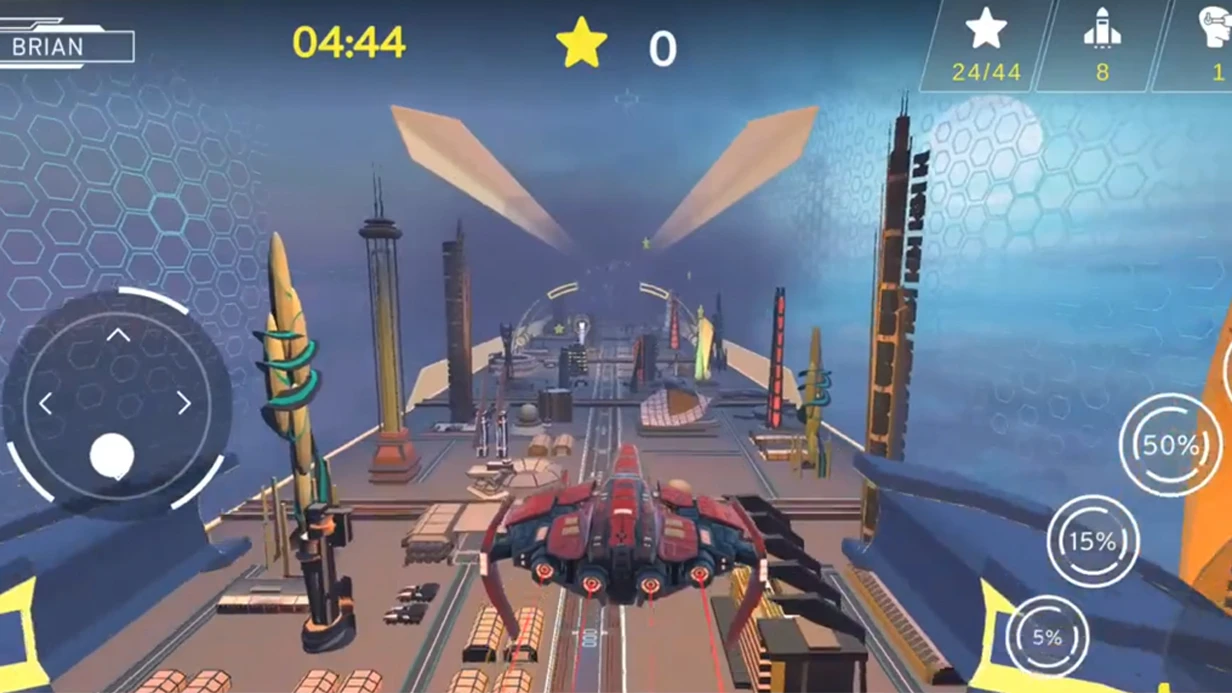
We developed a VR application for Meta Quest with personalized scenarios: instead of boring exercises, the patient is immersed in a game where they need to reach, squat, and control their breathing.
Difficulty adjusts automatically — progress is visible to both patient and doctor. The instructors mastered the system in one day.
What changed after launch
Over three months, patient coverage doubled — VR sessions can be held more often without expanding staff. Motivation also increased: 85% of patients now complete the full course, whereas previously one in three interrupted rehabilitation.
Recovery progress accelerated: the average improvement in motor function was a third higher. This is especially important for long-term programs — patients do not burn out and miss sessions less often. Patients themselves ask for additional sessions, which reduces the burden on staff motivation.
After the first results, the center ordered two more expansions and extended the contract. The VR case went from experiment to a permanent part of the center's work.
How long does it take to implement VR in a clinic?
A standard VR rehabilitation implementation project in a clinic takes 2–3 months with active work on our side and your team's willingness to allocate time for approvals.
During this period, we conduct a task audit, select scenarios for the patient profile, adapt the interface, and train staff — by the end of the second month, you are already running first test sessions.
Timelines may shift if non-standard modifications are required, for example, integration with your medical system or special protocols for severe conditions. In such cases, we define stages and clear milestones in advance — you always see what is ready and what remains.
No "black boxes": after each stage, you receive a demonstration of the intermediate result.
As for the space — no separate room is needed. A free area of 3×3 meters is enough for a patient to move safely in a VR headset. We bring our own equipment and set it up; all you need is a desk for staff and a power outlet.
The whole system takes up little space and is easily deployed in a standard exercise therapy or physiotherapy room.
Most of the time goes into the methodological part: together with your doctors, we determine which exercises and scenarios will deliver the greatest effect for specific patient groups.
This is not a "boxed solution" but a tool that integrates into your rehabilitation process. That is why we stay in touch after launch: we support the first weeks of operation, adjust settings, and train new staff.
In the end, within 2–3 months the clinic gets a working service line that increases patient coverage and diversifies the recovery program. Patients train with greater motivation, and you get a modern tool that sets your clinic apart from competitors.
The effect of implementation is visible within the first month — in session dynamics and patient feedback.
Frequently asked questions and concerns before starting
Before a first VR rehabilitation project, clients always have the same questions: will patients handle the controls, could the technology cause harm, will they have to change their entire infrastructure. That is normal — a new tool requires confidence.
We have gathered the three most common concerns and briefly explained how they are resolved in practice.
Patients don't know how to use VR — will training take a lot of time?
No. The headset is set up in a minute, and the scenarios are designed for people without experience. Most patients get the hang of it within the first 2–3 sessions and then work independently.
Our specialist supports the launch and trains your center's staff, so you get a ready process without adding to your doctors' workload.
Is it safe for people with disabilities?
Yes. We use professional equipment with position tracking and carefully designed scenarios that exclude sudden movements and overload. The load is individually selected, and the session can be stopped at any moment. Each project includes a safety protocol and recommendations for the doctor.
Will we have to buy expensive equipment and remodel rooms?
All you need is one dedicated space of 2×2 meters and a power outlet. We supply headsets and software turnkey and configure everything remotely or on-site. If you already have computers with sufficient performance, integration will be even faster. No replacement of workflows and no downtime for the center.
After launch, you receive support and analytics for each patient, so all doubts dissolve in the first results.Launch a VR program for your patients
Launching a VR rehabilitation program is not about buying a headset — it is a structured process: from defining the task to staff working with patients. We support you at every stage so the program starts delivering results within the first month.
Here is the path from idea to a working program:
-
VR request. You submit a request on the website or by phone — briefly describing which patients need the program. This takes no more than five minutes.
-
Consultation. Our specialist contacts you and clarifies the goals: motor recovery, cognitive function, psychological support. We also discuss how many patients you plan to serve.
-
Project estimate. We prepare an accurate estimate: equipment composition, methodological materials, staff training, launch timelines. You receive a transparent costing without hidden fees.
-
Solution preparation. We select VR training scenarios and professional equipment for your tasks. If necessary, we adapt the program to your patients' specific needs.
-
Staff training. We conduct a training session for doctors and methodologists: they learn to work with the program, configure sessions, and evaluate progress. You do not need to hire new employees.
-
Launch and support. We help you launch the program on-site and then continue supporting: updating scenarios, consulting staff, and helping with technical issues.
As a result, you get a ready rehabilitation tool that increases patient engagement and frees up staff time. Patients train in a safe environment, and you see measurable progress.
Submit a request for a free consultation and project estimate — we will send a launch plan for your institution and answer all your questions.