

Shipbuilding and Ship Repair: Why Blueprints No Longer Sell
Drawings and specifications are the language of the designer, not the language of the customer.
When a client looks at flat diagrams of a future vessel, they see lines but cannot imagine what the hull will look like, how spacious the interior is, or how ergonomically the workstations are arranged.
Doubt creeps in: “Is this really what we need?” In shipbuilding and ship repair, the cost of a mistake is enormous, so doubt leads to a pause in negotiations, endless clarifications, and ultimately to losing the order to someone who could present a clear visual.
A shipyard manager or sales director spends weeks on approvals, and the decision is still postponed. The client cannot touch a vessel that has not yet been built and is not ready to trust only figures.
At this point, visual clarity plays a decisive role: the sooner the customer sees the future facility “alive,” the higher the chance that the contract will be signed with you.
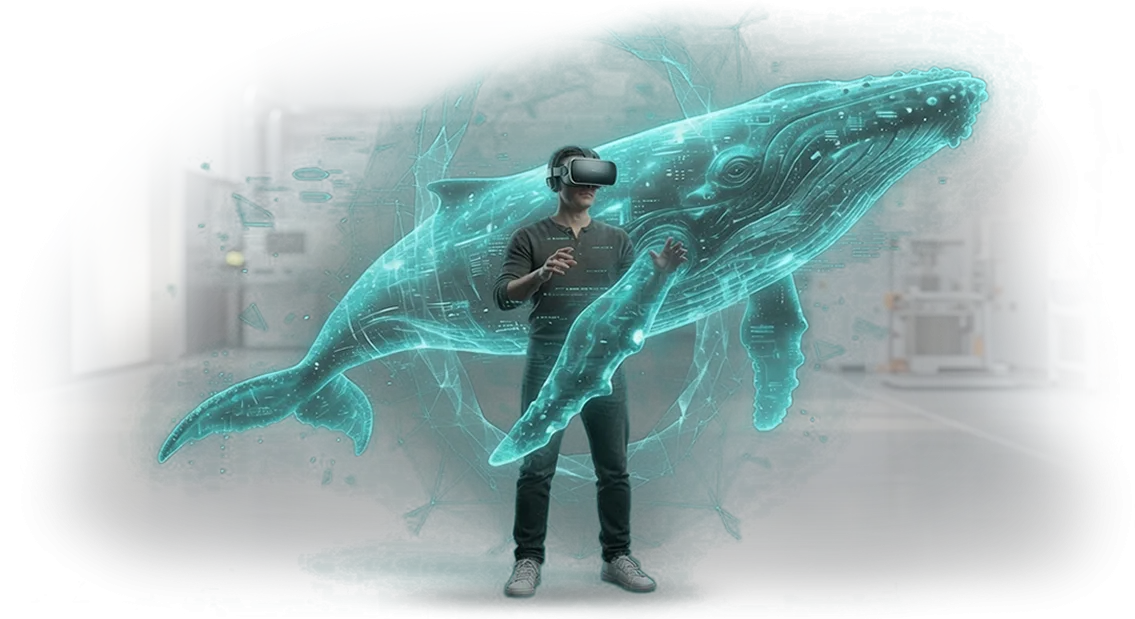
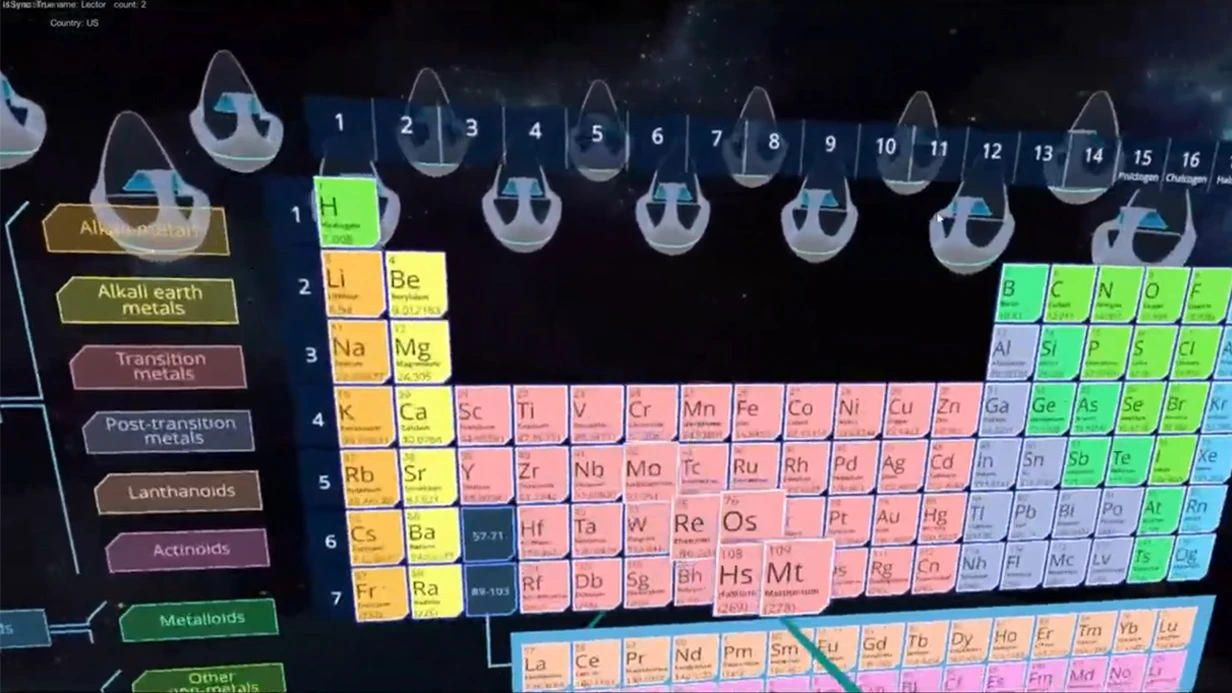
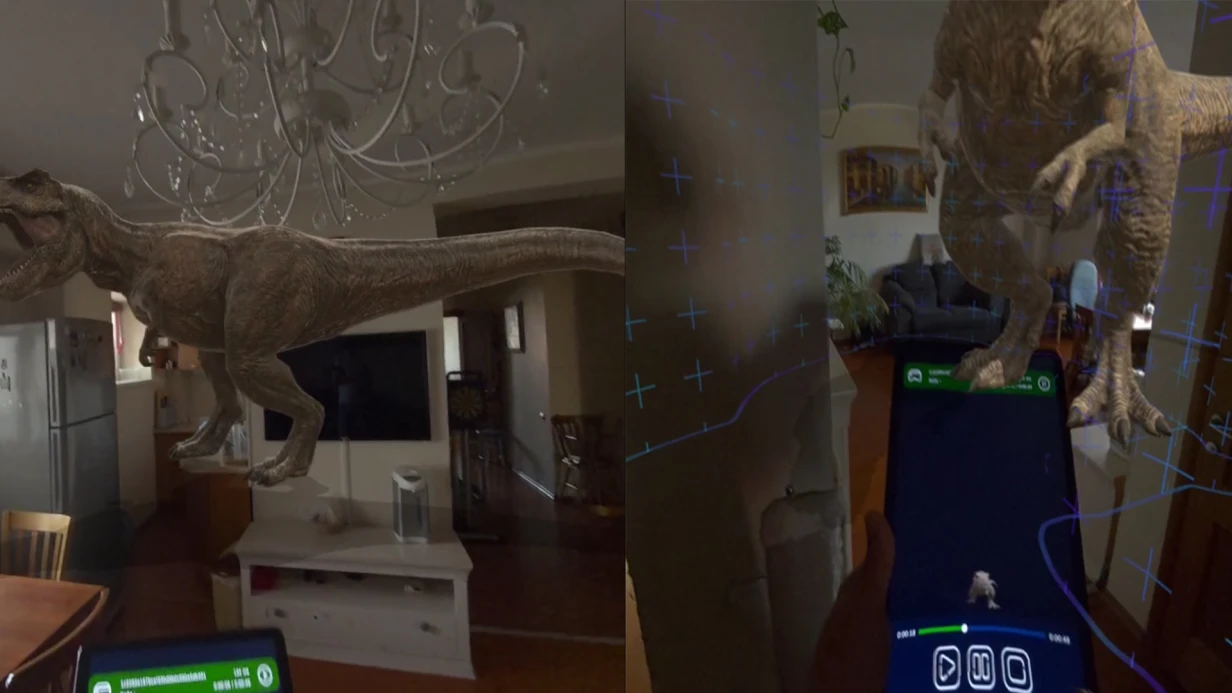
Virtual reality removes this barrier. We create an interactive presentation of the vessel that lets the client inspect the hull from the outside, walk across the decks, look into cabins and technical rooms — all before construction begins.
Such a VR presentation for shipbuilding turns an abstract project into a tangible object and enables the client to make a confident decision without lengthy negotiations.
It also works for ship repair: you show what the vessel will look like after modernisation, what will change in the layout, and where new utility runs will go.
The customer sees the result before money is invested in the work—so the main fear of “what if it turns out not as we imagined” is removed. We cover that need by helping you sell complex projects faster and without losing orders.
What a VR App for Industrial Presentations Delivers
For the shipbuilding industry, the main problem is showing a product that has not yet been built. A full-scale model is prohibitively expensive, a trip to the shipyard disrupts schedules, and a drawing does not evoke emotion.
A VR app replaces a physical demonstration: the customer sees the vessel at full scale, evaluates it from the inside and outside, and makes a decision faster.
Here is what the business gains from such a presentation:
- Full-scale product visualisation — the visitor examines the vessel in detail, seeing interiors and decks that cannot be shown on a poster or slide.
- VR benefit for the stand — the visitor stays for 5–7 minutes instead of 30 seconds, and a queue of people wanting to try the headset becomes natural marketing.
- VR benefit for the brand — strong impressions boost recognition: visitors take photos in the headset, share them on social media, and reach grows without an advertising budget.
- Leads after the demo — after the session, the visitor leaves contact details because they have already “touched” the product and want to discuss order specifics.
- Working with diverse visitors — from executives to technical specialists: each gets the appropriate level of detail, while the manager gets a ready-made talking point for negotiations.
- Faster approvals — instead of a series of meetings with mock-ups and documentation, a single VR session is enough to show the scale and answer questions.
The bottom line is that the value of VR here lies not in high tech but in measurable results: more time at the stand, more contacts, more repeat visits.
For ship repair this is especially valuable: the customer quickly understands the scope of work and trusts a company that shows the product rather than describing it in a brochure.
VR App Formats for Specific Tasks
In shipbuilding and ship repair, the same 3D model covers three key tasks: showing the project before construction, training personnel, and controlling the quality of work.
We select VR app formats for these tasks based on the specific situation—from negotiations with a customer to accepting a vessel after repair.
We implement solutions on Meta Quest so that they run on professional equipment and you get stable results without being tied to a stationary headset and cables. Below are typical formats already used in production.
| Format | For whom | What it gives the client |
|---|---|---|
| Demonstration | Customers, investors, acceptance committees | The project is seen “live” before construction: hull attitude, layout, access to components. Decisions are made faster, and corrections are made before the slipway, when they are inexpensive |
| Training | Repair crews, new staff, shift teams | Practice operations without risk to the vessel or people: dismantling, defect detection, component replacement. Mistakes happen in VR, not on the real object |
| Control | Managers, supervisors, quality department | Comparing actual condition with the 3D model, identifying deviations and defects, recording stages. The manager sees an objective picture for each item |
The formats are easy to combine: you show one model to a customer during approval, then use it as a simulator for repair teams, and later as a benchmark for control. As a result, you do not pay for development from scratch—you extend a single VR project to new tasks.
How a VR Project Is Developed: 7 Steps
For shipbuilding and ship repair, a VR project is not a toy but a tool: to reduce staff training time, eliminate errors in assembly of components, and safely practice operations in confined spaces.
That is why development follows a clear seven-step plan: from day one you know what you will get, when, and how to verify it.
-
Brief and immersion in the task. We ask technologists, supervisors, and workers how the operation is currently performed, where failures occur, and what safety requirements are in place at the enterprise. This provides the foundation for the future scenario.
-
Scenario approval. We present the simulator in words and diagrams: what actions the employee performs, what errors will be tracked. You adjust the details before development begins.
-
Plan and timeline estimate. We define stages and checkpoints: when the prototype appears, when the test version is ready, and when the project is ready for delivery. You know the work status without constant conference calls.
-
3D model and prototype. We build a model of your component or workshop and show it in a headset. At this step, changes are inexpensive, so we review details together and adjust them.
-
Scenario and interface development. We work out tasks, hints, and error control based on your regulations and instructions. The simulator reproduces real production conditions.
-
Testing with employees. We give a headset to your specialists: welders, repair personnel, trainees. We collect feedback and refine the product to make it simple and convenient to use.
-
Launch and support. We install the software, train the administrator, and support the project after it goes live. Scenarios can be updated when the production process changes.
As a result, you get not “raw development” but a working simulator accepted by the people who will train on it. Each stage has a clear deliverable and a control point—and our team remains available after the project is delivered.
What a VR Solution Delivery Includes
When you order a VR solution from us, you get not just an application but a fully operational tool integrated into your shipbuilding and ship repair processes.
We have thought through every stage—from installation to daily use—so that your team starts getting results from day one.
What is included in the delivery:
- A working VR application tailored to your enterprise’s specific tasks: staff training, component assembly practice, quality control, and other scenarios. The product is adapted for Meta Quest and runs on professional equipment that you can either purchase separately or rent.
- Instructions and regulations — clear guides for setup, launch, and routine operations, as well as quick-reference cards for employees, so the system never sits idle because of unfamiliarity with small details.
- Training for your specialists — we deliver training for administrators and users: they will learn to operate the system, load scenarios, and handle routine tasks without contacting the developer.
- Technical support — a dedicated engineer answers questions, helps in emergency situations, and collects feedback throughout the entire service life. You are never left alone with a problem.
- Updates — we regularly improve the functionality to match changes in your production processes and new tasks. Updates are included in the contract and require no separate approvals.
- Transfer of source materials — methodological guides, a knowledge base, and system logs stay with you, so you can continue developing the solution even if you change contractors.
In the end, you get a transparent package: an application, instructions, training, support, and a clear development plan. Support does not end when the acceptance certificate is signed—we stay with you throughout the entire lifecycle of the solution.
This removes the main risk when implementing digital tools: “equipment purchased turns into useless goggles.” That does not happen with us, because delivery is always a working system, not just files on a disk.
Case Study: Virtual Simulator for a Production Facility
New employees at a shipyard need weeks to learn operations at a production site, and mistakes lead to downtime of expensive equipment. We developed a virtual simulator that allows them to practice key actions in a safe environment without risking production.
Workers put on Meta Quest headsets and perform the same operations as in the workshop: from preparing tooling to quality control. In two months, 120 employees completed the simulator.
The average time to learn a new operation decreased from five days to one, and repeat rework requests dropped by a third—this confirms that personnel reach the required proficiency faster.
The production manager noted: “Previously, a newcomer could not be allowed near complex components without a mentor; now they first work in VR and come to the workshop prepared.
This saved us time and removed unnecessary risks.” Following the pilot project, the plant ordered three more simulators for other areas—from assembly work to engine repair.
This case shows how a VR solution integrates into a real training process and delivers measurable results. If you have a similar task—let us discuss how to adapt this approach to your production.
We work remotely, structure the project around a brief and a test prototype, and at launch hand over documentation and train your team.
How to Choose a VR Format for Shipbuilding and Ship Repair Tasks?
Choosing a VR format for shipbuilding and ship repair starts not with equipment but with a specific production task.
The same application can work differently in a workshop, on a slipway, or in a design department, so it is important to determine right away where the technology will deliver measurable results.
For personnel training, standalone headsets are optimal—they allow practicing welding, component assembly, or emergency responses without stopping production.
For quality control and work acceptance, augmented reality solutions that overlay drawings directly onto the vessel’s hull are better suited.
And when it comes to complex logistics or installation in confined spaces, the format must provide real-scale tracking—so the worker sees the exact position of structures relative to one another.
The specificity of shipbuilding is that objects are too large for ordinary exhibition demonstrations, and access to components is often limited.
Therefore, format selection always relies on two things: the nature of the work (design, training, repair) and the site conditions (network availability, lighting, employee mobility).
It is important not to chase universal “premium” graphics but to choose a solution that works reliably in the workshop and does not require workers to learn complex interfaces.
We help you decide on the format during the audit stage: we look at your processes, talk to crews and technologists, and then propose an option that is quick to implement and pays off.
In the end, you get not an expensive toy but a tool that reduces training time and lowers the number of errors during installation—even if a lightweight VR application on a standalone headset is all that is needed.
Frequently Asked Questions About Implementing VR in Production
Implementing VR in production is a decision that affects safety, personnel qualifications, and operation costs. Unsurprisingly, managers have questions: how long it will take, whether it will disrupt current processes, and how quickly results will appear.
Below we answer the most common concerns—in terms of numbers and real benefits, without technical details.
Isn't implementing VR at a shipbuilding enterprise too slow?
The first VR scenarios for key tasks are up and running within 2–4 weeks. In parallel, we train your specialists—in 1–2 months the team independently uses the simulators without external help.
Meanwhile, the production cycle is not interrupted: the entire implementation runs in the background.
Will employees refuse to learn in VR—isn't it too complicated?
VR simulators are built on natural actions: pick up a tool, press a button, perform the operation—just like in real life. The average time to learn the interface is 15 minutes.
In practice, even workers over 50 meet performance standards after the first session, and motivation grows because there is no need to fear mistakes or broken equipment.
How will VR affect the current workflow and safety?
Virtual scenarios model real workshops and emergency situations without risk to people or expensive machinery. An employee can “walk through” a vessel and practice welding or repair in a safe environment.
This reduces the number of errors on real objects and accelerates work clearance—without stopping production or the shipyard.
How quickly will VR training pay off?
Savings become visible within the first months: no money is spent on defective materials, downtime is reduced, and newcomers reach performance standards twice as fast. Some customers recover their investment in a single repair season through fewer accidents and reduced downtime. For ship repair, where an hour of downtime is expensive, the benefit is felt especially quickly.
What happens after launch if something breaks?
We continue to support the project after delivery: we update scenarios, help resolve issues, and provide additional employee training. Support works remotely, and backup copies and instructions are always at hand for your staff.
You do not need a full-time VR engineer—only someone to launch the simulators; we take on the main work.
If you are not sure whether VR suits your production, start with a pilot scenario. In a short time, you will see how the technology integrates into your processes and what savings it brings, and only then decide about scaling.Let's Discuss Your Project? Leave a Request
Your request is the starting point.
Submit a request for a VR solution for shipbuilding or ship repair—and within one business day we will contact you to clarify the context: exactly where virtual reality will be useful (a welder simulator, checking component fit, an interactive instruction for a repair crew). No ten-page questionnaires: just a couple of questions are enough to understand the task.
Next — a consultation. On a call, we analyse your situation, show relevant industry cases, and honestly say where VR will deliver a measurable effect and where it will not pay off right now.
You receive not a presentation but a concrete proposal: which scenarios to implement, which equipment will fit, and what results are realistic.
After that, we prepare a commercial proposal with fixed timelines and stages. You see exactly what will be created, how the solution will fit into your production processes, and who on our team is responsible for the result.
If needed, we join the technical specification and help formulate requirements for internal approval.
Once the terms are agreed, we launch the project. At every stage, you receive intermediate demos—from the first prototype to the final version. This allows you to adjust the course of work in time and avoid surprises during delivery.
Ordering a VR project from us means getting a proven process refined across dozens of implementations.
Leave a request—and at the next step we will discuss your task. This way, you will quickly understand what opportunities VR opens up for your production and can make a decision without unnecessary risk.