



VR Boosts the Effectiveness of Pharmaceutical Presentations to Physicians
Doctors face a huge flow of information every day: articles, conferences, colleagues' presentations. Ordinary slides with charts and text no longer hold attention — after a few minutes the audience gets distracted, and key drug data doesn't stick in memory.
This problem is especially acute at presentations of complex products: biologics, new dosage forms, combination regimens. For pharmaceutical companies, this means lost budget and low effectiveness of pharma events.
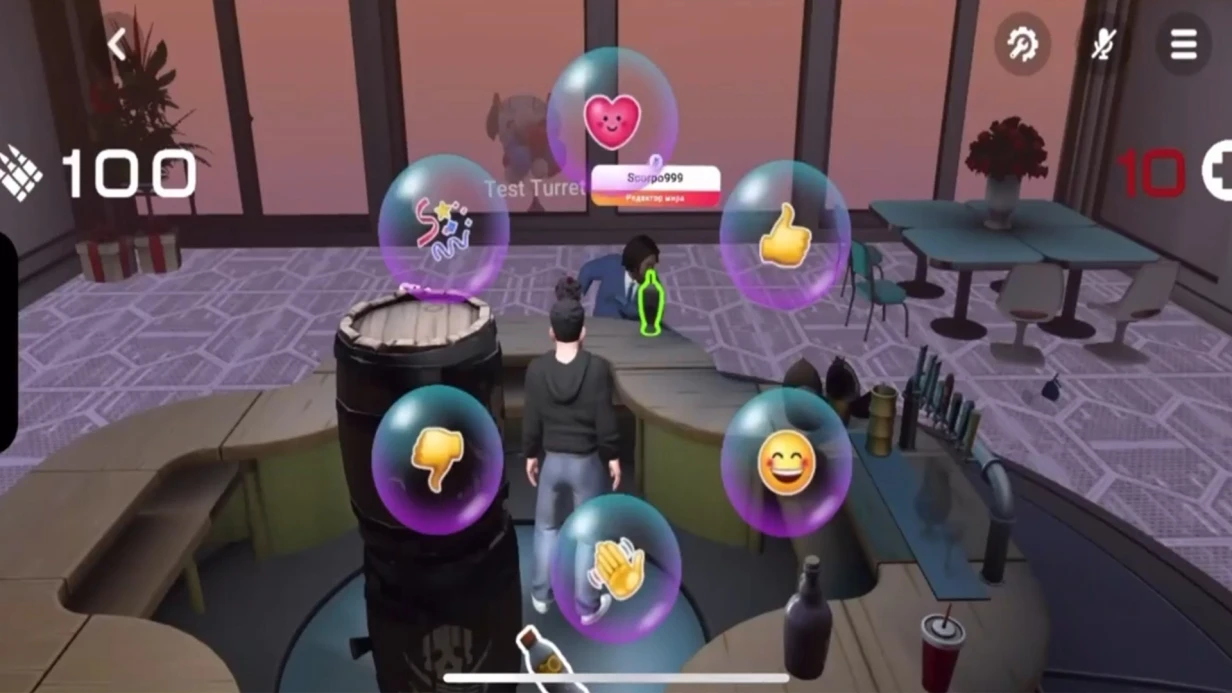
A virtual presentation completely changes the format: the physician immerses in an environment where they can interact with materials — literally "touch" a molecule, see the drug's mechanism of action in motion, and examine how the drug affects the body.
This kind of interactivity for physicians turns passive listening into active exploration, multiplying information retention many times over.
Research shows that immersive formats are absorbed far better than flat charts and tables — so the physician walks away from the presentation with exactly the arguments that matter for prescribing.
Why does this work? The human brain is evolutionarily wired to perceive space and movement.
When a physician in virtual reality "walks through" the drug's pathway of action or examines an organ in cross-section, the information becomes a personal experience rather than an abstraction.
This creates lasting associations that physicians recall when prescribing therapy — they mentally "see" their experience instead of trying to remember a slide.
For a pharmaceutical company, this means a measurable result: higher audience engagement, longer attention retention, and stronger brand loyalty.
Such pharma events stand out from competitors, and physicians gladly share their impressions with colleagues, expanding reach for free.
In addition, the VR format is easy to adapt for different audiences and therapeutic areas, providing a universal tool for education and promotion without extra costs for printed materials and logistics.
Physicians are more willing to trust a product they have seen in action and prescribe it more often — this is a direct link between presentation effectiveness and commercial results.
We create corporate metaverses and virtual presentations that solve these problems. Your team gets a ready-made turnkey product: from script to launch. If you want your pharmaceutical presentations to physicians to be memorable and deliver results — let's discuss your project.
What Benefits the VR Format Brings to Your Brand
Physician Engagement
The VR format turns a presentation into a personal experience: the physician explores the drug's mechanism of action themselves instead of passively watching slides. This increases physician engagement, helps retain key arguments, and strengthens trust in the product.
As a result, the medical representative communicates the drug's value faster and gets more time for answering questions.
Brand Recognition
Medical presentations look alike, so physicians remember an unusual format. A VR presentation sets the brand apart, creates the image of an innovative company, and makes physicians want to share the experience with colleagues.
This is a natural way to expand brand recognition among a professional audience — conferences and roundtables become a reason to discuss the product even before the official program begins.
Analytics for Pharma
The VR platform records physician actions: which sections were studied longer, where there were doubts. This analytics for pharma helps tailor the next meetings and improve arguments with precision.
The medical representative gets ready-made data for more effective negotiations, and marketing gains an understanding of which product characteristics are most attractive to different groups of physicians.
Speed and Scalability
One VR presentation can be used at conferences and meetings in different regions without reconfiguring materials. This reduces preparation time and logistics costs, and also makes it possible to reach more physicians simultaneously.
The format is easy to adapt for new products or audiences, which is especially important for companies with a broad drug portfolio.
VR Content Formats for Pharma Events
Pharmaceutical presentations to physicians traditionally take the form of slides and handouts. But when it comes to a complex drug mechanism of action, a flat image doesn't provide the needed clarity.
VR formats turn a presentation into an immersion: the physician sees the process from the inside, and the brand gains lasting recall.
We have developed several scenarios for different goals — from overview to deeply educational. Each one integrates easily into an event and requires no special training from the physician. Below are typical formats already used in corporate metaverses.
| Format | For whom | What it gives the client |
|---|---|---|
| 3D drug model | For small groups of physicians who need to examine the structure in detail | The physician "takes apart" the molecule independently and sees the mechanism of action — questions disappear before they even arise |
| Virtual tour | For plenary sessions and large audiences | Immerses all participants in a single brand space, creates a sense of presence without logistics costs |
| Interactive table | For individual work and side discussions | The physician chooses scenarios and compares data on their own — you get more time with each specialist |
| Simulation | For training on usage and practicing practical skills | Safe practice with no risk to patients, the sequence of actions is remembered for a long time |
Such variety allows you to build a program for a specific meeting: sometimes a virtual tour is enough, while for complex drugs we add a simulation and an interactive table.
In the end, you don't just talk about the product — you give the physician a personal experience they will remember and use in practice.
How We Build the Project: 5 Clear Steps
Developing a corporate metaverse for pharmaceutical presentations is a project where every detail matters. You need to convey complex information to physicians, make it visual and memorable.
We understand this, so we've structured the process so you can focus on the content, not technical details. Each stage is coordinated with you — you always know what's happening and what comes next.
Five Clear Steps
-
Brief and task immersion. We gather information about your audience — physicians, presentation goals, and key messages. You get a clear picture of how a VR space will help solve your tasks.
-
Concept and script. We propose the metaverse structure: zones, interactive elements, interaction mechanics. You approve the concept before development begins, avoiding unnecessary time expenses.
-
Working version review. We create a draft version of the key scenes. You see how the future solution will look and work, and you can make corrections at an early stage.
-
Development and content. We build the full VR solution: graphics, content, interaction logic. At this stage, you receive intermediate results for quality control.
-
Launch and support. We help with installation and train your team. We stay in touch after launch and quickly make changes if needed.
This transparent approach eliminates unexpected surprises and unnecessary revisions at the final stage. You get a tool that helps physicians absorb material faster and increases the effectiveness of your presentations — without wasting time on technical details.
What's Included in Delivery: A Package for Your Event
You receive a complete turnkey solution — from script to final report. We handle everything that usually consumes an organizer's time: preparation, setup, on-site support on the day of the event, and results review afterward.
The delivery package includes:
-
A ready-made VR script adapted to your presentation. The narrative and visual imagery are built around your data — physicians immerse themselves in the material rather than just listen.
-
Localization and customization for your brand. Brand colors, logo, terminology — all in a unified style, so the corporate standard is maintained even in virtual space.
-
Professional equipment rental and delivery to the venue. You don't need to source headsets, controllers, and computers — we bring the set, check it, and configure it on site.
-
Staff training. We provide a short briefing for your team: how to welcome physicians, help with the headset, and answer questions. Your staff will work confidently from the very first guest.
-
Technical support on the day of the event. Our engineers are available and located near the venue — if anything needs attention, we resolve it in minutes, not hours.
-
Installation, dismantling, and logistics. We deliver, set up, and collect after the finale. You focus on the physicians and content — everything else is on us.
-
Post-presentation report. We show how many physicians viewed the scenario, how much time they spent in VR, and how they reacted — this data helps plan future launches.
This package covers all organizer concerns: from the first discussion to the final report. All you have to do is invite the physicians and start the presentation.
Case Study: How a Pharma Company Captured 80% of the Audience's Attention
A typical pharma situation: physicians are overloaded, they allocate minimal time to a new drug presentation, and attention fades by the third slide.
Slides and brochures lose out to videos and urgent tasks — in the end, from a large audience, only the brand name is remembered, while the mechanism of action and prescribing rules remain unnoticed.
To fix this, the company VektorMed ordered a corporate metaverse for pharmaceutical presentations to physicians.
Instead of a passive lecture, doctors entered an interactive 3D world: a volumetric drug model that can be examined from any angle, the mechanism of action in motion, and built-in questions throughout the session.
The immersion doesn't require headsets for all participants — a conference room screen or tablet is enough, so the audience isn't tied to expensive equipment.
What Changed in Physician Attention
Material study time increased 3 times, and 80% of physicians watched the presentation to the end — by comparison, only about a quarter of the audience stays for an in-person slide talk.
A month after the session, a follow-up survey showed that nearly all participants correctly described the drug's mechanism of action. For the brand, this isn't just an "interesting format" but a growth in trust and prescribing frequency. Reach and recall grow without additional advertising budgets.
"We had physicians asking for the recording themselves and asking when the next session would be — that happened for the first time across all offline events," noted the marketing director of VektorMed.
After just the first cycle, the client requested scenarios for two more drugs, and we reduced the preparation time for each subsequent scenario to two weeks thanks to established tools and assembly templates.
How to Choose a Format for Pharmaceutical Presentations?
The answer depends on three things: what goal you're setting, who exactly will watch the presentation, and how complex the material is to convey.
There is no single "best format for everyone" — there is a format that solves your task more effectively than ordinary slides. We select it individually based on the product's specifics and the physician audience.
First — the meeting's goal. If you need to show a drug's mechanism of action in volume, the VR format lets the physician "step inside" the process and see it in motion.
AR overlay is convenient when a specialist is working with a real drug or treatment plan, while MR combines both approaches — for example, at a conference or roundtable. A clearly defined goal immediately narrows the choice.
Second — the audience and event format. For a large group at a conference, it isn't always reasonable to hand VR headsets to everyone: here, interactive 3D visualization on a screen works more effectively.
For an individual consultation or small-group work, VR immerses one physician in the scenario and gives full control over their attention. Time also matters: a short 10-minute demonstration requires one approach, multi-stage training requires another.
Third — the complexity of clinical data. Molecular interactions, metabolic pathways, safety profile comparisons are easier to interpret in space than on a flat image.
It is precisely for such materials that interactive formats deliver the greatest gains in recall and physician trust. If the topic is simple — high-quality animation without full immersion is enough.
Choosing the right format isn't a question of "what's trendier" but a question of fit to the task.
Our specialists help determine the format before development begins: they assess goals, audience, and content, after which we create a solution that physicians understand from the first minutes.
You get not just "something in VR" but a tool that achieves the desired result in your pharmaceutical presentations.
Common Concerns: Answering Questions Before You Order
Before ordering a VR presentation for physicians, teams usually have concerns: will the technology scare off the audience, is it hard to implement, will it deliver results. Here we answer the common questions — briefly and to the point.
Is a VR presentation safe for physicians?
Yes. We use professional equipment with proven operating protocols: sessions last a few minutes, there are breaks, and the user always controls the process. No discomfort — only immersion in the material.
Is it compatible with our laptop and venue?
Yes. We bring and set up all the equipment ourselves; it runs standalone — all you need is a power outlet. A meeting room or lobby is enough for the presentation; additional technical requirements for the client are minimal.
Will physicians find VR headsets difficult to use?
No. The controls are intuitive: the physician puts on the headset and follows on-screen prompts. Before each session, we give a short briefing, and an operator stays nearby during the presentation — guests feel confident from the first minute.
Won't the VR format scare off a conservative audience?
Quite the opposite: an interactive 3D presentation holds physicians' attention 2-3 times longer than regular slides. The format is perceived as modern and caring — it builds brand loyalty, not resistance.
How much time is needed for preparation and launch?
From brief to ready script — about two weeks. We allocate 1-2 days for setup and configuration at the event itself. We handle the entire process: content, equipment, and technical support on the day of the event.
Can we run the presentation in multiple cities?
Yes. Our logistics process is well established: all equipment is packed in cases, operators are trained, and setup takes a couple of hours. You get the same quality in any city where you operate.
If you still have concerns — we'll send a demo script and show how it works with your content. Just write to us: we'll discuss the details and prepare a proposal for your task.Order a VR Presentation for Your Pharma Company
What physicians remember is what they see and touch, not what they flip through on slides. A VR pharma presentation turns your product into a visual scenario — with mechanism of action, clinical data, and therapy schemes that stay in memory after the meeting.
Ordering such a presentation means getting a tool that keeps working toward results long after the event.
Leave a request — and on the very first day you'll receive everything you need to make a decision:
- Consultation: we'll advise which VR format suits your audience and objectives.
- Cost and timeline estimate: we'll provide the cost calculated after audit and dates for your scenario and scale.
- Storyboard and script: we'll show how the physician's interaction with the material will look.
- Technical specification: we'll document the details so you can see the scope of work.
- Prototype or interactive demo scene: you'll evaluate the result before full development.
- Launch plan: we'll outline the stages — from installation to on-site staff training.
We've been creating VR presentations for pharma companies for more than 10 years. We work remotely, adapt to your event schedule, and support the project from plan to final report.
Write to us via any convenient channel — we'll send examples of our work and calculate the cost for your pharma presentation. The first consultation is free and comes with no obligation.