

How can the aerospace industry cut costs and reduce risks?
In the aerospace industry, the cost of a mistake is not measured merely in money: an incorrectly performed operation during assembly or maintenance can lead to downtime, re-inspections, and safety risks.
The more complex the product and the stricter the regulations, the more expensive every shortcoming becomes — and the more visible the losses in costs spent on correcting defects.
Traditional briefings and paper checklists do not allow an employee to practice all non-standard situations in advance.
Training on real facilities takes time, requires process stoppages, and creates additional risks — especially when it comes to expensive equipment that cannot be used for trial and error.
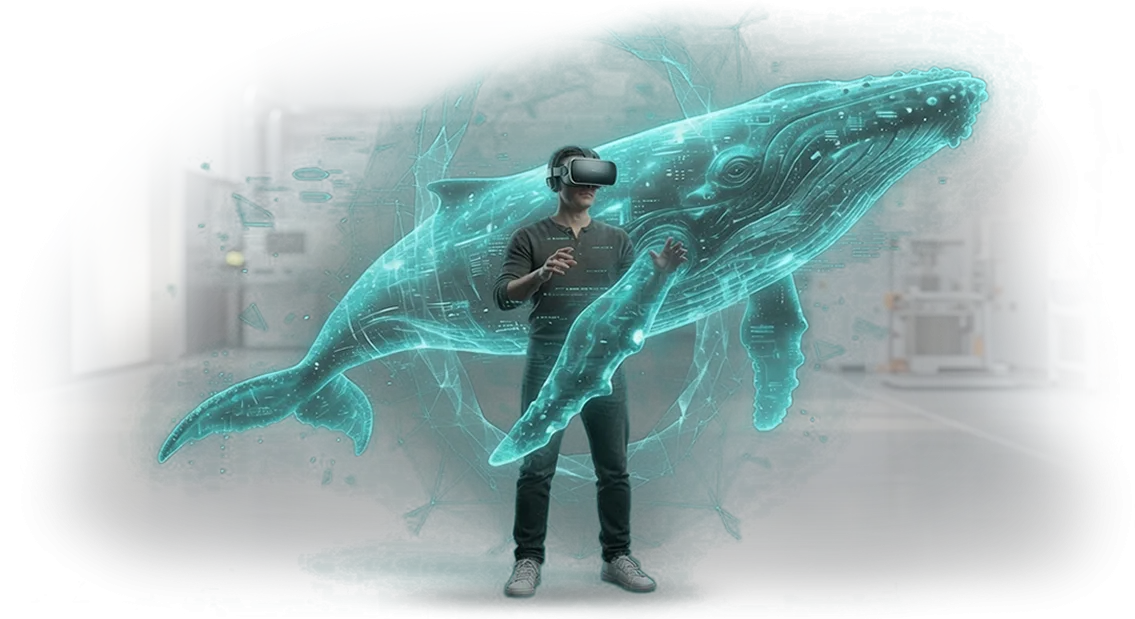
Virtual and augmented reality technologies solve this problem: they move training and operation control into a digital environment that is as close to reality as possible.
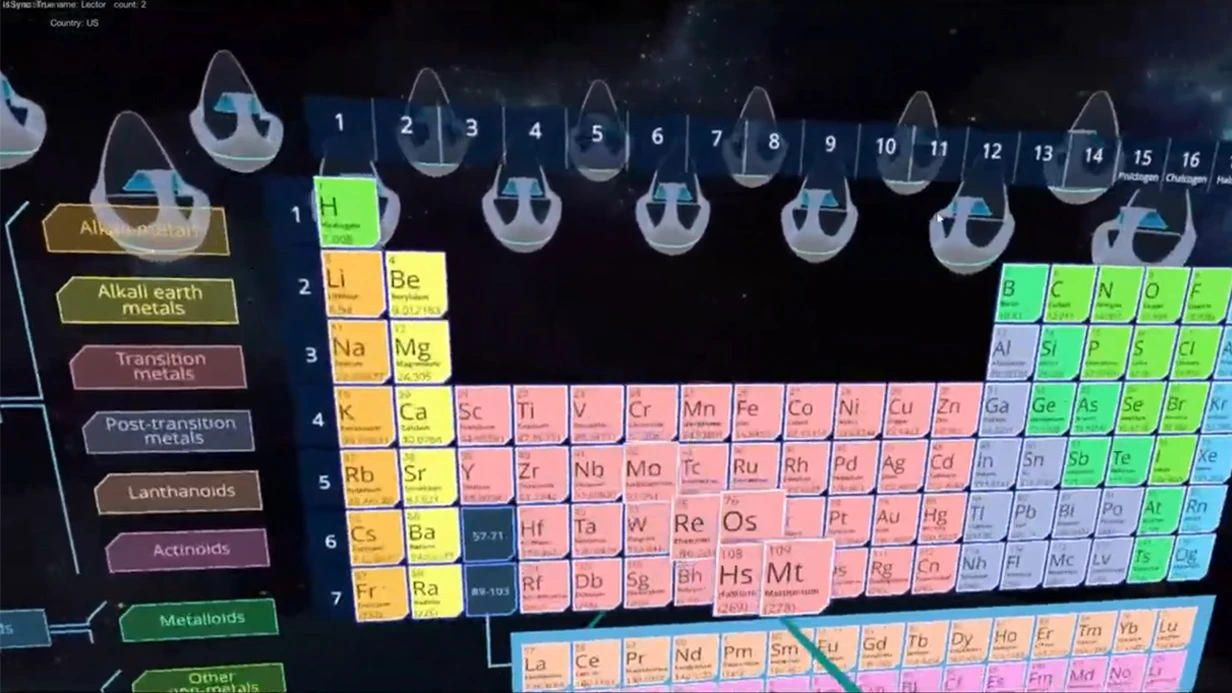
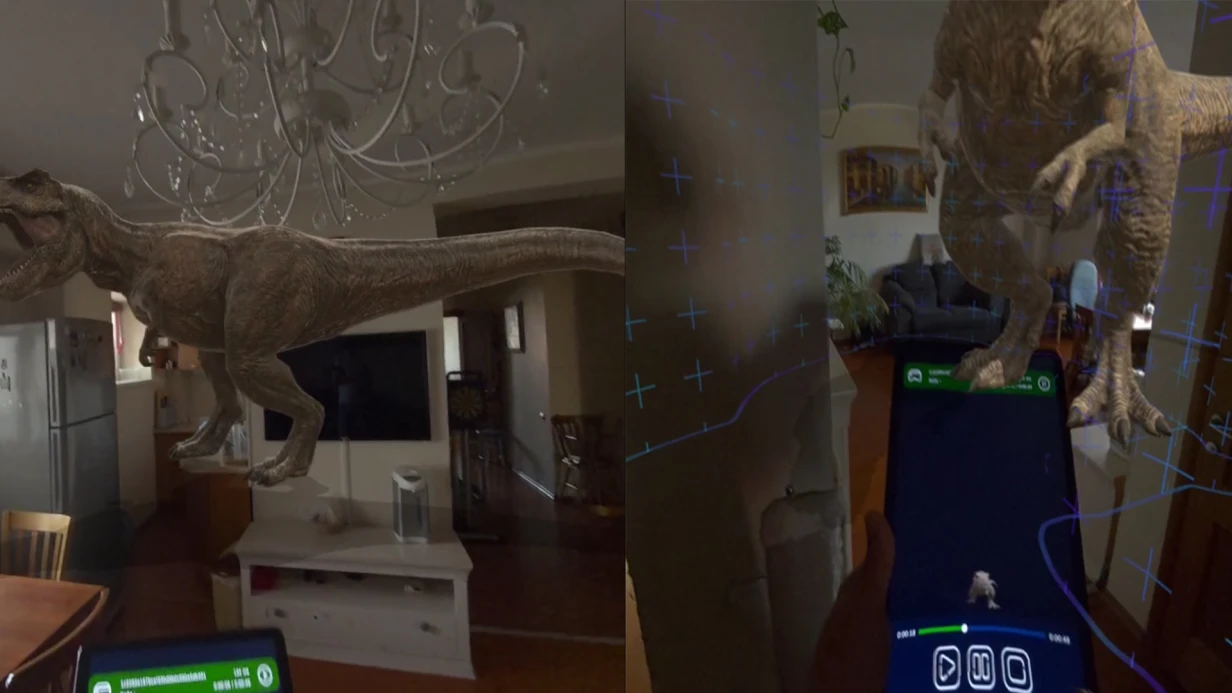
A specialist trains on an accurate model of a unit or assembly without touching the real equipment, while an MR system overlays hints directly onto the object in their field of view, eliminating incorrect actions.
For the aerospace industry, this means fewer defects during assembly, faster onboarding of new employees, and consistent operation quality even under high workload. Rework costs go down, downtime shrinks, and compliance control becomes a built-in part of the process. This is how VR/AR/MR help turn safety from a set of instructions into a manageable workflow.
What benefits does an enterprise gain from implementing VR/AR/MR
In the aerospace industry, the cost of an error is high, and production downtime is expensive. VR/AR/MR make it possible to verify designs before creating prototypes, train personnel without risk, and accelerate product release.
our team has been implementing such solutions for industrial clients for more than 10 years and knows what benefits an enterprise gains.
Time savings across development and production stages
Engineers work with digital twins of products instead of physical mock-ups. Design changes are made in minutes, and documentation updates automatically. Launching a new product takes weeks instead of months, so investments begin to pay off sooner.
Assembly accuracy and quality control
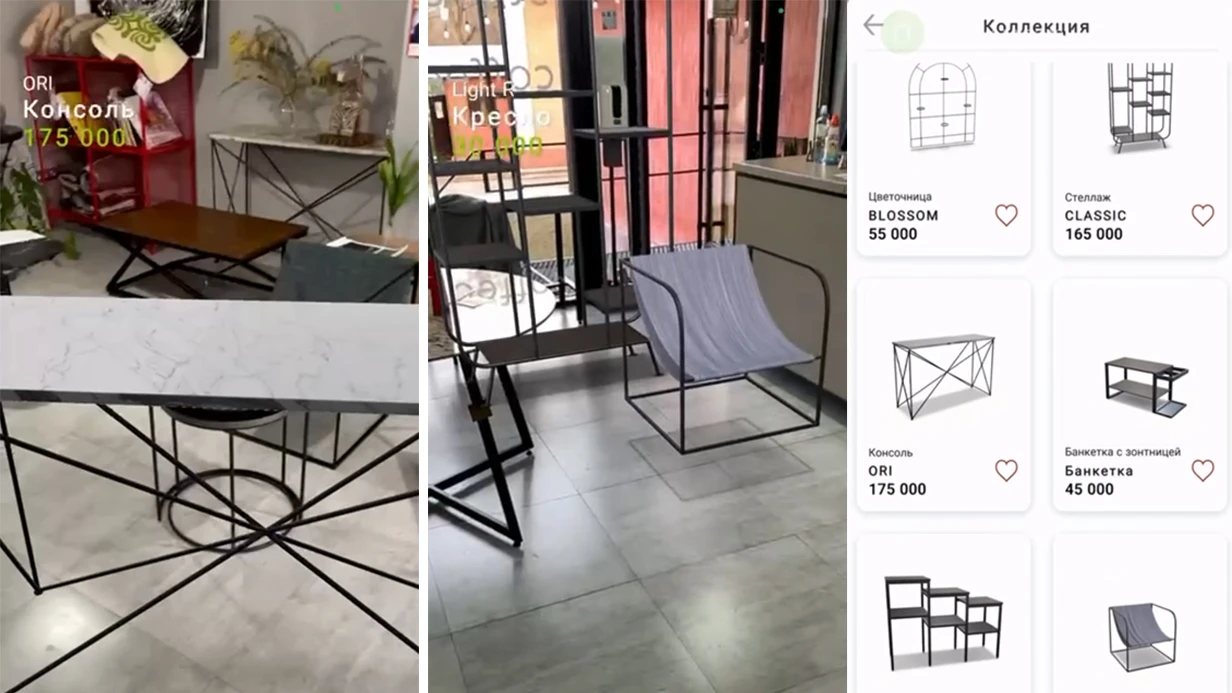
Augmented reality displays the operation diagram directly at the workstation. The operator is not distracted by drawings and makes fewer mistakes — the quality of serial products remains stable at every stage.
Safe personnel training
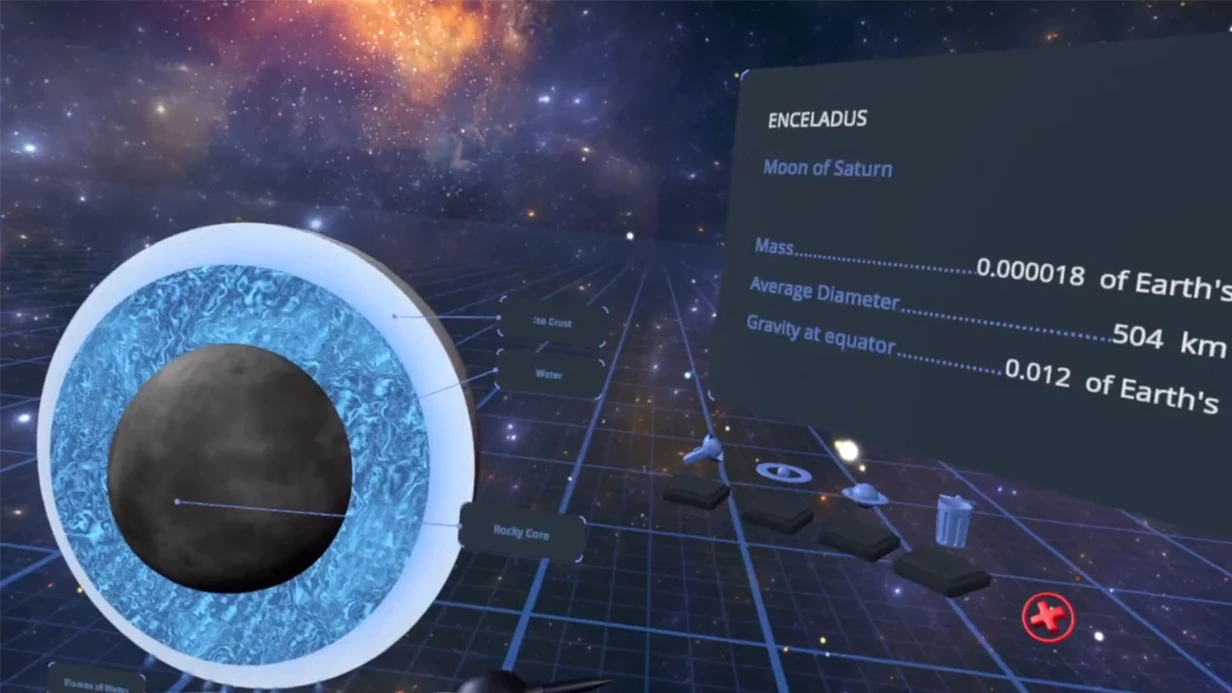
Virtual reality allows complex operations to be practiced without risk to people or equipment. An employee trains until they develop a solid skill and only then is allowed to perform real work. This eliminates accidents caused by inexperienced staff.
Mixed reality for complex tasks
MR solutions overlay digital data onto the object: hidden utilities, sensor readings, diagnostic results. A specialist sees the full picture without referring to drawings and databases — this speeds up maintenance and reduces equipment downtime.
Formats of VR/AR/MR applications for the aerospace industry
The aerospace industry is made up of complex systems where a mistake in assembly or maintenance is costly, and missed deadlines translate into multimillion-dollar losses.
Therefore, the solution format must match the specific task: training an operator is one thing, delivering work to a client is another. We select the application type based on the production process rather than simply "selling a picture".
| Format | For whom | What it gives the client |
|---|---|---|
| AR assembly instructions | Shop-floor engineers and fitters | Step-by-step highlighting of components on the real product — fewer errors and less time per operation |
| VR simulators | Training centers and pilots | Practicing procedures and non-standard situations without risk to equipment or people |
| MR constructor | Design bureaus | Checking assemblies at 1:1 scale before a prototype is even manufactured |
| Virtual mock-ups | Sales and marketing departments | Demonstrating equipment at exhibitions and tenders without a physical sample |
| AR maintenance | Service teams | Overlaying sensor readings onto the real object — faster diagnostics and repair |
Each format addresses its own business task: in some cases speed matters most, in others safety, in others visual clarity for the client.
We discuss with you the process that needs to be digitized and propose a format that will actually fit into the work rather than remain a demo stand. Technically, it can be a single ecosystem of several applications — a unified interface and shared data for different departments.
How a VR/AR/MR development project proceeds
We structure our work so that you always understand what is happening at each stage and what result you will get. our team follows a transparent procedure: you personally approve all key decisions, and we show in advance how the solution will work in your environment. This removes the risk of "getting something wrong" and keeps the project under control.
-
Brief and analysis of your task — we discuss which operations you want to simplify, where clarity is needed, and which personnel will work with the solution. We record goals and success criteria.
-
Concept and use-case scenario — we propose VR/AR/MR format options, show sketches and interaction logic. You approve the concept before development starts.
-
Technical specification and schedule — we formalize the scope of work, timelines, delivery milestones, and control points. You get a clear schedule in which budget and time are tied to the result.
-
Development and interim demos — we show working versions iteratively: first the key function, then the full scenario. At each iteration you provide feedback, and we make adjustments.
-
Integration and testing in your environment — we test the solution on the production floor or in the office, with your equipment and networks. We eliminate issues before they affect operations.
-
Pilot launch and training — we deploy the system, train employees, and help during the first sessions. You get a working process and instructions.
-
Support and further development — after launch we stay in touch: we update content, refine scenarios for new tasks, and maintain stable operation.
What is included in the delivery of a ready solution
We deliver not just an application but a fully ready-to-use tool for your production. At the output you receive a package in which every detail is thought through — from installation and setup to employee training and ongoing support.
This allows you to integrate the solution into workflows immediately and get results without firefighting or extra costs.
- A ready-to-use mixed reality application deployed on your equipment or within a protected environment — with no need for additional configuration.
- Adapted documentation: clear instructions for operators, administrators, and those responsible for launch. Everything is written in the language of your team, without complex technical terminology.
- Personnel training: we conduct sessions for employees who will use the solution in their daily work. Your specialists master the tool before the official launch.
- Integration with current processes: we ensure compatibility with your procedures and production scenarios so the application complements the work rather than disrupting it.
- Technical support: a dedicated communication channel, prompt assistance when questions arise, and scheduled performance checks.
- Warranty and updates: we regularly refine the solution based on changes in your processes and fix errors throughout the entire support period.
- Training materials and video guides for quickly onboarding new employees — no need to contact us every time.
- Transparent transfer of software usage rights so you can be confident in the legal integrity of the deal.
Case study: how we improved assembly efficiency at an aircraft plant
At aircraft plants, assembling complex units requires high precision: an error measured in millimeters translates into hours of rework and line downtime.
Employees constantly have to check paper instructions, and newcomers need a mentor beside them for every critical step — this slows output and becomes the bottleneck of the entire production chain.
An aircraft manufacturing enterprise, Krylo Engineering, came to us with exactly this task.
We implemented a mixed reality solution: a lightweight headset is pointed at a real part and shows the technician which operation to perform right now, where to attach a component, and which tool to use.
What changed after replacing paper instructions
- Assembly time for one unit dropped by 30% — the line produces more products without expanding the workforce.
- The number of installation errors fell twofold: the system highlights mounting points and the sequence of operations, so the "human factor" stops costing the company defective products.
- A new employee reaches the level of an experienced technician in three weeks instead of two months — training happens right at the work site, with no dedicated simulators needed.
The case is already being replicated across two assembly lines, and shop managers note that workers themselves ask for such a tool: it removes the stress of responsibility for an expensive part and keeps the specialist in control of the process.
For the client, this means a predictable production pace, fewer reworks, and rapid adaptation of new people — precisely the performance indicators for which production is automated.
What if we have specific security requirements?
Non-standard security requirements are not a barrier but our usual working environment.
In the aerospace industry, every part goes through strict regulations, and we take this into account from day one: we design the solution so that it fits organically into your existing protocols rather than conflicting with them.
We do not work from templates. Every project begins with an audit of your internal standards and constraints, and only then do we propose an architecture that matches them. If your requirements are stricter than industry norms, we adapt to them. If data needs to be isolated within a closed environment, we do that without reducing performance.
An individual approach means we do not force your task into a ready-made solution but instead tailor the technology to your specifics.
Security classification, data storage requirements, information transfer protocols — for us these are not obstacles but the initial conditions of design. You will not have to explain the basics: we speak the language of your industry.
Security is confirmed not by words but by the work procedure. We test the application in advance under conditions as close to yours as possible and provide documentation for internal audits upon request.
You get not a "black box" but a transparent system that can be certified and integrated into workflows.
The bottom line is this: specific requirements are a reason for detailed development, not for abandoning the technology. We take responsibility for ensuring the solution meets your standards from the very first launch. Start with a short brief about your constraints — and get a plan for how to address them.
Frequently asked questions about VR/AR/MR development
Developing MR solutions for aerospace is a responsible task, and clients naturally have questions before a project starts. We have collected the most common ones: about cost, timelines, and safety. The answers below will help you understand how we work and what guarantees the client receives.
How much does it cost to develop an MR application for the aviation industry?
The exact cost depends on the tasks: one application is visualization of units for training, another is a full-fledged simulator integrated into production processes. That is why we always start with a free analysis: we record goals, use-case scenarios, and the volume of data. After the brief we state the budget range, and we fix the price before work begins.
Importantly, the cost estimate includes all stages — from prototype to deployment and support. No hidden payments: you understand what you are paying for and see the result at every step.
What are the project implementation timelines?
A standard project takes from several weeks to several months, depending on complexity. For example, a prototype for validating a hypothesis is usually ready in 2–3 weeks, while a replicated solution for several workshops takes 2–4 months.
We work in iterations: every 1–2 weeks we show the client a working result. This makes it easier to adjust functionality in the early stages, and you are not waiting for a release in silence.
How safe is using MR in production and training processes?
Safety is a key requirement in aerospace, so we design solutions that do not interfere with the operator's work but complement it.
MR training takes place in a controlled environment: virtual objects do not replace real equipment in the early stages but allow practicing the procedure without risk to the employee or the machinery.
For production scenarios, we restrict functionality by role: an engineer sees only the necessary data, and access to critical parameters is granted through authorization.
Integration with internal systems goes through secure channels, and data transfer does not create open points of entry.
Does the MR solution integrate with our existing systems and documentation?
Yes, this is a standard task. We build integration with your CAD, PLM, ERP, or internal knowledge bases so that data is pulled in automatically.
This eliminates manual entry and errors: technical documentation is always up to date, and the 3D model receives fresh changes from approved revisions.
If needed, we deploy the solution on your infrastructure — without transferring sensitive data to external services.
What happens after launch — will you abandon us?
We support the project after release: we train employees, update content, and add new scenarios as your processes evolve. Support and further development are included in the contract, so you can always count on our team.
If you still have questions — leave a request on the website, and we will respond within one business day. We will discuss your task and advise which VR/AR/MR format will deliver fast results in your case.Discuss your project with our engineers
Projects for the aerospace industry always involve complex requirements: safety, precision, strict regulations, and a high cost of error.
Before MR application development starts, it is important to understand how the solution will fit into your processes — from the design bureau to the assembly floor.
We have been creating VR/AR/MR solutions for industry for more than 10 years. During the consultation, we will analyze your task from the perspective of your benefit: where to speed up training, reduce downtime, and simplify quality control. You will get not a presentation but implementation options and a preliminary estimate.
Leave a request — an engineer will contact you within one business day. We will discuss the project and prepare a solution tailored to your tasks.
What you will get from the consultation
- An assessment of ideas: whether MR suits your task and what effect it will deliver.
- An implementation scenario: at which stages of production or training the application will bring maximum benefit.
- A preliminary cost and timeline calculation for budget planning.
- Recommendations for integration with your engineering systems.
- A clear plan of next steps: what is needed to start and who participates on your side.
- Answers to questions about equipment, deployment, and support.
The consultation is non-binding. Even if you do not start a project, you will have a clear understanding of how MR technologies solve aerospace industry tasks — from digital instructions to remote support during assembly.
Send a request right now — we will start by discussing your task and prepare the calculation. ---