

Losing clients in the chemical industry due to a lack of VR?
Potential customers in the chemical industry make decisions cautiously: they need to see the production, assess the scale, and verify process safety.
Without modern tools, this can only be shown through presentations, photos, and rare site visits — which takes weeks of approvals and often deters the client right at the introduction stage.
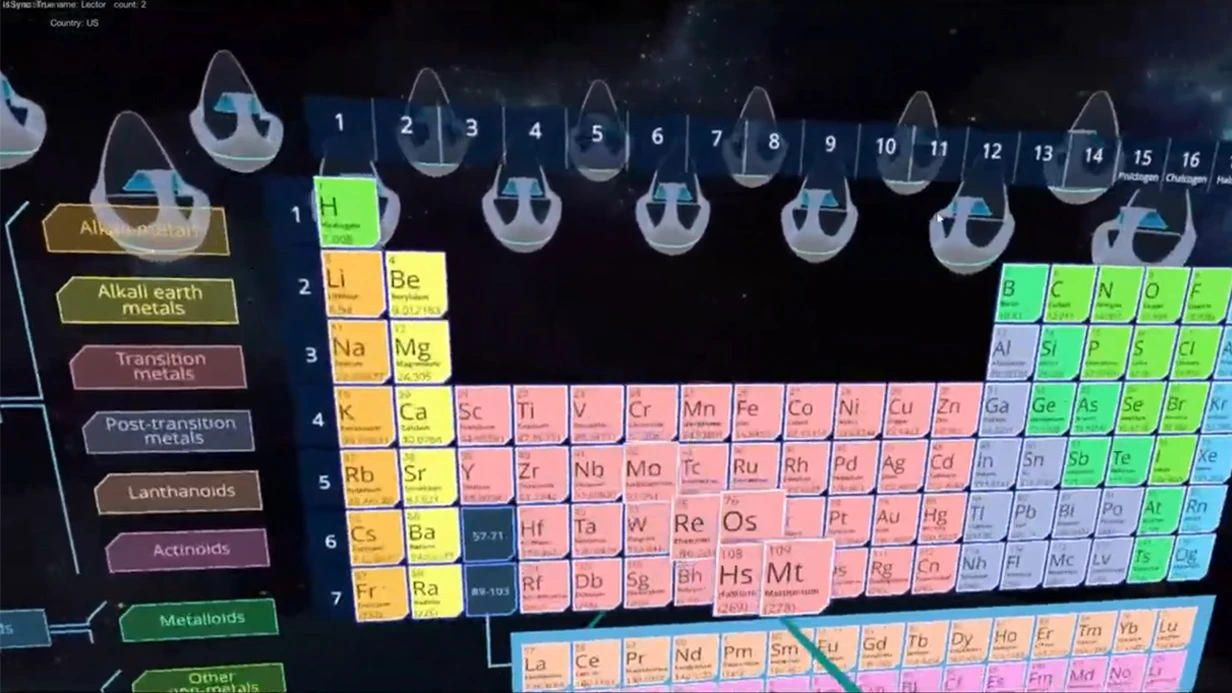
Competitors who have already implemented VR and AR in chemistry solve the task differently. They invite the customer into a digital copy of the enterprise — with a walkthrough of workshops, demonstration of process lines, and a clear explanation of how the equipment works.
This removes trust barriers and shortens the deal cycle, while you are left with brochures and lose orders.
Digitalization has long ceased to be an advantage — it is a basic market expectation. Companies using virtual tours and augmented reality look tech-savvy and reliable, which directly influences the choice of supplier. The buyer goes where decision-making feels clearer, more convenient, and safer.
We help implement VR/AR/MR into your sales and training processes: we create interactive presentations, virtual tours, and simulators that deliver results.
Over 10+ years, we have completed more than 60 digitalization projects for industrial companies — and we know how to turn technology into your argument.
What you get from implementing VR/AR/MR solutions
Implementing VR/AR/MR solutions in the chemical industry starts with the most important thing — training safety. Employees practice actions in emergency and abnormal situations without risk to health or production.
A mistake on the simulator costs neither money, nor time, nor reputation — it simply becomes part of the learning process. As a result, personnel arrive at the real site already prepared, and the number of incidents noticeably decreases.
The second tangible result is time savings at all stages: from design to repair and equipment commissioning. Engineers and managers see the future facility or problem unit in 3D before funds are invested in physical changes.
This allows faster identification of bottlenecks, faster alignment with colleagues, and reduced downtime. What used to take weeks of negotiations and site visits is now resolved within a single working session.
The third benefit is increased brand recognition and customer loyalty. An interactive demonstration of a product or technology makes an impression that no presentation or drawing can achieve.
The customer sees how the solution will work in their conditions and feels confidence in your professionalism. Such interaction is memorable, raises the company's status, and increases the likelihood of repeat contracts.
Finally, all these effects combine into a single business result: safe personnel, fast processes, and a modern corporate image. This is not just technology "for show," but a tool that pays off through reduced risks, lower costs, and a stronger competitive position.
The manager gets clear metrics: fewer accidents, faster commissioning, greater partner trust. That is why companies that have implemented VR/AR/MR solutions strengthen their market leadership and are ready to grow without unnecessary losses.
VR/AR/MR application formats for the chemical industry
For the chemical industry, the cost of error is especially high: an operator's wrong action, a missed regulatory step, or a design inaccuracy results in downtime, risk to people, and reputation damage.
Classic paper instructions and 2D drawings do not provide the full picture, and training on "live equipment" is often dangerous or physically unavailable.
We address these tasks with three formats: VR simulators for skill practice, AR instructions for working directly on site, and MR design for aligning decisions before construction. Which one to choose depends on the task.
| Format | For whom | What it gives the client |
|---|---|---|
| VR simulators | Operators, process engineers, maintenance personnel | Safe practice of routine and emergency scenarios: actions are honed to automaticity, and mistakes do not lead to real consequences. The employee arrives on site already prepared |
| AR instructions | Shift supervisors, maintenance crews | Step-by-step hints overlaid on the equipment: the employee sees the next step without being distracted by searching through documentation. Fewer errors, faster procedure execution |
| MR design | Design engineers, construction managers, chief engineers | A virtual model of a workshop or pipeline is overlaid onto the real space. Errors and collisions are visible before work begins, not after: saving both time and budget |
The formats do not compete with each other — they solve different tasks. Often a company starts with one scenario and then scales the solution to other areas. After a short brief, we select the appropriate format for your specific situation: training, process support, or design.
How an application development project works
We have structured the process so that you control every stage and understand what is happening with the project. For the chemical industry, this is especially important: solutions must account for regulations, safety, and real staff work scenarios. Breaking the work into steps with sign-offs eliminates unexpected outcomes and unnecessary costs.
- Brief and immersion into the task. We conduct interviews with your team and process specialists. We study the processes that need to be visualized or automated and gather requirements for the future application.
- Plan and timeline estimate. We define the scope of work, stages, and milestones. You receive a clear schedule indicating what result will be delivered at each step.
- Scenario approval. We discuss usage scenarios: from operator training to interactive equipment repair instructions. We approve the details before development begins.
- Application development. We create interfaces and three-dimensional models of your products and process units. We work on professional hardware to ensure the result is stable and realistic.
- Testing on real tasks. We test the application together with your specialists. We address feedback and adapt it to specific conditions: workshop lighting, the particular laptops or headsets your employees use.
- Launch and training. We deploy the system on your equipment and train administrators and users. You receive a production-ready tool, not a raw prototype.
- Support and development. We stay in touch after launch: we update content, add new scenarios, and help with technical questions. If necessary, we evolve the project for new tasks.
This sequence guarantees that you will not lose money or time on unexpected rework. Each stage ends with a concrete deliverable that you see and approve.
What is included in the delivery of a VR/AR/MR solution
When ordering a VR/AR/MR solution, you receive not just a program, but a ready-to-use tool for your production. We hand over a complete package so that you can independently operate and develop the system.
The delivery includes:
- A working application — adapted to your technological processes and scenarios, taking into account the safety requirements of the chemical industry. Employees immediately work in a familiar environment, and you get a tool for training and operations control.
- Full documentation — instructions for users, administrators, and engineers, as well as a description of all processes. This accelerates implementation and removes the need to contact the developer for every question.
- Personnel training — practical sessions for specialists on your team. Administrators will learn to configure scenarios, operators — to confidently use the system, and technical specialists — to maintain the solution.
- Application source code — complete code with comments and a description of the logic. You become the owner of the solution and can refine it for future tasks on your own.
- Technical support — assistance during implementation and throughout operation, prompt resolution of issues, and feature updates as your regulations change.
This package covers the entire cycle: from launch to system evolution. You are not dependent on specific individuals and can be confident in the stable operation of the solution.
Case study: how a VR simulator helped a chemical enterprise
For the chemical industry, the cost of error is especially high: working with corrosive media, high temperatures, and complex equipment requires flawless actions from personnel.
Conducting drills at a real production site is expensive and dangerous, and theoretical briefings do not provide the necessary practice.
That is why one enterprise approached us with a task: to develop a VR simulator for practicing emergency scenarios and training newcomers at a hazardous site.
Together with the KhimResurs team, we created a virtual copy of the production site where every employee could safely make mistakes and learn from them.
Operators practiced equipment startup, leak response, and evacuation — in conditions as close to reality as possible, but without the slightest risk.
Implementation results
The simulator's effectiveness was confirmed within the first few months. New employee training time was cut by 30%, and personnel loyalty grew by 35%: people stopped fearing complex operations because they gained safe practice and confidence in their actions.
The enterprise's management noted a decrease in the number of errors during real operations and a noticeable increase in personnel engagement in further training.
After the first stage, the client returned to us with a request to expand the simulator to two more workshops — for us, this is the main confirmation of the value of the result.
This case shows that modern augmented and virtual reality tools work not as a toy, but as a measurable tool for improving efficiency and safety at chemical enterprises.
How to choose the right VR/AR/MR format for your task?
Choosing a format is not a question of "what's trendier," but a question of "what will bring more value to a specific task." The same application built in the wrong format can prove useless or unjustifiably expensive.
So first, you should define the business goal: employee training, product marketing, or production design. Each goal has its own optimal format.
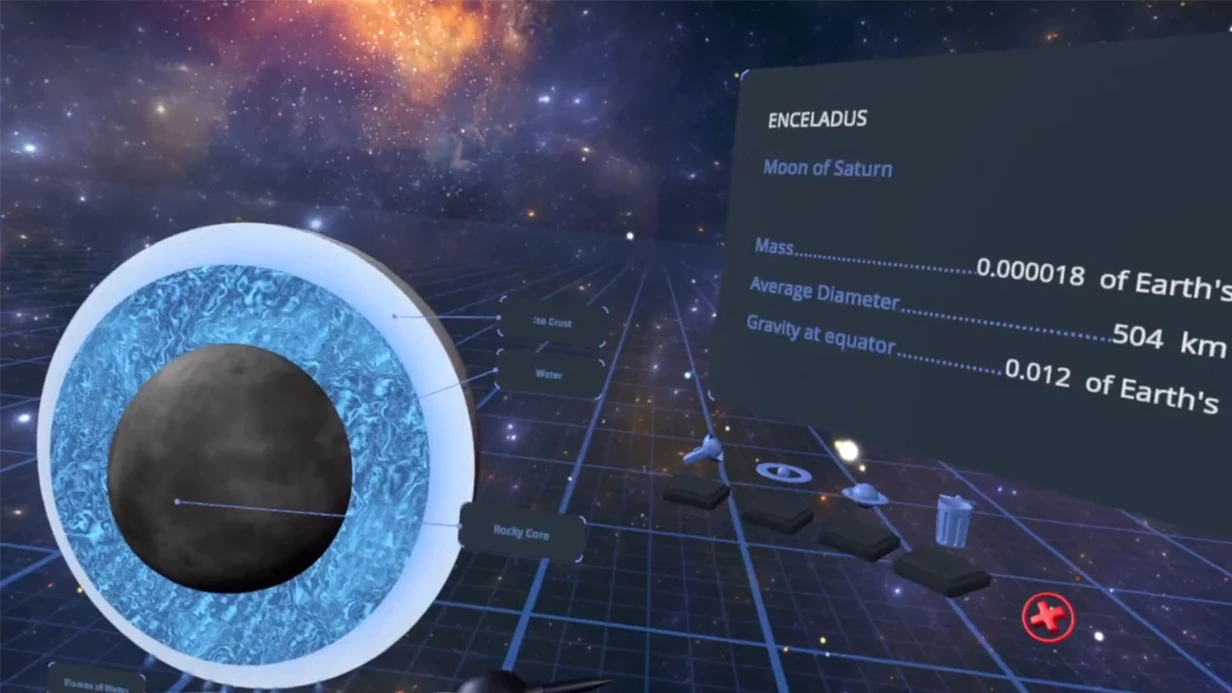
For personnel training, fully immersive VR is most often the right fit. The employee enters a safe virtual copy of the workshop, practices actions on a simulator, and risks neither themselves nor the equipment.
Such solutions deliver measurable results: fewer errors on the real production floor and faster onboarding of newcomers.
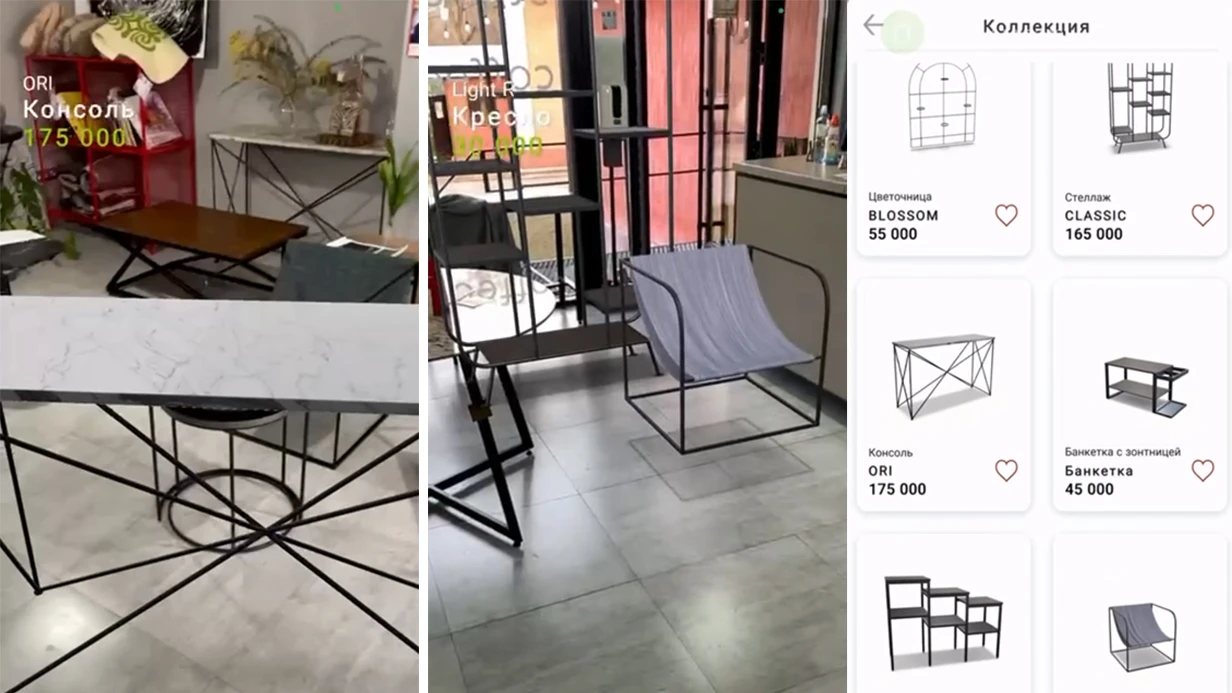
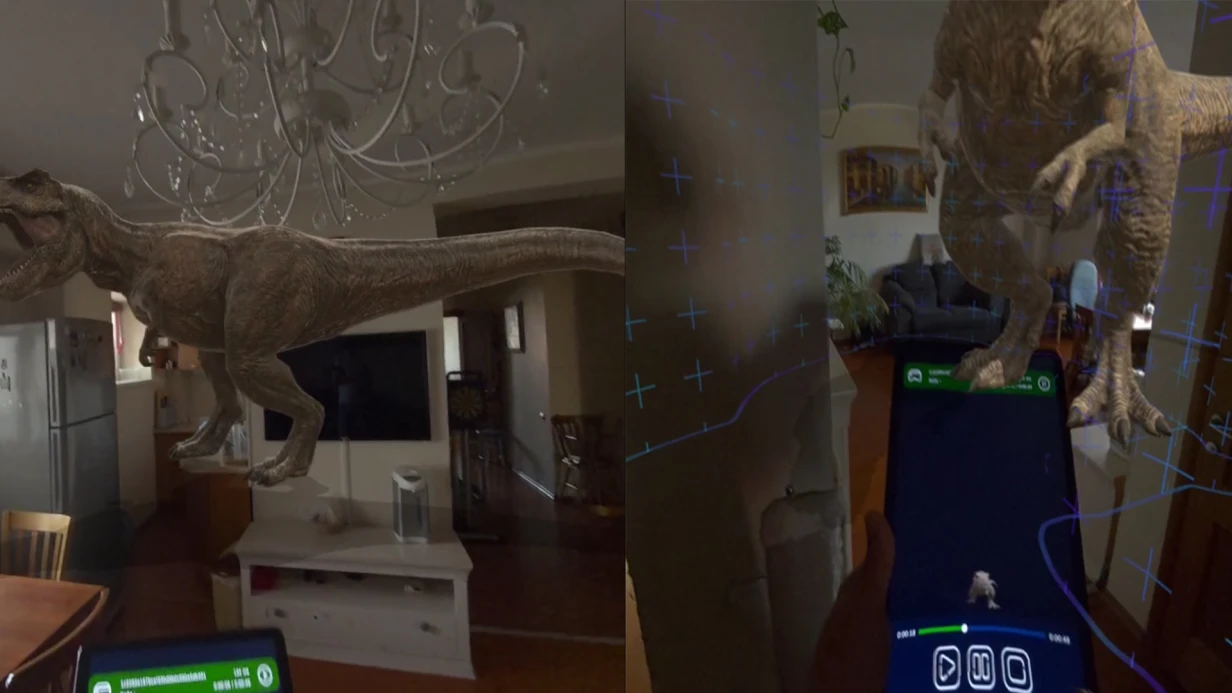
If the task is to show a product or equipment to a client, the AR format is more effective. Augmented reality overlays a digital model onto a real object or space via a tablet or phone.
This is convenient for exhibitions, client presentations, and demonstrating complex components when you don't want to transport heavy equipment.
When the goal is design and alignment, MR solutions are worth a closer look. In mixed reality, several specialists see the same three-dimensional object in physical space, can make edits, and discuss technical solutions in real time.
This reduces the number of approvals and eliminates misunderstandings between engineers and management.
The main piece of advice is to base your decision not on the technology, but on the task: what should change in the business after implementation. If you are unsure which combination suits you, contact a developer who will first ask about your goal and only then propose a format. The right choice at the start saves your budget and accelerates results.
Answers to common questions about VR/AR/MR
Chemical manufacturing leaders most often ask us about the same things: equipment reliability, implementation timelines, and safety. Below are honest answers to the questions that come up on every first call.
What happens if the equipment breaks down or runs out of battery mid-shift?
We are responsible for the solution's operability at all stages of implementation and beyond. The contract includes warranty obligations: in the event of a breakdown or failure, you receive replacement equipment within an agreed timeframe, without stopping employee training.
Technical support operates during the enterprise's working hours — an engineer is available, and upon request visits the site or connects remotely. For wireless systems, we use professional equipment with long battery life that lasts a full shift.
How much does development cost, and will there be hidden payments?
We provide the exact cost after the brief and always fix the estimate in the contract — the final price does not change during the project. It includes development, setup, employee training, and support.
Personnel training in mixed reality pays off through speed: employees master procedures faster and make fewer errors in real work. So the budget for a simulator, as a rule, pays for itself after just a few training groups.
Is it difficult to implement virtual simulators into an existing production facility?
Implementation takes from a couple of weeks and does not require shutting down workshops. We deploy the system in parallel with current processes: configure the equipment, conduct briefings, and then hand the solution over to your team.
Our simulators are adapted to the real specifics of chemical production — taking into account regulations, emergency scenarios, and occupational safety requirements. Employees learn in a safe environment rather than on live equipment, where a mistake can be costly.
Is it safe to use headsets in the workshop and in protective gear?
Yes, we work with solutions certified for professional use. The headsets do not restrict movement, do not overheat, and do not cause discomfort during regular training sessions — they can be used in designated training areas without health risks.
For working in personal protective equipment, we select compatible hardware or adapt the scenario for cases where the employee is already wearing a helmet and safety glasses. This keeps training as close to real conditions as possible.
How quickly will employees learn to use the new technology?
The simulator interface is intuitive — basic skills are mastered within the first 15–20 minutes, and a full training session takes 20–40 minutes. This is faster than traditional training because the person immediately sees the result of their actions.
We design scenarios so that they do not require prior experience with technology. The age and technical proficiency of employees do not matter — the system itself prompts the correct steps, and the instructor sees each student's progress.
If you still have questions about pricing, timelines, or working conditions — send us an inquiry, and we will prepare an option for your task. We will explain what is included in the cost, show examples, and give you an idea of the timeframe.Ready to discuss your project? Get a consultation
Developing MR applications for the chemical industry is not about impressive visuals, but about safety, speed, and tangible savings. Errors in training or visualization cost too much here, so it is important to discuss the project before development begins.
Submit a consultation request — and within one business day you will receive bonus materials that will help you make a decision:
- Analysis of your task: we will determine where mixed reality will deliver the maximum effect — personnel training, process control, remote support, or presentations.
- Demo for your scenario: we will show, using an example from the chemical industry, how employees see digital instructions, equipment metrics, and 3D models of installations.
- Timeline and stage estimate: we will provide realistic timelines for your scope — from a pilot area to full workshop coverage.
- Preliminary budget estimate: clear for management, without hidden surcharges or fine print.
- Equipment recommendations: we will select headsets and accessories proven in industry — you won't overpay for what you don't need.
- Implementation plan: we will advise which departments to involve first, how to integrate the solution into current processes, and how to avoid disrupting production.
The consultation is non-binding. Even if you don't become a client, you will get a clear picture: what can realistically be automated and what results to expect.
Fill out the form or write to us in a messenger — we will discuss your task, show a demo, and propose a solution that will pay off.