

Why the IT industry lacks VR/MR solutions for customer retention
The IT business lives in a digital environment, but most companies still communicate with customers through flat websites, documentation, and standard presentations.
The buyer sees similar offers, feels no difference between you and competitors, quickly loses interest, and moves on to where the interaction is brighter and more modern.
Customer churn is not just lost deals — it is declining loyalty, missed revenue, and rising costs for acquiring new customers.
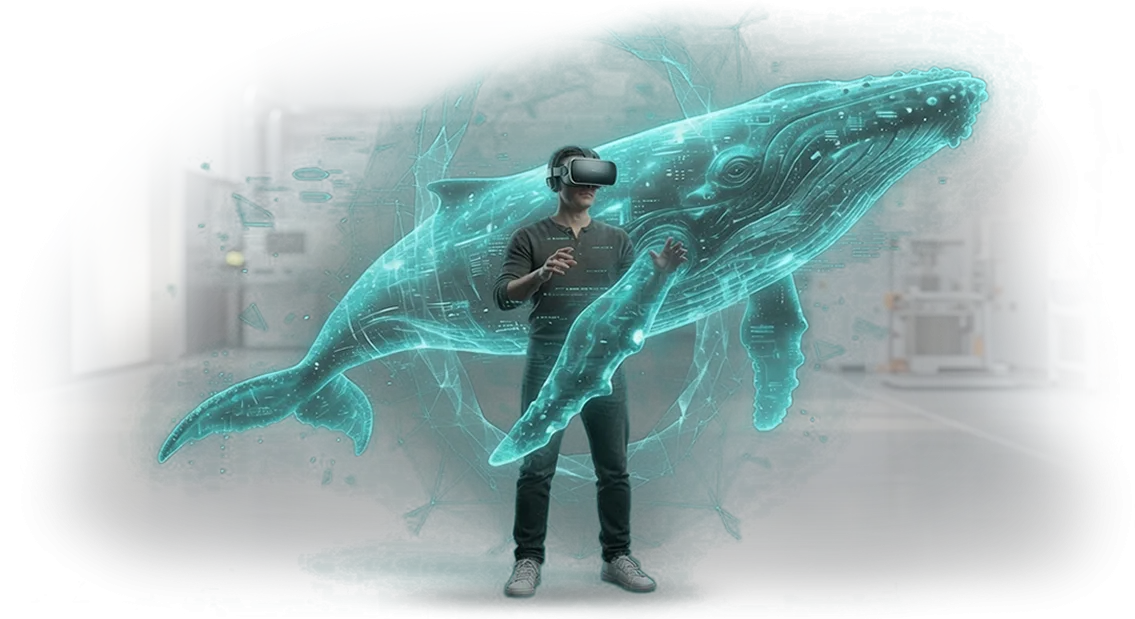
VR and MR applications change the way of interaction: instead of reading text, the customer steps inside the product, sees it in a real environment, and controls it.
This experience is remembered many times more vividly, creates an emotional connection, and gives a reason to share the impression. For an IT company, this is a way to retain customers through engagement, not discounts.
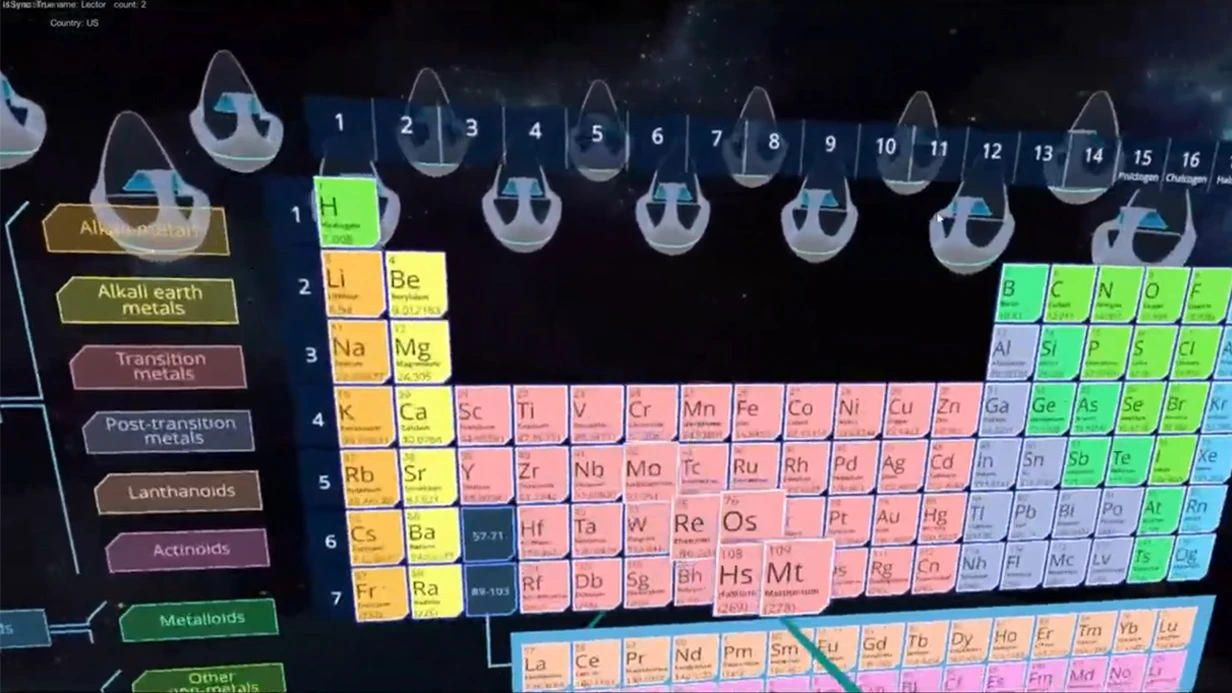
MR applications fit naturally into digital transformation processes, helping you show the customer what cannot be seen on a screen: the work of a complex interface, three-dimensional analytics, or an interactive product model.
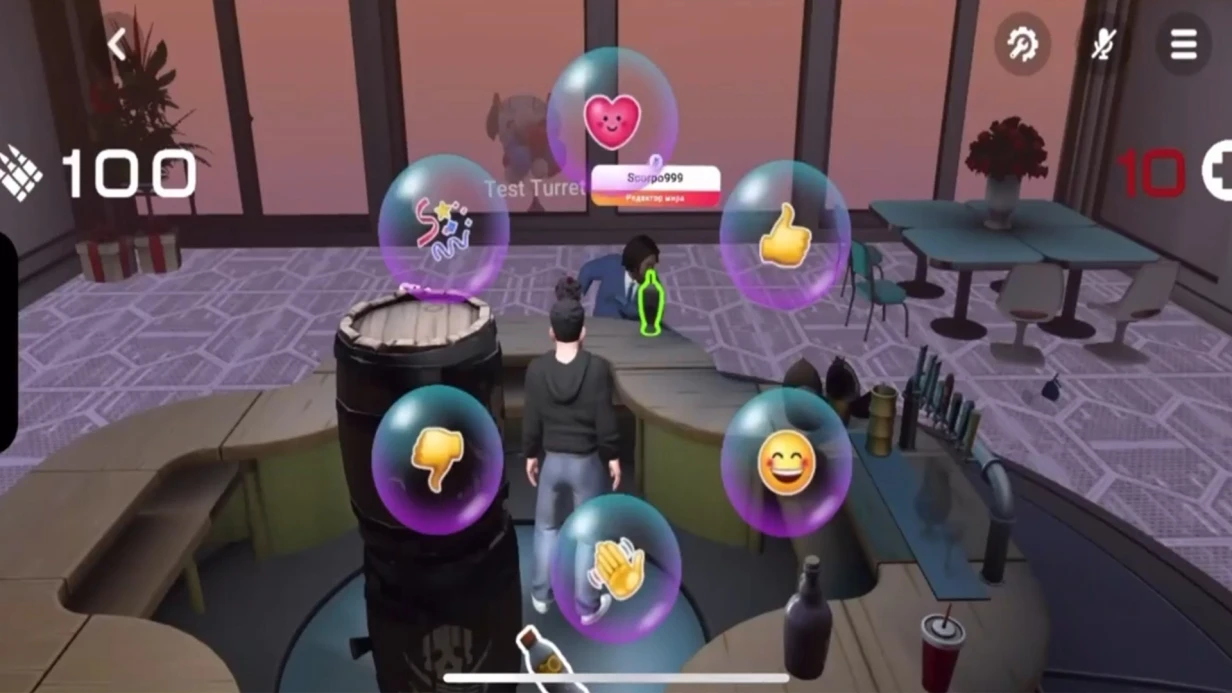
We — our team — help IT companies implement VR and MR solutions for business tasks: from product demonstration to interactive training and virtual offices. Our team covers the entire cycle — from idea to launch — so you get a working customer retention tool.
VR/AR/MR application formats: which one to choose for your task
In the IT industry, the same product needs to be presented differently: to a partner at a pitch, to an employee in training, to a visitor at an exhibition. There is no universal format — and choosing randomly leads to extra costs and weak results.
We select the format for the specific task: what to show, to whom, and what outcome the business needs.
Below is a quick cheat sheet of the main formats. It contains no technical details — only a practical answer to the question "what will this give your project".
| Format | For whom | What it gives the client |
|---|---|---|
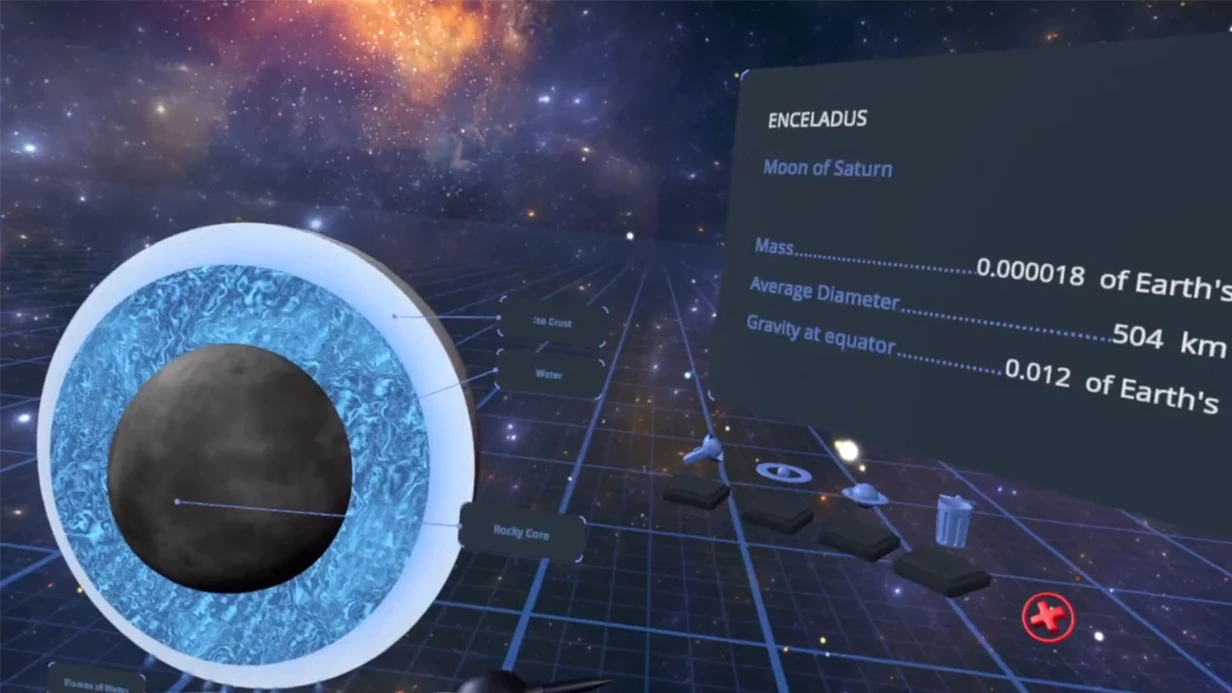
| VR (full immersion) | Staff training, practicing complex skills, product demonstration "from the inside" | Full engagement without distractions, safe practice, and a vivid, memorable experience |
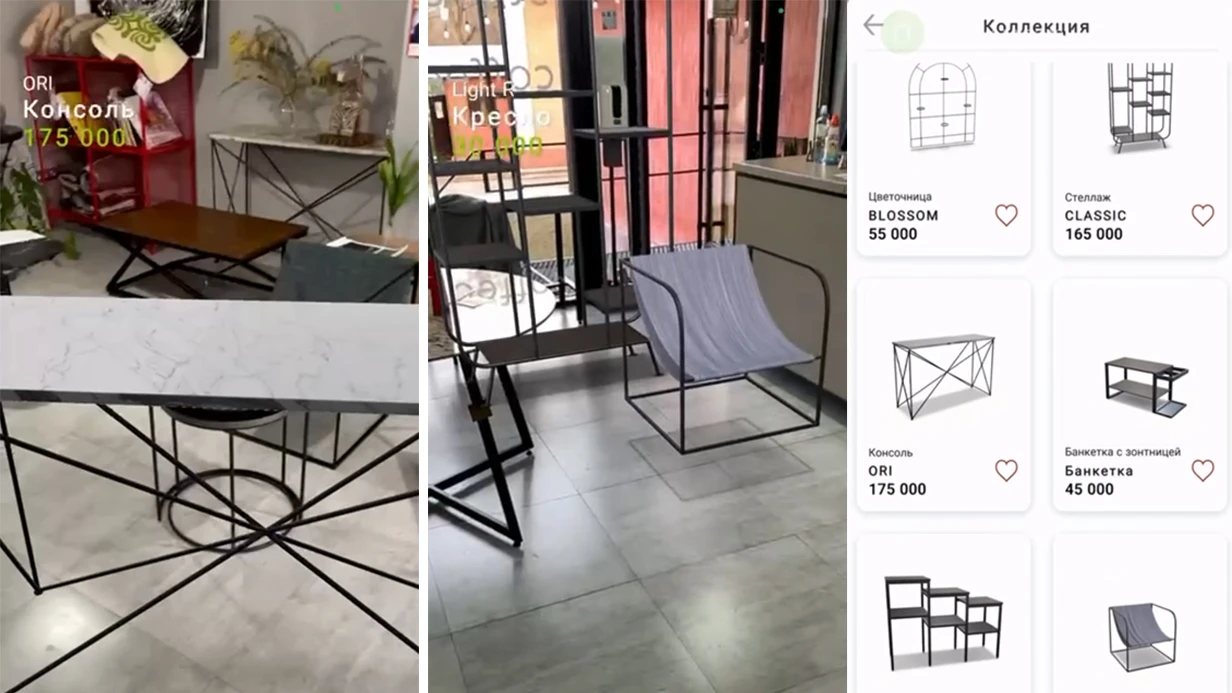
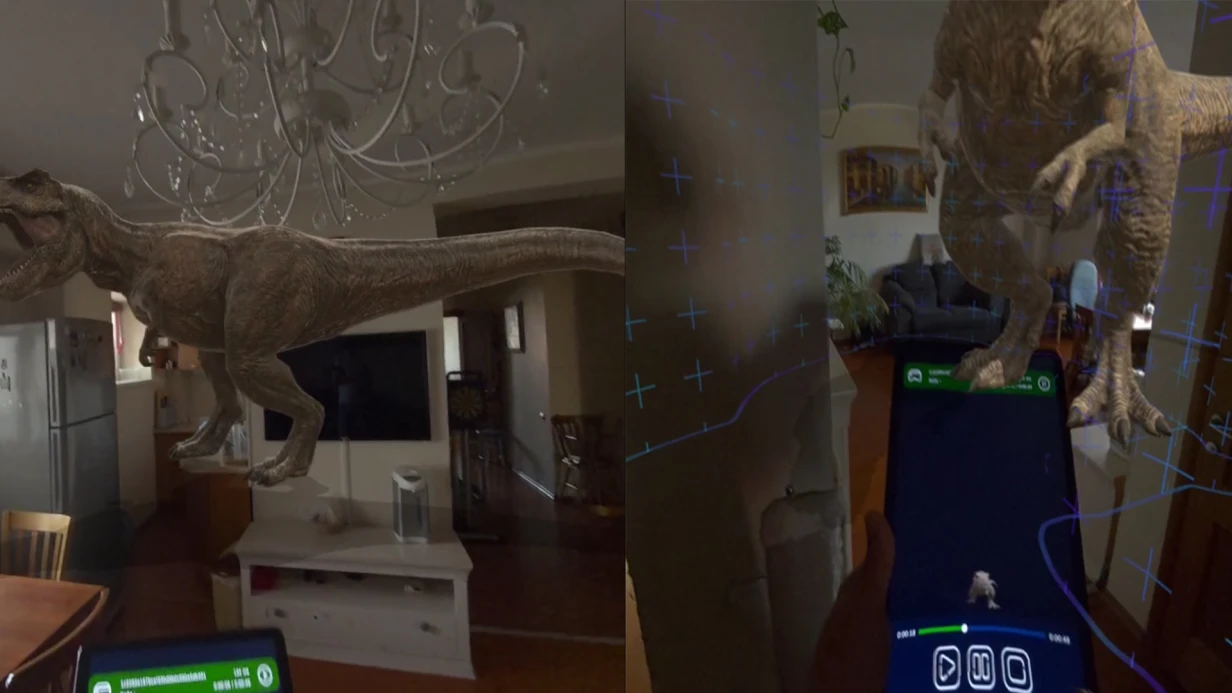
| AR (augmented reality) | Presentations, exhibitions, catalogs, packaging | Digital content is overlaid on the real world — the client sees the product in context and makes decisions faster |
| Interactive presentation | Pitches, client meetings, investor sessions | A controlled presentation scenario, live audience engagement, and a focus on key product advantages |
| Staff training | Onboarding, professional development, employee assessment | A unified training standard, faster learning, and fewer errors on the job |
You don't have to choose just one — the formats work well together. For example, at an exhibition, a visitor first gets acquainted with the product via AR, and then studies its structure from the inside in VR.
At the briefing stage, we will help you determine the optimal combination for your task and budget, so that the technology delivers a measurable result rather than being an end in itself.
MR application development stages: from brief to launch
When ordering MR development, IT companies usually solve applied tasks: show a product without a physical sample, train employees in a simulator format, attract attention at an exhibition.
That is why the process is built as a transparent route: you understand what you get at each stage and how it affects the timeline and the final result.
- Brief and task immersion — we study your audience, usage scenarios, and business goals. We capture the expected effect: conversion growth, shorter training time, or wider reach.
- Concept and scenario — we propose the interaction logic in mixed reality: what the user sees, what actions they perform, and what benefit they get.
- Layout approval — we create a visual prototype of the interface before development begins. You see the style, structure, and usability of the future application, not abstract descriptions.
- Core functionality development — we build the main scenario and show intermediate versions. Revisions are made at early stages, not after the final build.
- Testing on real devices — we check stability, correctness, and usability in target conditions, taking into account your equipment and operating scenarios.
- Project launch — we install the solution, configure integrations, train your team, and hand over documentation for independent work.
- Support and development — after launch, we remain available for improvements: we add features, update content, and help you scale the solution.
At every stage, you get a measurable result that can be reviewed and approved before moving to the next step. No technical expertise is required — your vision of the task is enough; we handle everything else.
What is included in the delivery: a kit for launching an MR project
After the project is completed, you receive not just a working application, but a complete kit for launching and developing your MR solution. All artifacts are transferred to you, remain your property, and are ready to use immediately after signing the acceptance certificate.
Here is what is included in the delivery:
- Ready-to-use MR application — fully configured for your task, tested on real users, and ready to run on your equipment.
- Source materials — design mockups, 3D models, source code, and all project resources. You are not dependent on the contractor and can develop the product with any team or vendor.
- Employee training — we conduct training sessions for administrators and operators so that your team can independently manage content, add scenarios, and launch new sessions without our involvement.
- Technical documentation — instructions for launch, configuration, and maintenance, as well as update procedures. Everything is written in plain language, not tied to specific specialists.
- Project results report — engagement measurements, usage time, number of completed scenarios, and other indicators confirming the solution's effectiveness.
- Development plan — a roadmap for future iterations: what features can be added, how to scale the solution to other platforms, or integrate it with your internal systems.
This approach guarantees transparency at every stage: you understand what you are getting and can replicate the solution across new business areas. All materials are delivered within agreed timelines, and after launch we remain available for consultations.
Case study: how an MR application paid for itself in 3 months
For the IT industry, the main task is to present a product so that the client immediately understands its value. Ordinary presentations and videos do not create a sense of presence: the buyer sees a picture but cannot "touch" the solution.
This is exactly what the large system integrator "Alfa-Soft" faced when bringing a corporate infrastructure management platform to market.
We helped the team move key demonstration scenarios into an MR format. Instead of slides — a holographic model of the platform that can be interacted with: expand modules, view the load, simulate a failure and its resolution.
The client received a tool that works on a regular tablet or mixed-reality headset — without complex setup or special training.
The results turned out to be measurable. In the first three months, more than 400 potential customers saw the MR demo at exhibitions and in negotiations; conversion to commercial meetings grew 2.3 times.
The average sales cycle shortened by two weeks — clients made decisions faster because they saw the product in action, not just in words.
What matters for business: the project fully paid for itself in three months. The development cost was compensated through faster sales and lower travel expenses for managers — previously they hauled heavy demo stands between offices; now a tablet with the application is enough.
Six months later, the client returned to us to expand the functionality and adapt the solution for partners' mobile devices.
Such results are not a coincidence, but a consequence of a systematic approach to MR projects. We do not just draw beautiful scenes — we build applications that integrate into the sales process and give business clear metrics: reach, conversion, deal speed.
For an IT company, this is a way to stand out from competitors and shorten the client's path from introduction to purchase.
What if I have specific requirements for an MR solution?
Specific requirements for an MR solution are not an exception, but rather a normal condition for mixed-reality projects.
Off-the-shelf products that cover all tasks simply do not exist: every company has its own business specifics, its own processes, and its own quality standards. That is why we do not offer a "standard solution". Instead, we design each scenario around the client's specific situation.
We often hear the question "what if my task is non-standard?" We answer directly: individual requirements are exactly the area where MR delivers maximum effect. At the first stage, we study your workflows, find bottlenecks, and determine what exactly should change.
Then we adapt interfaces, interaction logic, and integration methods so that the solution does not require rebuilding your current ecosystem.
Adapting MR to business specifics also means respecting your constraints — in terms of timelines, budget, and infrastructure.
We select equipment and scenarios that are realistic to implement in your environment, and we predict in advance how they will work in the daily routine of your employees.
For IT companies, it is often important to connect MR with existing systems: from CRM to a corporate training platform. Such seamless integration is part of our work.
In the end, "non-standard" for us is not a reason to increase the cost, but an opportunity to build a product that truly delivers value. You describe your requirements in your own words, even if they seem complex or unlike the cases from our presentations.
We turn this into an architecture and an implementation plan. No rigid templates, no excuses like "that's not how it's done" — only about how to solve your task and get a concrete result.
Answering common questions before you order
Before ordering an MR solution for an IT event or product demonstration, a few similar questions usually come up. We answer them briefly and to the point — so you understand what you are working with and how quickly you will get the result.
What is MR and how is it different from VR and AR?
MR (mixed reality) connects the physical world and digital objects: the user sees the real space, and inside it — interactive holograms.
Unlike VR, which fully immerses you in a virtual environment, and AR, which simply overlays an image, MR lets you interact with objects as if they were actually right next to you.
For the IT industry, this is convenient: you can show a complex product or data in three dimensions without building a physical model. Guests put on a headset, see the demonstration zone, and control the content with gestures — it is spectacular and boosts brand recognition.
How long does MR application development take?
A typical project for an exhibition or presentation takes 2 to 4 weeks. The timeline depends on the scope of the scenario: a simple interactive showcase with one or two objects is done faster; a multi-stage quest with training prompts takes longer.
We work without intermediaries and lay out clear stages at the start. Two weeks before the event, you receive a test version, and 2–3 days before — the final build with room for small adjustments.
What equipment will the application be compatible with?
We use professional mixed-reality headsets that are compatible with modern laptops and mid-range desktop PCs. These are standard devices — they are easy to rent or buy for the project, and we help with setup on the day of the event.
If you already have your own equipment, we will send the hardware requirements so that everything works stably and without hiccups. If necessary, we arrange a rental with a backup kit.
What happens after launch — is there technical support?
Yes, support is included in the project. We are present remotely or on site on the day of the event: we check the launch, monitor the application's operation, and quickly resolve any equipment issues.
After the event, we hand over source materials and operating instructions. If you plan to reuse the MR solution, we will help adapt the scenario to a new task — this works out cheaper than ordering a project from scratch.
Order MR application development for your IT business
MR application development for the IT industry is not just a passing trend, but a working tool for presenting complex products, training employees, and attracting clients.
Mixed reality lets you show the capabilities of your software or hardware in action, without requiring special skills from the viewer.
We have been building VR/AR/MR solutions for business for 10+ years and understand how to turn technology into a measurable result. That is why, after your request, you get not a "pretty picture", but a clear action plan.
What you get after submitting a request:
- Cost and timeline estimate for your task — without hidden fees or "surprises" along the way.
- Consultation with an engineer and an analyst: we will figure out where MR will deliver quick results.
- Implementation plan: from idea to launch, with clear stages and checkpoints.
- Format selection: training, product presentation, virtual booth, remote support.
- A demo version or prototype at early stages — so you can see the solution before full development.
- Support after launch: updates, refinements, instructions for your team.
Leave a request for a consultation — we will discuss the task, calculate the development cost, and prepare a proposal within a few days. We work remotely with companies around the world, so we are not tied to your city.
To order an MR application for your task, fill out the form on the website or message us in a messenger. The first step is a short message; we will take it from there.