

Why Museum Attendance Is Declining
Museum attendance is falling not because people have become less interested in history and culture. The main reason is that a static exhibition does not meet the expectations of the modern visitor.
Display cases, signs and audio guides require sustained attention, but after 20–30 minutes the visitor gets tired, stops reading and misses most of the exhibits. As a result, the tour is remembered only for the fatigue, not for the impressions.
Audiences are used to interactivity. Young people and families with children — the core of weekend visitors — choose formats where they can participate, influence the storyline and get instant feedback.
A museum with ordinary shelves and signs loses to immersive shows and quests before the guest even enters the hall. Interest in exhibits declines because the exhibits “remain silent” and do not tell their story without the active involvement of the viewer.
Competition for leisure time is growing. Interactive venues, VR clubs and multimedia exhibitions constantly appear in the city — they offer bright visuals, movement and engagement.
Against this backdrop, a classic museum is perceived as a “warehouse of the past” that is interesting to visit once every few years. For the museum owner, this means fewer tickets sold, lower revenue and a loss of relevance in the eyes of the local community.
We propose solving this problem with interactivity for museums — mixed reality applications that bring exhibits to life and make the visitor a participant in the story.
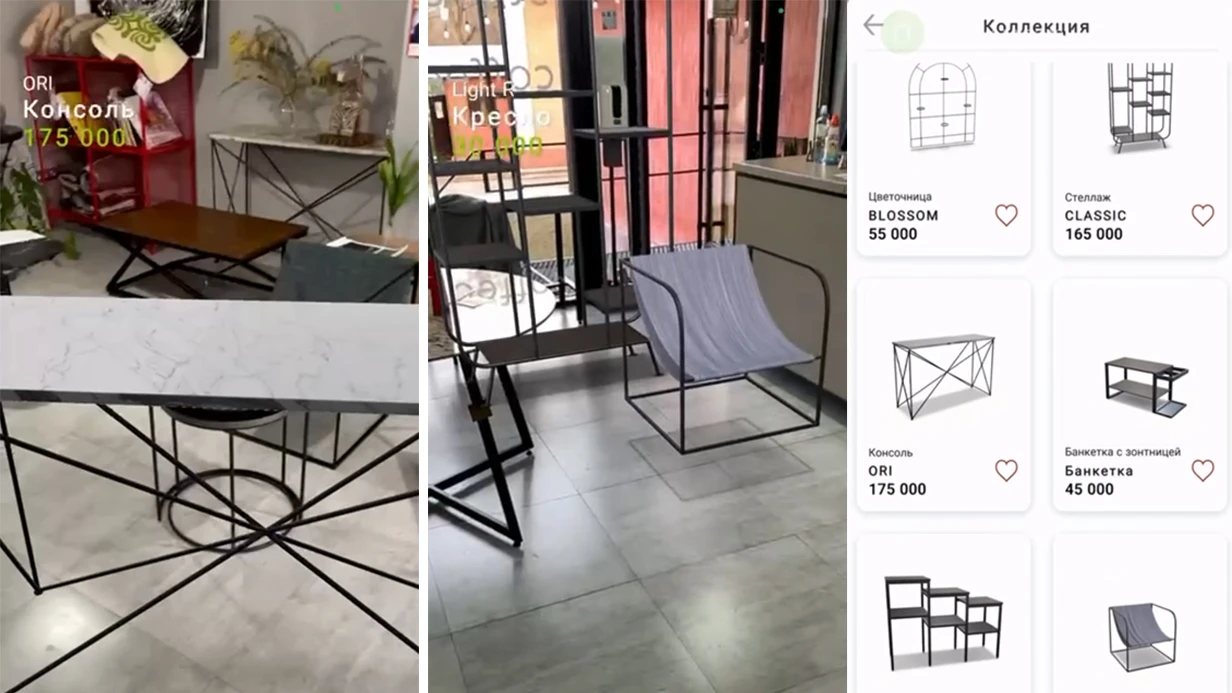
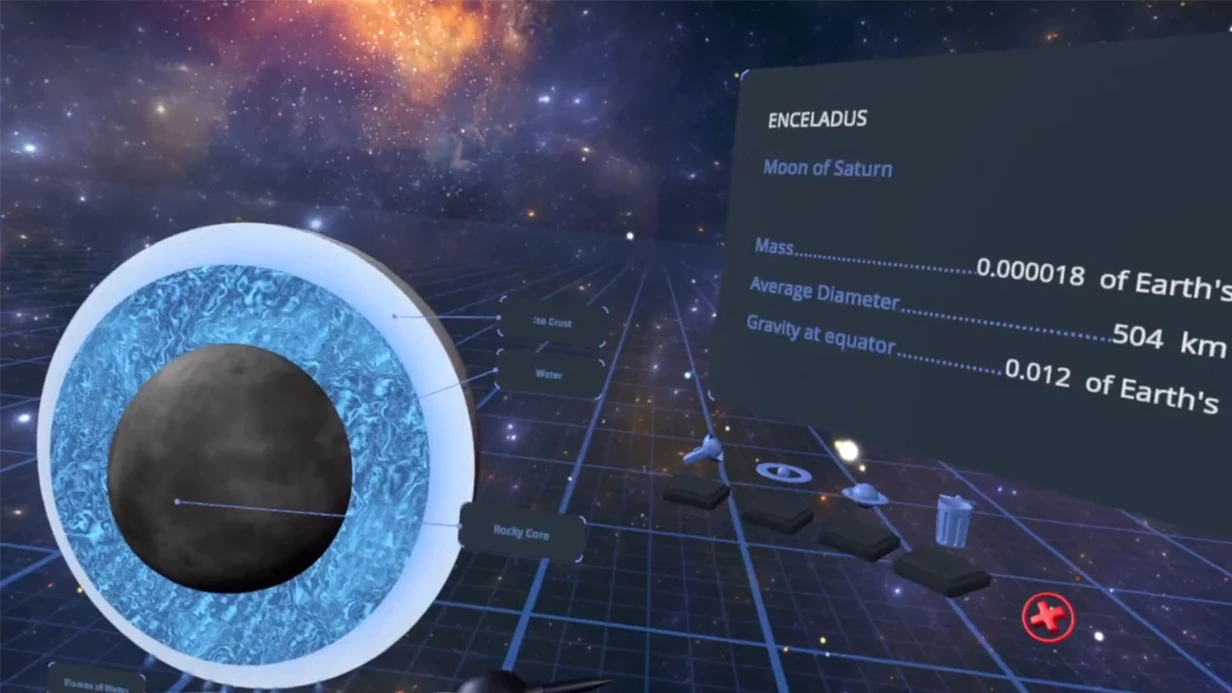
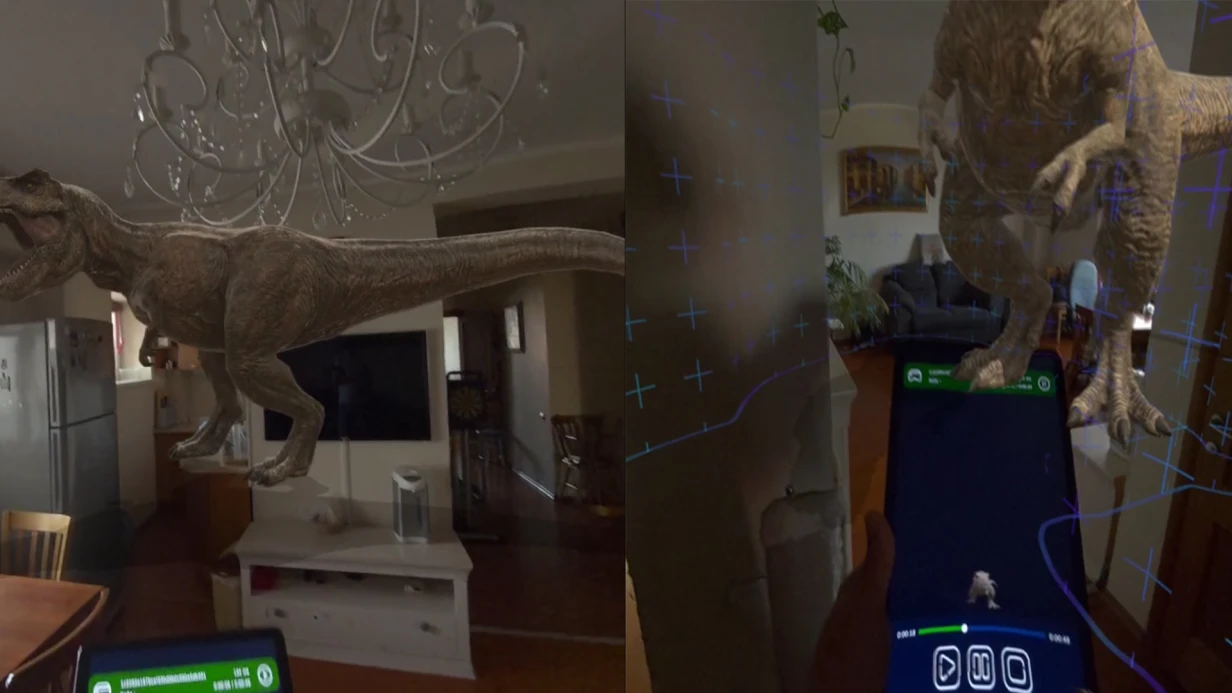
Simply point the camera at a display case or stand and see the artifact “tell” its story, see a scene from the era recreated, and see the narrative hero address the guest personally. This approach holds attention, evokes emotion and creates the desire to stay in the museum longer.
What VR/AR Technology Gives Museums
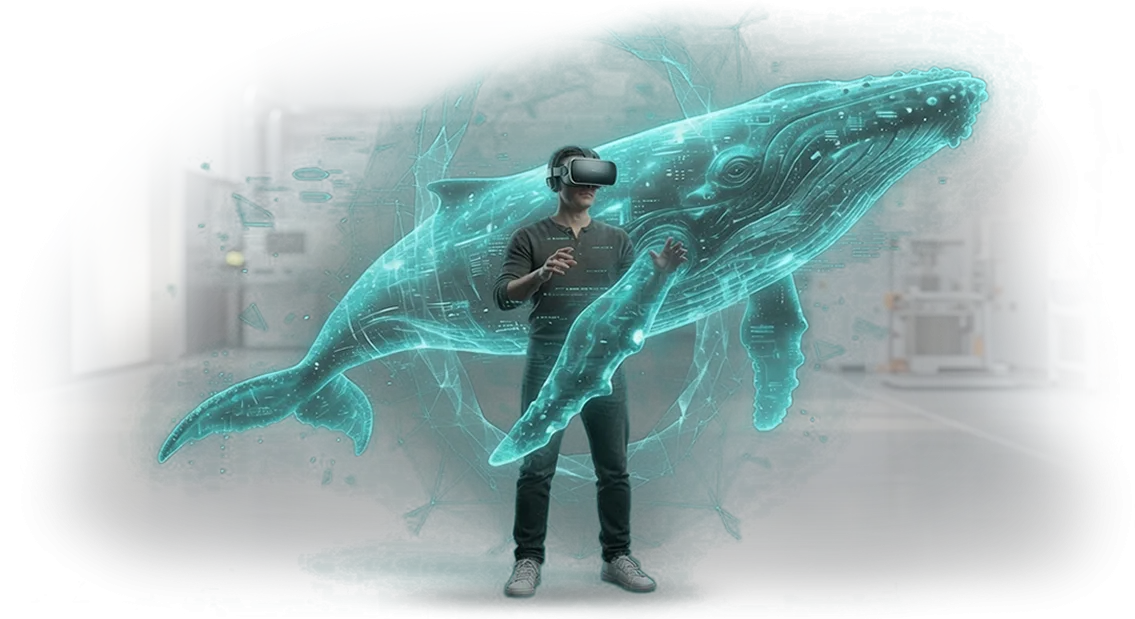
Visitors come to the museum for impressions, not for signs under glass. VR and AR turn a tour into a living immersion: historical events unfold before their eyes, exhibits “come alive”, and guests stop watching the clock.
This interaction holds attention far longer than a regular viewing — and leads to the deep emotional response that brings people back again.
Emotions become the main channel of promotion. After an unusual format, visitors themselves share photos and videos on social media and recommend the museum to friends and colleagues.
This gives the museum organic reach without an advertising budget, and the exhibition name becomes established as a brand of a modern cultural space.
Technology helps attract audiences that are difficult to interest with a classic tour. Young people, families with children, tech-savvy tourists — they are drawn not only by the content of the collection but also by the unusual format. For them, VR and AR become the reason to choose your museum among dozens of other leisure options.
New interaction formats also open up additional scenarios: from individual routes to group quests with tasks across the halls.
This makes the visit personalized and turns the museum into a place people want to return to in order to explore what they didn’t manage to see the first time.
We develop VR/AR projects tailored to the specific museum: we treat the collection with care, take into account the features of the space and visitor flows.
We work with professional equipment and proven tools — so the result is stable and the process does not require deep technical knowledge from your team. In the end, the museum gets not just technology, but a working tool for increasing attendance and recognition.
Formats for Integrating VR/AR into Exhibitions
We design and implement all major VR/AR/MR formats turnkey: from stationary installations to lightweight mobile applications. Here are typical scenarios that already work in museums and exhibitions.
| Format | For whom | What it gives the client |
|---|---|---|
| Stationary VR installation | Large halls, high-traffic points, central exhibits | Creates a “wow effect” and a queue of visitors, increases dwell time, provides vivid photos for social media and additional reach |
| Mobile AR application | Museums with an existing exhibition, without the ability to install bulky equipment | Point your phone camera at an exhibit — a 3D reconstruction, animation or historical reference appears. Implementation does not require reconfiguring the space |
| Interactive guide (MR) | Tours, family routes, children’s programs | Mixed reality combines the real hall with digital hints: the visitor chooses the depth of immersion, and the museum gets navigation and seamless accompaniment |
| Personal VR attraction | Rest areas, separate themed halls | Allows visitors to “experience” a historical era or an inaccessible object; works well as a commercial point — you can sell a separate ticket or session |
Whichever format you choose, we connect it to your exhibition logic: we take into account the visitor flow scenario, the technical limitations of the halls and the need to update content.
At this stage, the main thing is to understand exactly what tasks you expect from the digital layer: attraction, retention, education or additional revenue.
How the Project Goes from Brief to Launch
We work on a transparent basis: you always understand what stage the project is at and what you will get as a result. This is especially important for a museum — because the application should bring the exhibition to life, not distract from it.
-
Brief and goals. We discuss the current exhibition, audience and objectives: attract new visitors, increase dwell time, create a reason for a repeat visit. We record success criteria — this makes the project measurable.
-
Concept and scenario. We propose an MR solution idea that fits organically into the museum space. We agree on the scenario: what the visitor sees, which exhibits come alive, and how it works without staff involvement.
-
Prototype and approval. We create a visual mockup — you see how the application will look and work on a real device. We make revisions before production begins, which saves time.
-
Production and assembly. Our specialists create 3D content, animations and the logic of the VR application. We use professional equipment and proven tools, so the result is stable.
-
Testing in the halls. We test the application in real museum conditions: natural light, visitor flow, noise. We eliminate all issues before guests experience the new offering.
-
Launch and support. We install the application, connect the devices and train your staff. After opening, we stay in touch — we update content, monitor stability and add new scenarios.
On average, the project takes 4 to 8 weeks — depending on the number of exhibits and the complexity of the logic. We fix the exact timeline at the brief stage so you can plan the opening of the season or exhibition.
What Is Included in the Delivery
We deliver not just an application, but a complete solution that staff can start using the very next day. The delivery includes everything needed for launch and day-to-day operation — without hidden stages or unnecessary approvals.
We believe it is important that after the project is handed over, the museum does not depend on external contractors.
- Mixed reality application — an interactive scenario, 3D exhibits and audio accompaniment, ready to use in your space and fully customized to the specifics of the exhibition.
- Admin panel — a simple interface that lets your employee change descriptions, upload new materials and manage sessions on their own. No programming knowledge required.
- Clear instructions — short guidelines for staff: how to prepare the area, welcome the visitor and handle a typical situation.
- Team training — we conduct a practical session, work through the scenario together with your employees and answer questions.
- Launch support — we help with the first sessions, adjust the equipment to the specifics of the hall and correct the logic if necessary.
- Support and development — we stay in touch after delivery: we answer questions, update content and refine functionality as the exhibition grows. Scheduled system monitoring is included.
As a result, you get a working system, not a set of files. The museum team quickly gets up to speed, visitors get a new experience, and you don’t need to hire a separate technical specialist.
We agree on all details and record them in the documentation — you know what you are paying for and what you receive.
Case Study: Attendance Growth of 40%
For an ordinary museum, the problem is well known: a visitor walks through the halls in 40 minutes, takes a couple of photos and leaves.
The exhibition is not revealed, interest does not turn into emotion, and the museum loses revenue from the cafe, souvenir shop and repeat visits. Our client — Museum of City History — approached this systematically.
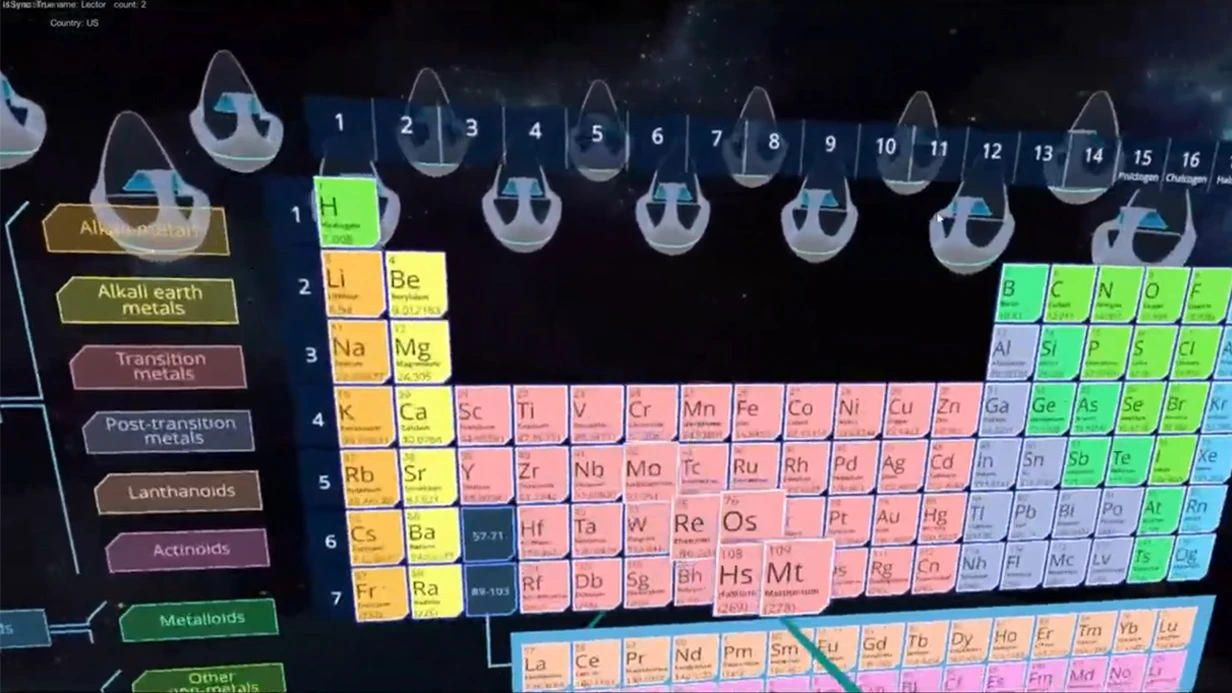
We developed a mixed reality application that “brings exhibits to life”: when pointing the camera at a display case, the visitor sees historical scenes, building reconstructions and interactive hints.
The technology does not separate people from the exhibition, but encourages them to examine details, return to them and share their impressions.
What Changed After Launch
The average visitor dwell time grew from 45 minutes to one and a half hours. The share of repeat visits rose by 25% — guests return with children and friends to “finish viewing” what they didn’t manage to see on their first visit. Overall attendance increased by 40% over six months.
Economic Effect
The growth in attendance pulled along the cafe, souvenir shop and tour desk: every second visitor after a session with the app stays for another 20–30 minutes and spends more than the average ticket.
The museum recouped its investment in the project within three months, and after that the application began generating profit.
We continue to support the project: we update content, add scenarios for temporary exhibitions and adapt the application to new halls.
The client has already ordered a second version for the museum’s branch — this is the main evaluation of our work and a reliable sign that the technology delivers real results.
How to Choose the Right Format for Your Task?
There is no single “best” VR format — the right option is determined by your goal and usage scenario.
That is why we start selecting a solution for a museum not with equipment but with tasks: who do you want to surprise, how much time can a guest spend, and what result do you need specifically.
If the goal is to give visitors a deep immersion in an era or event, choose a stationary VR zone with a full scenario of 5–10 minutes. The guest decides when to enter, stays alone with the story and leaves with a vivid emotion they want to share. This format works well at exhibitions and holds the audience longer than a regular stand.
If you are planning a group tour and want to preserve live communication, pay attention to mobile augmented reality solutions.
Participants see virtual hints over real exhibits, move together with the guide and listen to their comments — technology complements the route rather than replacing the guide. In this case, choosing a VR format favors a shared experience and controlled group dynamics.
For promotional campaigns and attracting new audiences, short scenarios of 1–2 minutes with an instant result are suitable: a spectacular “look through the hero’s eyes”, an interactive image ready for social media. A fast cycle, high throughput and minimal visitor preparation are the key criteria for this format.
The main thing is not to start from technology, but from the task. Define your goal — we will offer a format that brings a measurable result for your museum.
Frequently Asked Questions about VR/AR for Exhibitions
Clients often ask whether visitors will find it difficult, whether the project will require constant attention, and what to do if equipment fails. We have collected answers to these and other concerns — briefly and based on experience from past exhibitions.
Will visitors find it difficult to use VR headsets?
We design scenarios so that they are intuitively understandable for people of any age — the interface itself suggests the next step. If a guest is still confused, a venue staff member is always nearby to help within a minute. Most visitors confidently interact with the content after just a few seconds.
What if the equipment breaks down in the middle of an event?
We take on technical support: during the exhibition, our specialist works with you, and the kits are supplied with spare components. Replacement or reconfiguration takes only a few minutes, so the event runs without pauses or failures.
How much does it cost and what makes up the price?
The budget depends on the number of installation points, the duration of operation and the complexity of the content. We prepare a transparent cost estimate before launch and offer a solution for your scale — from a single zone to full exhibition support.
The cost is calculated after audit, and you know the final amount in advance with no hidden payments.
Won’t VR/AR distract visitors from the exhibits themselves?
Thoughtful VR/AR complements the exhibition rather than competes with it: it provides additional context, emotion and a reason to stay at the stand. Sessions are limited in time, and the content is created specifically for your collection or event theme.
As a result, guests talk more about the exhibition and are more willing to share their impressions on social media.
Order VR/AR Development Today
Today’s visitors come to the museum not for static signs, but for emotions and participation. VR and AR applications turn the exhibition into a space people want to discuss and recommend to others — this directly affects reach and repeat visits.
Ordering a turnkey VR application means getting a project ready to launch in your halls. We take on the scenario, development, equipment setup and staff training. You don’t need to dive into technology — we explain the result in the language of your team.
Leave a request today — and you will soon receive a solution for your task. After contacting us, you get:
- a preliminary consultation and format selection: augmented reality on smartphones or an immersive VR hall;
- a turnkey development timeline calculated with the events in your calendar in mind;
- a proposal with work stages — without vague wording or hidden tasks;
- examples of projects for museums and scenarios that have already attracted visitors;
- a list of equipment and space requirements for approval;
- support and content updates after launch.
Turnkey VR development from our team is a tool for increasing museum recognition and improving guest experience. We have worked with cultural spaces and understand how to make interactivity appropriate and reliable in a public area.
Leave your contacts in the form, write to us in a messenger or call — we will get back to you, clarify the details and prepare a cost estimate. We start with a free brief, and we’ll discuss the rest on a call.