

Why the Food Industry Needs VR/AR/MR Solutions
The food industry operates under harsh conditions: high safety standards, a shortage of qualified personnel, and constant pressure from retailers and consumers. Every error in production means losses of raw materials, time, and reputation.
Meanwhile, traditional training and control methods no longer keep up with the pace of change: by the time a new employee masters the processing line, a week has passed, and every equipment stoppage costs money.
This is where VR for the food industry comes to the rescue—it allows skills to be honed in a safe digital environment without disrupting the plant's operational rhythm.
AR in food production solves an equally important task: the operator sees hints right on the equipment—parameters, tolerances, sequence of operations. This reduces the risk of human error and speeds up changeovers.
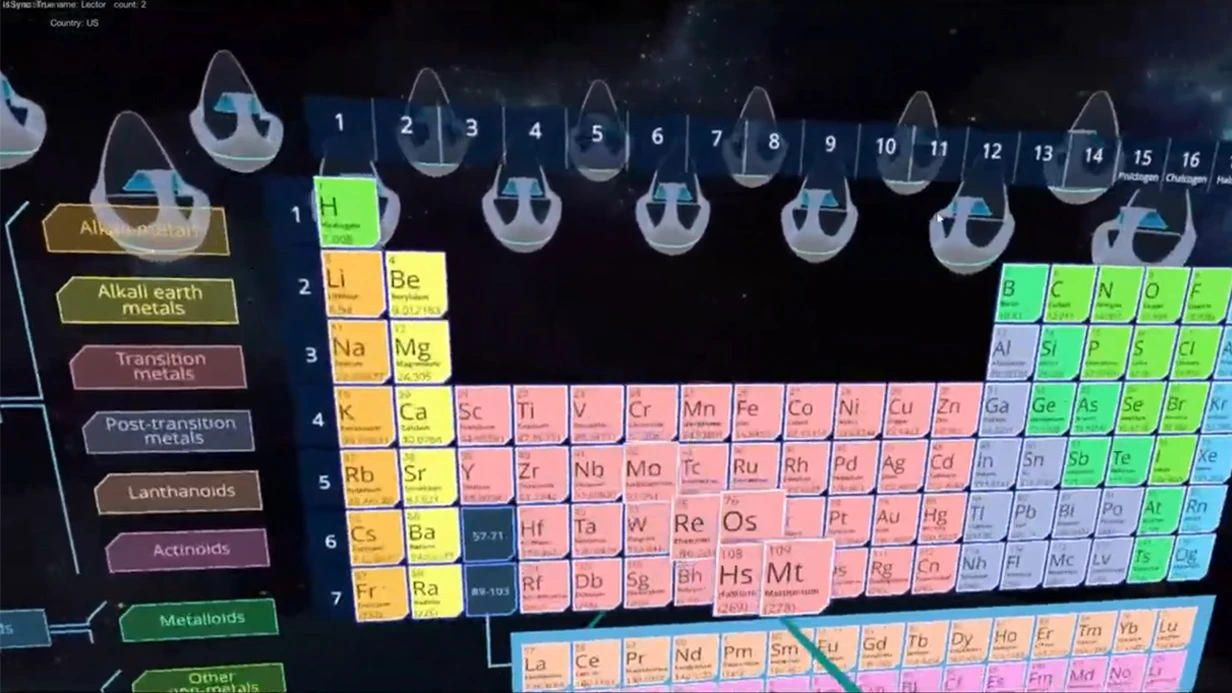
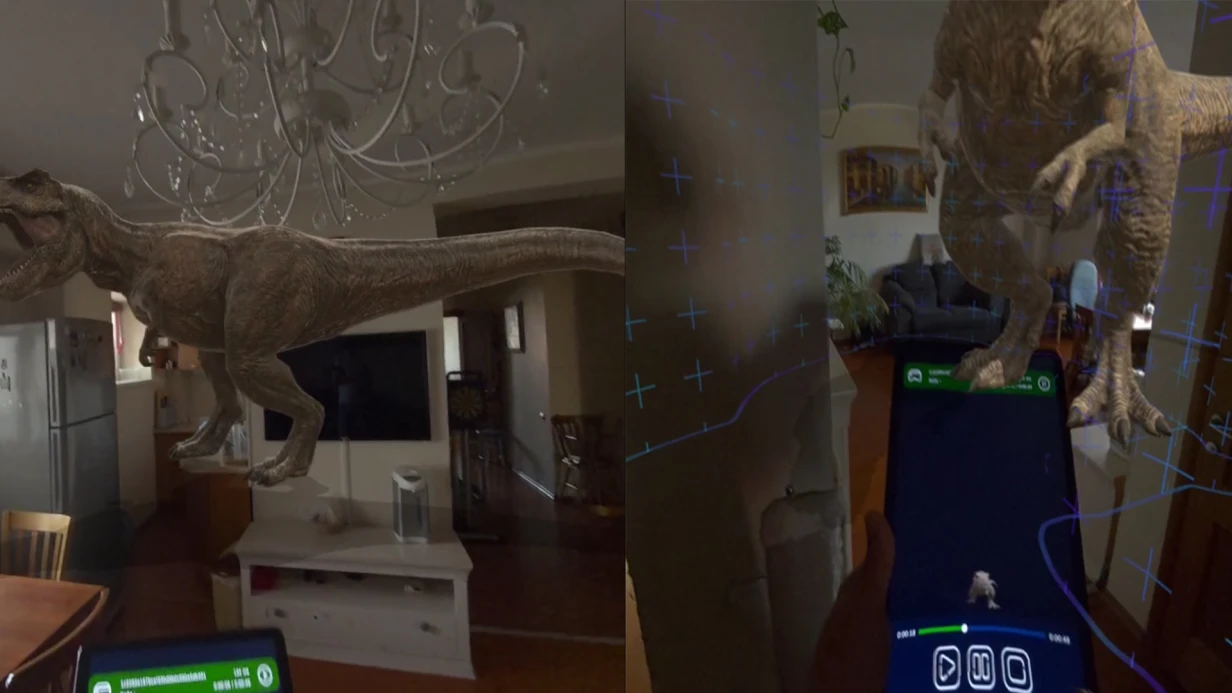
Mixed reality for the food industry unites the physical and digital worlds: you can overlay a virtual line diagram onto the real workshop, quickly locate a fault, or plan modernization without stopping production.
Innovation in the food industry today means not only new formulations but also smart processes.
Immersive technologies help shorten the time to launch new products, conduct virtual audits, and even show customers the production process in augmented reality—this builds trust and makes the brand stand out on the shelf. Companies that adopt such solutions adapt faster to change and save on training and downtime.
We have been creating immersive solutions for business for over 10 years. Our projects for food enterprises pay off by reducing staff training costs, cutting defects, and accelerating the time-to-market for new products.
We help implement VR/AR/MR in a way that is understandable for employees and beneficial for the business—from the first pilot to scaling across all sites. Let's discuss your task and show where the technologies will deliver maximum impact.
What VR/AR/MR Technologies Give to Production and Marketing
Modern food production competes not only on product quality but also on the speed of launching innovations and the depth of customer engagement.
VR/AR/MR technologies solve both tasks: they accelerate employee training and turn ordinary packaging into an interactive sales channel. Our team deploys mixed reality in production and marketing processes across Russia—from bottling lines to the shelves of federal retail chains.
VR Accelerates Staff Training
Traditional training for food production personnel takes weeks: theory, work with a mentor, and practice on a real line. VR simulators shorten this path to 2-3 days.
A new employee enters a virtual copy of the workshop, practices equipment setup, sanitation standards, and emergency situations—without the risk of stopping the line or producing defective goods.
Result: lower mentoring costs, faster onboarding to planned output, and, most importantly, fewer emergency stoppages and raw material losses due to human factors. For the food industry, where the price of error is product safety, this is a direct contribution to profitability.
AR Product Presentation for Marketing
On the store shelf, your product competes with a dozen alternatives for 3 seconds of shopper attention. AR labeling solves this: point a smartphone camera at the label, and you see the production process, the recipe, the farm's story, or serving suggestions. This works in advertising layouts, outdoor media, and tasting promo zones.
AR product presentation holds attention 3-5 times longer than a static banner or packaging. The buyer doesn't just look—they engage: they rotate a 3D model, open interactive layers, and build a dialogue with the brand. Product recognition grows, and so does the frequency of repeat purchases.
Marketing in the Food Industry and Sales Growth
Interactive packaging and AR promotions deliver measurable results: sales on the shelf increase by up to 15-20% during a campaign. Each smartphone activation is a brand touchpoint that you see in your statistics.
You know exactly how many people interacted with the product, which mechanics worked best, and in which regions.
Moreover, the AR layer on packaging is a permanent communication channel without additional advertising costs. You update content in the app and launch a new promotion without reprinting the run. This is flexibility that ordinary food marketing lacks, and a direct path to customer loyalty.
Contact us—we'll show how a specific MR solution takes root in your niche and calculate the economics of implementation.
Formats of VR/AR/MR Applications for Different Tasks
For the food industry, choosing the augmented reality format is not a question of technology but of a specific business task.
Virtual tours, simulators, AR overlays, and MR training solve different problems: from quality control and staff training to product presentation and brand awareness. Understanding the difference helps you invest in the tool that will bring measurable results to your production.
Below is a table of the main formats we use in projects for food enterprises. It will help you determine which option fits your task.
| Format | For whom | What it gives the client |
|---|---|---|
| Virtual production tour | Distributors, retail chains, end consumers | Shows clean workshops and quality control without a physical visit. Speeds up negotiations and increases brand trust. |
| AR overlay on packaging | Marketing and sales | Brings the label to life: recipes, product history, authenticity checks. Increases time spent with the product and encourages repeat purchases. |
| Process simulator | Technologists, line operators | Practice on a virtual replica of the equipment without risk to production or raw materials. Reduces training time for new employees. |
| MR training application | Engineers, maintenance services, workshop staff | Step-by-step instructions overlaid on the real object: how to service equipment, troubleshoot faults, and comply with safety standards. |
Virtual production tours are most often requested to show the plant to potential partners or buyers. This is convenient when the facility is far away or has restricted access.
AR overlays on packaging are used to promote product lines—they turn an ordinary box or can into an interactive communication channel with the buyer.
Simulators and MR training target internal processes. They help standardize knowledge, reduce errors, and onboard new employees faster. There is no need to stop production or risk expensive equipment—everything happens in a safe virtual environment.
If you are unsure which format suits your enterprise, we will help you choose. Just describe the task—promotion, training, or control automation—and we will propose a working solution that pays off quickly.
How Development Works: From Brief to Launch
Developing an MR application for the food industry is not magic but a transparent process. We guide you from the first request to launch and beyond, so you always know what stage the project is at.
Below are the standard stages of VR and MR scenario development that we have refined over ten years of work.
- Brief. We discuss the task: what you want to change—employee training speed, customer experience, or product visibility. We record goals, audience, and success criteria. If the task is not yet clear, we help formulate it.
- Analysis and plan. We study your production processes, space, equipment, and users. We select a format and scenario that actually work in your situation, not just "a pretty picture."
- Script and prototype. We describe the user scenario, interface, and interaction logic. We approve the concept before production begins—this saves time and eliminates rework.
- Production. We create content: 3D models, animations, interaction logic. We work with professional equipment and refined tools to deliver a stable result.
- Testing. We test the application with the target audience: employees, customers, or stand visitors. We collect feedback and polish it to the required quality before launch.
- Launch and team training. We install everything on devices, brief your employees, and provide clear instructions. Launch happens without disrupting current processes.
- Project support. We stay in touch: we update content for new products, seasonal promotions, or your internal changes. We guarantee stable operation and fast support.
This approach helps avoid surprises: you know the timeline and budget in advance, and you see the intermediate result at every stage. In the end, you get an application that solves your specific task—and keeps working after delivery.
What Is Included in the Application Delivery
When you order an MR application for the food industry, it is important to understand what you will receive in the end.
We deliver not just a program but a complete package for launch and daily operation: a ready-made product, documentation, source codes, and training for your team.
- Ready mixed reality application — a working solution for your task: from a staff training simulator to a quality control system and virtual tours for partners.
- Product source codes — you remain the full owner of the system, can develop it with your own IT team, and are not dependent on the contractor for modifications.
- Technical documentation — detailed instructions for installation, configuration, and maintenance; your system administrator will quickly understand all the nuances.
- User instructions — simple scenarios for operators: how to launch the application, select the desired mode, put on the headset correctly, and act in case of failures.
- Methodological materials — training regulations, checklists, and scenario descriptions for food production: safety, sanitary standards, quality standards.
- Employee training — practical training for administrators and operators so your team works confidently from day one.
This package saves time on implementation and protects your budget—you won't need to hire outside specialists for minor adjustments. After project delivery, we stay in touch: we support the application, help update scenarios, and add new features for your enterprise's tasks.
Case Study: How We Strengthened a Brand at an Exhibition with AR
At a food exhibition it is hard to stand out: hundreds of similar booths, and a guest has at most half a minute to decide whether to approach.
We offered a dairy producer not a traditional exhibition display but an interactive AR presentation: a visitor points a phone camera at the packaging, and the product "comes alive"—briefly telling about its ingredients, production, and benefits.
The solution required no app installation—guests used the camera right at the booth. It worked instantly.
Implementation Results
Over the two exhibition days, the booth attracted more than 1,500 guests. On average, each visitor stayed at the display for 3 minutes—compared to the standard 15-20 seconds at neighboring booths.
The conversion to contacts reached 25%: we collected 380 business cards and inquiries. After the event, the company received orders from three retail chains.
What This Means for You
AR turns a product presentation into a memorable experience that is discussed after the exhibition. While competitors hand out flyers, your brand stays in the spotlight.
Guests themselves record videos and post them on social media—this increases awareness without additional advertising investment.
The case won a repeat order for the next industry forum: the company entrusted us with a new AR story for launching a dessert line. This is the best indicator—the client got a measurable result and came back.
How to Choose the Application Format for the Food Industry?
Choosing the application format is not a matter of technological fashion but a decision that must match your business tasks, the type of audience interaction, and your budget.
There is no single "best" option: what works well for staff training may be useless for an in-store promotion. Therefore, it is important to define format selection criteria before development starts, not after.
Start with the question, "what should the technology solve?" If the task is to immerse an employee in the full production cycle, practice actions on the line, or conduct safety training without risk, choose virtual reality.
Full immersion relieves stress and gives a sense of real presence—such solutions work well for training and professional development. A VR development budget usually starts at a lower threshold if complex simulation of physical processes is not required.
If you need to connect digital data to real objects—for example, show product composition when pointing at the packaging, bring a label to life, or place a virtual shelf in a store—augmented reality is more effective.
It does not require a special headset, works on the visitor's smartphone, and easily integrates into existing marketing channels. This format pays back faster and is more often used to attract attention and increase awareness.
Mixed reality combines the strengths of both approaches: digital objects interact with physical space in real time. This is optimal for complex demonstrations, collaborative project work, or situations where you need to combine video from real equipment with virtual hints.
However, MR solutions require larger investments and careful scenario development, so choose them only for a specific task with a measurable effect.
In practice, the choice comes down to three steps: fix your tasks and expected benefits, assess the user profile and usage scene, then determine a realistic budget.
This sequence prevents overpaying for a "trendy technology" and avoids saving where a noticeable result is needed.
We help food industry clients go through this path in a week: we formulate a scenario, choose the optimal format, and estimate the cost so that it matches your business goals.
Frequently Asked Questions About VR/AR/MR Projects
Before ordering VR/AR/MR development, clients from the food industry ask the same questions: how much it costs, when the result will be ready, and whether it is compatible with their equipment. We answer directly—without technical fog or fine print.
How much does a VR application cost?
The cost is based on the tasks, not on a markup for the technology. After the brief, we fix an estimate with clear stages—you immediately see what you are paying for. We calculate payback by scenario: staff training, product presentation, defect reduction.
What is the development timeline?
It depends on scope: a quick prototype takes several weeks, a full solution several months. We set milestones and show interim results so you see progress from day one. If you have a deadline—we discuss what we can speed up.
Is it compatible with our equipment?
We check compatibility before the contract. The solution works on professional headsets, tablets, and smartphones, and it integrates into your infrastructure. We audit your inventory and select what you already have—without unnecessary purchases.
How is support provided?
After launch, we stay in touch: updates, refinements, and employee assistance. We store data on your infrastructure, and access is segmented by roles. This is especially important for the food industry, as commercial information must be protected.
Discuss Your Task — Get a Project Estimate
Discussing the task is the first step toward a solution that truly works.
Tell us what you want to automate or improve with AR, VR, or mixed reality—and within one business day you will receive a project assessment: what is possible, how long it will take, and what benefits it will bring to the business.
What you receive after contacting us:
- Analysis of your task: we determine where augmented or mixed reality will have an impact—in staff training, product presentation, quality control, or equipment demonstration.
- Preliminary estimate: we state the turnkey development cost without hidden fees or unexpected surcharges at final stages.
- Implementation plan: stages, timelines, and results at each step—from concept to launch and support.
- AR and VR consultation: we help choose the format that fits your goals—from simple AR instructions to full-fledged MR simulators.
- Examples from the food industry: we show how similar solutions have already worked for other clients and what metrics they delivered—from reduced training time to increased product awareness.
- A ready technical specification: we capture all agreements and priorities so you understand what you are paying for and what result you will get.
Leave a request on the website—this is not binding. You will receive an estimate, a plan, and answers to your questions so you can make an informed decision. VR application development begins with a simple step—discussing your task.