

Energy Industry Loses Money to Accidents. VR Simulators Reduce the Risks
Energy is an industry where the cost of a mistake isn't measured in fines, but in equipment shutdowns, downtime, and risks to personnel safety.
An accident at a substation or an error during switching operations can lead to losses in the millions, while training employees on real facilities is often impossible: it's too dangerous and expensive to shut down operating systems.
VR simulators for the energy sector close this gap. Virtual reality makes it possible to model any emergency — from a short circuit to an automation failure — and rehearse staff actions without putting equipment or people at risk.
An employee enters an exact copy of their facility, learns to act according to procedures under stress, and internalizes the algorithms to the level of muscle memory.
Developing VR applications for the needs of energy companies isn't entertainment; it's a tool for reducing accident rates.
Virtual reality in the energy sector has already proven its effectiveness: personnel trained in VR make far fewer mistakes during real switching operations, and the time needed to practice emergency scenarios drops from hours to minutes.
A manager gets objective statistics on each employee — number of attempts, mistakes, reaction speed — and can see who is truly ready for the job and who needs more training.
The implementation of VR simulators pays for itself with the very first prevented accident. A company reduces costs for briefings and training grounds, speeds up onboarding of new personnel, and improves overall workplace safety.
We develop VR applications for the client's specific facility: operational dispatch switching, transformer maintenance, actions during fires or depressurization. Instead of abstract scenarios, you get an accurate digital copy of your equipment and your procedures.
Key Benefits: Speed, Safety, and Training Cost Savings
Energy industry employees work under elevated risk conditions: high voltage, complex equipment, and the need to act quickly and without errors.
Traditional training takes weeks, requires halting production processes, and doesn't provide an opportunity to practice emergency scenarios.
VR simulators solve this problem in a fundamentally different way: a worker enters an accurate digital copy of the facility where they can safely make mistakes, experiment, and practice actions until they become automatic.
The main benefit is training speed. What used to take months to learn now takes just days: the employee works with virtual equipment at their own pace, and the system records every action. Training doesn't depend on weather, available equipment, or an experienced mentor.
That means new specialists start their shifts sooner, and current staff regularly improve their qualifications without disrupting schedules.
The second benefit is safety. Practicing emergency situations, fire response, or short circuits in a virtual environment eliminates risks to life and health.
At the same time, the stress level is close to real, so in a critical situation the employee acts confidently instead of freezing. For a company, this means fewer injuries, no downtime, and protection of its reputation as a reliable employer.
The third benefit is cost savings. A virtual simulator replaces expensive test benches, consumables, and instructor travel. One digital scenario can be used an unlimited number of times, and updating it takes hours, not weeks.
The investment pays off through shorter training periods and fewer mistakes at real facilities — every prevented accident saves far more than the development costs.
Finally, VR solutions help attract and retain staff. Young specialists choose companies that invest in modern technology, while existing employees get a chance to grow without boring lectures.
Additionally, such projects strengthen the company's image as an innovative leader — this works with partners and the industry community. We build all these benefits into every solution and back them up with measurable results on real projects.
VR/AR/MR Project Formats: From Simulators to Assistants
In the energy industry, the cost of a mistake is especially high: high voltage, dangerous zones, complex equipment, and strict safety requirements.
Paper instructions, lectures, and bench training don't give personnel the most important thing — practice under realistic conditions without risking lives. That's why we use three formats for energy companies: VR simulators, AR instructions, and MR assistants. We choose them based on the specific task and audience, not to just "check the box."
| Format | Who it's for | What it gives the client |
|---|---|---|
| VR simulator | Engineers, maintenance personnel | Practice of emergency and operational scenarios without risk to health or equipment. Fewer injuries, fewer mistakes during real actions, rapid onboarding of new employees. |
| AR instructions | Workers on site, technicians | Step-by-step prompts right in the field of view: quick onboarding, less downtime and rework, independent work without constant supervisor control. |
| MR assistant | Managers, dispatchers | Combining digital data with the real object: equipment status is visible, processes can be controlled remotely, and operational reports are available in real time. |
The formats don't compete with each other — they cover different stages of work.
The VR simulator prepares personnel before they go out to the site, AR instructions support workers while they perform a task, and the MR assistant gives the manager a complete picture of what's happening in real time.
The choice of format depends on the task you're solving: training personnel, speeding up repair work, or establishing control over facilities.
We help you decide at the briefing stage and show where the technology will deliver the greatest effect — saving time, reducing accidents, or improving work quality.
We work with professional equipment, including Pico headsets, so the image stays stable even during long shifts and in poor lighting conditions.
Before launch, we test the scenario with your specialists and make revisions — you get not just a nice-looking picture, but a working tool that integrates into your processes.
How a VR Application Is Created: 6 Steps
The workflow is designed so you understand at every stage what's happening and what you're paying for. We don't disappear "underground" for months: you see intermediate results, make revisions, and make key decisions.
The entire path from brief to launch takes 3 to 6 months depending on complexity — and each stage has a clear outcome.
- Brief and task immersion. We hold a meeting or send a questionnaire, study how employees are currently trained, where mistakes occur, and what problem the application should solve. The output is a document with goals, audience, and project success criteria.
- Concept and technical plan. We develop the usage scenario, simulator structure, and visual style. We set the scope of work, timeline, and cost so you make decisions based on facts, not guesses.
- Scenario approval. We show what the application will look like and how it will work: what actions the employee performs, which mistakes are tracked, and how feedback is delivered. You approve the scenario before development starts — this prevents misunderstandings at the final stages.
- Development and intermediate demos. We create interfaces, 3D models, logic, and training materials. Every 2–3 weeks we demonstrate working intermediate versions so you can see progress and adjust details.
- Testing and launch. We test the application on real equipment, fix issues, and adapt it to the specifics of your site. Then we install the system, set up workstations, and train the instructors who will work with employees.
- Support and growth. We stay in touch after launch: we update content, add new scenarios, and help with administration. If needed, we refine the simulator for new procedures or equipment — without rewriting the project from scratch.
The entire process is documented in the contract and schedule, so you always know which stage the project is at and what comes next. If questions arise at any step, you have direct contact with the project manager who is responsible for the result.
What's Included in the Delivery: From Prototype to Support
You receive not just an "application in a vacuum," but a complete working tool for the energy industry — from an interactive simulator to a data visualization system.
We take the project from prototype to stable operation on Pico equipment, and you always know what each stage includes.
The delivery includes:
- An executable VR application adapted to your company's tasks — employee training, assembly node control, safety briefings.
- VR documentation: scenario descriptions, operator instructions, launch and administration procedures. All of it stays with you and doesn't require "keeping a developer on staff."
- User training: we conduct sessions for instructors and employees so your team works confidently from day one. We help integrate scenarios into the regular training process.
- Post-launch support: we stay in contact, ensure the system works, fix bugs, and help with operational issues.
- VR updates: we improve functionality to meet new procedures, add scenarios, and integrate feedback from your specialists.
- Training materials: ready-made templates for knowledge assessment and training completion reports, so you can see each employee's progress.
This set covers the full cycle: you get the tool, implementation, and support. You don't need to hunt for contractors for "finishing touches" or figure out technical details — everything is already included.
How the Energy Sector Reduced Downtime with a VR Case
Emergency outages at energy facilities are expensive: every equipment shutdown means hours of downtime, unscheduled repairs, and risk to personnel. The causes of most incidents repeat themselves — the human factor when performing routine work. This is exactly where VR simulators deliver a measurable effect backed by practice.
One of our clients — a power grid complex with several substations — faced a typical problem: an increase in incidents during switching operations in switchgear.
Operational staff worked according to instructions, but stressful situations and rare emergency scenarios led to mistakes. We proposed moving the most critical operations into a virtual environment.
What the Implementation Delivered in Six Months
Together with the client's domain specialists, we modeled typical and emergency operating modes of the equipment. Operators got the opportunity to repeatedly practice actions on a VR simulator — without risk to the power system or people.
In six months, the company recorded a 30% reduction in technical violations, and the time required for planned switching operations decreased by a quarter.
"Previously, new employees trained on real equipment — it was slow and unsafe. Now they qualify for independent work after practicing scenarios in a virtual environment.
Mistakes that used to lead to accidents are now trained on the simulator," notes the head of the energy company's occupational safety service.
In addition to reducing accident rates, the client achieved two more results. Repeated knowledge checks became faster — teams train in parallel without distracting staff from work.
And employees themselves note that the VR simulator removes the fear of complex operations: in the virtual environment, you can make mistakes, try again, and practice actions until they become automatic.
The effectiveness of VR in the energy sector is confirmed not only by our projects — industry studies record a 25–40% reduction in accidents with regular virtual training of personnel.
This isn't a one-time campaign, but a system that pays off through prevented downtime and reduced insurance risks. We're ready to show how to adapt such a scenario for your facilities.
Frequently Asked Questions About VR Development
Before implementing VR in the energy sector, clients always have three groups of questions: timelines, how easily staff will adapt, and what happens after launch.
That's normal — VR simulators and digital twins change familiar processes, and business owners need to understand how this will affect dispatchers, engineers, and repair crews.
We'll answer directly. Timelines: we launch a standard simulator in two to three months; complex scenarios are handled individually, with intermediate demos. Implementation doesn't require new infrastructure: just put on a headset or open the application on a workstation.
Staff learn the controls in one or two days, and the entire process runs under our supervision until full adaptation.
After project delivery, we don't disappear. We provide technical support, make revisions as processes change, and help update scenarios. That's why the price includes not just development, but also peace of mind at every stage — from the brief to regular operation.
What if employees can't master the VR simulator?
This is the main fear of most managers. That's why we design the interface on the principle of "put on the headset — you know what to do": no instructions or complicated settings required.
Before launch, we conduct a short training session for key operators, and afterwards provide one-on-one help during the first sessions. If an experienced crew runs into difficulties, you simply call us, and we connect to the scenario remotely and show you how to work correctly.
Ready to Discuss a VR Project for Your Company?
Energy is a field where the cost of a mistake is high, and staff training takes time. VR simulators let you practice emergency scenarios without risk to people or equipment, while employees gain practical experience.
To evaluate the effect, you don't need to understand the technology — just tell us about your task, and we'll propose a solution.
We already implement VR projects for energy companies and understand the specifics: from safety protocols to actions in emergency situations. You can order a turnkey VR application — from scenario to support. Below is what happens after you contact us.
How to start a VR project and quickly get results:
- You submit a request — we get back to you within one business day.
- VR consultation: we clarify your goals and format.
- Demo of a VR solution for your specific needs, using an example from the energy sector.
- We agree on the scenario, timeline, and stages — with no hidden conditions.
- We start the VR project: test scenarios are already available at the early stages.
After you contact us, you receive:
- A quick start: a plan and a first meeting within a few days.
- A demo tailored to your facility or procedures.
- A clear cost estimate and timeline without technical jargon.
- A single point of contact: the project manager.
- A guarantee on the result and support at all stages.
Leave your contacts for VR — we'll show you how the solution works in your situation. We'll start with a free, no-obligation consultation.
How to Choose the Right VR/AR Format for Your Task?
A VR/AR format isn't a trendy gimmick, but a working tool that must solve a specific business task. In the energy sector, there are usually three such tasks: personnel training, object demonstration, and support for repair work.
Start with the question, "what should change after implementation?" — and the right format will choose itself, without unnecessary costs.
If you need to train employees to act in emergency situations, choose full immersion in virtual reality. The employee enters a digital copy of a substation or switchboard, where they can safely practice the sequence of actions during an accident, fire, or equipment failure. Such training builds muscle memory and reduces the risk of mistakes at real facilities.
Meanwhile, the company gets consistent training quality without spending on consumables, and training results are easy to measure: reaction speed, number of errors, and a newcomer's confidence during their first independent shift.
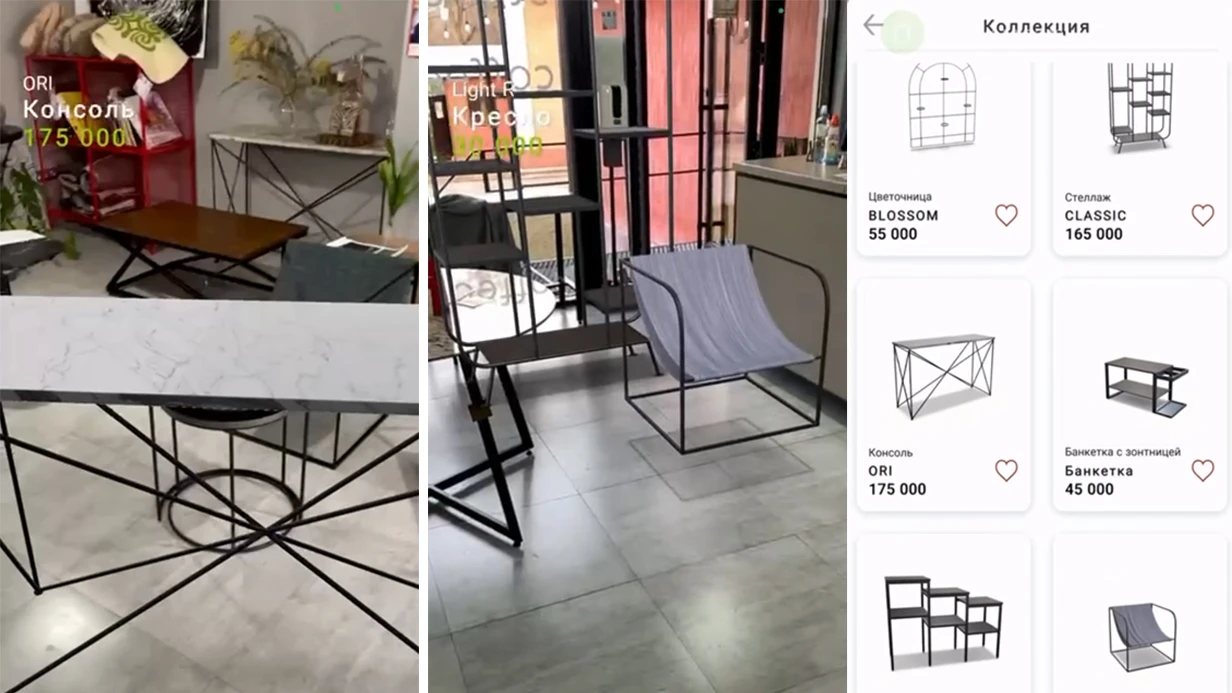
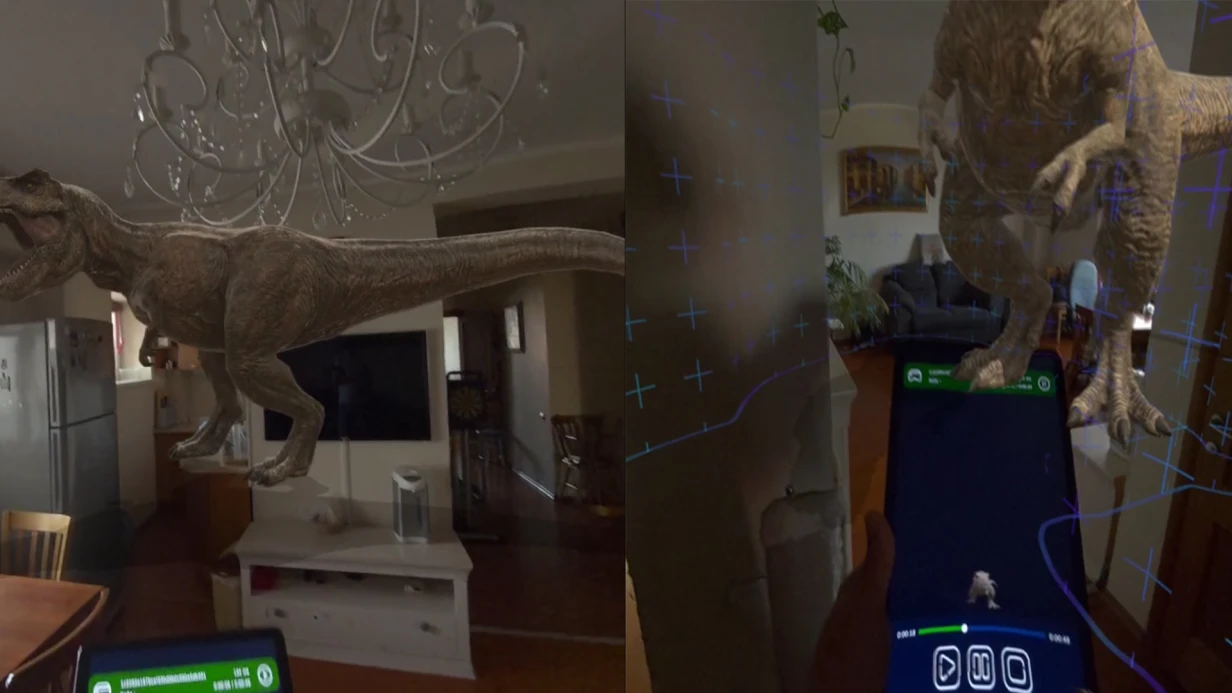
When the task is to show an investor or contractor a facility that hasn't been built yet, use augmented reality.
Overlaying a digital model onto a real space lets you "place" future equipment in an existing room and immediately see whether everything fits, what the walkways will look like, and whether utilities get in the way.
This saves weeks of modeling and approvals, and the investor makes a decision faster — which means the project gets funded sooner.
The third scenario is mixed reality for repair crews. Wearing a lightweight headset, a specialist sees the internal diagram, sequence of actions, and danger warnings directly overlaid on the real unit.
For the energy sector, where every minute of downtime is expensive, this reduces repair time and the number of repeat visits. A new employee doesn't need constant mentor supervision — the system itself prompts the next step.
The rule for choosing is simple: start with the goal, not the technology. If you're unsure between formats, order a short consultation — we'll analyze the task together and recommend a solution that gets you to results faster.
We can even run a small pilot project so you can evaluate the effect before full implementation. In the energy sector, we've already gone through this path with a dozen companies, so we'll tell you where to save budget and where, on the contrary, not to risk your timeline.