

Developing VR Applications for Pharmaceuticals: Sales Challenges
Pharmaceuticals is one of the most conservative industries when it comes to sales. Medical representatives have been using the same catalogs, charts, and slides for years, while competitors adopt VR for pharma and turn a presentation into a live experience.
A doctor or buyer sees dozens of identical pitches a day — only something outside the ordinary holds their attention.
The main problem in the pharma industry today is not product quality but how it is presented. If you show a drug’s mechanism of action with a static diagram, the client reads halfway and switches to a more visual solution.
Without interactive sales, it is hard to explain complex molecular processes, compare effectiveness, and address objections on the spot. As a result, the deal drags on and the client goes to someone who speaks their language with clarity and engagement.
This is especially noticeable in distributor training and work with key clients. When a product can be “touched” in a virtual environment, retention increases significantly and trust in the brand grows.
Companies that already use VR for pharma gain an advantage in negotiations: their representatives do not tell, they show; they do not persuade, they engage.
We see this pain in every second project for pharma companies and know how to solve it. Interactive sales powered by virtual reality are not a fashion trend but a tool that shortens the sales cycle and increases product recognition. Tell us about your task — we will show you how to turn a presentation into results.
What Benefits Business Gets from VR
VR in pharma is no longer an experiment; it is becoming a working tool that delivers measurable results. The main benefits of VR are increased engagement, high information retention, and systematic employee training without interrupting daily work.
Unlike traditional presentations, a virtual environment holds attention completely: in a single session, a doctor or medical representative absorbs several times more details about the drug, its mechanism of action, and dosing regimens.
For business, this means less time spent on product onboarding and faster time for an employee to reach the required level of competence.
Brand recognition is the second key benefit of VR. An immersive experience is remembered more strongly than a standard landing page or brochure, so information about the company and product reaches patients and partners through emotion.
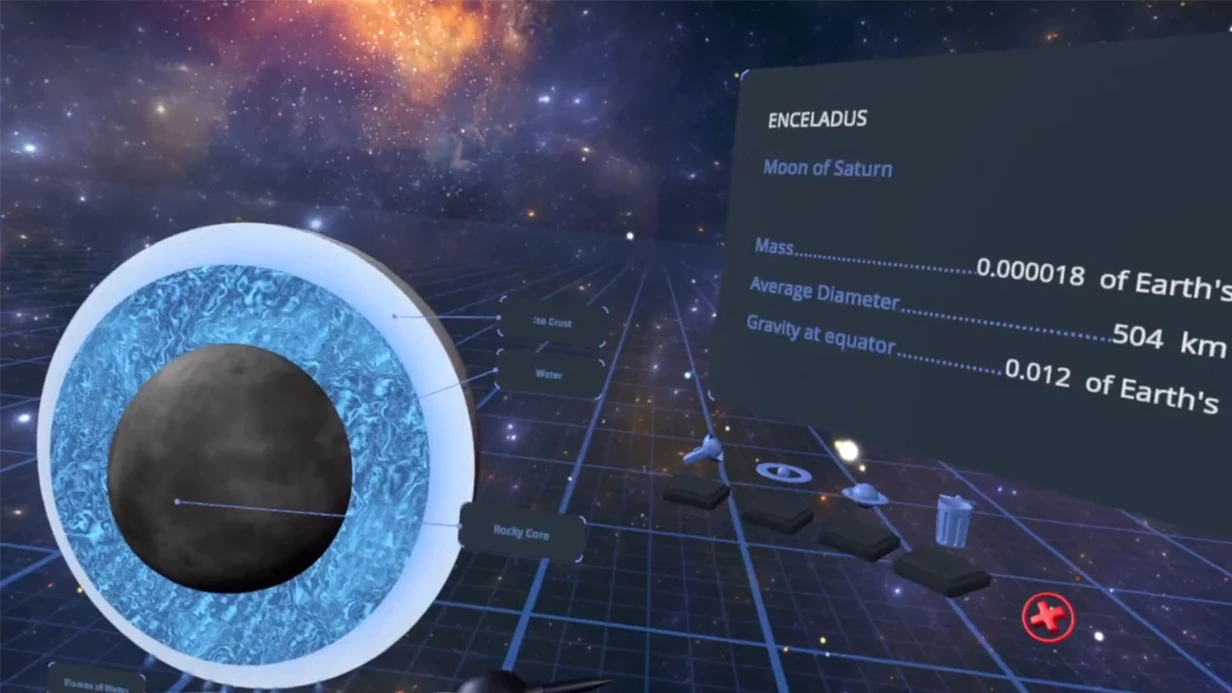
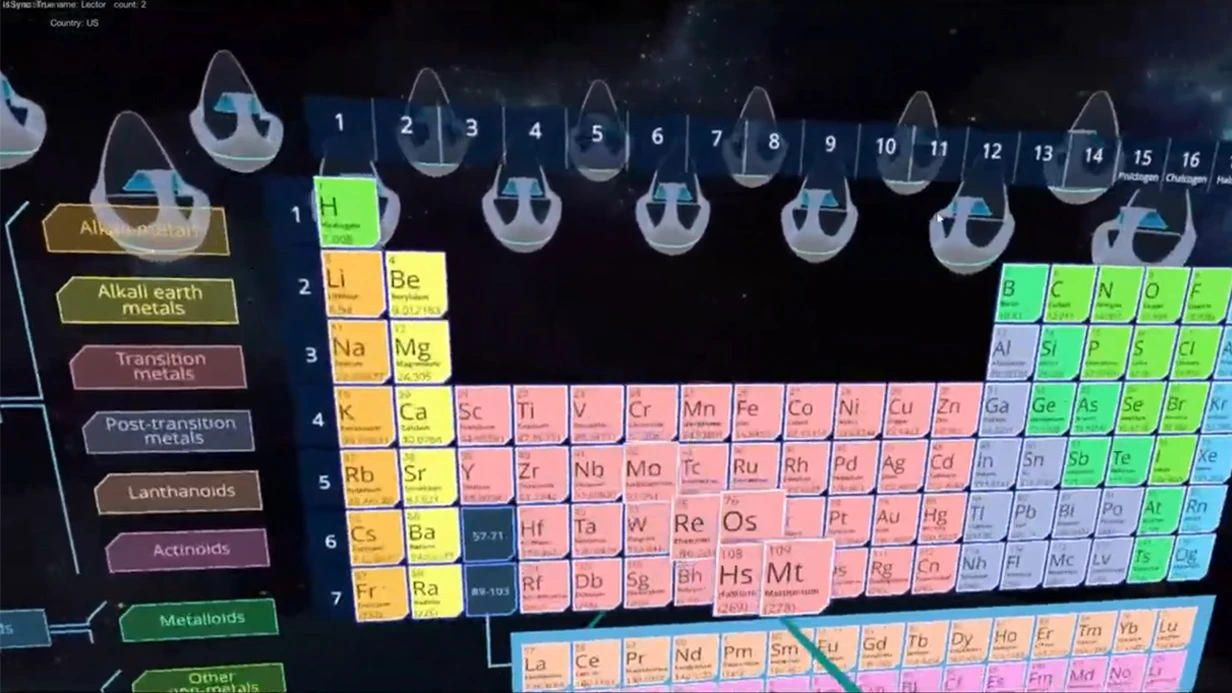
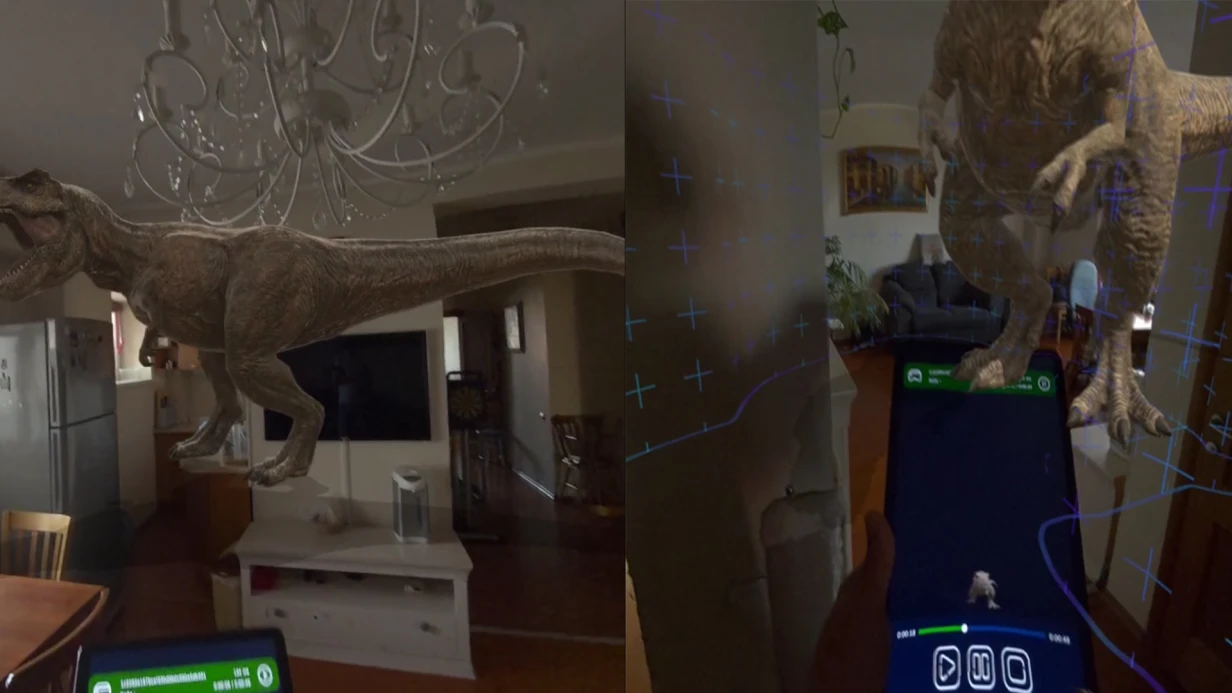
When a specialist “walks through” a molecule or observes a drug’s action in a 3D model, they gain personal experience that they share with colleagues and at conferences.
Thus, VR continues to work for the brand’s reputation long after the meeting — every demonstration becomes a mini-event in the professional community.
VR personnel training solves the main pain point of the pharma industry: the need to quickly and consistently prepare employees across different regions.
Virtual simulators make it possible to model complex negotiation scenarios, handling objections, and working with a drug safely for both budget and reputation.
Every employee goes through the same immersion, so knowledge quality becomes uniform and newcomers’ mistakes do not fall on mentors’ shoulders.
We use professional equipment and proven development tools, so implementation takes just a few weeks and project management is fully transparent for the client.
You get not “technology for technology’s sake” but a tool with clear metrics: reduced training time, increased conversion rates for medical representatives, and sustained brand awareness growth among the target audience.
VR Solution Formats for Different Tasks
The same VR development addresses different business goals: showing doctors a new drug, training employees to work with equipment, or attracting attention at an exhibition.
The format of the solution directly affects the outcome — the right scenario reduces explanation time, improves retention, and delivers measurable value to the brand.
Below are the typical formats we implement for pharmaceutical companies. In each case, the focus is on results, not technology.
| Format | Target audience | Value for the client |
|---|---|---|
| Virtual product presentation | Medical representatives, doctors at conferences | Visual demonstration of the mechanism of action without laboratory conditions; reduced time spent explaining the drug |
| Process simulation | Pharmaceutical manufacturing, training departments | Practicing procedures and actions in a safe environment without stopping the production cycle |
| Interactive simulator | New employees, medical university students | Fast onboarding and fewer mistakes during the first independent work |
| VR booth for exhibitions | Marketing, sales department | Visitor traffic and increased interest in the booth; additional brand mentions on social media |
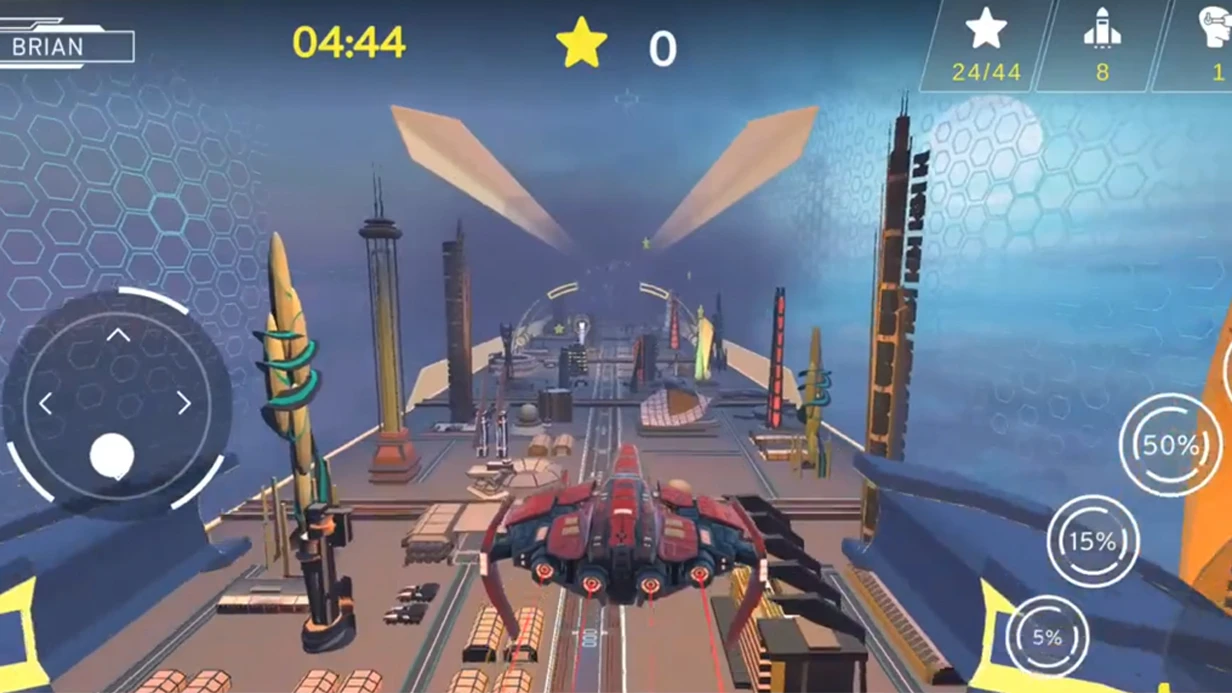
For each format, we select a scenario for your audience: from a short headset demo to a full-fledged quest with tasks and score tracking.
We work with professional Pico headsets — they are convenient for mass events and corporate training, so the client gets stable, glitch-free operation.
In the end, you get a format that solves a specific marketing or training task: more meeting registrations, faster-trained employees, and greater recognition for the drug or company in the market.
How VR Application Development Works
VR application development for pharma is a clear process that we break into stages. This way, you always know what is ready, what is happening now, and what steps come next.
-
Brief and goal setting — we define what task the application solves: doctor training, drug presentation, immersive booth. We agree on timelines and quality criteria so the result can be measured on launch day.
-
Scenario and prototype — we show how the user will move within the scene and interact with objects. You see the future functionality before major resources are invested, which helps avoid expensive changes later.
-
Concept approval — we discuss details on a demo version and make adjustments. In pharma, it is important that the mechanics and visuals do not contradict industry regulations, so we immediately check the scenario against your requirements.
-
Development and regular demos — we work in iterations: every 1–2 weeks you get a working version and provide feedback. You are always up to date on progress rather than waiting for a result at the end of the project.
-
Testing and polishing — we test the application with the target audience: doctors, medical representatives, and conference guests. We fix glitches, speed up loading, and make controls intuitive.
-
Launch and support — we publish the application for your devices, help prepare kits, and train the team. After launch, we stay in touch: we update quickly if requirements change or new content is needed.
What Is Included in a VR Solution Delivery
The full delivery package is not just an application file. You get a ready-to-use tool, training, and support to launch VR in pharma without stopping your workflows.
-
Working application — adapted to your tasks: employee training, drug demonstrations, skill practice. Installed on Pico headsets that you already have or that are supplied with the project.
-
Content — 3D models of products, equipment, and interactive scenarios. Materials are created to match your specific needs and can be supplemented with new scenes as needed.
-
Personnel training — training sessions for administrators and users. Employees master the system on day one and do not depend on developers.
-
Technical support — a dedicated engineer provides consultations, resolves issues, and monitors stability. You get help exactly when you need it.
-
Documentation — clear instructions in Russian for users and administrators. The guides cover all scenarios and make training new employees easier.
-
Development and updates — the content and application can be refined in response to market changes or new drugs. You do not stay with a one-time product; you get a living system.
Bottom line: the delivery includes everything needed for launch and daily use. You pay for the outcome, not for extra contractors.
Case Study: VR for Pharma in Action
How It Went
A pharmaceutical company was launching a new drug, and medical representatives had to explain a complex mechanism of action to doctors during short meetings.
Ordinary slides and brochures did not hold attention: the information was too abstract, and competitors offered similar solutions. We were asked to develop a format that would create the right mental model for a doctor in minutes. We proposed replacing part of the training with a VR scenario on Pico headsets.
In virtual reality, the representative could “walk through” the path of a molecule in the body, see how the drug interacts with receptors, and influence the process. Instead of passive viewing, this was active exploration that engages visual and muscle memory.
The format naturally fit into the existing training program and did not require process restructuring.
Results and Feedback
The project covered 120 medical representatives across three regions. The effect was measured by three parameters: retention, engagement, and readiness to use the materials in conversations with doctors.
Retention of key benefits increased by 40% compared with a classic presentation, and active study time was three times higher. 86% of participants noted that the VR format helps explain a drug’s mechanism of action faster.
One month after training, 92% of employees correctly reproduced the drug’s sequence of action — before the project, only half could do so.
The head of training at Pharm-Group commented on the results: “The VR application replaced three hours of lectures with one short immersion. Representatives now retell the mechanism of action on their own, without cheat sheets — you can see they really understood it.”
After the pilot launch, the company ordered VR scenarios for two more of its products and included them in the standard team training program. The repeat order was the best confirmation: the solution not only impresses but delivers measurable business results.
How to Choose a VR Solution for Your Tasks?
Choosing a VR solution rarely starts with the question “which app is cooler” — it usually starts with a task. What do you want to change: train employees faster, clearly show a drug’s action, keep doctors’ attention at a conference, or create a booth people will remember? The answer determines the format, scope of work, and budget — not the other way around.
The second criterion is the audience and usage scenario. One situation is a simulator for medical representatives needed several times a month that must work without failures.
Another is a demo for an exhibition, where the key things are visual impact and the ability to launch it from a tablet. You just need to estimate how many people will use the solution and how often, so you do not overpay for complex features that will go unused.
The third criterion is choosing a contractor. In pharma, caution matters: you need to work with regulations, correctly display complex terms, and respect an audience of professionals.
Therefore, look for a team with experience in your industry, one that speaks the language of doctors and marketers, not just the language of development.
Ask how post-launch support will work, whether they will train your employees, and what happens if scenario changes are needed.
Transparent stages and deadlines are another marker of reliability: a good contractor always names checkpoints instead of promising “we’ll do it fast and beautifully.”
Finally, avoid the main mistake: choosing equipment or technology before the task is formulated. First determine what the user should feel and do, then choose the format, and only then decide what to run it on.
If you approach the choice systematically, the VR application becomes a working tool that pays off, not a “shelf exhibit.” We help with this selection free of charge: send us a description of your task — we’ll propose a format, estimate timelines, and tell you what you really need.
Frequently Asked Questions About VR Development
VR development for pharma raises the same questions from clients: how long it will take, what about warranty, and whether the result will turn out to be an “expensive toy.” We understand these concerns, so here we have collected direct answers to what is most often asked before a project starts.
How long does VR application development take?
It depends on complexity: a basic training scenario or product presentation takes 4–6 weeks. A full-fledged simulator with multiple scenarios and tracking of employee actions takes 2 to 4 months.
We give an exact timeline after the brief; it depends on the number of scenarios, the required level of detail, and integration with your training system.
What does the warranty cover and what happens if something breaks?
We provide a warranty on all work — from 6 months. If something works incorrectly during operation, we fix it free of charge. Post-launch support stays with you: we update content for new drugs, help adapt scenarios, and provide technical support for the project. On request, we sign a separate contract for annual maintenance.
Why is the price what it is, and how do I stay within budget?
The price reflects the value of the result: a professional team, equipment, and server architecture that can handle simultaneous use on multiple devices. We lock in the estimate before the start, and stage payments are tied to intermediate results. You always see what you are paying for and understand the business effect at each stage.
Is VR suitable for training pharmacists and medical representatives?
Yes, this is one of the most effective formats: an employee gets into a realistic situation — handling a doctor’s objections, demonstrating a drug, practicing a protocol.
Studies show that training in VR is absorbed faster and remains in memory longer than reading instructions or watching videos. In addition, you get a single training standard for all regions and save on trainers’ business trips.
If you still have a question, ask us directly — we’ll tell you how we solved similar tasks in your industry and help you evaluate a project for your budget and timeline.Submit a Request for VR Development
Pharma requires precise product knowledge and the ability to communicate it to doctors, distributors, and patients.
VR applications help show a drug’s action, practice skills without risk, and attract attention at exhibitions — but first you need to understand how exactly the technology will work in your case. Submit a VR request, and we will turn your idea into a calculated project.
After you contact us, you get a personal manager and a clear workflow:
- online consultation — you describe the task, we clarify details and answer questions;
- project estimate — we prepare an evaluation of timelines, team composition, and investment;
- express scenario audit — we show where VR/AR will deliver results and where simple 3D materials are enough;
- equipment selection — we recommend devices, including Pico, based on your tasks and audience comfort;
- prototype and presentation — you see the future interface and interaction logic before development starts;
- work plan with timelines and acceptance criteria — we put all agreements in writing.
This sequence eliminates “surprises” in the middle of the project: you understand what you are getting, how long it will take, and how we check the result.
For pharma companies, this is especially important — you do not spend time discussing technology and instead move straight to business tasks. The online consultation is non-binding — during it, we honestly tell you where VR will strengthen your work and where it is not needed.
Submitting a VR request takes less than a minute, and the first response arrives within one business day.