

Clients Are Going to Competitors Without VR Attractions for Telecommunications
In the telecommunications sector, competition has long shifted from price to experience. A customer walks into a mobile store for a plan, but chooses the place where they can have a more interesting time and visually grasp the value of the offer.
Ordinary consultations, dummy phones, and brochures fail to hold attention — people compare several carriers and often go with the one that surprises them. This is a direct loss of customers for a company that does not invest in modern interaction formats.
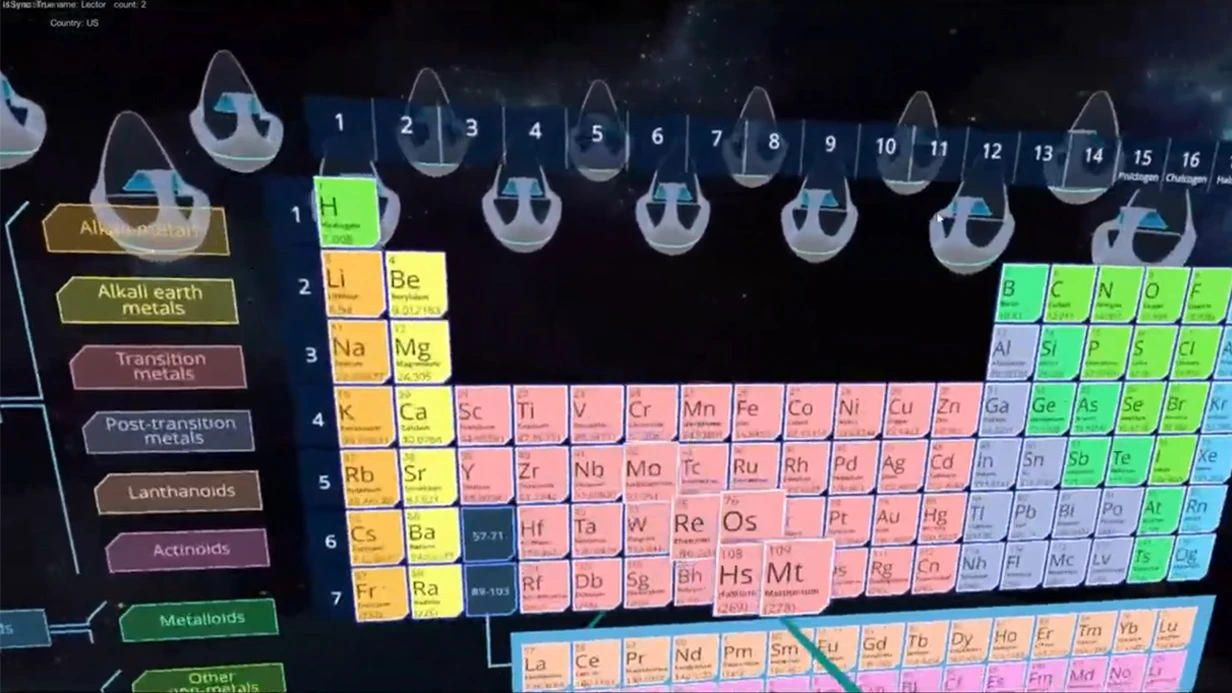
This problem is especially acute at exhibitions, showrooms, and branded retail points. VR for telecommunications makes it possible to show in just minutes how next-generation connectivity works, what home internet can do, or give a visitor a memorable experience.
Without such attractions, a booth looks lackluster, and marketing investments do not pay off — people walk past and do not remember your brand.
Operators that are already implementing virtual reality for telecom providers gain more qualified contacts and higher conversion to sales. Game-based scenarios are memorable, and visitors tell friends and share on social media — this is extra reach without an advertising budget.
A one-off campaign turns into long-term recognition as a tech-forward brand, and the cost of the VR solution is quickly recovered through the new subscribers it attracts.
We know how to design VR attractions for telecommunications around a specific carrier's goals: short demo sessions in-store, zones at events, promotional campaigns with prizes.
Our developments help steer customers toward your company and clearly demonstrate the advantages of your services. We will propose a scenario that works for your revenue.
What You Get from Implementing VR and AR in Your Business
Implementing VR and AR in the telecom business delivers measurable results: higher loyalty, increased sales, brand awareness, and a flow of hot leads.
This is not entertainment but a tool that turns abstract plans and services into a tangible experience any customer can understand.
Loyalty begins with emotion. When a mobile store visitor or an exhibition attendee puts on a VR headset and “walks through” a virtual office, explores the coverage area, or sees future options in 3D, they remember the brand.
Such interaction builds trust and a desire to come back to you — the customer feels the company is keeping up with the times and cares about their experience.
Sales grow through clarity. Instead of dull slides and brochures, customers see how their lives will change with a new plan or feature: speed, coverage, benefits — all of this can be shown in an interactive format.
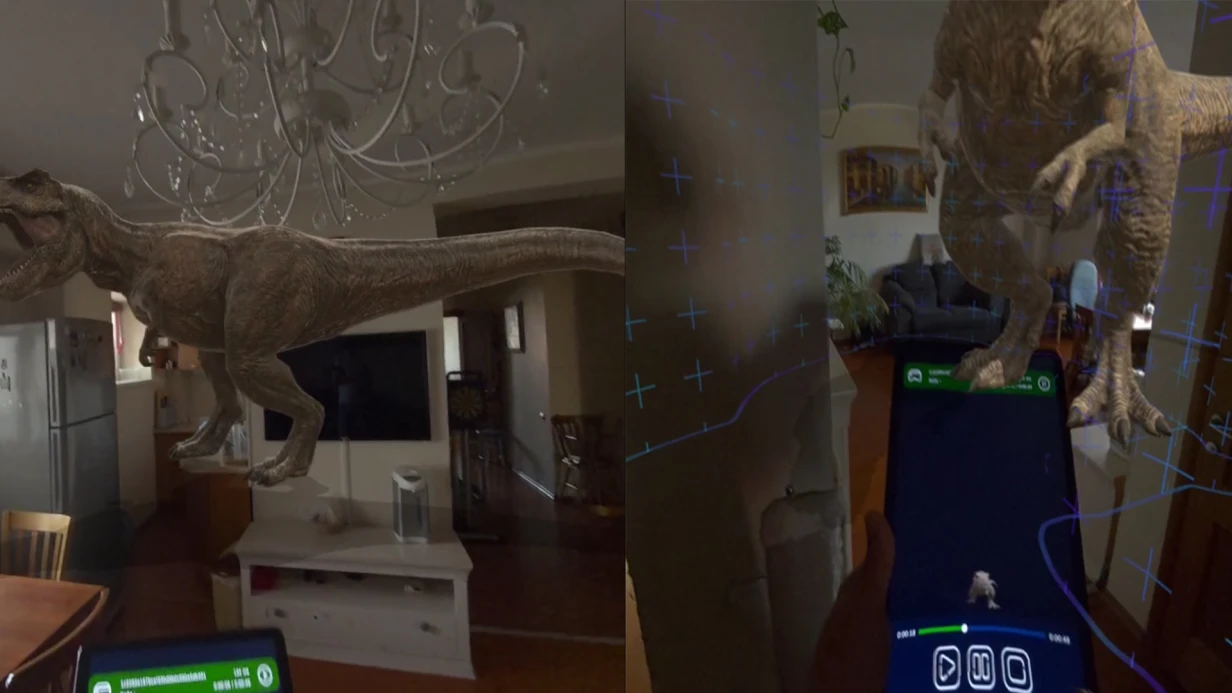
AR filters on a smartphone let customers “try on” the service for their home or office, remove objections during the presentation stage, and shorten the sales cycle. The clearer the offer, the faster the purchase decision.
Brand awareness is amplified by the viral effect. A striking VR experience at an event or an AR mask on social media prompts guests to share photos and videos — and that is free reach among their followers.
Every such repost builds your image as an innovative company, setting you apart from competitors that still offer paper brochures.
Finally, VR and AR are a lead generator. Built-in app scenarios let you collect participants’ contacts, record their interest in specific services, and pass them into your CRM.
You get not just “contacts for mailings” but a warm database with explicit intent — for example, a customer has already chosen a plan and wants to connect it.
We deliver all these benefits in turnkey projects, adapting solutions to a telecom operator’s goals, and structure the process so that results are visible after the first launch.
Which VR and AR Formats Fit Your Task
A telecom product is difficult to “touch”: networks, plans, and cloud services remain an abstraction for the customer. VR and AR turn them into a clear experience — you show how your solutions work without mockups or brochures.
The format depends on the task: attracting attention at an exhibition, accelerating employee training, or selling a complex solution at a client meeting.
We choose the format based on your goal and audience, not “VR for the sake of VR.” Below are three typical scenarios for telecom companies.
| Format | Who It Is For | What It Gives the Customer |
|---|---|---|
| VR zone for exhibitions | Marketing and promotion at industry events | Draws a flow of visitors: in 3–5 minutes a person gets to know the product and remembers the brand. You collect contacts and talking points for meeting with a manager. |
| AR training simulator | Training centers, technical support, installation teams | An employee practices equipment setup or network operations in a safe environment. Errors do not lead to accidents, and onboarding time noticeably decreases. |
| Interactive 3D presentation | Sales managers at meetings with B2B clients | Clearly show the network structure or how a service works — the client sees value, not slides. You reduce objections and the sales cycle. |
All formats adapt to the venue: from a compact AR marker in the meeting room to a full VR zone handling 50+ visitors per day.
For each project we design the scenario, select equipment — including Pico — and support the launch so you get results without diving into technical details.
How We Develop VR and AR Applications: 6 Steps
For a client in the telecom sector, an application in virtual or augmented reality is a way to stand out at an exhibition or in a mobile store — but without a clear process, the project risks dragging on.
That is why we have structured the development process as a transparent route of six stages: you always know what you will get and when you will launch the solution.
- Brief and immersion. We define the goals: employee training, tariff presentations, or a show zone. We determine the audience, scenarios, and success criteria — for example, the number of sessions per day.
- Concept and plan. We agree on the idea, timelines, number of revisions, and team composition. You receive a plan with checkpoints — no surprises in the middle of the project.
- Scenario design. We work out the interaction logic: how a guest puts on the Pico headset, what they see, and what actions they take. At this stage it is already clear how the application will solve the business problem.
- Development and previews. We create a prototype and regularly show intermediate versions. You review the result at every step, not just at the end.
- Testing and launch. We test the application on professional equipment and verify scenarios under high visitor flow. Then we deploy the solution at your venue.
- Support and evolution. We stay in touch: help with updates, collect guest feedback, and refine scenarios. When necessary, we scale the project to new offices.
In the end, you get a turnkey development — from idea to a working application that you don’t need to worry about.
And transparent stages with fixed agreements allow you to integrate the project into your plans: for an exhibition, a store opening, or the launch of a new tariff line.
What Is Included in the VR Solution Delivery: A Package for Your Business
Ordering a VR solution for telecommunications means you receive not just an application, but a fully operational business tool. We have assembled the package so that your team can launch the project without external contractors and use the system independently from day one. Here is what is included in the delivery:
- Ready-to-use VR application — adapted to your company’s tasks, installed on the required devices, and configured for your scenario. You get stable performance without rework or surprises.
- Admin panel — an intuitive interface where you can change content, scenarios, and access rights yourself. No need to bring in developers for routine edits — everything is done in a few clicks.
- Instructions — detailed guides for administrators and employees: how to launch the system, configure it, and update it. Written in plain language, without unnecessary technical detail.
- Staff training — a practical session in which your team learns how to use the system and immediately applies the new skills. The session is held online or at your venue.
- Technical support — a dedicated communication channel for questions and assistance. We respond during business hours, and in urgent situations — faster.
- Launch support — on the launch day, we are on call, helping you troubleshoot and promptly adjusting settings when needed.
The complete package removes uncertainty: you know in advance what you will receive and can plan the budget and timeline. All that remains is to launch the project — we handle everything else.
Case Study: VR Presentation for a Telecom Operator Increased Sales
Telecom operators find it difficult to explain the difference between tariffs, coverage, and speed to a customer — abstract numbers in a brochure do not inspire trust. While a manager draws diagrams on paper, the buyer loses interest and goes to a competitor.
A virtual presentation turns a complex product into a visual experience that is memorable and leads to a purchase decision.
We developed such a project for the mobile store chain “Lider Telecom”. Instead of a standard consultation, a visitor put on a VR headset and entered an interactive model of the city with coverage zones, speeds, and advantageous options.
In a few minutes, they could “test” signal quality in the neighborhoods they cared about, compare plans, and see the savings in real time — the manager stayed nearby and answered questions, having already understood the customer’s intent.
Project results
During the two-month pilot, sales conversion increased by 34%, and the average consultation time nearly halved — customers made decisions faster and returned with complaints less often.
Store managers noted that staff spent less effort on explanations, and visitors showed more interest in additional services.
After the pilot, the operator ordered the VR presentation to be rolled out to all key retail locations and added employee training on new products to the scenario.
This case showed: an immersive format pays off not as a flashy banner, but as a working sales tool. We will transfer its logic to your products and adapt the scenario to the specifics of your audience — so that VR or AR helps sell, not just surprises. Contact us to discuss metrics and an implementation plan for your company.
How to Choose the Right VR Format for Telecommunications?
There is no universal VR format for telecommunications — the right choice is determined by the specific task and the expected outcome.
Before ordering development, ask yourself: what should happen after using the solution — will an employee learn to work faster, will a customer understand the value of the service, or will an engineer get help in the field?
If you need a full simulation of an environment without risks and unnecessary costs, choose VR. It allows you to safely train staff for work at height, equipment maintenance, or response to emergency situations.
When it is important to augment the real world with data, an AR solution is appropriate: a specialist sees network diagrams, hints, and instructions directly on-site without interrupting their work.
A mixed format is effective where physical objects and digital prompts need to be combined in a single view.
The key selection criteria are audience, use case, and budget. For mass employee training in offices, standalone VR headsets are suitable; for field teams, mobile AR tools on tablets or smartphones.
Estimate how many people will use the solution and how often — this determines the type of equipment and the need for technical support.
Also consider long-term savings: one high-quality simulator replaces dozens of off-site training sessions, and AR hints reduce troubleshooting time manifold.
Our engineers help you choose a format that fits your tasks and budget: we conduct a short audit, test the scenario with your sample users, and propose a solution that is sure to pay off. Start with the goal — and we will tell you which tool will deliver results fastest.
Frequently Asked Client Questions About VR and AR Application Development
Before ordering a VR/AR application, clients from the telecom sector ask the same questions: how long until we see results, what about guarantees, and how will everything work in real operation. The answers determine team confidence and the fate of the launch, so let’s cover the main points.
We work according to a transparent scheme: brief, plan, approval, test zone, launch, and support. Instead of vague promises — concrete agreements at every stage.
How long does VR application development take?
The timeline depends on the complexity of the scenario and the number of scenes. A typical project for an event or training in telecom takes 4–8 weeks. During the brief, we lock in the delivery date and the dates of test previews, so you see the schedule from day one.
What guarantees are there for a VR application?
The guarantee is stable operation on launch day and fixing any bugs that may appear in the first weeks. We formalize this in the contract and the technical specification so you are protected at all stages.
What if updates are needed after launch?
Telecom products change quickly: tariffs, promotions, scenarios. That is why we design the application so that content can be updated without rebuilding the entire project. Replacing texts, prices, and simple blocks takes days, not months.
We close technical risks before the premiere: we run the application on real Pico headsets and typical smartphones. You receive a product that works on launch day, not “in theory.”If you still have doubts, ask your questions before the brief: we will respond within 24 hours and advise which VR/AR format fits your task.
Discuss Your VR Project with an Engineer — Application in 15 Minutes
Submit a request on this page — and within 15 minutes an engineer who will lead the project will contact you. They will clarify the task, advise where VR will deliver real results, and where it is better to save.
This is a professional consultation tailored to the needs of your industry — no pressure and no hidden conditions.
What you get after submitting your request:
- A VR engineer consultation: whether the technology suits your business task, which scenario to choose, and how to implement it.
- A preliminary cost estimate and timeline based on your input — before signing the contract and without hidden surcharges.
- A commercial proposal with fixed work items and stages — you clearly see what you pay for and what you receive.
- Equipment and scenario recommendations for your industry — so that VR works toward a concrete result.
- Examples of similar projects — solutions that have already proven themselves, with a clear assessment of impact.
- A straightforward plan of next steps: what happens after approval and when the first results will appear.
You don’t need to understand technology or prepare a technical specification — the engineer will ask the right questions and handle the preparation for you.
Leave your name and phone number in the form below; we will call you back within 15 minutes, answer your questions, and prepare a personalized proposal.