

Customers Are Leaving for Competitors Who Already Use Web-Based AR
Modern buyers barely notice static pages: they are used to seeing products in action, not in photos. When a website doesn't offer that, people simply close the tab and go to someone who already uses web-based AR.
Customer churn happens invisibly, but it is exactly what eats sales in mobile commerce, where users make decisions in seconds.
If you notice a growing number of abandoned carts and a decline in repeat visits — that's a signal. Customers compare your experience with competitors who show products in augmented reality right in the browser.
And more often they choose those who let them "try on" a product, change its color, place it in their own room — without installing apps or extra steps.
Web-based AR removes the main reason for churn — the doubt "will it suit me?" Retaining an audience relies on instant clarity: see — like — buy. This is exactly the chain that augmented reality on a website provides, and it works equally well for retail and services.
We help implement web-based AR so it solves business problems: reduces churn, increases conversion, and holds audience attention.
We work out the UX scenario, integrate the technology into the interface, and launch a solution that delivers measurable results within the first weeks.
What Web-Based AR Will Give Your Business: Growth in Engagement and Sales
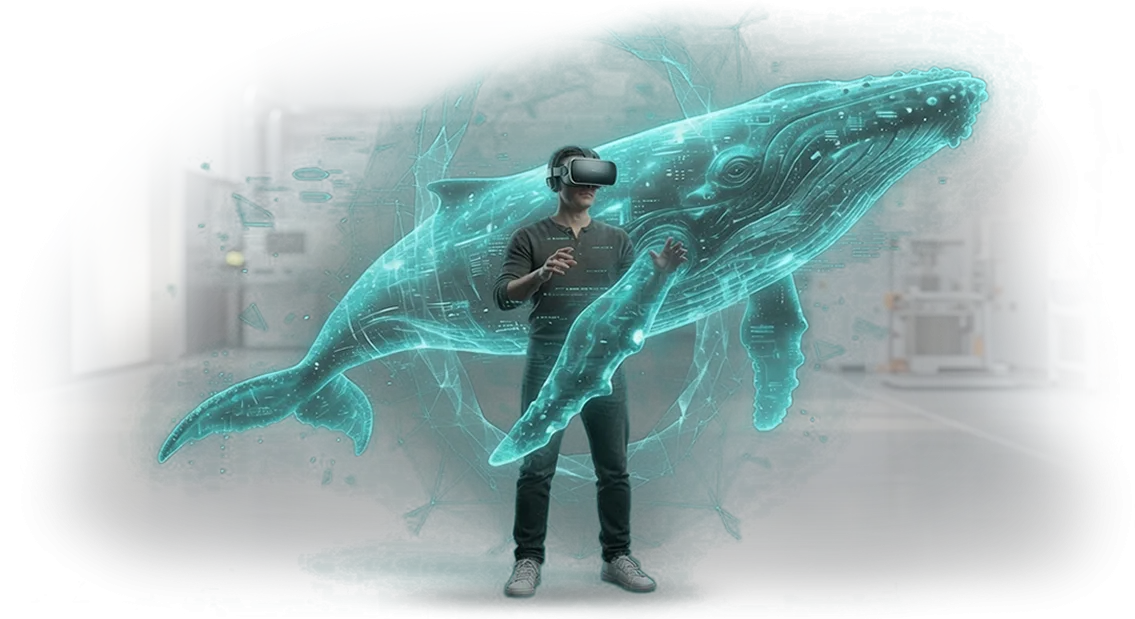
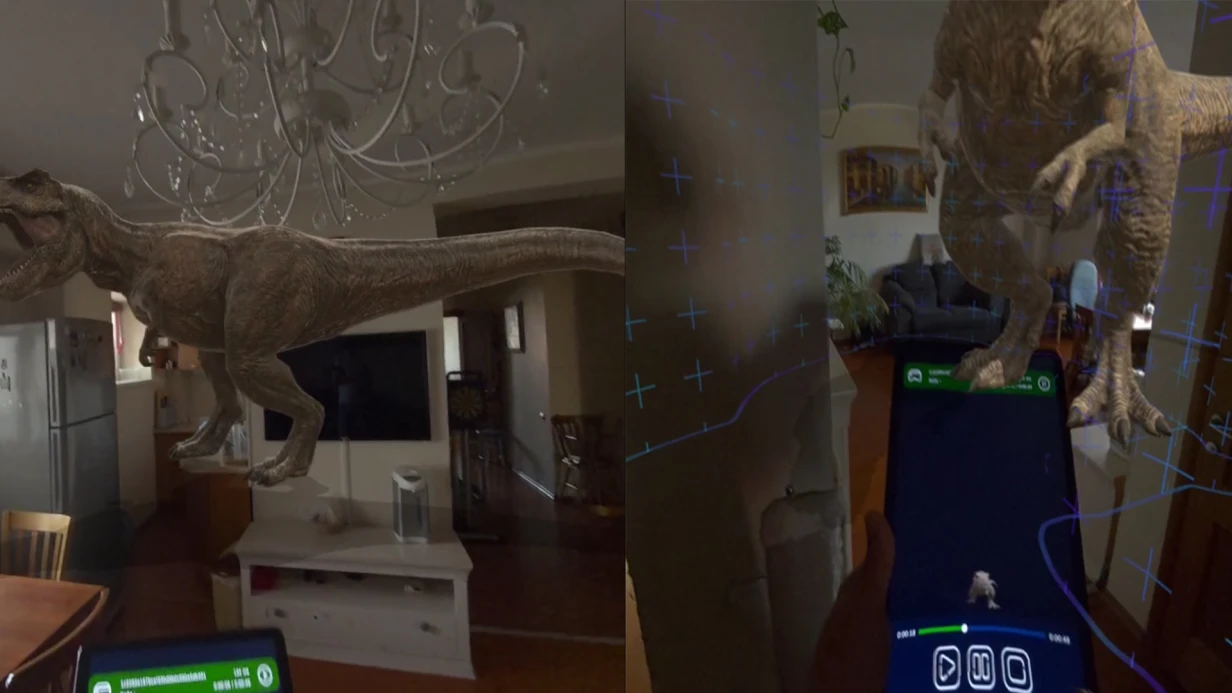
Web-based AR is augmented reality that launches directly in the browser, without installing apps. Users just open a link — and they immediately enter an interactive experience. This removes the main barrier to entry: no need to download anything, register, or figure out settings.
Instant access directly affects engagement. The fewer steps to interaction, the higher the chance that users complete the scenario. For businesses, this means an advertising campaign, catalog, or promotion page becomes a living tool that works right here and now.
Reach is the second important advantage. Web-based AR works on any modern smartphone and tablet, and spreads through ordinary links, QR codes, and social media posts.
This lets you engage an audience that hasn't encountered AR before and make the technology part of everyday brand interaction.
Engagement turns into conversion growth. When a customer can "try on" a product, see how furniture fits into a room, or examine product details in 3D, they decide faster and more confidently. Such scenarios reduce returns and increase average order value.
Finally, brand recognition. Unusual interactivity is memorable; people tell friends about it and share it on social media. Each such share is free advertising that expands reach and reinforces the association of the brand with modern technology.
We create web-based AR solutions that work reliably on any device. We use professional equipment and proven tools — you get a result that benefits your business, not just a technology demonstration.
Formats of Augmented Reality Projects for Different Tasks
AR project formats determine how a visitor interacts with the brand: quickly looks, explores details, or gets involved in a game. We identify three basic formats — presentation, catalog, and interactive mechanics.
They solve different tasks, and augmented reality in the browser lets you launch them without installing apps — just open a link from your smartphone.
In the table, we compared three formats. Focus on your task — we'll handle the rest.
| Format | For what tasks | What the client gets |
|---|---|---|
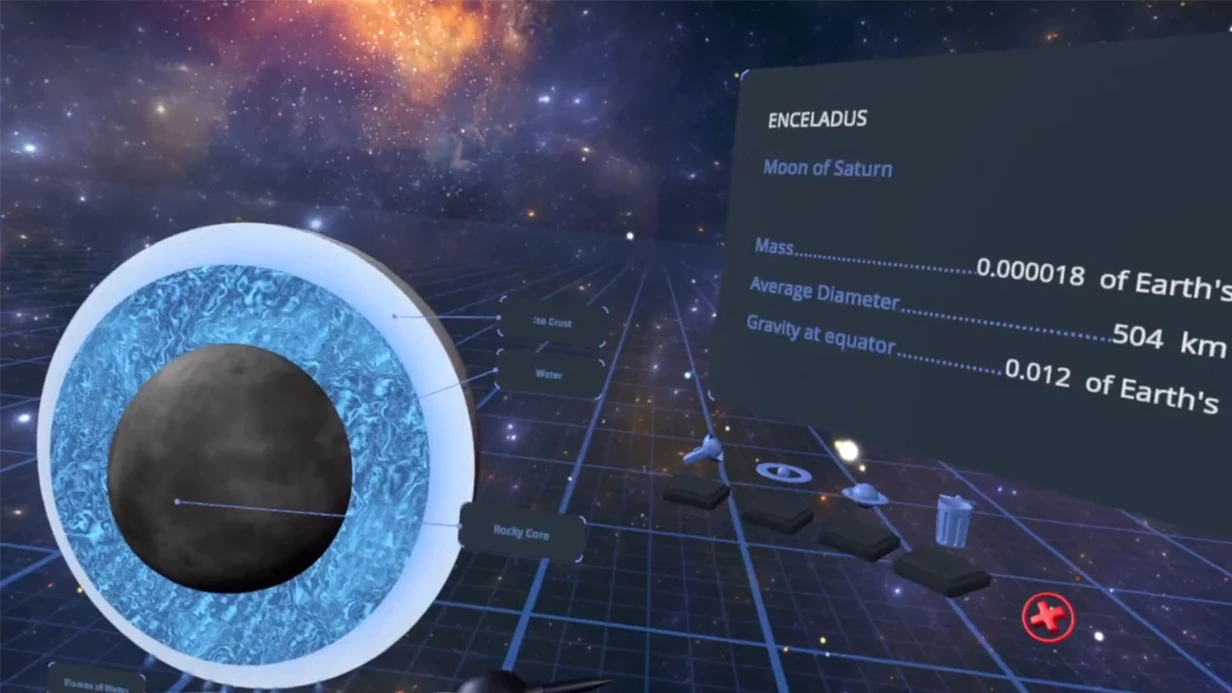
| AR presentation | Product presentations at exhibitions, conferences, showrooms | A visual product demonstration: guests see the product from different angles, can "place" it into a real space, and immediately assess the scale |
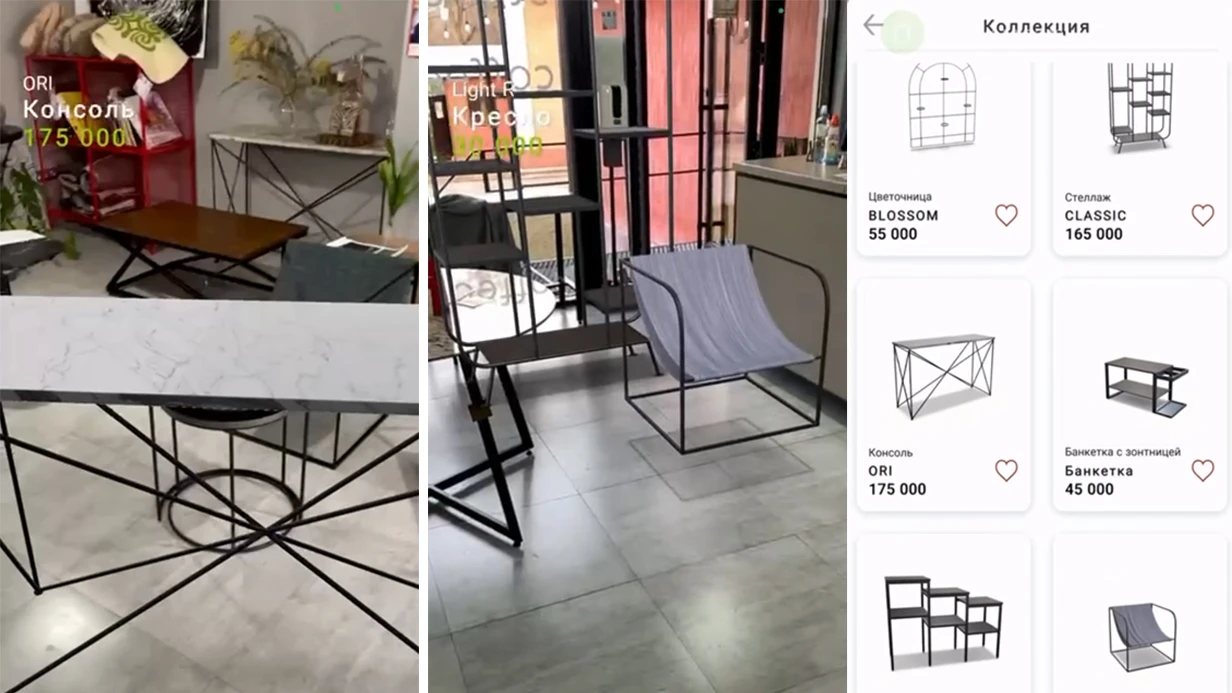
| AR catalog | Product catalogs, brochures, showcases | Quick viewing of the product line without a physical sample. A visitor points their phone and gets a 3D model, specifications, options. Convenient for sales and consultations |
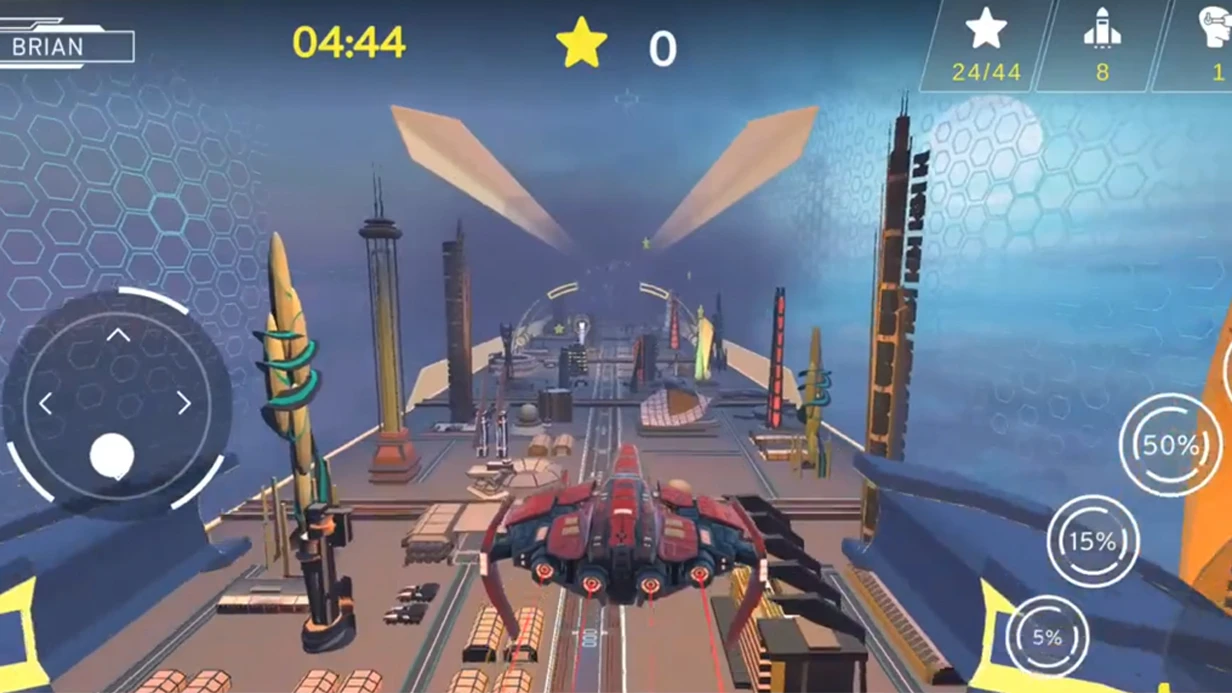
| Interactive game | Promotions, entertainment zones, team building | High engagement: visitors spend time with the brand, earn points, share results on social media. The format creates emotions and a reason to return |
Presentation works when you need to show a product quickly. Catalog — when the assortment is wide. Game mechanics — when it's important to hold attention and collect contacts. We'll help you choose the optimal scenario and adapt it to your audience.
Stages of Developing an Augmented Reality Project
A transparent process is the key to a predictable result. We know how painful it is when a project drags on or turns into a "black box." That's why we divide the work into six clear steps: at each one, you understand what's happening and what you get at the end.
- Brief and immersion in the task. We gather your goals, audience, and usage scenario. We determine how augmented reality solves a business task — increases conversion, engages guests, or simplifies training.
- Plan and estimate. We propose a concept, timeline, and work format. We fix the scope and acceptance criteria so you know in advance what you'll get and when.
- Layout and scenario approval. We show a prototype: how the user interacts with AR elements, what actions they take, what result they see. You make edits before the main development starts.
- Development and testing. We create the application or web-based AR module and test it on real devices. We eliminate inaccuracies so there are no surprises at launch.
- Launch and integration. We place the solution on your page, in your app, or at the event venue. We train your team if needed and hand over access.
- Support and development. We monitor stability, update content and add functionality when necessary. We analyze user behavior and suggest improvements based on results.
This approach removes typical risks: missed deadlines, unexpected edits, and not understanding what you're paying for. Each stage addresses a specific need — from idea to a working solution that benefits your business.
What's Included in the Delivery: A Kit for Launch and Growth
We don't just hand over a "project and goodbye." Along with the finished solution, you get a complete kit for independently managing, launching, and developing web-based AR. This removes the client's main fear: dependence on the contractor after delivery.
Here's exactly what's included:
- Source files and project structure — all work remains with you; you can hand it to another team or continue developing it with us.
- Documentation and instructions — clear descriptions of setup, publishing, and updates. No need to keep a developer on staff.
- Training for your team — a short session where we show you how to work with the control panel, update content, and track errors.
- Warranty and technical support — after launch we stay in touch: we fix issues, consult, and advise on development.
- Analytics and reports — configured events so you can see who interacts with the AR scenario and how: number of launches, viewing time, conversion.
- Scalability — the kit is assembled so you can add new features and platforms without rewriting from scratch.
In the end, you buy not just code, but your business's ability to quickly test AR ideas and scale successful solutions. Such a delivery pays off from the first launch — you save on ongoing refinements and change content yourself whenever needed.
Case Study: How In-Browser Augmented Reality Increased Conversion
For the client — clothing brand NextFit — the familiar problem was: visitors looked at product cards but doubted how the item would fit. Most added the item to the cart and left at checkout — there wasn't enough visual confirmation.
We designed the UX/UI for web-based AR: the user turns on the camera right in the browser, without installing an app, and sees the selected model on themselves in real time. We made the interface design intuitive — one step from product card to virtual fitting.
How it went
In two weeks, we designed and tested a prototype, then integrated it into the three most popular catalog categories. The client's team noted that visitors were spending 40% more time on product cards, and most importantly — they stopped being afraid of the "Buy" button.
Results
A month after launch, online store conversion grew 1.5 times. The share of returns decreased, and repeat visits increased — users came back to "try on" new arrivals.
This result came not from a new catalog, but precisely from reducing the uncertainty barrier through augmented reality.
The case showed: web-based AR is not just decoration, but a working business tool. A small improvement in the user journey pays off with increased sales and customer loyalty.
Frequently Asked Questions About Implementing Augmented Reality
We've collected answers to the questions most often asked before launching a web-based augmented reality project. We explain briefly and to the point — without technical details, only what affects your budget, timeline, and result.
If your question isn't here, send us a brief — we'll prepare a personal cost calculation for your task.
What devices is your product compatible with?
Web-based augmented reality works in the browser, so it runs on most modern smartphones and tablets — both iOS and Android. The user doesn't need to install anything: they open a link and immediately enter the desired scenario.
How much does development cost?
The cost depends on the set of features: number of scenes, 3D objects, integration with your data. After the brief, we fix the exact estimate, and it doesn't change during the process — unless you add new tasks.
What are the timelines?
A typical project takes from two weeks to two or three months. We specify the timeline in the contract. The speed is affected by the readiness of your materials and the promptness of feedback at each stage.
Is it safe for users?
Yes. We don't collect unnecessary data — only what's needed for the scenario to work. The processes comply with standard security practices for websites, so there are no risks for visitors.
What about support after launch?
We stay connected to the project after release: we train your employees, monitor stability, and promptly update content — we change products, promotions, and images.
Leave a request for an estimate — we'll get back to you with specific numbers and solution options for your task.Ready to Discuss an Augmented Reality Project? Leave a Request
Discussing a project doesn't mean committing right away. It's an opportunity to show your task, clarify the idea, and understand how augmented reality can help your particular business.
The free consultation takes 20–30 minutes: during this time, we analyze your situation, answer questions, and suggest initial solution options.
If after the conversation you decide to move forward, we'll create a plan and estimate. If not, you'll still understand where to go and which tools to use. Either way, you get value from the meeting.
What you'll get after your request:
- A free consultation — we discuss your task and goals without pressure or pushiness.
- An analysis of your audience and AR use case — who it's for and why in your context.
- A feasibility assessment: what can be done quickly, and what will require more time and budget.
- Examples of similar projects and solutions — you'll see how it looks in practice.
- A clear plan of next steps — with stages, timelines, and areas of responsibility.
- Answers to questions about integration with your website or app, technical requirements, and support.
- A clear commercial proposal — if you decide to order AR, you'll know what you're paying for.
Leave a request for a free consultation, and we'll contact you within one business day. We'll discuss the project, analyze your tasks, and suggest options that actually work for your results. Ordering AR now means getting a competitive advantage before others do.
How to Choose an Augmented Reality Format for Your Business?
Choosing an augmented reality format is not a technology question but a question of your business task.
Web-based AR works right in the browser, requires no app installation, and reaches the widest possible audience — ideal for promo campaigns, catalogs, and interactive showcases.
If your goal is deep engagement, ongoing product interaction, and loyalty, consider a native app with AR functions.
Focus on your audience. If clients come from their phones and value speed, web-based AR shortens the path from touch to result: opened a link — saw the product in your room — ordered.
For events and offline locations, AR markers and geotagged scenarios work well, bringing posters, packaging, or signage to life and attracting attention where it matters.
We help you choose a format for your goals and budget. During the consultation, we analyze exactly where your audience will encounter AR: on the website, in social media, at an exhibition, or in a store.
Based on that, we propose a solution that delivers measurable results — growth in reach, interaction time, or repeat inquiries.
Importantly, web-based AR can be easily embedded into an existing website or landing page without complex updates. It's a fast and cost-effective way to test an idea, and if needed, scale it to other channels.
In the end, you get not just a nice feature, but a working tool that solves a specific business task and is clear to your audience.