

The Energy Sector Loses Resources: How VR/AR Reduce Risks
Energy is an industry where the price of a mistake is measured in hours of downtime, reputation, and people's safety. Most incidents occur due to human factors: personnel act in stressful situations without sufficient practice.
Training at real facilities involves risk and high costs, and the consequences of errors in production cost many times more than preventing them.
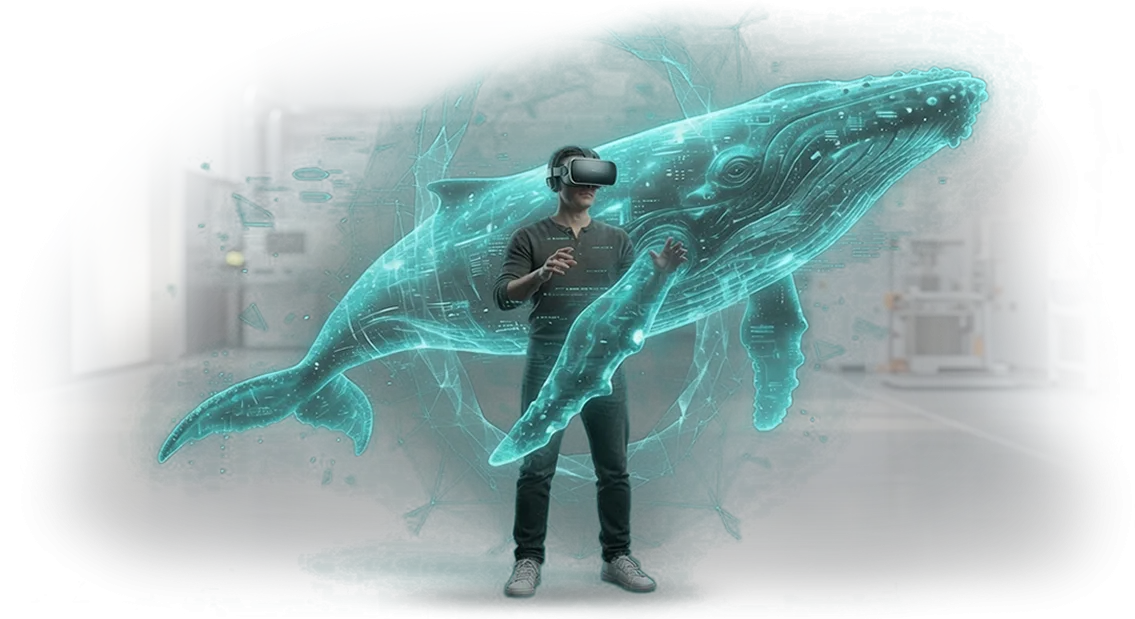
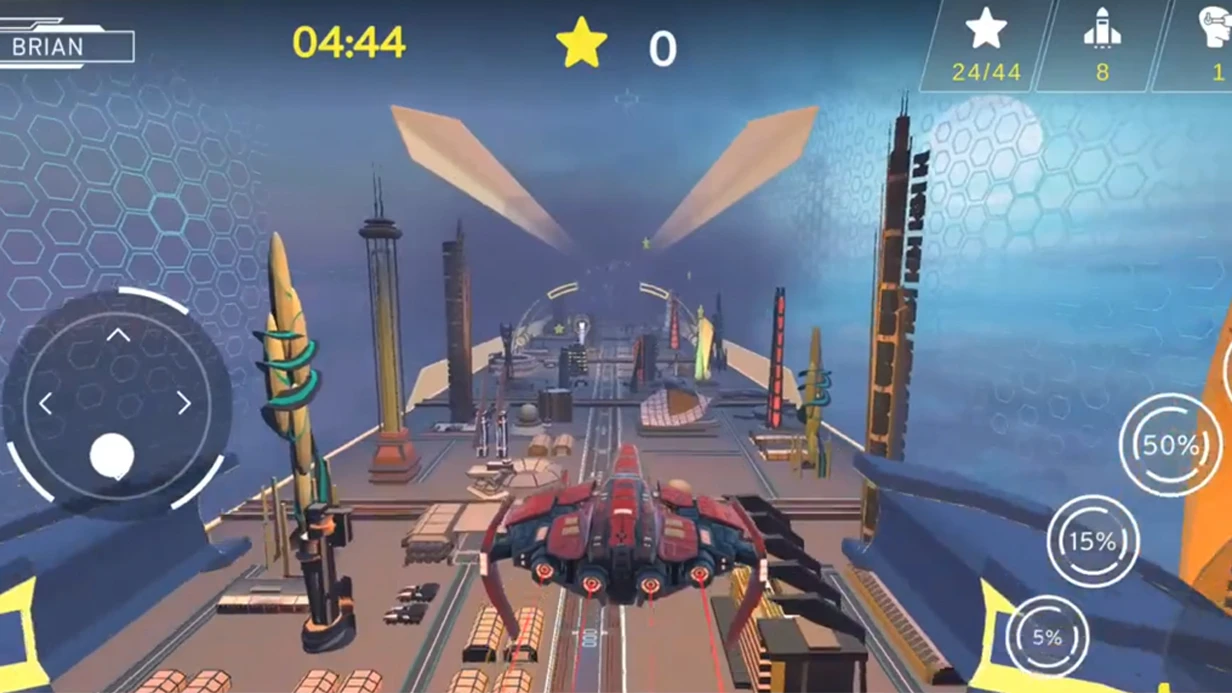
Implementing VR makes it possible to move training into a safe virtual environment. Employees practice emergency situations as many times as needed, without stopping equipment or threatening lives.
VR for the energy sector is not a replacement for theory but an opportunity to build muscle memory before a person steps onto a real site. Companies get a predictable level of training and noticeably fewer errors at work.
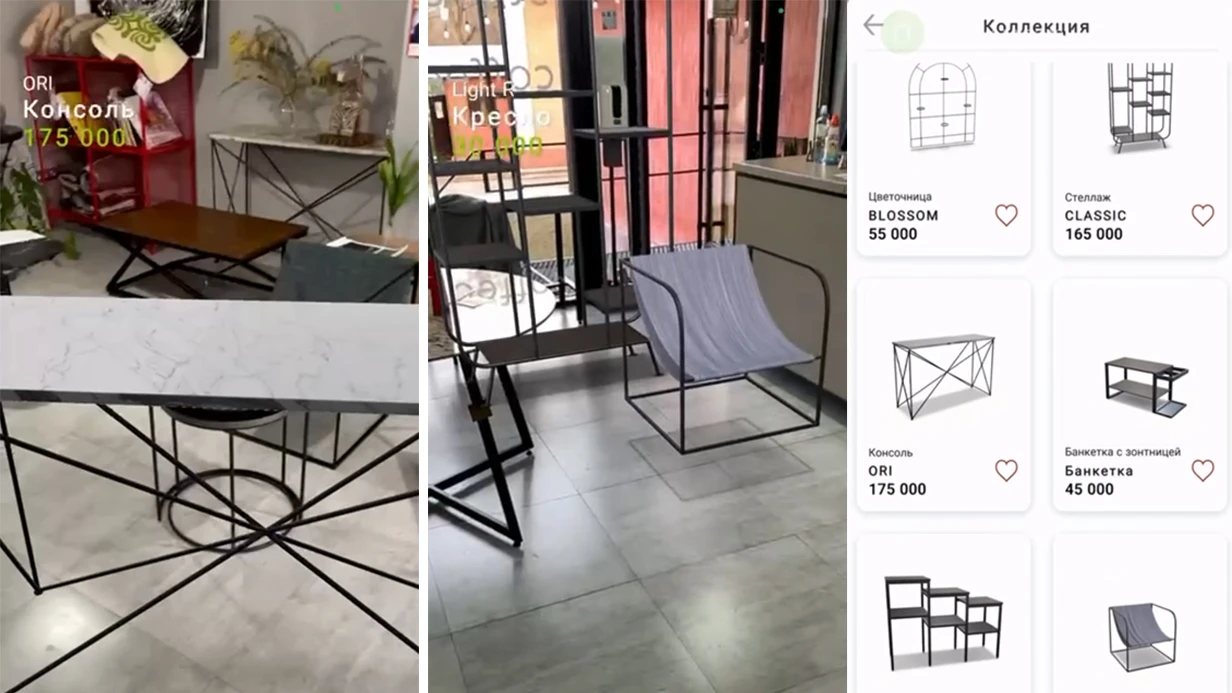
AR in the energy sector supplements the real picture with data: diagrams, readings, and instructions directly in the specialist's field of view.
This accelerates diagnostics, scheduled inspections, and repairs — reducing time spent searching for information and lowering the number of errors during equipment maintenance.
Digitalizing the energy sector with AR and VR turns knowledge from abstract documents into a working tool at every site.
We help energy companies navigate digitalization without experimenting with the production process: we design scenarios for your facilities, support implementation, and measure the effect. As a result, risks decrease, downtime shrinks, and personnel confidence grows.
You invest in technology that pays off through lower losses — that's exactly what you should expect from VR and AR implementation in the energy sector.
Why VR/AR Pay Off in Industry: Business Benefits
Personnel at energy facilities work with high-voltage equipment, gas, and chemicals — the price of a mistake is measured not in fines but in people's health and the reliability of supply.
Training newcomers at an operating facility is dangerous and slow, while classic briefings do not prepare them for emergencies.
VR simulators remove this contradiction: an employee practices emergency scenarios in a safe environment, and the company gets a predictable level of training without risks to production capacity.
The economics of such solutions are calculated within one training cycle. Virtual training grounds replace expensive physical test benches, reduce the time it takes to bring an employee up to speed, and lower the number of errors during equipment maintenance.
Our clients record up to half fewer regulation violations in the first months of personnel work — that's direct savings on repairs, downtime, and insurance claims.
Industrial safety becomes systematic: every employee goes through an equally complete scenario, including rare emergency situations that occur once in a decade in real life.
AR mode complements practice on site: a technician sees prompts for the sequence of operations directly on the equipment, reducing the dependence of results on human factors.
We have implemented such projects for grid companies using professional VR systems and the Unity platform. We support applications after launch: we update scenarios to new regulations, retrain personnel, and collect analytics on each employee's progress.
The payback of VR/AR in the energy sector is not a deferred effect but a measurable result within a year: lower injury rates, faster commissioning, higher discipline.
Calculate the cost of one incident or downtime at your facility — and compare it with the price of a virtual trainer. We will help you select the right format for the task: from a short scenario for a crew to a complete digital training ground.
VR/AR/MR Solution Formats for Energy Industry Tasks
There is no universal format for the energy sector — only a solution matched to a specific task delivers results. One thing is preparing an operator for an emergency shutdown; another is reducing repair time at a substation. That's why we first analyze the scenario and only then choose the technology.
| Format | For whom | What it provides |
|---|---|---|
| VR simulators | Operations personnel, dispatchers | Practicing actions in emergencies without risk to life or equipment. Skills are reinforced faster than by reading instructions. |
| AR instructions | Repair and service crews | Step-by-step prompts directly on the equipment: no need to flip through paper regulations. Fewer errors, shorter downtime. |
| MR solutions | Designers, engineers | A 3D digital model is overlaid onto the real object. Even before installation, you can see how new equipment will fit into the existing layout. |
Each format addresses a specific pain point: one shortens the time to full competence, another improves work safety, and a third accelerates approval of design decisions.
We don't start with "let's implement VR" — we start with a task audit. If the problem is a long briefing process, we'll suggest AR prompts. If you need to practice a rare emergency scenario, we'll build a VR simulator.
This approach is clear to the client: you pay for results, not for technology for technology's sake.
How Application Development Proceeds from Brief to Launch
Developing a VR application for the energy sector is a well-structured process where the client always understands what is happening and how much it costs. We don't hide details in a "black box": each stage produces a clear outcome, and you control timelines and budget. Below is your path from the first discussion to a working solution and post-launch support.
-
VR brief. We define goals: where the application will be used — training, occupational safety, equipment demonstration. We identify users and the tasks the solution must address.
-
Analytics and scenario. We study your facilities and regulations and prepare interaction scenarios. You receive a description of what an employee or client will see and do.
-
Design and estimate. Based on the scenario, we create a technical specification and break the work into clear stages with accurate timelines and cost. Changes are documented and agreed upon — no hidden extras.
-
Development. We build the application using professional equipment and proven tools. We show intermediate versions so you can make changes before the final build.
-
Testing and refinement. We verify the product in real conditions — on your equipment and with your scenarios. We eliminate errors and bring the solution to stable operation.
-
VR application launch. We hand over the project with documentation, install it on devices, and train employees. You get a working tool, not just files.
-
VR project support. We stay in touch: update content, add modules, adapt to changes in processes. Technical support is documented in the contract.
What Is Included in Delivery and When Project Stages Are Handed Over
A client in the energy sector values predictability: it's important to know in advance what the final solution will include and at what stage you will receive it.
We structure the work so that each step ends with the handover of a measurable result — you don't wait for the finale blindly; you see progress and can influence the product.
Here's what's included in the delivery of a VR/AR solution:
- Working prototype after the first stage — it shows the simulator's logic, interface, and basic scenarios. This is the basis for feedback and adjustments before full development begins.
- Full version of the application, adapted to your tasks: emergency response practice, regulations, and features of specific equipment.
- VR project documentation: user guide, scenario descriptions, launch and administration instructions — everything needed for the operations team to work without our constant support.
- Personnel training — we conduct sessions for instructors and operators. They master the system and then pass the knowledge on to other employees independently.
- Source files and modification rights — you can develop the product in-house or with any contractor without being locked into a dependency on us.
- Post-launch technical support: we answer questions, resolve failures, and help update content for new regulations.
Timelines are fixed in the contract. After the brief, you receive a project plan and a schedule of stage handovers. Typically, the first prototype appears within 2–3 weeks, and the full package with documentation and training is delivered within 2–3 months. You personally accept each stage, sign the acceptance certificate, and plan the rollout.
This approach eliminates missed deadlines and misunderstanding: you always know where the project stands and what you will receive next.
Case Study: How We Helped an Energy Company Reduce Downtime
For a major energy holding called «Volgaenergo», we developed a VR simulator for training operations personnel in emergency response.
Before implementation, the company faced a problem typical of the industry: real-life drills were expensive and time-consuming, and mistakes by newcomers on live equipment led to emergency downtime and lost output.
How we structured the project
First, together with chief engineers, we examined the most common scenarios: a short circuit at a substation, automation failure, and errors during switching operations.
Based on these scenarios, we created virtual spaces that fully replicate the real layout and operating logic of the equipment.
Employees train in a safe environment: they can make mistakes without consequences, and the system prompts the correct sequence of actions and tracks each operator's progress.
What changed for the business
After three months of using the simulator, the time for bringing new employees up to speed decreased by 35%. The number of errors during emergency response dropped by half, and the average response time to an emergency went from 12 down to 8 minutes.
Most importantly, equipment downtime caused by personnel decreased by 20%, which directly affected the company's revenue.
Operations managers noted that personnel became more confident in real conditions. The simulator is also used for annual knowledge checks — this replaced part of the stationary exams and freed engineers for current tasks.
The successful pilot led to a repeat order: we are now expanding scenarios for other types of equipment and preparing crews for seasonal risks.
How to Choose the VR/AR Format for Your Task?
Choosing a VR/AR format is not a matter of fashion but of business objectives. VR fully immerses an employee in a virtual environment — ideal for practicing emergency situations and hazardous operations.
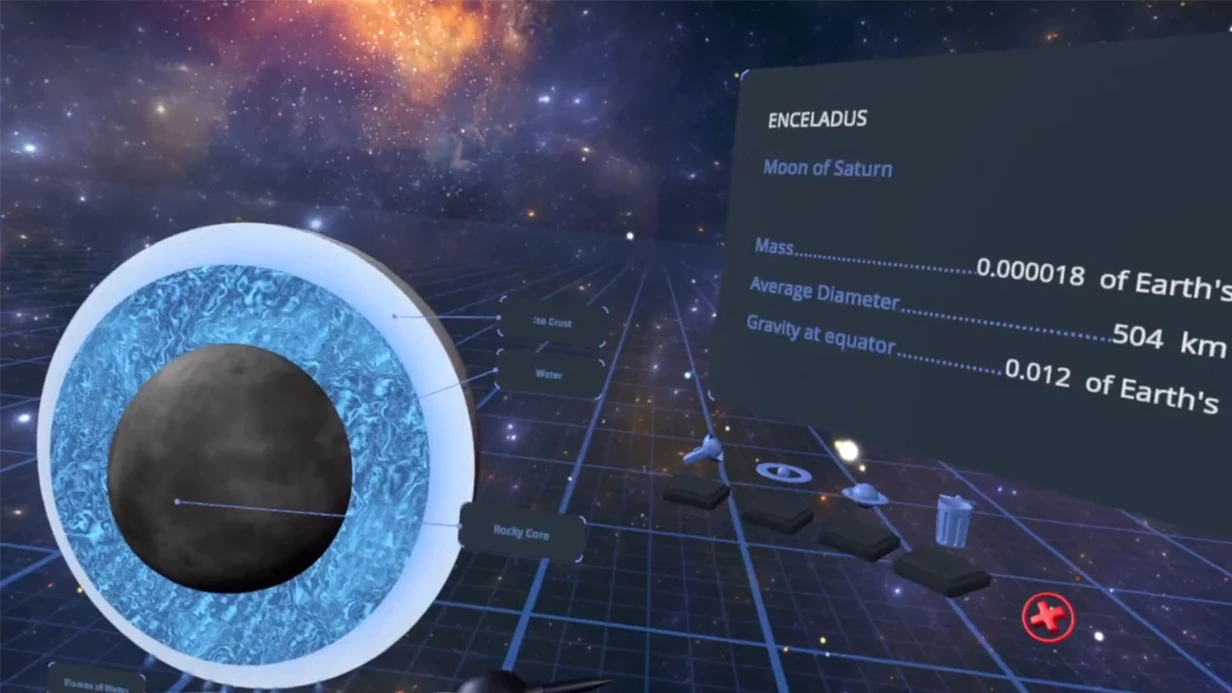
AR overlays digital instructions onto a real object — it helps with repairs and commissioning. MR combines both approaches: virtual models interact with real equipment.
How to choose VR? Start with the question: "What should an employee be able to do after the interaction?" If you need to practice a rare emergency scenario, choose VR. If you need step-by-step prompts right on the equipment, choose AR.
For engineers working with layouts and prototypes, MR is more effective. To avoid mistakes, select the VR format based on three parameters: scenario complexity, number of trainees, and safety requirements.
| Format | For what tasks | What it gives the client |
|---|---|---|
| VR | Full immersion: training for emergency response, working at hazardous sites | Safe skills practice without risk to personnel or equipment |
| AR | Overlaying instructions and data onto a real object | Reduced repair time and errors, faster onboarding of new employees |
| MR | Interaction of virtual models with the real environment | Visual verification of design decisions, collaborative design |
The main thing when choosing is the VR project calculation. Don't count the development cost — count the savings: how much time and money you lose with each employee error.
According to a PwC study, training in a virtual environment is four times faster than in a classroom, and knowledge retention is higher. For the energy sector this is especially important: one wrong step at a substation can mean an outage for an entire district.
We will help with the calculation for your scenarios: together we will identify a format that pays off in the first month, and fix timelines and budget. Write to us — we will respond within an hour.
Frequently Asked Questions About VR/AR Implementation in Energy
Before ordering a VR/AR project for the energy sector, managers ask similar questions. We've collected the most common ones — about equipment reliability, on-site safety, and payback. Below are honest answers without tech jargon.
Does VR equipment really hold up to production conditions?
Yes. We select headsets and controllers in industrial-grade versions — they are designed for dust, temperature fluctuations, and heavy use.
Employees themselves don't touch fragile electronics: they typically work with protective covers, and replacement parts can be swapped out quickly.
Is it dangerous to use VR near real equipment?
We design scenarios so that the employee does not come into contact with real machinery. Training takes place in a separate zone or in an instruction-overlay mode — when a worker sees prompts overlaid on the real object but does not leave a safe position. Risks are ruled out at the planning stage.
What return on investment does VR/AR provide in the energy sector?
The project pays off by reducing training time, decreasing errors, and cutting downtime. For example, one briefing on complex switching can take fifteen minutes instead of two hours, and the number of errors during skills practice drops significantly.
We calculate the potential for your scenario before we start so you can see the economics of the solution at the brief stage.
What if employees don't accept the new technology?
We integrate VR/AR into already familiar processes: briefings, regulations, exams. Training is gradual, and the interface adapts to the staff's level. That's why employees quickly see the benefit — less paper routine and clear prompts at work.
Next Step: Get a Consultation and Project Estimate
To get a consultation and a project estimate, you don't need to fill out long briefs or wait weeks for a response. Just describe the task in your own words — and we'll prepare a transparent proposal: timelines, scope of work, budget, and the result you'll receive at each stage.
What to do now — 5 minutes
- Describe the scenario: where you plan to use VR/AR — personnel training, safety briefings, a digital twin of the equipment, or something else.
- Specify the scale: how many facilities, users, and workstations are planned.
- Attach any available materials — drawings, 3D models, regulations, existing training programs, if you have them.
- Set a timeline target: when the project should be launched and whether there is a hard deadline.
- Submit a request on the website or message us directly — we'll respond within a business day and ask clarifying questions if needed.
Based on this data, we'll prepare a cost estimate for VR development and a consultation: we'll explain which formats fit your specific task, what can be done in stages, and what requires a full cycle.
If you need enterprise security considerations and integration with your IT infrastructure, we'll discuss that separately.
Usually, preparing a proposal takes one business day. You'll receive a clear plan: what will be implemented, how we'll deploy it, how we'll train employees, and how we'll provide support after launch. Start now — and we'll take on the entire development cycle, from concept to handover to operation.