

Why pharma loses clients without VR solutions
The pharmaceutical market is oversaturated: dozens of companies offer similar drugs, and pharmacy chains fight for every visitor. A customer chooses not just a medicine but care, expertise, and a modern approach.
Those who stay within classic consultations and brochures quickly lose to tech-savvy competitors — they manage to show the product visually, engage the audience, and be remembered.
This is especially visible in pharmacist training. Traditional lectures and presentations deliver low engagement, which means shallow knowledge. An incompetent consultation leads to a loss of buyer trust and a return to a more “advanced” pharmacy.
While one company uses ordinary slides, another already gives employees an interactive experience that is absorbed far more deeply.
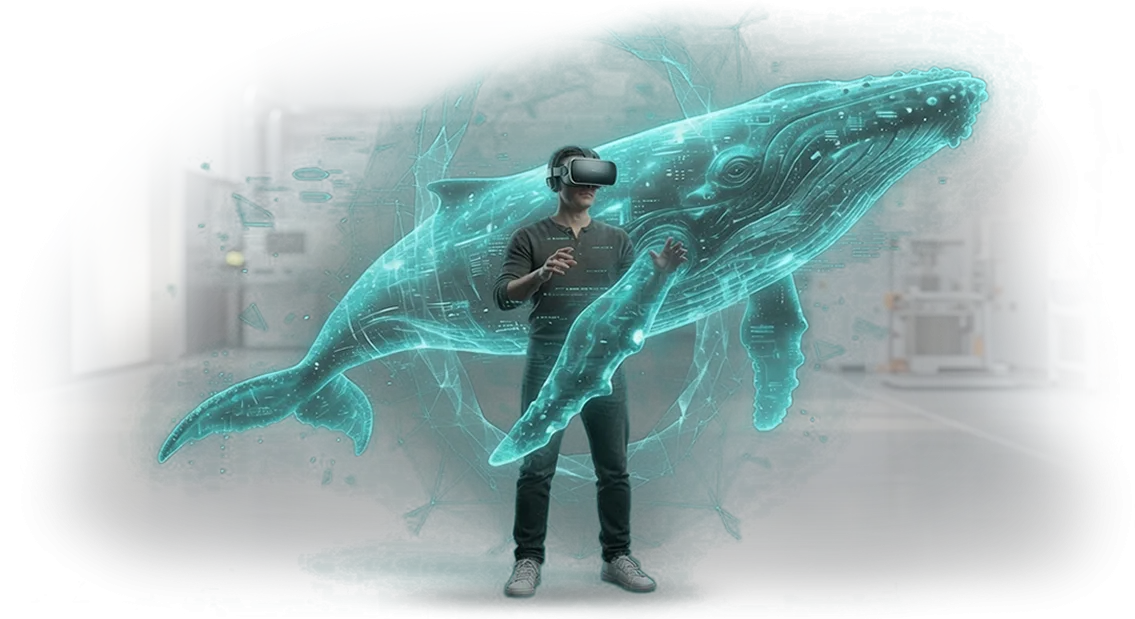
Virtual reality in medicine is no longer an experiment — it is a working tool for demonstrating drug mechanisms of action, practicing skills, and communicating with patients. Manufacturers that use VR in training doctors and pharmacists bring products to market faster.
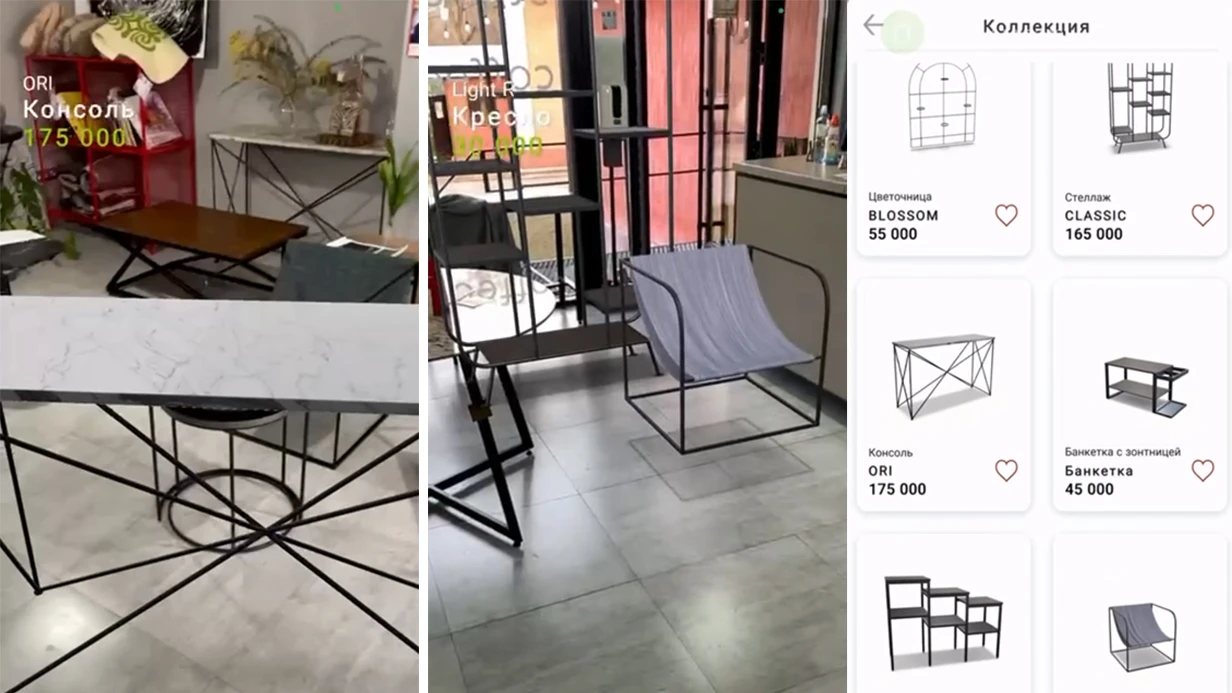
Pharmacies that use AR for interactive product descriptions attract a younger audience and increase the average check. Those who ignore technology lose face at exhibitions and in negotiations with chains.
The absence of virtual reality directly reduces the client base. Doctors do not see advantages over analogues, patients do not receive a visual explanation, and partners choose suppliers with modern presentations.
A pharma company without VR solutions is perceived as outdated, even if the product itself is superior to competitors. This is not a question of prestige but of survival in a highly competitive market.
We close this gap: we create VR/AR solutions that help train pharmacists, engage doctors, and increase brand awareness. Our projects already work in the medical field and deliver measurable results — from conversion growth to sustained interest in the product.
Virtual reality for pharma is not an expensive toy but an investment in customer trust and an advantage over competitors.
What a VR/AR application gives your company
Pharma is a field where a complex product needs to be explained quickly and accurately. A doctor has no time to dig through long presentations, and a patient finds it hard to remember instructions.
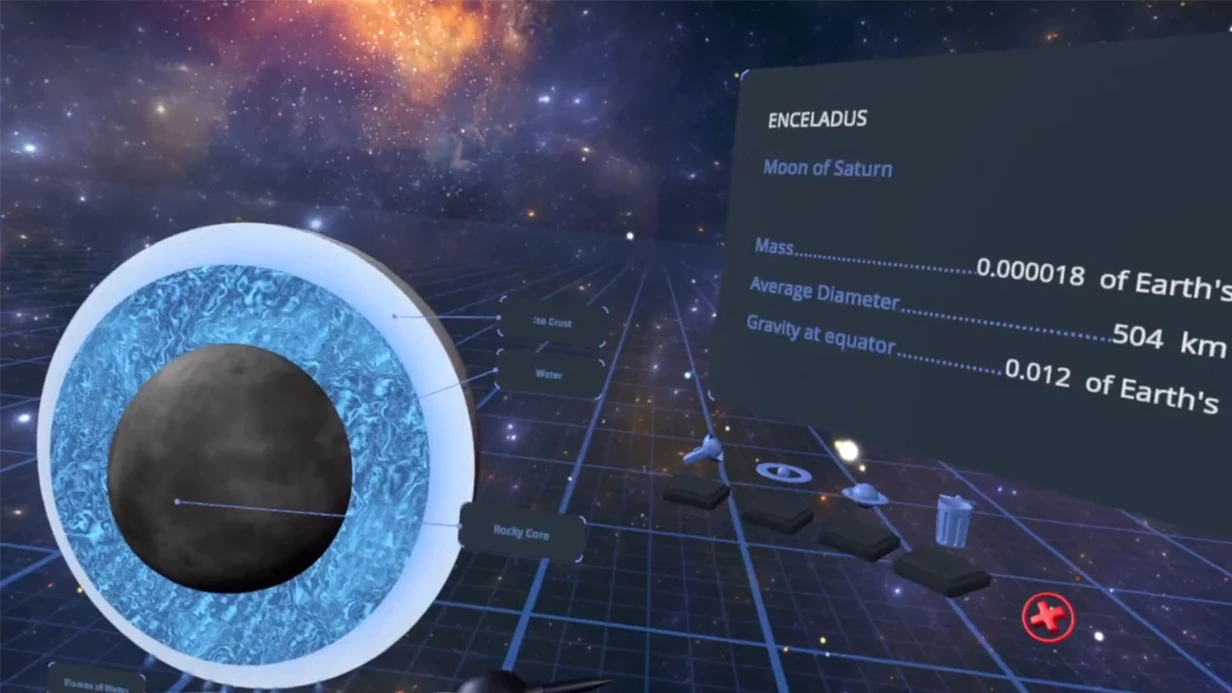
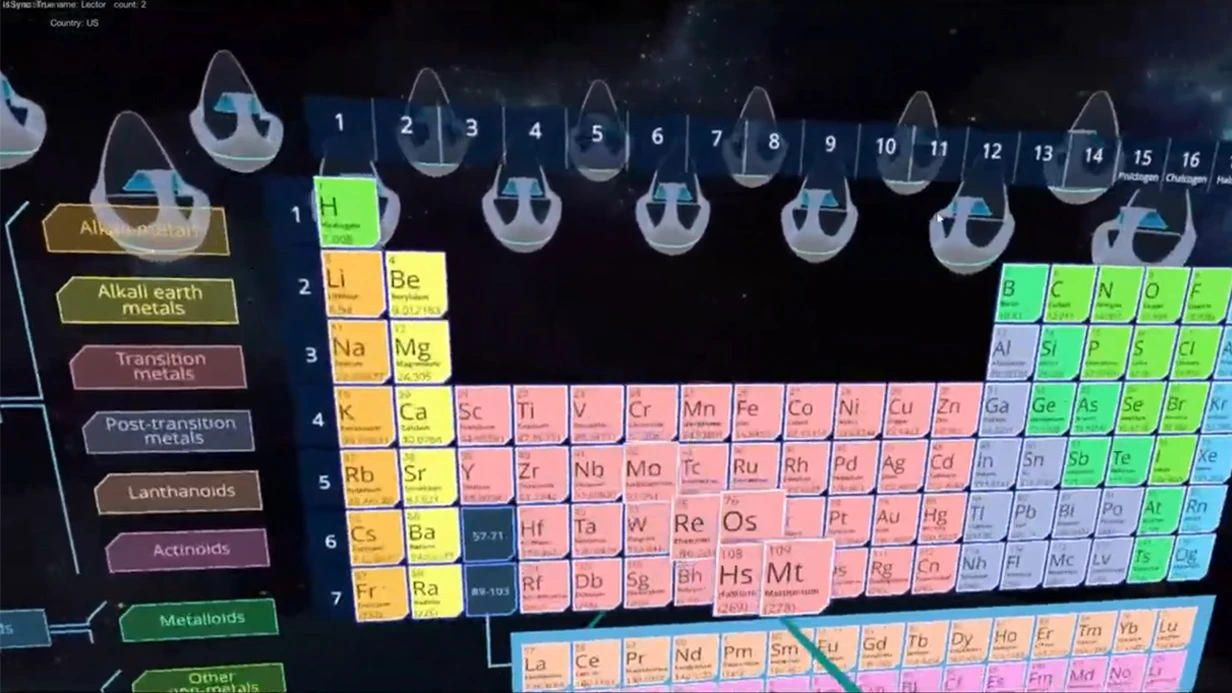
A VR/AR application turns three-dimensional molecules, mechanisms of action, and drug effects into a clear interactive picture — something understood at first glance.
This leads directly to higher sales. Medical representatives get a tool that engages the doctor in dialogue and reduces explanation time. Instead of a folder of studies — a volumetric model that can be examined from all sides.
Such a demonstration is better remembered, which means a higher probability of discussing the drug during appointments.
Employee training also accelerates. A new specialist masters the product line in a few sessions, and an experienced team is ready faster to launch a new product on the market. This saves weeks of working time and noticeably reduces onboarding costs.
We build such applications on the Unity platform — the industry standard for interactive 3D graphics, a guarantee of stable operation on tablets, smartphones, and VR headsets your team already has.
The project is easy to update and adapt for new drugs and markets without rebuilding the entire system.
Finally, loyalty and brand awareness. At conferences and in clinic lobbies, an AR/VR zone draws a queue, becomes a news hook, and a source of live photos for social media.
Every visitor turns into a brand ambassador, and the company gains the image of an innovative leader in the eyes of doctors and patients.
The result: more prescriptions, faster product launches, savings on training, and warm client contact. All of this is a measurable effect that pays off within the first months of the application’s operation.
VR/AR formats for pharma: from training to presentations
Pharma works with products that cannot be shown “on the fingers”: composition, mechanism of action, production processes. When this is explained in words and flat pictures, the doctor or distributor fills in the gaps themselves, which means precision and trust are lost.
VR and AR bring the dialogue into a visual space: here you can take apart a molecule, look inside an installation, or walk through cleanrooms without wearing a sterile suit.
However, each format solves its own task. To avoid overpaying for unnecessary options, it is worth choosing the right scenario from the start. Below are the key formats and their impact on business.
| Format | For whom | What it gives the client |
|---|---|---|
| VR training | Medical representatives, new staff, field teams | A uniform standard of knowledge in a short time, practice of procedures and handling objections without risk to real negotiations |
| AR product presentation | Doctors, purchasers, conference attendees | Visual demonstration of a drug or equipment, increased engagement and time at the booth, brand memorability |
| Virtual tour | Partners, investors, auditors | A tour of production or a laboratory without a visit, lowering barriers to inspections and building trust |
| Interactive catalogue | Sales managers, pharmacy chains | Instant access to current materials, client-specific personalization, savings on printed materials |
The choice of format depends on where the bottleneck is: medical representatives do not have time to train newcomers — take a VR simulator; at an exhibition the product gets lost among competitors — launch an AR presentation; partners find it hard to visit production — make a virtual tour.
In most projects, one solution is enough at the start, and after measuring the results it is supplemented with an adjacent format.
We develop applications on Unity using professional equipment and proven tools — this ensures stable operation on tablets, headsets, and smartphones.
At the first stage, we help you choose the format for free: we analyze your task, audience, and usage scenario, then we fix the budget and timeline. You get not an “app for the sake of technology” but a tool that solves a measurable business problem.
How a VR/AR project is developed: stages and timelines
For pharmaceutical companies, a VR/AR project is not entertainment but a working tool: employee training, drug presentations, skill practice. We have structured the process so you see the result at every stage and understand what timelines and costs lie ahead.
The process is maximally transparent — you know what is happening and what you will receive at the end.
-
Brief and task analysis. We study who the application is for and what problem it solves: training, presentations, or sales. We capture the requirements so we do not have to redo the product after the first tests. This allows us to calculate timelines accurately before development starts.
-
Prototype and work plan. We show scenarios, controls, and voice prompts. You make edits to the layout, and we approve the schedule — how long each step will take and what results you will get. This way we cut everything unnecessary at the start and keep the focus on the main task.
-
Development of a working version. We build the application on the professional engine Unity — this ensures stable operation on headsets, tablets, and smartphones. Your employees use the product without delays or technical failures.
-
Intermediate approvals. Every 1–2 weeks we send a working version. You review it with colleagues and leave comments — edits are made immediately, not at the end when they cost more. This way we jointly control quality, and there are no surprises in the final version.
-
Testing and launch. We test on the real devices your employees use. We help with deployment: set up access, connect analytics, and train the team.
-
Support and development. We stay in touch: update content, add new drugs and scenarios. You always know who to call if something goes wrong.
The whole process takes from three weeks to two months — depending on complexity and the number of scenarios. The result: an application that employees start using within a few weeks of the start.
What is included in the delivery of a VR/AR solution
When it comes to implementing VR/AR in pharma, it is important to understand what you receive at the end of the project. This is not an abstract “development” but a concrete set of artifacts your team can start working with immediately after handover.
The standard delivery package includes:
- A ready-to-use application, configured for your task and equipment: scenarios for staff training, presentations, or product work.
- Source code and project materials — you remain the full owner of the solution and can develop it with us or with any other team.
- Documentation: instructions for administrators and users, scenario descriptions, operating procedures, and cheat sheets.
- Staff training: practical sessions for your employees so they can confidently use the system without constant support from our side.
- Technical support and launch guarantee: we help with installation, answer questions, and support the first weeks of operation.
- Methodological materials — if the solution is for training, you will be able to conduct sessions for your own employees or clients independently.
In the end, you get a transparent and manageable product, not a “black box.” We are interested in long-term results, so we hand over knowledge and documentation, not just code. Contact us — we will tell you how we adapt the delivery package to your specific business task.
Case study: how a VR simulator helped pharma
In pharmaceuticals, the cost of error is high: a wrongly assembled order, a mixed-up drug, or a broken sequence of operations — this is not just a fine but a risk to the patient and to reputation.
Ordinary training of a newcomer takes weeks and requires a mentor who is distracted from their own tasks. We close this with a VR simulator that moves the training process into a safe virtual environment.
Case study: developing a VR simulator for a pharmaceutical company
We were approached by the pharmaceutical distributor PharmLogistik — they needed to reduce the onboarding time for warehouse and pharmacy warehouse staff. In real conditions, a trainee is afraid of making mistakes, so they act slowly.
We developed a VR simulator where the employee practices receiving, storing, and shipping drugs: they see the labeling, scan barcodes, and assemble orders from electronic lists — all without consequences in the event of an error.
After three weeks of use, the metrics changed noticeably: the training time for a new employee fell by 40%, and the number of picking errors dropped by a third.
The warehouse manager noted that trainees started real work with more confidence and did not require constant supervision.
Most importantly, the company calculated the return on investment: the cost of developing the VR simulator was recovered in five months thanks to reduced defects and faster employee ramp-up to full capacity.
Why this works
VR training works because it replicates the real scenario down to the smallest detail, and mistakes do not lead to losses.
The employee learns at their own pace, and the manager sees objective statistics: how many operations were completed, where difficulties arise, and who needs additional practice. This makes training predictable and adaptable to each individual.
For pharma, this format is especially beneficial: standard briefings provide no practice, while training on real products is dangerous and expensive. A VR simulator replaces them without loss of quality.
If you want the same effect — we are ready to develop a pilot scenario for your task within a few weeks.
How to choose the right VR/AR format for your task?
There is no universal VR/AR solution for pharma — that is the main catch. The same format may work perfectly for training medical representatives and be useless at an exhibition where doctors pass a booth in 30 seconds.
So it is better to start not from a trendy technology but from a specific business task: what should a person do after interacting with the application — remember the drug’s mechanism of action, master a new technique, or make a purchasing decision?
Pharma imposes special requirements: high standards of information accuracy, the need to control dosages and contraindications, and work with complex molecular structures.
This is exactly where VR/AR delivers measurable results: it reduces training time, improves memorability, and lowers the risk of errors when demonstrating drugs.
But to get this effect, you need to choose a format for your audience and budget — and this is no longer a technical task but a strategic one.
What do we look at when selecting a solution? First, the usage scenario. If it is regular training of 200 medical representatives in different cities, virtual reality connected to a learning management system is optimal.
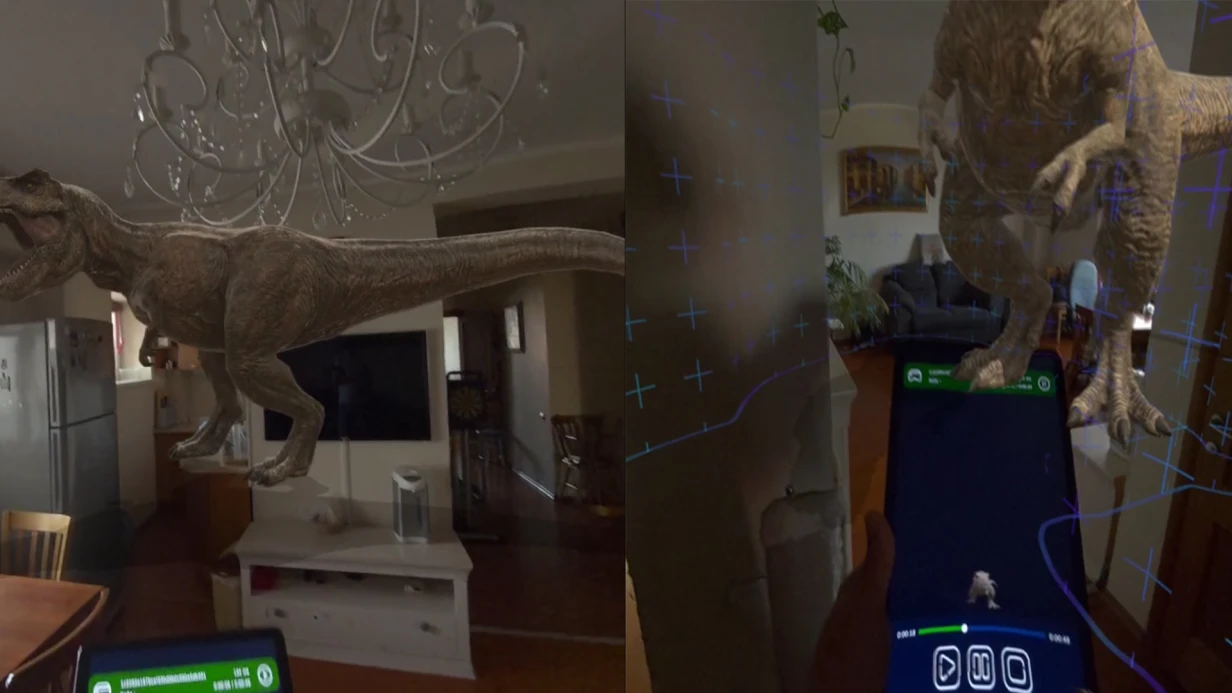
If it is demonstrating a drug at a conference or in a pharmacy, augmented reality is a better fit: a doctor points a smartphone camera at the packaging and sees a 3D model of the active ingredient’s action without special equipment.
We also consider the device on which the application will run: the company’s own headsets or employees’ personal smartphones — these mean different budgets and logistics.
Second, the specific requirements of the industry. We help calculate how many employees will use the solution at the same time, whether versions in foreign languages are needed, and whether integration with your CRM or Learning Management System platform is required.
Implementation timelines and total cost of ownership depend on this. It is important to understand: VR/AR is not buying a free app from a catalogue but an investment in efficiency, and it is calculated against your business metrics.
A common mistake is ordering a large project at once, without testing the hypothesis. We recommend starting with a pilot version on one drug or one training program.
This way you get a quick result for internal presentation, collect user feedback, and only then scale the solution.
In 10+ years of work, we have completed dozens of such projects and know that a phased approach saves budget and guarantees you do not overpay for unnecessary features. Come with a task — we will propose 2-3 suitable formats calculated for your scenario.
Frequently asked questions about VR/AR in pharma
Before launching virtual and augmented reality solutions in pharma, clients have the same concerns: will deadlines slip, will the investment justify the budget, how safe is it to use technology when working with doctors and patients. We answer the main questions — so you understand what you get and what you can expect.
How long does application development take?
A typical cycle is from one and a half to three months, depending on scenario complexity. The first week is spent on requirements gathering and concept approval, then we agree on the scenario and interface, and then we start production.
If you need to show a result at an upcoming conference, we can prepare a working sample faster by cutting some secondary features.
What determines the cost, and is there a fixed price?
The cost consists of three parts: scenario and design, programming, testing, and support. We do not name a price before studying your tasks, target audience, and usage format. After the initial consultation, you receive a transparent estimate with stages and timelines.
Many pharma companies start with one training scenario and then expand the solution to other products.
How do you ensure safety and compliance?
We have several projects for the pharma industry behind us, so we take into account data handling requirements and the client’s internal regulations. Data is placed on your infrastructure or in a secure perimeter, and access is configured by roles. Before launch, we test with real users and hand over instructions to administrators.
What hardware do your solutions work with?
We configure scenarios for popular devices — from tablets to professional augmented reality glasses. In most cases, the equipment that doctors or medical representatives already have is suitable.
If the hardware pool needs upgrading, we will help you choose an appropriate model without unnecessary overpayment.
Discuss your VR/AR task with an engineer
You see how VR/AR reduces training time for pharma staff and makes drug presentations visual, but you do not know where to start or what it will cost.
To get an accurate estimate, you do not need to study technical details — you just need to discuss the task with an engineer who speaks the language of business.
We provide a free consultation and cost calculation within 2–3 business days. The development request takes 10 minutes, and after it you get a path from idea to working prototype.
- You submit a development request via the form or through the contacts on the website.
- An engineer clarifies the goal: employee training, doctor demonstrations, or a marketing campaign.
- We analyze the task and propose a suitable format: simulator, 3D catalogue, or interactive stand.
- We prepare a cost estimate in two options — minimal and extended.
- We agree on timelines and a work plan; you get a fixed estimate.
As a result, in one call you receive:
- A clear understanding of whether VR/AR solves your business task.
- Recommendations on the format and scenario for pharma.
- Cost and timeline calculations without hidden work.
- Examples of similar projects and their results.
- Direct engineer contacts for quick questions.
Submit a consultation request — it is free and non-binding. In 2–3 days you will have an action plan and numbers for your budget.