

Hospitality and Tourism Without Emotion: Guests Leave for Those Who Surprise
Guests no longer choose solely by location and price — they choose experiences. Ordinary service and standard offerings are forgettable: there is no reason to return, no reason to tell friends.
If a hotel or tour does not surprise, the client goes to whoever offers a new experience — and most often stays there.
Virtual tours solve this problem before the guest even arrives. A guest can inspect the room, restaurant, grounds, and surroundings without leaving home — the fear of the unknown disappears, and booking conversion rises.
VR for hotels works on-site as well: put on a headset at the front desk — and the guest has already "walked through" the spa area or seen what a room with a sea view looks like. This turns waiting time into entertainment.
Interactive tours change the format of getting acquainted with a place. Instead of passively listening to "look to the right," the guest becomes a participant: choosing the route themselves, examining details, controlling the narrative.
Such tours are remembered as a whole — and people talk about them. Service uniqueness becomes the main reason for recommendations, and word-of-mouth in tourism works stronger than any advertising.
We help hotels, museums, and travel companies take this step: we develop virtual tours, VR excursions, and interactive scenarios tailored to your goals. Guests get emotions they want to relive, and you get an advantage that cannot be copied by price.
What You Gain from Implementing VR and AR in Your Business
Guests do not return to a hotel — they return to the experiences it gave them. VR and AR turn an ordinary stay or excursion into a story worth retelling and reliving.
For business, this is not entertainment but a tool that directly influences a guest's choice, willingness to pay, and likelihood of returning.
Benefit 1. Bookings Grow — Guests Choose Emotions
When a person compares 5 similar hotels, what decides is not the price but what they have already "lived" in their heart. A VR tour of a room or a panorama of the view from the balcony gives the future guest exactly that — the feeling of already being there.
Uncertainty disappears, the fear of "what if I don't like it" fades, and the finger presses "book" on its own.
Guests who have "visited" the hotel in advance arrive with positive expectations and are less often disappointed — which relieves staff workload and reduces negative reviews.
Benefit 2. Loyalty and Word-of-Mouth Instead of Expensive Advertising
Innovations are memorable. An AR quest for children in the lobby, a virtual artifact hunt on the grounds, a branded character filter for Stories — this is what guests show their friends. Every such post is a free recommendation to people from your target audience.
And when a guest takes home not just a souvenir but an AR photo as a keepsake, the emotional connection to the brand is cemented. They return on their own and recommend you to others. As a result, you see growth in direct bookings without aggregator commissions.
Benefit 3. Additional Sales Without a Single Upsell
VR and AR gently show the guest what else you have.
A virtual preview of a spa treatment at the front desk, augmented reality over a restaurant display case, or a three-dimensional map highlighting villas and beaches — all of this engages the guest and increases the average check.
The guest approaches and asks on their own because they have already seen how it looks and what it feels like. Sales become a natural part of the experience, not a pushy service. This is how technology works for your profit every day.
We have already launched such projects for hotel complexes and tourist routes — for example, at Mriya Resort & SPA guests use AR scenarios for navigation and entertainment, which increases their engagement with the hotel's infrastructure. Technology here is merely a tool, and your benefit is measured in real emotions and sales figures.
VR/AR Solution Formats for Hotels, Restaurants, and Travel Companies
A guest makes a booking decision in a matter of minutes, and at that moment they need not descriptions but a clear visual. A virtual tour of a room or an AR guide around the grounds removes doubts and shortens the path to booking.
For a hotel, restaurant, or travel company, this is an opportunity to showcase your product before the visit, stand out from competitors, and increase conversion.
Augmented reality formats in tourism and virtual excursions for hotels solve different tasks: some attract new guests, others boost loyalty and average check. Below are the main formats and the benefit each brings to business.
| Format | Who It's For | What It Gives the Client |
|---|---|---|
| Virtual tour of rooms and locations | Hotels, resorts, guest houses | The guest sees the room before booking — fewer doubts, more direct inquiries, less load on the sales department |
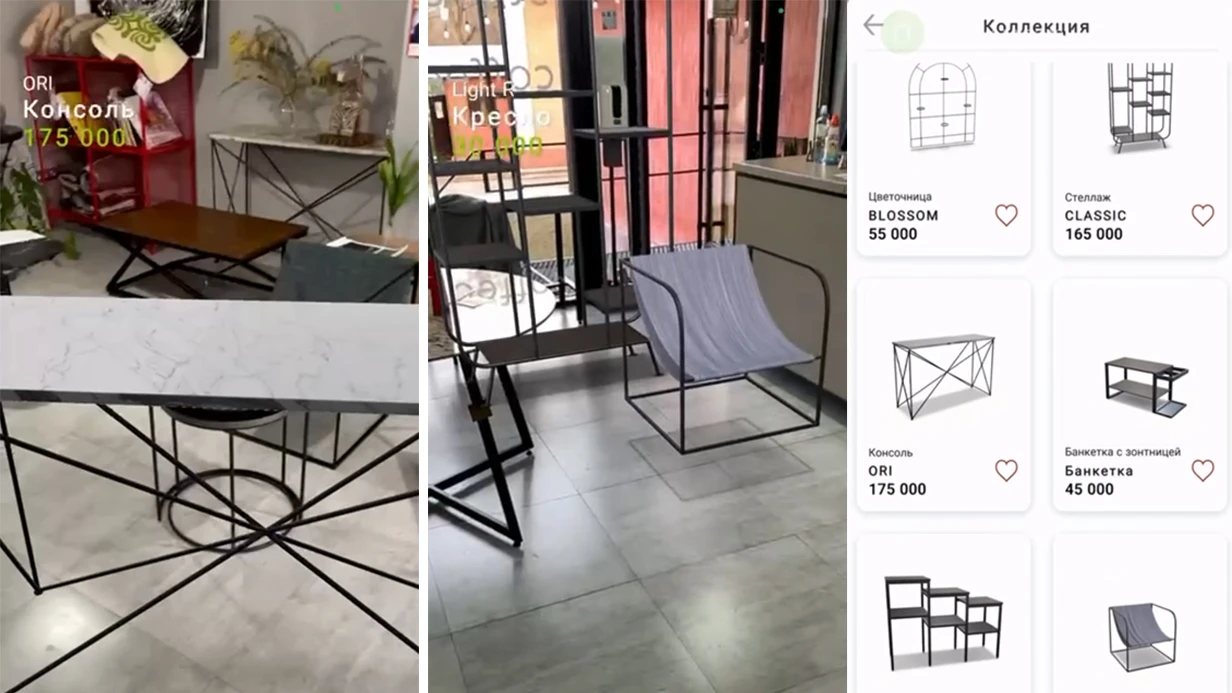
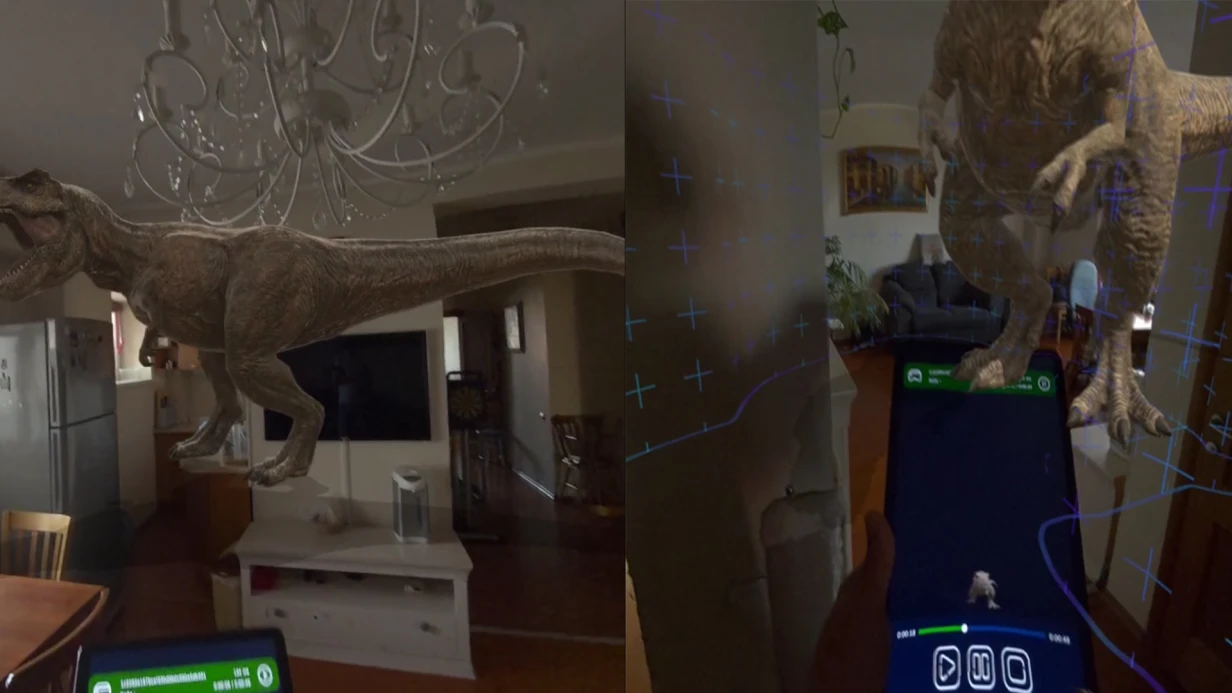
| AR guide around the grounds | Hotels, museums, tour operators | The visitor independently explores the space via smartphone: history, objects, navigation — without staff involvement |
| 3D space configurator | Restaurants, banquet halls, coworking spaces | The client chooses seating or interior online — faster approvals and higher booking probability |
| Interactive excursion catalog | Travel companies, agencies | The client explores a route in 360° format and makes a choice without calling a manager |
| VR staff training | Hotel and restaurant chains | New employees practice service standards without stress for guests — service quality grows |
Whichever format fits your task, we will develop it turnkey on Unity — this ensures stable performance on any device, from smartphones to VR headsets. Let's discuss your task and propose a solution that will pay off.
How We Create VR Projects for Hospitality and Tourism: 7 Steps
A clear process is half the success. We have broken the work into seven steps: you always see where the project stands, what comes next, and when you will get the result. No surprises — only agreed decisions and clear timelines.
-
Brief and immersion. We discuss the goal: showcase a hotel, conduct an excursion, keep a guest in a restaurant. We define the audience and expected result so every step works toward your benefit.
-
Scenario and prototype. We build the scenario the user will see and show an interactive prototype. It can be "touched" before full-scale development, helping you quickly understand whether the concept fits.
-
Approval. You receive a clear document: scenario, visual style, screen composition. Revisions at this stage are inexpensive and do not break deadlines.
-
Development. We create graphics, assemble scenes, and configure logic. We work on a refined professional platform — this speeds up the project and makes the result stable.
-
Testing. We check the project on real devices: phones, tablets, and VR headsets that your guests use. We fix issues before launch, not in the middle of an event.
-
Launch. We publish the application in stores or set up equipment on-site. We prepare instructions for staff and support the first day.
-
Support. We stay in touch: updating content, adding scenarios, and monitoring compatibility with new devices. The project keeps delivering value after launch.
What's Included in the VR/AR Application Delivery Package
We hand over the project in full so your team can use the application without constant dependence on the developer. The package includes everything needed to launch, maintain, and grow the VR/AR solution independently — from source code to staff training.
- Source code and all project assets. You own the solution, can transfer it to another contractor, make changes, or scale it to new locations.
- Administrator interface. Manage content without a programmer: change descriptions, photos, videos, and scenarios directly from a convenient panel.
- Clear staff instructions. Step-by-step guides for launch, setup, and daily operation — employees get up to speed quickly.
- Training for your team. We conduct sessions with administrators and frontline staff so they confidently welcome guests and help them use the application.
- Warranty on the VR/AR application. We fix errors and support the project free of charge throughout the entire warranty period.
- Updates and improvements. We regularly adapt the application to new tasks — changing scenarios, adding locations, and improving the user experience.
- Test documentation and reports. You see which scenarios the solution was verified on and how it behaves in real conditions — no surprises on launch day.
In the end, you get not a "black box" but a manageable asset that keeps working for your business after project delivery. Everything needed for launch and growth is already in the package — all that remains is to use it.
Case Study: How We Increased Hotel Sales with a Virtual Tour
We received a task from a chain of country hotels: guests browsed the website but postponed booking. The main reason — they could not see with their own eyes what the rooms, grounds, and views from the windows looked like. Photos did not give the full feeling, and doubts killed conversion.
We proposed a virtual tour that lets guests "walk through" the room, step out onto the terrace, inspect the pool, and stroll around the grounds before pressing the booking button.
We also added an AR mode for smartphones: pointing the camera at the hotel map shows a three-dimensional model of the buildings and routes to the restaurant or spa.
The results were noticeable within the first month. The share of guests who proceed to booking after viewing the tour grew by 37%. Time spent on the hotel page tripled, and repeat orders from those who had already visited came in 20% more often.
Hotel administrators note that guests arrive already familiar with the grounds and call less often with clarifying questions.
Why It Worked
The virtual tour removes the client's main fear — "the unknown." The guest sees real proportions and details, so they trust the hotel before arriving. For bookings, this solves the task better than any description: the person is already there mentally.
What the Client Got
- Guest confidence when choosing a room and higher booking conversion.
- Reduced admin workload thanks to fewer clarifying calls.
- A ready-made tool for social media and advertising — the tour is shared and used in mailings.
We are now scaling this approach to other hospitality properties: hotels, glamping sites, and recreation centers. If your business depends on how quickly a guest decides to book, a VR tour works as one of the strongest arguments.
Answers to Common Doubts About Implementing VR/AR
Guests remember emotions, not interfaces.
That is why, when choosing VR/AR for a hotel, restaurant, or tourist route, the doubts are usually not about the beauty of the idea but about its reliability: what if the technology doesn't catch on, turns out expensive, or fails in the middle of a banquet. Below, we examine these fears in detail — and show how we address them at the design stage.
Guest Response: What If Nobody Is Interested?
VR and AR have already become a familiar format of entertainment and navigation in tourist locations — from museums to hotels. New technology works like a magnet: guests approach on their own, take photos, and share their impressions.
What seemed like an innovation yesterday is becoming your competitive advantage today — and people talk about it.
Built-in session analytics shows which scenarios are in demand and which need refinement. You are not guessing — you see the audience's reaction and adapt the format to your visitor demographic in time.
Is it expensive — and when will it pay off?
The cost depends on scale: one AR zone or a full VR tour of a hotel is a different budget scope. But in both cases, the project pays off through a higher average check, longer guest stay, and a flow of new clients who come to "try that thing."
We prepare a transparent cost estimate before work begins, with every stage itemized. After launch, we help measure the business impact: how many guests used the scenario and how it affected revenue.
What if the application breaks down in the middle of an event?
Any technology requires attention, and we account for that. We deliver the project with clear instructions, train staff in basic operations, and stay in touch after launch: setup, maintenance, and updates are included in the support package.
For critical events, a backup scenario — a "Plan B" — is provided so your guests never notice a technical pause. In years of work, we have never had a case where VR/AR let a client down on an important day.
Does it include staff training and the delivery package?
Yes. This is not just an application — it is a turnkey solution. Included: equipment setup, a staff interface, and brief training for your team. Employees will be able to launch scenarios, change content, and handle common situations without calling a developer.
All documentation is written in plain language, not technical jargon. Any administrator or manager can understand it — no specialized knowledge required.
Most often, doubts disappear after the first joint brief — when we show how the solution fits into your specific process and how much value it brings. If questions remain, ask us directly — we will answer honestly and without technical details, focusing only on the essence of your task.Order VR/AR Development for Your Business
Every project in hospitality is a battle for the guest's attention. VR and AR help retain that attention, surprise the guest, and turn a one-time visit into a recurring one.
The only question is how to implement the technology without risks and long downtime — and this is exactly where we take the entire process on ourselves.
Turnkey development includes analysis of your venue, guest scenarios, and business goals. We prepare an implementation plan and immediately show where the technology will deliver measurable impact: higher average check, longer visit duration, repeat bookings. No abstract promises — only specifics tailored to your format.
By submitting a request, you receive:
- A free demonstration of the VR/AR solution on your scenario — see how it works for your guests before paying.
- A personal AR consultation — we review where augmented reality will strengthen your service and where a simple application is enough.
- Cost and timeline estimate — we fix the work plan and budget before the start, with no hidden fees.
- Adaptation to your venue — from a hotel and restaurant to a tourist route or museum.
- Post-launch support — staff training, technical assistance, and refinements for new tasks.
We work remotely worldwide and have already helped hotels, restaurants, and travel companies implement VR/AR with clear results. You can now order a VR application or discuss an idea — no technical brief required.
Submit a request on the website or call us. Within two business days, we will prepare an implementation plan with an impact assessment for your business. We start with a free demonstration — we will discuss the rest after you see the result with your own eyes.
How to Choose the Right VR/AR Format for Your Task?
The choice between a virtual tour, AR guide, and interactive booth comes down to one question: where and at what moment do you want to interact with the guest?
For a hotel or tourist destination chosen in advance, a VR tour works stronger — it lets guests feel the atmosphere before the trip. For those already on-site, an AR guide is more convenient: point the camera — and get a story, route, room details, or an excursion.
If the goal is to attract attention at an exhibition or in a lobby, choose an interactive booth: it draws a crowd, keeps visitors engaged, and gives them a reason to capture and share content.
Simply put, VR is responsible for "I want to visit," AR for "I can easily navigate and learn something new," and a booth for "I remembered and told others." The right format is not the most spectacular one, but the one that solves a specific business task.
We match the format to your audience and venue, not the other way around. At the start, we conduct a consultation on augmented reality and virtual tours: discussing goals, visitor numbers, usage scenarios, and customer touchpoints.
In the end, you get a solution that pays off: growth in direct bookings, fewer questions at the information desk, and more brand mentions on social media.
If you are unsure which option suits you — start with a short conversation: tell us about your task, and we will propose a format that delivers results.