

Why VR/AR Solutions Are Essential for Chemical Production
Chemical production is an industry where the cost of a mistake is measured in people’s health and a company’s reputation. Every new employee must master complex procedures, and experienced personnel must regularly confirm their qualifications.
Traditional on-the-job training or training on real equipment takes time, consumes resources, and carries risks even under a mentor’s supervision.
Virtual reality removes this contradiction: an employee practices emergency scenarios, procedures for a leak, or equipment startup in a safe digital environment. A mistake in the simulator costs nothing — but provides the same experience as a real situation.
Staff training is accelerated many times over, and the level of preparedness becomes predictable for management.
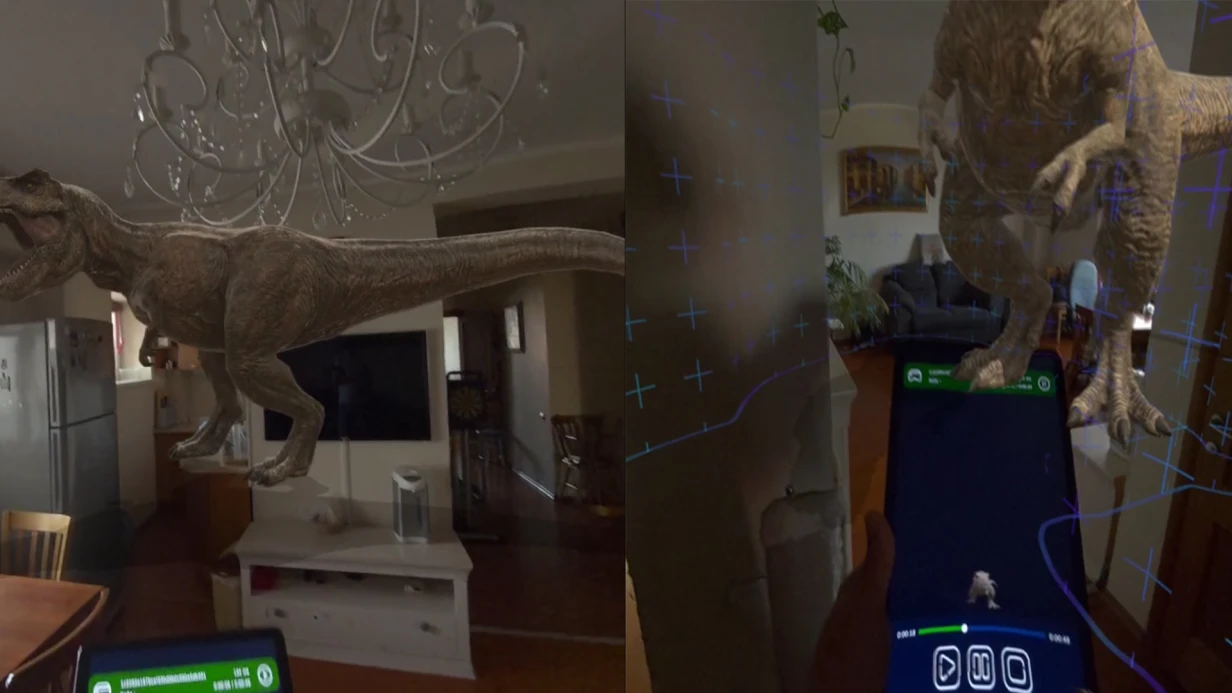
Augmented reality works directly in the workshop. An operator sees prompts, parameters, and the sequence of operations right on the equipment — this reduces the likelihood of human error and speeds up response in an abnormal situation.
For safety control, such a tool covers issues that previously could only be addressed with intuition and experience.
There is also special value in the company’s image. Modern VR/AR solutions look impressive at exhibitions and when presenting products to customers. A potential partner sees that the plant is keeping pace with technology, and that is a direct contribution to trust and contracts.
We have been creating such solutions for more than ten years and know how to turn complex chemical specifics into a clear and safe tool.
We rely on professional tools and the experience of dozens of projects — so you get a predictable result rather than an experiment.
What Benefits an Enterprise Gains from Implementing VR/AR
Implementing VR/AR in chemical production is not a replacement for live training but a way to make it safe, fast, and measurable.
Management gets not “technology for technology’s sake” but a working tool that affects accident rates, the speed at which new employees join shifts, and the company’s reputation. Here is a checklist of benefits to consider when launching a project.
- Reduced accident rates and risks. In a virtual environment, an employee practices actions for leaks, spills, or fires without a real threat. The skill is reinforced over several repetitions, and the correct sequence of actions remains in memory for an emergency.
- 2–3 times faster staff preparation. A newcomer masters the workshop’s process flow in a week rather than a month: the simulator shows the equipment from the inside, highlights components, and prompts the order of operations. This reduces the burden on mentors and cuts equipment downtime.
- Savings on mock-ups, training grounds, and off-site training. Instead of a physical sample, you get a digital copy of the site. A simulator created once is updated along with production changes and used for all new employees without additional purchases.
- Increased trust from clients and partners. In negotiations and tenders, a VR presentation of production is more convincing than slides: customers see the workshops, procedures, and automation level in an “as-is” format. This helps win contracts and justify pricing.
- Employer brand recognition. Modern simulators attract young specialists and show that the company invests in technology and people. The company becomes more attractive for engineer and technologist vacancies.
Every item on this list is backed by practice: we have been making VR/AR solutions for chemical production for more than 10 years and start every project with a calculation of the economic effect.
If you want to understand which benefits are achievable specifically at your enterprise, send us a description of your site or task, and we will prepare an assessment.
VR/AR Formats for Different Tasks in Chemical Production
Not every scenario in chemical production requires the same approach. An operator of a technical line needs to practice emergency actions, a maintenance worker needs prompts on real equipment, and a client needs clear proof of the plant’s reliability.
That is why there are different VR/AR formats: each solves its own task without wasting time and resources.
We select the format for a specific goal — training, instruction, or presentation. Here is what it looks like in practice:
| Format | Target audience | What it gives the client |
|---|---|---|
| Virtual simulator | Operators, technologists | Practice of abnormal situations without risk or production shutdown. The employee comes to a real shift with ready-made skills. |
| AR instruction | Maintenance workers, equipment adjusters | Step-by-step prompts right on the equipment via a tablet or headset. Fewer errors, faster repairs, no need to search for documentation. |
| Virtual tour | Clients, partners, investors | Safe introduction to production from the inside — without protective suits or permits. A good tool for commercial presentations and building trust in the company. |
This division is also convenient for budgeting. A simulator covers systematic staff training, AR instruction speeds up maintenance, and a virtual tour brings new customers. Everything can work as a single system or as separate modules, depending on the current task.
When choosing a format, we look at the production bottleneck. If frequent downtime is caused by human factors, we strengthen simulators. If repair work drags on, we implement AR. If sales are hard to explain with words, we create a virtual tour.
As a result, you pay only for the tool that delivers measurable results: faster training, fewer accidents, more orders.
How a Project Works: From Technical Specification to Launch
We have structured the project so that at every stage you understand what is happening, how long it will take, and what result you will get. No “black boxes”: you see intermediate versions, approve key decisions, and control the budget without surprises. Below is the path a client takes from the first request to a working solution and beyond.
-
Request and preliminary conversation. You describe the task: what you want to show employees, teach them, or control. We clarify goals, audience, and constraints — for example, whether the solution is needed for a workshop or a training classroom.
-
Task analysis and technical specification. We study your technological process, procedures, and typical scenarios. The output is a document that records functions, usage scenarios, and acceptance criteria. You approve it before development begins.
-
Concept and scenario. We show what the virtual workshop or simulator will look like, what actions the user performs, and what prompts and controls are provided. This is a draft of the future solution so you can evaluate the logic before major resources are invested.
-
Approval and work plan. We set deadlines, stages, and checkpoints. You know when you will see the first version, when intermediate demos will take place, and what you need to prepare on your side — for example, access to procedures or help from a technologist.
-
Development and assembly of the solution. We create virtual objects, interaction logic, and the interface. We work in iterations: every 1–2 weeks we show an intermediate result, you leave comments — changes are made immediately rather than at the end of the project.
-
Pilot testing on your side. We hand over a version for testing on real equipment — in a workshop, classroom, or at workstations. We collect feedback from future users and refine the solution to a comfortable state.
-
Launch and support. We install the application, configure the equipment, and, if needed, train your specialists. After launch, we remain in touch: we update content, fix issues, and provide technical support. You are not left alone with the product.
This procedure guarantees that you receive not an abstract “development” but a tool that solves a specific task of your production — with predictable timelines and a clear result at every step.
What Is Included in the Delivery of a VR/AR Solution for an Enterprise
When choosing a VR/AR solution, it is important to understand in advance exactly what is included in the delivery. Otherwise, after launch it turns out that modifications and training must be paid for separately.
We fix the full scope in the contract so that the client receives a transparent package — from a ready application to support.
- A ready VR/AR application for production tasks: a simulator, an augmented reality instruction, or a virtual model of a workshop. The solution is adapted to your procedures and processes rather than delivered “as is.”
- A content update panel — your employees can change scenarios and instructions themselves without involving developers. No need to wait for modifications or pay for every small change.
- A set of documentation — operator manual, administrator guide, launch procedure, and architecture description. Everything is written in language accessible to non-specialists.
- Staff training — a training session for instructors and administrators so they can confidently work with the system from day one.
- Warranty support — help by phone and messengers, bug fixes, and updates during the warranty period.
- Post-launch maintenance — optional extension of support: we monitor stability, update the platform, and help develop the solution for new tasks.
As a result, you receive not a “semi-finished product” but a working system for training and safety control, integrated into the enterprise’s daily processes. Every component is fixed in the contract, and stages are coordinated with your team.
Case Study: How a VR Simulator Reduced Training Time by 40%
Case study with a chemical plant: traditional training took up to two weeks, required pulling experienced mentors away from their work, and created risks on real equipment.
A virtual simulator allows a newcomer to practice emergency and operational scenarios in a safe environment where a mistake has no consequences but immediately shows the correct algorithm of actions.
For a fertilizer plant (we will call it AgroKhim), we developed a VR simulator on Unity that replicates the real workshop with accurate proportions and equipment logic.
The employee “lives through” a shift: starting the unit, monitoring parameters, and abnormal situations such as a leak or automation failure. Every action receives a score — so the skill is reinforced without a mentor.
What changed at the plant
We measured the results after two groups of trainees: operator preparation time decreased by 40%, and the number of errors in the first working days dropped by half.
Newcomers’ production indicators matched those of experienced employees by the end of the first month, whereas previously this took almost two.
The simulator also proved convenient for recertifying existing personnel. Technologists and workshop managers can change scenarios to match updated procedures, and the training department can receive aggregated statistics for each employee.
For the plant, this means less downtime, lower training costs, and confidence in safety. The client has already expanded the project to two adjacent departments.
What to Do If an Enterprise Has Specific Requirements for VR/AR?
Specific requirements are common in chemical production. Industry standards, safety procedures, and the specifics of working with hazardous environments cannot be covered by a standard VR/AR solution.
That is why we do not look for a ready-made template but design a system around your real workshop, equipment, and scenarios.
Work begins by studying your internal procedures and industry standards. We analyze how processes flow and note where the scenario should differ from the standard — for example, when working with chemicals or on rare equipment.
After that, we adapt the logic of actions, visualization, and interfaces so that personnel act in the virtual environment exactly as they would at production: the same signals, the same precautions, the same restrictions.
This approach covers a wide variety of non-standard conditions — from emergency situations to maintenance of unique equipment.
We check in advance how the solution will fit into existing occupational safety rules and, if necessary, coordinate details with your technologists and engineers. You get VR/AR that is not merely similar to your enterprise but replicates its logic at the process level.
Flexible adaptation occurs at the scenario level, not just the visual level. Sequences of actions, access standards, and controlled risks change — everything that matters for your specifics.
This does not drag out the project; on the contrary, it removes the risk of rework during implementation because we account for your requirements in advance.
In the end, you receive a tool that actually works in your conditions rather than remaining a demonstration sample. Employees master real tasks faster and make fewer mistakes in non-standard situations. And if needs change, the solution can be easily refined for new procedures or processes.
Frequently Asked Questions About Implementing VR/AR in an Enterprise
Implementing VR/AR in chemical production is a task that raises many questions: timelines, compatibility with current equipment, data security, and employee adaptation.
We have prepared answers to the most common ones so that you can make decisions based on facts rather than assumptions.
How long does implementation take?
A typical project takes 4 to 8 weeks — from brief to launch. If you need a quick result, for example for shift training, we build a pilot in 2–3 weeks and gradually expand the functionality.
Is the solution compatible with our equipment?
We adapt the development to your hardware and configuration. You will not need to buy new equipment — we use existing headsets and computers, and if necessary, select optimal options.
How are corporate data protected?
Data does not leave the enterprise perimeter. Access is configured by roles, and work can be done through a closed network — outsiders will not obtain information. If necessary, channels are encrypted.
How do we update content after launch?
Updates do not require programmers. Through a simple management system, your specialists can independently change instructions, scenarios, and tests — new materials are added in minutes.
How will employees learn to work with VR/AR?
We provide training and hand over clear manuals. The interface is tailored to your technological processes, so users get comfortable within a few days.
Let’s Discuss Your VR/AR/MR Project During a Consultation
Every VR/AR/MR project in chemical production begins with a consultation. During it, you talk about your task, and we immediately see which format will bring real value and which would be an unnecessary expense. You get not vague promises but a concrete analysis of your situation.
We conduct the consultation like a checklist: after the first conversation, you leave with a clear action plan. You will learn where to start, what stages to go through, and where the main risks are hidden.
What you get from the consultation:
- Analysis of the task and current processes — we determine where VR/AR/MR will deliver measurable impact.
- Format selection: employee training, virtual simulators, assembly control, or 3D visualization of installations.
- Calculation of terms: timelines, work stages, team composition, and the amount of involvement required from your specialists.
- Budget assessment and expected return — so that the solution pays off rather than becoming a museum exhibit.
- Project launch: a clear plan of first steps after signing the contract.
We do not sell “hot air” and do not delay our responses. Leave a request through the form or write to us in a messenger — we will schedule a consultation within one business day. We will analyze your task, choose a format, and calculate terms you can use to launch the project.