

Why the Investment Sector Loses Clients Without VR/AR
Opening paragraph: the investment sector loses clients where competitors have already implemented VR/AR.
While you show an investor a presentation with slides and spreadsheets, a rival company invites them on a virtual tour of a future property or lets them "try on" the product before launch. The decision is made in a single presentation — and often not in your favor.
An investor doesn't live by numbers in a report, but by feeling. They need to see how the investment pays off: walk through a building under construction, examine a product from every angle, test the usage scenario. Weak presentations don't deliver this.
The lack of VR/AR turns presentations into a lottery: the client doesn't understand the value, hesitates, and postpones the decision.
Hence — weak response to your proposals. An investor researches competitors, compares formats, and chooses the one who speaks their language of visual clarity. Every missed deal is not just a failed project, but a signal to the market that your product is weaker.
The longer you stay without interactive formats, the harder it becomes to arrange follow-up meetings.
We help the investment sector close these gaps. We create VR/AR solutions that turn an abstract idea into a tangible experience: the investor sees the object, controls the details, sets scenarios — and makes decisions faster.
Your presentations stop being "just another deck of slides" and become an advantage over competitors.
Benefits of VR/AR Applications for the Investment Sector
The investment sector sells trust: an investor or partner must see a project's potential within minutes, and a client must imagine how the product will transform their business.
A regular presentation with charts requires imagination; VR/AR removes this barrier — they show the product "live," in scale and in action. This increases audience engagement, makes the brand recognizable, and directly drives sales growth and new leads.
For Marketing — Recognition and Leads
An immersive format itself becomes a news hook: guests remember the emotions, share photos and videos, and talk about the project. Each such demonstration turns into multiple brand touchpoints at no extra advertising cost.
Online VR presentations work the same way — they hold attention far longer than regular streams, meaning more viewers remember your product and leave a request.
For Sales — Demonstration and Decision-Making
In negotiations, an investor sees not abstract forecast numbers, but a working prototype: a building before construction, the interface of a future service, or a workshop with new equipment. The more visual the proposal, the lower the barrier of doubt and the faster the deal decision.
Practice shows: after such demonstrations, the number of follow-up meetings and closed deals grows noticeably — the client "buys" an experience that has already happened, not a promise.
"After implementing a VR presentation, the number of inquiries grew by a third, and investors began making decisions twice as fast during negotiations," says the marketing manager of one of our clients.
Today this is the standard for working with major partners: you invest in development once, and you get a tool that works to attract investment and drive sales with no limits on location or time.
VR/AR Solution Formats for Your Tasks
Every investor needs to see an object that doesn't exist yet. Drawings and 3D videos don't convey a sense of scale, and site visits take time and logistics.
VR/AR closes this gap: you show the future asset realistically, in detail, anywhere — from a boardroom to an exhibition booth.
We select the format for the specific task. Sometimes full immersion in a virtual object is more effective, sometimes it's quick augmented reality on a guest's smartphone. Below are typical scenarios and their business results.
For Investment Presentations and Deals
At the negotiation stage, emotions and numbers decide. A VR showroom or 3D configurator lets an investor "walk" through a future building, change the number of floors, finishes, and see the panorama from the upper levels.
This turns a presentation from a story into an experience that is remembered and shortens the deal cycle.
For Exhibitions, Forums, and Client Meetings
In a highly competitive environment, you need to capture attention at your booth within 30–60 seconds. An AR catalog with animated objects or an interactive booth with VR tours engages visitors, helps quickly showcase the project portfolio, and collects contacts. The guest leaves with an emotion and an understanding of your product.
| Format | Target Audience | What It Gives the Client |
|---|---|---|
| VR Showroom | Investors and partners in negotiations | Full immersion in an object that hasn't been built yet, clear presentation of scale, accelerated investment decisions |
| AR Catalog | Potential buyers and tenants | Instant object viewing via smartphone — no app installation required, convenient at exhibitions and in mailings |
| 3D Configurator | Clients selecting object parameters | Real-time visualization of changes: number of floors, layout, materials — helps make decisions |
| Interactive Booth | Exhibition and forum attendees | Attracts guests' attention, keeps them at the booth, collects contacts for further work |
| VR Tour | External investors and international partners | Object presentation without business travel — just put on a headset anywhere in the world |
Choose one or more formats — we will adapt them to your portfolio, infrastructure, and meeting approach. As a result, you get a tool that drives trust and decision-making speed.
VR/AR Project Development Stages: From Brief to Launch
We've structured our work so that at every step you understand what's happening and what result you'll get. No "black box": you see progress, approve key milestones, and make decisions rather than watching from the sidelines.
- Brief — a 30–40 minute interview. We capture project goals, the investor or guest profile, and the usage scenario: what the person should see and feel. The output is a document with objectives and success criteria.
- Plan and budget estimate — we create a phased plan with timelines, team composition, and cost. You know in advance when the checkpoints will be and what work happens at each stage.
- Prototype — we build an interactive model of the key scenario. This is a "living" mockup that lets you test the logic and feel of the product before full development. Changes at this stage are cheaper and faster.
- Approval — you approve the prototype, we lock in the changes, and move to full development. All agreements are documented, so there are no surprises at the finish line.
- Development — we build the full application, configure graphics, sound, interactivity, and test on real devices. You get a stable version that works without glitches on the day of the event.
- Launch — we install the application on your equipment, configure it for the specific venue, and train your team. We're on hand during the first presentation to make sure everything goes smoothly.
- Support — after launch, we stay in touch: we make adjustments, update content for new events, and help with technical issues. You're never left without a contractor.
What's Included in the VR/AR Application Delivery
Any project in the investment sector involves working with data, reputation, and money. That's why delivery isn't just a "finished picture": you get a complete package to manage the product, develop it, and hand it over to a team without loss.
Below are the standard delivery components. Depending on your needs, you can take the starter package or go straight to the full one.
Starter Package
- Ready build for your platform — installs and runs without additional configuration.
- Source code with comments — you're not dependent on the contractor and can transfer the project to any team.
- Architecture and scenario documentation — describes how the application is structured and how to make changes.
- Basic user manual — what's needed to launch and manage day-to-day operations.
- Updates during the warranty period — bug fixes and adaptation to new system versions.
Full Package
Everything from the starter package plus:
- Team training — we cover administration, content, and scenarios so you can manage the application yourself.
- Extended documentation — descriptions of integrations with your systems and update procedures on your side.
- Priority support — a direct channel to an engineer, with a response time of the next business day.
- Regular updates — scenario improvements, new content additions, and optimization for your tasks.
This package covers the client's main risk: you're not left alone with an unfamiliar product after launch. Source code, training, and support give you full control over the solution and the ability to develop it with your own team.
Case Study: How VR/AR Increased Product Response
Business investors receive dozens of presentations every month, and most fail — slides don't hold attention for more than a couple of minutes. Those who let you see and "touch" the product stay in memory.
A VR showroom solves this problem: instead of abstract numbers — a space where you can examine the object, look inside, and explore at your own pace.
We built this format for a company in the investment sector. The task was simple: show the product so that an investor feels its value before closing the deal. Our team developed a VR presentation — an interactive showroom on professional equipment.
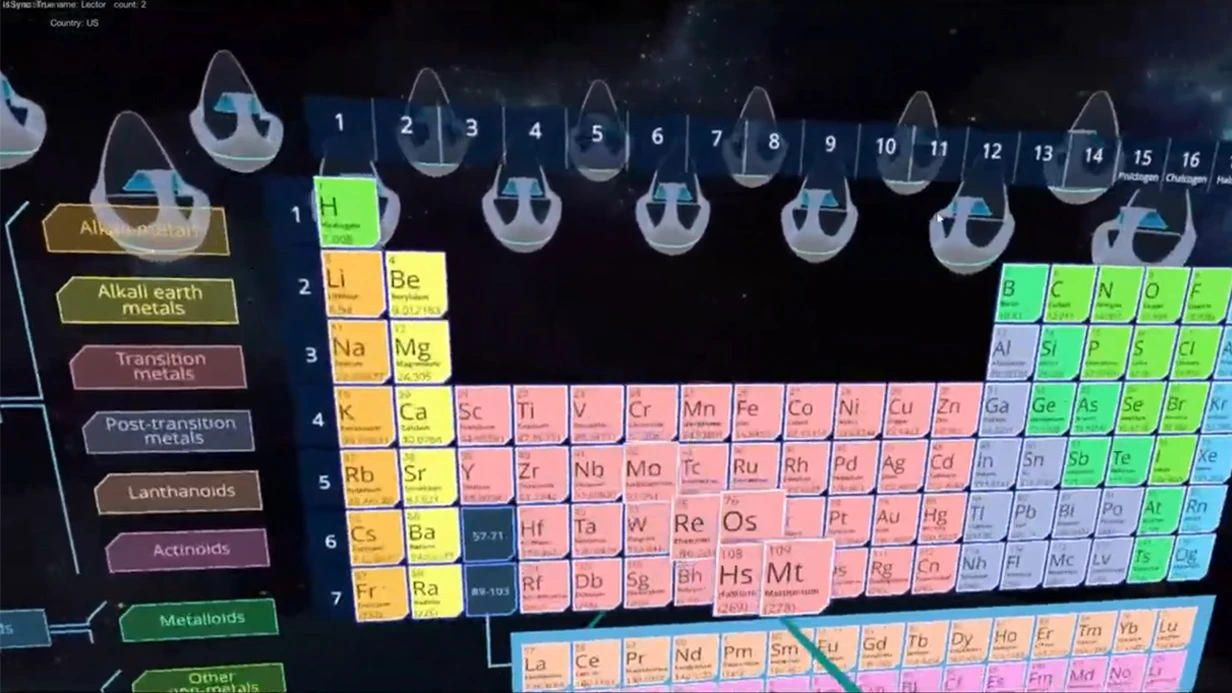
Guests put on a headset and found themselves inside the future product: changing configurations, seeing dynamics, and viewing metrics in real time.
The results exceeded the client's expectations. Response to the offering grew by 250% — investors were more willing to schedule meetings, asked substantive questions, and requested additional demonstrations.
Active attention time in negotiations doubled: instead of the standard 10 minutes, discussions lasted 25–30, because the guest left with concrete impressions and questions.
What the Case Delivered to the Client
- Increased presentation response: +250% in interest.
- Investors remembered the product after a single showing.
- Repeat demonstrations and heightened interest in collaboration.
For the client, this accelerated the deal cycle and strengthened trust: instead of verbal explanations — a tangible experience. The VR showroom paid for itself before the final negotiations, and the client returned to us to develop the next version.
How to Choose a VR/AR Format for Your Task?
There is no one-size-fits-all VR/AR solution: the same format isn't equally effective for project presentations, employee training, and retail sales.
The choice depends on what task you're solving — showing a future object, building a skill, or introducing a client to a product at the point of contact.
For presentations to investors and partners, a VR scenario works best: it fully immerses the viewer in the project and lets them "walk" through a building that hasn't been built yet or start a production line.
Such a demonstration is more memorable than drawings and slides, and it shortens the approval timeline.
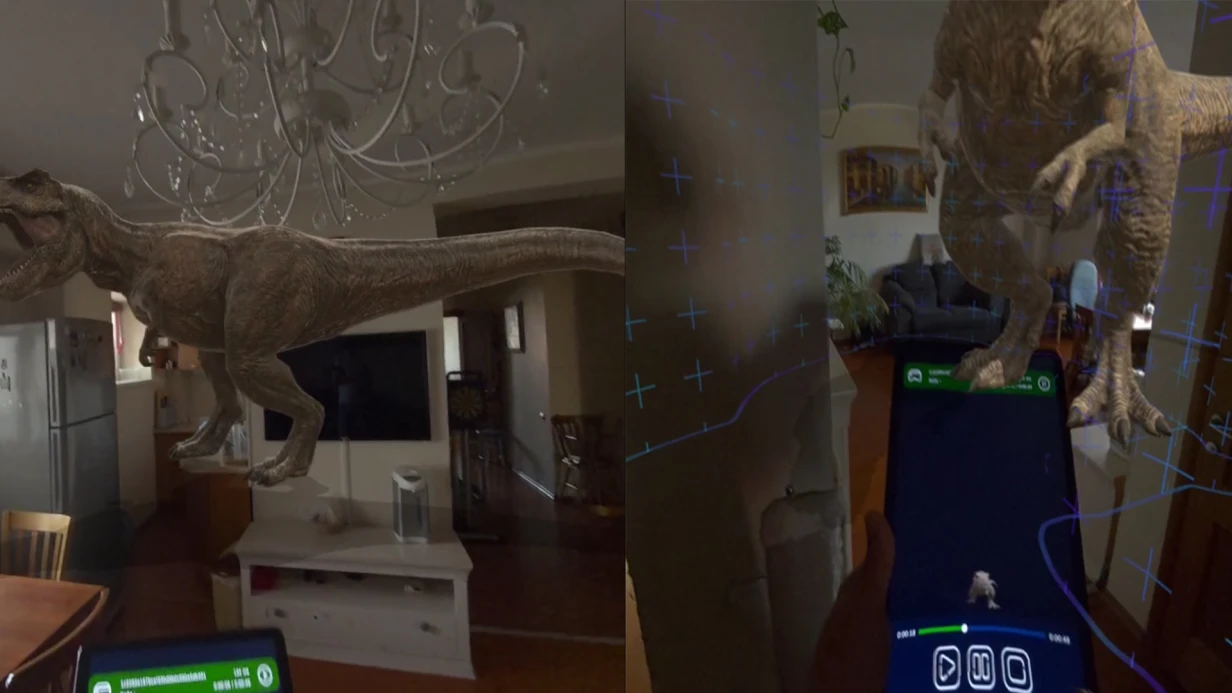
If you need to impress an exhibition visitor or show a product in action — an AR mode is enough: no headset required, it works from a tablet or smartphone, and creates a sense of presence without complex equipment.
For employee training, the format also differs: VR simulators allow practicing actions in a safe environment where a mistake on a real object is costly.
This matters especially in the investment sector, where staff must know the regulations and respond quickly in unusual situations. Regular video courses don't deliver that level of engagement, so knowledge is absorbed faster.
The format directly affects budget and timelines: an AR scenario built around an existing space is prepared faster and costs less, while a VR environment requires more detail and, accordingly, more production time.
At the start, we state realistic timelines and offer a phased launch: first the key scenario, then expansion if a different mechanic is needed.
We choose technologies for the task, not for trendy appeal: we work with proven tools and professional equipment so the result is stable. Post-launch support is included in the project — you get a ready solution, not a "box" without accompaniment.
We'll help you decide on the format in a free consultation: send us a description of your task, and we'll tell you what will deliver results faster.
Frequently Asked Questions About VR/AR Development
Investment companies and funds primarily want to understand how a VR/AR solution will pay off: where the control points are, how long launch will take, and how the project will fit into current processes. Below are answers to the questions most often raised at meetings before a project starts.
How long does application development take?
Timelines depend on the format and scope of the task. We prepare a base version for presentations, training, or property showcase in 3–4 weeks, while complex multi-scenario projects take 2–3 months.
After the brief, you receive a calendar plan with checkpoints: it's clear what will be ready at each stage and when you can launch.
How is the price determined, and are there hidden fees?
We provide the price after analyzing the task and lock it into the contract. The estimate includes design, development, testing, and launch. Additional work is performed only at your request — no "surprises" along the way. You always see what you're paying for and can compare with alternatives.
What equipment is needed to use VR/AR?
For AR, a smartphone or tablet is enough — your clients and employees already have them. For VR scenarios, headsets are required: we provide our own equipment for demos, and for mass deployment we help you select the optimal fleet for your needs and budget.
What happens if the application becomes outdated or breaks?
Any software requires support, and we cover that. After launch, we stay in touch: updating the application for new operating system versions, changing content, and refining scenarios as your products or market conditions evolve. The warranty on our work is specified in the contract.
Can the solution be adapted to brand identity and business specifics?
Yes, every project is built from scratch around your brand guidelines, product logic, and real operational scenarios. This isn't an off-the-shelf product, but a bespoke tool that strengthens your negotiations, presentations, and employee training.
If your question isn't in the list — write to us. We'll explain how VR/AR can help in your specific case, show examples, and provide a timeline and cost estimate.Let's Discuss Your VR/AR Project Today?
The investment sector demands precise solutions — and a VR/AR project only pays off when it's structured around your business goals from the very start.
To avoid spending budget on experiments, we'll begin with a short discussion: you tell us about your goals, and we'll show how the technology solves your specific challenge.
Leave a request for a consultation — and within one business day we'll schedule a call or meet online. On the call, you'll get a preliminary timeline estimate and implementation options, and you'll understand which format — VR, AR, or MR — fits your project.
What you'll get after reaching out:
- A free consultation: we'll analyze your task and answer questions about VR/AR.
- A preliminary cost estimate — no hidden conditions or fine print.
- A timeline and implementation stage assessment aligned with your investment horizon.
- Format recommendations: VR for immersion, AR for data overlay, MR for hybrid scenarios.
- A roadmap: the steps needed to launch a prototype and pilot.
- A transparent collaboration plan: we lock in tasks, stages, and acceptance criteria.
- An understanding of risks and how to mitigate them before development begins.
After the call, you'll receive an email summarizing the discussion, and we'll agree on the next step — even if you decide the timing isn't right yet. Submitting a request is non-binding: we offer a substantive conversation, not a sales pitch.
Fill out the form below or message us — we'll respond within one business day. The sooner we discuss your project, the sooner you'll have a working tool for attracting investors, training employees, or engaging clients.