

Laboratory diagnostics losing clients? Implement VR/AR
Clients choose a laboratory by speed, accuracy, and service. But even perfect metrics fade if the process of taking tests seems outdated. People want to understand what is happening with their health and are willing to pay for a clear and modern experience.
The average patient sees no difference between laboratories until they encounter an inconvenience: queues, unclear results, stress before the procedure. This makes them choose competitors that seem more caring. A modern laboratory should remove these fears, not amplify them.
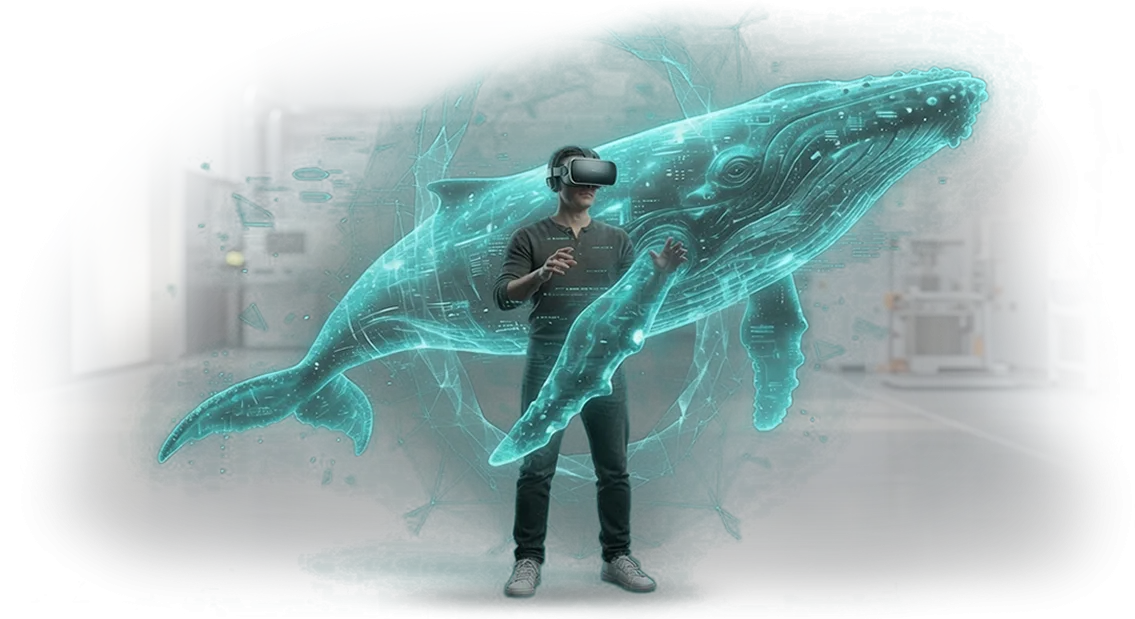
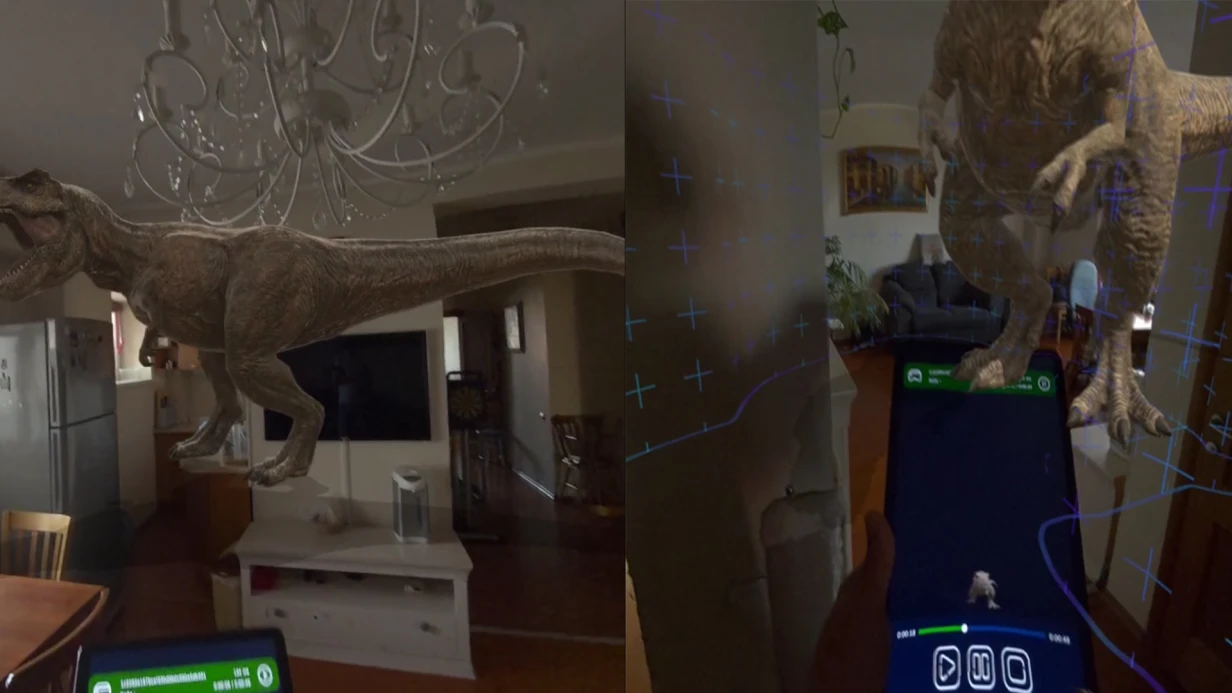
Implementing VR and AR in medicine changes the impression of the visit. With AR, you can show directly on the patient's body where blood will be drawn or how the test works.
VR allows you to take a tour of the laboratory, introduce equipment and processes — this way the client trusts transparency. The technology reduces anxiety and increases satisfaction, and therefore the likelihood of repeat visits.
A patient who receives a visual explanation shares the experience with family and colleagues. Each such experience becomes free advertising for the laboratory — on social media and in conversations. This increases reach and brings new clients without an additional marketing budget.
We have been creating VR/AR projects for business for over 10 years and know how to turn technology into an understandable tool for the client. We will help implement solutions for your laboratory — from interactive visualizations to staff scenarios.
This is not technology for technology's sake, but a tool for attracting clients and growing loyalty.
What VR/AR gives your laboratory and patients
A modern patient comes to a laboratory not only for accurate results, but also for a clear, comfortable process.
VR and AR in diagnostics turn a routine visit into a manageable experience: a person sees how the test is conducted, what happens to their biological material, and what steps they can take for better health control.
Such clarity removes the anxiety that often prevents people from taking tests again or undergoing preventive check-ups.
Patient engagement is the main result of implementing virtual reality in medical services. Instead of paper instructions and abstract explanations, the patient receives a procedure simulation where they can "walk through" all stages at their own pace.
This is especially important for children, elderly people, and those who fear needles or medical procedures. As a result, the number of disrupted procedures decreases, preparation time is reduced, and overall visit satisfaction increases.
Loyalty growth follows: a patient who understood and accepted the process is more willing to return to the laboratory and recommend it to friends and family. This is what builds the reputation that brings up to 40% of new clients without advertising costs.
Augmented reality can also show the patient how to interpret results, which indicators fall outside the norm, and what next steps should be discussed with a doctor — this turns a one-time service into regular health care.
Finally, VR/AR open the path to additional services: virtual consultations before complex tests, preparation simulators for procedures, interactive healthy lifestyle programs based on laboratory data.
This is not entertainment, but a way to create new value in a medical service and increase the average order value without pushy sales. Your patients get clear diagnostics, and the laboratory gets a steady flow of repeat visits and trust that competitors find hard to copy.
VR/AR solution formats for laboratory diagnostics
In laboratory diagnostics, the cost of error is high, and staff training requires time and safe conditions. Virtual and augmented solutions meet this need without equipment downtime or risk to reagents.
We have gathered formats that work at every stage — from lab technician preparation to explaining results to patients.
Who the format suits
| Format | Who it's for | What it gives the client |
|---|---|---|
| Virtual simulators | Students, new lab technicians, staff retraining | Practicing algorithms without reagent consumption or risk of error |
| Test visualization in augmented reality | Doctors, patients, laboratory managers | Visual results instead of dry numbers — fewer questions and disputes |
| Interactive instructions | Medical staff, technical specialists | Step-by-step prompts on equipment — lower error and distraction rates |
| Simulation of work with biological materials | Training centers, laboratories | Practicing rare and dangerous scenarios that cannot be trained live |
Virtual diagnostics pays off by reducing training consumables and lowering the number of defective tests. Augmented reality accelerates doctor explanations and increases patient trust in prescribed treatment.
Each format is easily adapted to your standards and internal regulations. Bring us your task — we will choose the right option for your budget and timeline.
How the project runs: from brief to launch
For laboratory diagnostics, it is especially important that a project develops predictably: you plan equipment utilization and patient flow, not guess when things will be ready.
That is why we structure the process so that you always see what is happening, within what timeframe, and with what result. No "black box": only clear results, approval points, and control at every stage. This reduces overall timelines and eliminates unnecessary rework.
- Brief and immersion in your routine. We study how the procedure currently runs, where difficulties arise, and what goal the application solves.
- Concept and prototype. We visually show what the solution will look like, and you make edits before the main development begins.
- Plan and estimate. We fix the stages, timelines, and control points. You know in advance when and what result you will get.
- Development and intermediate versions. After each major stage, we show a working version — you see progress and adjust details on the fly.
- Testing with your employees. Lab technicians and doctors try the application in real mode, and we fine-tune the solution to your processes.
- Launch, training, and support. We install the application on your equipment, train the staff, and stay in touch after launch.
What is included in the VR/AR application delivery
We deliver not just a "program," but a ready-to-use working solution for your laboratory. The package includes everything needed to launch VR/AR diagnostics, train staff, and not depend on the developer in daily operations.
- Full project composition. An application for diagnostics, settings for your laboratory, and operational documentation. You get a clear structure: what is installed, where data is stored, and how to update the system without stopping patient intake.
- Manuals for staff and administrators. Short instructions for employees who work with VR/AR equipment, and separate regulations for administrators: backup, failure control, standard settings. The documentation is written in plain language, not technical jargon.
- Training for doctors and lab technicians. We conduct a hands-on session at your site or remotely: your staff practices diagnostic scenarios until confident results. Each user — doctor, lab technician, or administrator — has a prepared training scenario.
- Technical support. Engineers are available during working hours, and we respond to requests according to regulations. Consultations, failure assistance, remote diagnostics — without visits or laboratory downtime.
- Updates and improvements for new tasks. Diagnostics evolves: we add new modules, adapt the interface for additional tests, and adjust to changing protocols. Updates do not require technical knowledge from your specialists.
- Personal project manager. One point of contact for the entire cycle — from trial launch to functionality expansion. You always know who is responsible for solving tasks in your laboratory.
This package covers the client's main risk: after implementation, you are not left alone with the program.
Staff is trained, documentation is at hand, and technical issues are handled by the support team — doctors focus on patients rather than trying to figure out application settings.
Case study: how a laboratory increased patient flow by 40%
The laboratory network MedDiagnostika came to us with a clear pain point: patients saw no difference between laboratories and chose by price and location.
At the same time, most experienced stress before tests, did not understand why certain tests were prescribed, and rarely returned. We proposed adding a VR application for the waiting area and an AR module for the personal account.
The VR application explained in an interactive format how blood collection works and what happens to samples. The patient "walked through" the virtual laboratory and saw where their test goes.
The AR module helped understand results: point the camera at the form — and simple explanations appear on screen showing what an elevated or reduced indicator means. This reduced anxiety and cut down questions to doctors.
Six months after launch, patient flow grew by 40%, and the share of repeat visits almost doubled.
The average consultation time for test preparation dropped by a third — administrators no longer repeated the same explanations but directed patients to the VR zone or handed out a brochure with an AR mark.
The laboratory also saw growth in additional tests: clear results motivated patients to monitor their health more regularly.
The solution paid for itself in the first quarter through an increased average order value and audience loyalty. The main outcome was predictable laboratory utilization without additional advertising investment — clients themselves shared the unusual format on social media.
These results are reproducible: we choose the format for the clinic's tasks and support the launch until the first results are in.
How to choose the right format for your task?
The choice of format depends on the task. For staff skills training, a VR simulator works best: a doctor enters a realistic environment and repeats actions without risk to the patient.
If you need to support a specialist in real diagnostics, an AR interface is more convenient — prompts and data right in the field of view. Mixed reality combines both approaches when you need to merge live interaction with digital models.
There is no universal "best" format — the right option depends on goals, scenario, and staff skill level.
That is why we start with a consultation: we find out where difficulties arise, whether you train beginners or improve lab technicians' qualifications, and whether you need autonomy or integration with equipment. After that, we propose an individual solution — from a single module to an entire system.
For example, a large laboratory with high staff turnover and frequent retraining benefits from a VR simulator with progress tracking. For mobile teams, AR prompts on a tablet or glasses work better. For training centers — a full course with emergency scenarios.
In all cases, you get not an abstract product, but a tool that solves a specific business task: reducing time-to-competency, lowering error rates, and speeding up diagnostics.
Come to a consultation — we will show project examples from your field and propose a format that will deliver results. No rigid packages: you know exactly what you pay for, and you can start with a pilot site to evaluate the effect before scaling.
Frequently asked questions about VR/AR development
Clients rarely ask about technology — they care about specifics: how much the project will cost, when it will pay off, and how it will fit into current processes. We answer the main questions before you start exploring the project.
How much does VR/AR development for laboratory diagnostics cost?
The cost depends on the format: a training simulator for staff, interactive visualization of test results, or a virtual laboratory tour. After the brief, we name the exact figure and break it into stages — you see what you pay for at each step.
The price includes scenario design, creation of visual materials, the program, testing, and support. No hidden payments: we fix the scope in the contract, and it does not change during the process.
What are the implementation timelines?
A typical project takes 4 to 8 weeks. This depends on the number of scenarios, the level of detail, and the need for integration with your learning management system or database.
We work in sprints: every 1–2 weeks we show an intermediate result. You control the process, make edits at early stages, and get a predictable launch date without postponements.
How does integration with existing processes work?
We do not break what already works. The VR/AR solution either complements current training and presentation formats or addresses a separate task — for example, practicing rare diagnostic scenarios.
At the start, we study your infrastructure to determine the integration point: result export, data import, role separation. We configure everything to your regulations so staff can start working without lengthy retraining.
How is data security ensured?
We operate in a secure environment: password and role-based access, encryption during transmission, storage on your servers or in a closed cloud. No patient or reagent data leaves your perimeter.
We conduct penetration tests and document security guarantees in the contract. For the medical industry, this is a mandatory requirement, and for us it is the standard.
If you still have questions before the brief, that is fine. Send us your task in two or three sentences, and we will show how it can be solved within your budget and timeline.Order a VR/AR application for your laboratory
Every laboratory center faces the challenge of explaining complex processes — to patients, partners, and new employees. A VR/AR application turns diagnostics into a clear scenario: you can show how a test is taken, how equipment works, and what happens to a sample.
But for the solution to truly pay off, it is important to order development tailored to the laboratory's tasks, not a standard template.
We have been designing virtual and augmented interfaces for medicine for 10 years. That is why before starting, we conduct a free consultation and calculate the cost so you can see the scope of work and timelines. You can order a VR or AR application with a single message — we handle the organization from there.
What you get when you contact us:
- Analysis of your task and selection of the right format: a virtual simulator, AR overlay on a real analyzer, or an interactive simulator.
- Transparent stage-by-stage cost calculation — the price does not change during development.
- A clear project plan: from scenario approval to a test version.
- Application adapted to your laboratory's processes, not the other way around.
- Staff training and transfer of all materials for independent work.
- Post-launch support: updates, improvements, technical support.
This approach reduces risk: you clearly see what you pay for and at what point you will receive a working product.
Developing applications for laboratory diagnostics on Unity — in our case, this is just a way to quickly build and test a solution; the main thing is the value for your team and patients.
To calculate the cost and discuss details, leave a request through the form on the website. A manager will call you back within one business day, clarify your goals, and prepare a preliminary estimate. Start with a short conversation — we will help you decide from there.