


VR/AR in Medicine: Why You're Losing Patients Without Them
Patients choose a clinic not only by location and price — they compare experiences and technology.
If a neighboring clinic lets them "walk through" the department in advance, view a procedure in AR, or prepare for surgery via VR, while all you offer are paper brochures, the choice is obvious.
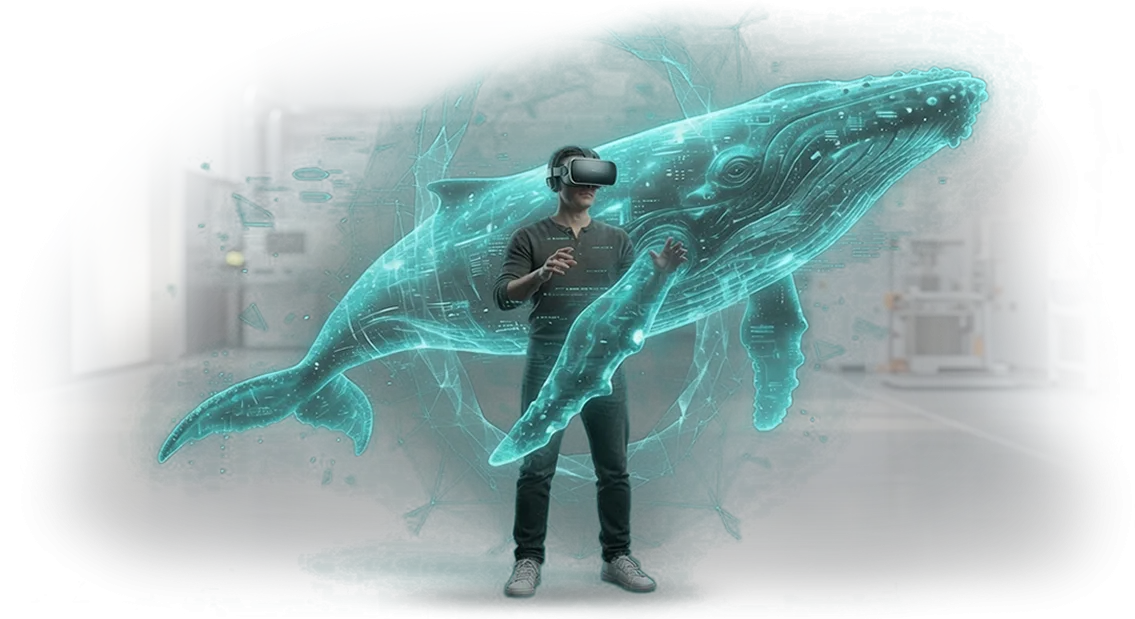
VR for medicine is no longer an experiment: it is a tool that builds patient trust and accelerates their decision.
Without healthcare digitalization, you lose not only patients but also young specialists. The new generation of doctors and medical staff expects modern tools for training and skill practice.
Clinics that use VR simulators and AR navigation win in reputation and earn the status of progressive — that is free PR that brings in new patients.
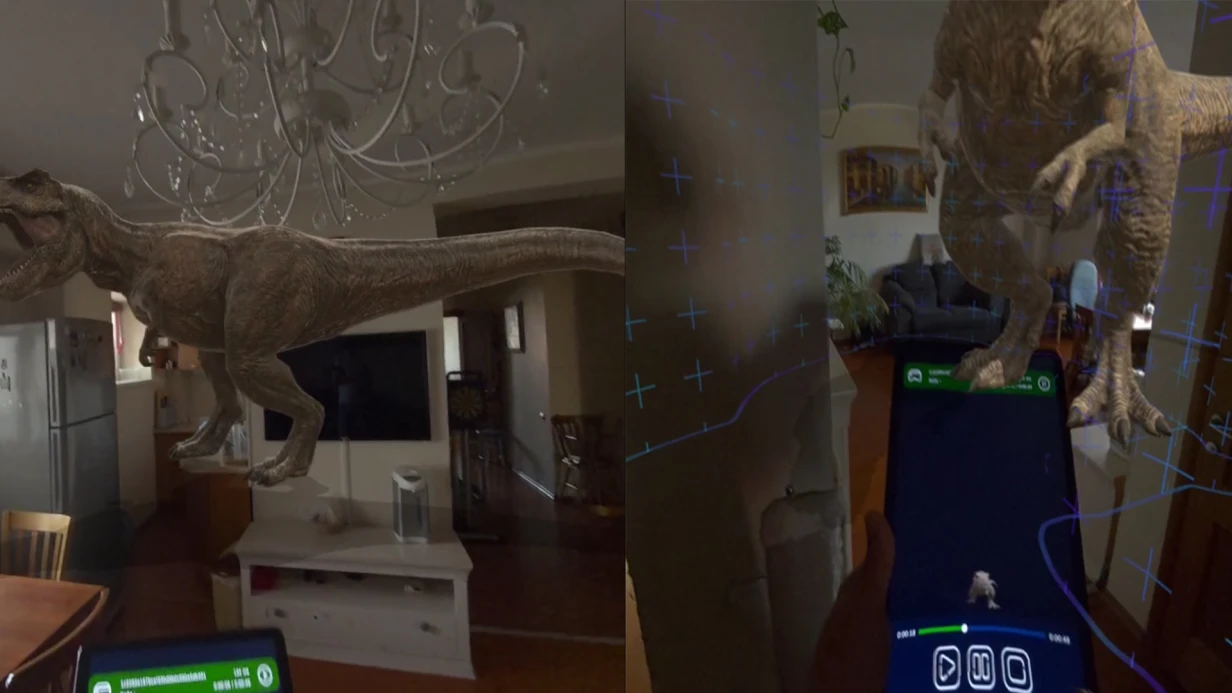
AR in a clinic solves practical tasks: from visualizing treatment outcomes to navigating patients through the building and assisting doctors during procedures.
It's not an image-driven move but a working tool that reduces time spent on explanations, lowers patient anxiety, and increases loyalty.
We help medical institutions implement VR/AR in a way that pays off: fast launch, clear scenarios for patients and staff, and support at every stage.
You get not "technology for technology's sake" but a measurable result — more appointments, fewer refusals, a stronger brand.
What You Get from Implementing VR/AR in Your Clinic
Implementing VR and AR in a clinic is not a tribute to tech trends but a way to raise the quality of care and get people talking about you. Patients choose a clinic by reputation and experience: a modern approach, comfort, and visible results.
VR tools directly influence all three factors, turning complex procedures into something understandable and less frightening — thereby increasing loyalty and repeat visits.
Technology helps attract new patients naturally. When a person sees that a clinic uses cutting-edge solutions for diagnostics, rehabilitation, and surgical preparation, trust follows. Augmented reality lets you show patients their future treatment outcome before it even begins. Admit it — that is a powerful argument when choosing between you and the clinic next door.
Another benefit is faster physician training. Instead of long lectures and risky practice on patients, young specialists hone their skills in a safe virtual environment. They act more confidently in real surgeries, make fewer mistakes, and reach professional competency faster.
Management gets predictable growth in competencies without extra costs for internships and business trips.
Improved surgical precision is another practical result. A surgeon can "walk through" an operation in advance on a digital model of the specific patient's organs, see all the details, and plan every step.
The result — fewer risks, shorter procedure time, and a better prognosis for the patient. This is exactly the kind of care quality improvement that can be shown in numbers: fewer complications, faster recovery, higher satisfaction.
Finally, VR-based rehabilitation brings patients back to a full life faster and with more enthusiasm. Boring exercises become game-like scenarios, and augmented reality gives the patient real-time feedback.
People train more consistently because it's engaging, and you get measurable progress and grateful reviews that build the clinic's reputation. Implement VR/AR once and you win on several fronts at once: treatment, training, marketing, and patient retention.
VR/AR Solution Formats for Medicine
Each medical field has its own requirements for visualization and safety. Surgery demands skill practice without risk to the patient, the operating room requires instant access to data, and diagnostics need the most accurate spatial picture possible. There is no universal "one VR solution" — you need a format that solves a specific task.
We use all three core formats and determine at the requirements stage which one will bring you the maximum effect: accelerated staff training, lower risk of errors, or more precise diagnostics.
| Format | Who It's For | What the Client Gets |
|---|---|---|
| VR simulators for surgery | Surgeons, residents, training centers | Practice of operations without risk to patients, growth of team mastery, faster staff training |
| Doctor's AR assistant | Operating surgeon, medical staff | Patient data and 3D prompts right in their field of view, fewer errors, fast decisions |
| MR visualization for diagnostics | Radiologists, oncologists, diagnostic departments | A volumetric picture instead of flat scans, precise treatment planning, clear patient explanations |
We don't just develop an app for the chosen format — we adapt the scenario to your processes and equipment. That gives doctors a tool that quickly integrates into their workflow, and you a measurable result: lower risks, higher precision, and patient trust.
You also get the ability to scale the solution to other departments and directions as your needs grow.
How a VR/AR Project Is Developed
For medical institutions, a VR/AR project is not just an app but a working tool that raises the quality of physician training, accelerates patient rehabilitation, and makes your clinic's presentation modern.
To ensure the product truly solves your tasks, we built a clear process: each stage is coordinated with you and has a concrete result. Below is how development works.
Stages of Work on a VR/AR Project
- Brief and task analysis. We examine where exactly virtual or augmented reality is needed: staff training, skill practice, equipment demonstration, or rehabilitation. We capture goals, target audience, and success criteria.
- Scenario design. Based on the brief, we create the interaction logic: how a doctor or patient will use the app, which steps and prompts will appear. You receive a clear scenario description without technical details.
- Mockup approval. Before development begins, we show the visual concept: style, interface, sample screens. You see what the product will look like and make corrections at this stage — this saves time and budget.
- Application development. The team builds a working prototype, then a full product. We use professional tools that have already proven reliable in medical projects and show intermediate results on a regular basis.
- User testing. The app is tested with doctors, students, or patients — depending on the task. This helps identify awkward moments and fix them before launch.
- Launch and installation. We help deploy the system on your equipment, train your staff, and hand over instructions. The launch happens without disrupting clinical operations.
- Support and evolution. After launch, we stay in touch: we update content, fix bugs, add new scenarios, and adapt the app to changes in practice.
What's Included in a VR/AR Solution Delivery
When you order a VR/AR solution for medicine, you get a ready-to-use tool that can be deployed from day one. We handle the entire journey: from installation and setup to staff training and support.
You won't need to search for subcontractors or dig into technical details — everything you need is already included in the VR solution delivery.
The delivery includes:
- Installation and setup of software on your equipment — doctors and administrators get a working system without downtime.
- Configuration of VR/AR devices to the clinic's or training center's tasks: displays, controls, scenarios.
- VR solution documentation: simple instructions for launch, operation, and typical actions for staff at any level.
- Staff training: hands-on sessions with doctors, nurses, and instructors — so they confidently use the solution in their work.
- Warranty support: bug fixes, updates, and consultations during the agreed period.
- Technical support on call: we help with failures, answer questions, and connect remotely when needed.
This is especially important in medicine, where the quality of training and specialist confidence depend on the equipment working properly.
You get not a "raw" development but a complete product with documentation and training — staff quickly master the technology and apply it without interrupting their duties.
If you need to refine a scenario or add a new simulator later — we'll support you after launch as well. Just set the task, and we'll handle the technical side.
Case Study: A VR Simulator for Surgeon Training
Limitations of Traditional Training
Medical universities face a problem: real operations cannot be entrusted to an unprepared student, and traditional mannequin trainers lack depth. Instructors spend hours on individual error reviews, and group statistics are compiled manually. As a result, training timelines stretch out, and graduates arrive at clinics lacking confidence.
How a VR Simulator Solves the Problem
We built a full-fledged VR simulator for medical residents at a medical university. Skill practice happens in a virtual operating room: the student makes an incision, works with instruments, and controls bleeding — the system provides real-time feedback. The instructor gets an automatic report: movement precision, operation time, critical errors.
This VR education case shows results within just two semesters. Training accelerated by 40%: material that used to take an entire course is now mastered by students considerably faster.
Errors dropped by 25% — virtual practice lets them build skills to the point of automation before ever meeting a patient.
The university made the VR simulator a mandatory step for admission to the real operating room and ordered an expansion of the system for other surgical specialties.
The repeat contract is the strongest proof that VR education delivers measurable results and that the investment pays off through the quality of training.
How to Choose the Right VR/AR Format for Your Task?
Choosing a VR solution starts not with specifications but with the task. Virtual reality fully immerses the user in a digital environment; augmented reality overlays objects onto reality. In medicine, these formats serve different goals: training, diagnostics, rehabilitation, marketing.
For training and skill practice, VR is usually the choice. A doctor can train on complex procedures without risk to the patient, repeating the scenario many times. For example, simulations of resuscitation or surgery offer experience before any contact with a living patient.
When real-time assistance is needed — for instance, during diagnostics or surgery — it's worth discussing which AR format fits. Augmented reality projects data (a tomogram, a vascular map) directly onto the patient, keeping hands free and maintaining focus on the action. This speeds up work and reduces errors.
For rehabilitation, VR delivers engagement: exercises become a game, the patient gets clear feedback, and the doctor gets digital progress metrics.
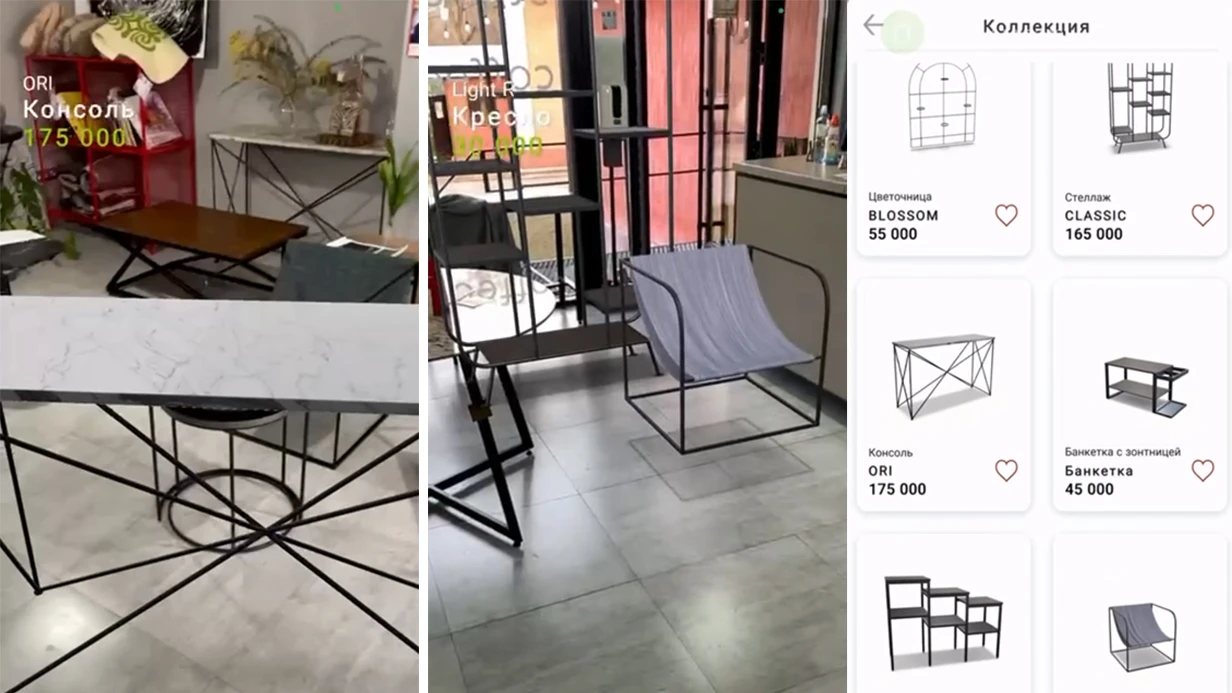
When choosing virtual reality for the clinic's marketing, AR is often the better pick: through a smartphone, a future patient can see treatment outcomes or explore the department, which boosts trust and appointment bookings.
We help you choose the right VR solution during the brief: we analyze the audience, scenario, and budget, then propose the optimal AR or virtual reality format. You don't need to be a technical expert — we'll explain what each option offers and why it fits your task.
What If the VR/AR Solution Breaks or Becomes Outdated?
Every client worries that a VR/AR solution might fail or become morally outdated. In medicine, the cost of a failure is especially high: patients suffer and trust in the technology collapses. That's why we structure our work so that this fear never becomes reality.
Even before launch, you receive a maintenance schedule, warranty commitments, and an update plan. And for medical institutions, priority support is available — during working hours, a specialist connects quickly, and most issues are resolved remotely.
We also take care of your staff: we train doctors and nurses, record short video instructions, and stay in touch after implementation. This way the solution becomes part of the routine process rather than a source of frustration.
What does the warranty on a VR/AR application cover?
The warranty covers the correct operation of key scenarios and compatibility updates with new versions of hardware and operating systems. During the warranty period, we fix errors that could affect staff performance free of charge.
How quickly do you respond to failures?
For clinics, we provide a dedicated communication channel. Critical issues are handled immediately, while typical ones are addressed within a few hours. Most problems are resolved remotely, without site visits or downtime.
What happens when the technology becomes outdated?
We build a modular structure into every project so components can be replaced without a complete redesign.
Once a year, we conduct an audit and propose a development plan: from targeted feature improvements to a transition to a new generation of devices — with a clear timeline and cost calculated after audit.
If you still have questions — open the FAQ block below or write to us. We'll explain exactly how we'll structure support for your project and put it in the contract.Order VR/AR Development for Your Clinic Today
When you order VR/AR for your clinic, you get not just an application but a working tool that solves a specific medical task.
We structure the process so that from the very beginning you understand what the outcome will be, how long it will take, and how it will fit into your clinic.
This approach saves time and budget: you don't pay for vague changes mid-process because all key questions are resolved up front. After you reach out, we handle the entire cycle — from idea to implementation. At the first stage, you'll receive:
- An express analysis of your task: we determine which result matters most — training, rehabilitation, patient visualization, or something else.
- A prototype of the key scenario: you see and try the interface before full development, not after.
- A commercial proposal with a transparent cost breakdown: you understand in advance what the cost consists of.
- An implementation plan for your clinic: timelines, stages, staff training, technical integration.
- A presentation of the solution to management and doctors so approval goes quickly.
- Support after launch: refinements, updates, and user support.
This is turnkey VR/AR development: you define the goal, we deliver the result. We design with medical specifics in mind — from safety and hygiene to the convenience of specialists' workflow.
We adapt AR and VR services for medicine to the equipment already in your clinic and to your clinic's working standards.
Leave a request — after you contact us, we'll send the task analysis, prototype, commercial proposal, and implementation plan. No long calls and no technical fog: we'll present all decisions at a level you can clearly understand.