

Maritime Shipping: Why Your Service Loses Clients
Clients leave not because of storms or port congestion, but because the service fails to meet their expectations. In maritime logistics, cargo often becomes a “black box”: the customer cannot see where the vessel is, when it will arrive, or what is happening to their container. Every such unknown means lost orders and a reputation that is difficult to rebuild.
Today’s shipping problems are not only logistical failures. They are outdated processes where you have to call and write emails to get cargo status, and data arrives late.
While clients are used to seeing delivery status in a couple of clicks, maritime shipping looks archaic and unpredictable.
Service quality in this field is measured by response speed and information accuracy. If the operator does not give the client a transparent picture — where the vessel is, which ports, what deadlines — the customer looks for someone who can.
Client loss becomes systemic: every missed deadline, every unanswered request drives the customer to competitors, even if your base rates are lower.
At our team we see these pain points in shipping and know how to address them. VR/AR solutions help make maritime logistics clear to the client: show the route, cargo condition and port operations in a visual format that builds trust and retains customers. We explain exactly how below.
Benefits of VR/AR Applications for Shipping
Benefit 1: Lower Training Costs and Reduced Vessel Downtime
Preparing a crew to work on a new vessel or with new equipment traditionally requires time and money: simulator rental, taking people off shifts, business trips.
Virtual reality in shipping removes these constraints — seafarers practice scenarios in a digital space without leaving the port or stopping vessel operations.
The crew acquires skills faster, which means less downtime waiting for a “ready team” and a lower risk of mistakes during a voyage. For business, this is direct savings: less spending on repeated training and fewer losses from inefficient work.
Benefit 2: Faster Crew Training Without Risking Cargo
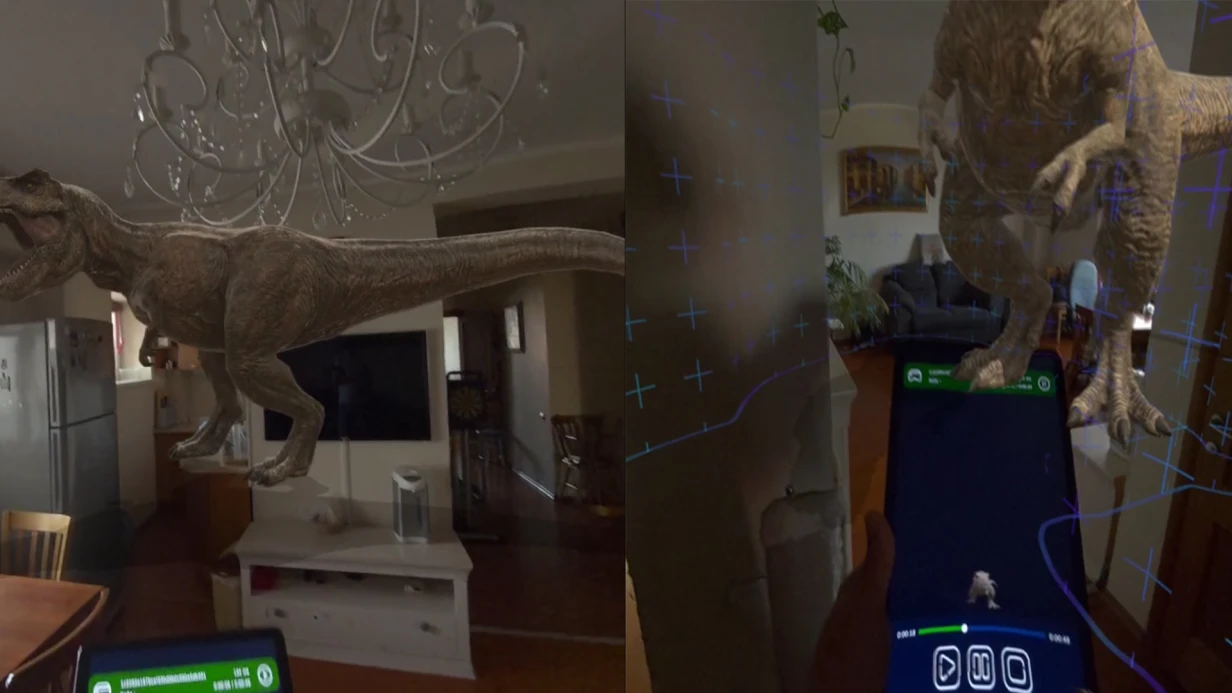
Shipping is an environment where a mistake is costly: damaged cargo, accidents, missed deadlines. Augmented reality for transportation allows beginners to train with overlaid digital prompts directly on real equipment.
An instruction “right before your eyes” reduces the number of incorrect actions by inexperienced seafarers.
Instead of long lectures and reading manuals — practice in a safe environment. An employee reaches the required skill level faster, and you get predictable team performance on every voyage.
Benefit 3: Process Optimization and Operations Control
With VR and AR applications, it is easier to manage loading, vessel inspections, repair planning and compliance with regulations.
For example, augmented reality shows a captain or engineer exactly where a component is and what the work sequence is — this speeds up maintenance and reduces the vessel’s time in port.
For the managing company, this means operational transparency and fewer penalties for downtime. Every extra hour at sea or in dock is a cost, and VR solutions help control those costs.
Benefit 4: Greater Trust from Clients and Partners
Freight customers want to see that their goods are in safe hands. Virtual reality applications make it possible to show the loading process, the route, or internal company procedures in a visual format. This sets you apart from competitors and simplifies negotiations with demanding clients.
When you demonstrate a modern approach to safety and training, decisions are made faster. This works both for retaining existing customers and attracting new ones — you look like a tech-savvy carrier that can be trusted.
We build such solutions on professional tools, including Unity, which ensures stability and realism on any device, from headsets to tablets. Contact us and we’ll show you how VR/AR fits into your processes and budget.
VR/AR Solution Formats for the Maritime Industry
In the maritime industry, the visualization format determines how effectively a task is solved. For example, crew training requires full immersion in the environment, while technical maintenance requires precise alignment with real equipment.
There is no universal “one app for everything,” so choosing the right format is half the success of a project.
We work with four basic VR/AR formats and combine them to suit each client’s tasks. Below is a comparison to help you decide which option suits your shipping business.
Main Solution Formats
| Format | Who it is for | What it gives the client |
|---|---|---|
| VR crew trainer | Vessel owners, training centers | Practice of emergency situations without risk to people or the vessel, reduced costs for real drills |
| AR maintenance instructions | Technical departments, onboard engineers | Step-by-step prompts for equipment repair and inspection — fewer mistakes and less downtime |
| 3D vessel tour | Sales department, marketing, brokers | Visual presentation of the vessel to a client without a port visit, increased trust and faster deal closure |
| VR port operations simulator | Port operators, logistics specialists | Validation of loading and mooring before execution, reduced risks and downtime |
Whichever format you choose, we adapt it to the specifics of your fleet: we take into account vessel types, regulations, and crew skill levels. As a result, you get a tool that solves your specific business task — improving safety, reducing costs, or increasing deal conversion.
How Application Development Works for Your Task
Developing a VR/AR application for the maritime industry is not a “magic button” but a structured process in which every step brings you closer to a measurable result: faster crew training, more visual vessel demonstrations, fewer delays and mistakes.
We have completed dozens of such projects and built a clear framework — you always know what is happening and what comes next.
- Brief and task discovery. We discuss your goal: crew training, project presentation, virtual trainer, or something custom. We listen, clarify, and collect data about your current processes and audience.
- Scenario and prototype. We propose a usage scenario, app structure, and key screens. You see how it will work before expensive development begins — we make changes on paper, not in a finished product.
- Plan and milestones. We fix the scope of work, deadlines and control points. You understand when you will get intermediate results and what each stage includes.
- Content and logic development. We create 3D models of vessels and port infrastructure, interfaces, and interactive scenarios. At this stage the application takes shape: a “live” controllable image appears.
- Testing on real equipment. We check how everything works in conditions close to yours: on the headsets and devices you will use. We catch and fix errors before launch so there are no surprises on site.
- Deployment and launch. We set up equipment, install the application, and train your staff. We help run the first sessions — you get a working tool, not just a program file.
- Support and development after delivery. We answer questions, update content, and add new scenarios as your tasks grow. The project doesn’t end at launch — we stay close.
This approach addresses the client’s main fear: uncertainty about timelines and the final outcome. You always know what stage the project is at, what is ready, and what decisions have been made.
This lets you manage the budget and get a predictable result — on time and tailored to your specific task.
What’s Included in a VR/AR Application Delivery
When you order a VR/AR application for the maritime industry — from crew training to virtual vessel inspection — you get not just a program but a complete working package.
Documentation, training and support are included in the delivery, so your team starts using the solution immediately after project handover, without a long ramp-up.
- Working application — compiled versions for headsets, tablets and desktop computers used at the port, on board, or in a training room. Everything is installed and tested for your tasks.
- Source code — the complete project code with comments and architecture descriptions. You are not tied to a single developer and can have any team extend the solution.
- Admin panel — through a simple interface you change scenarios, add objects, manage access and track user activity without involving a programmer.
- Documentation for administrators and users — instructions for installation, configuration, updates and typical workflows. The documentation is written in plain language with pictures and examples.
- Staff training — hands-on training for your employees, from operators to administrators. We cover real maritime logistics tasks, answer questions, and bring everyone to confident use.
- Video materials and cheat sheets — short instructions for quickly onboarding new employees. This reduces ramp-up time and eases the load on mentors.
- Warranty support and maintenance — bug fixes, phone consultations and updates during the agreed period. After that, we work under a support agreement or one-off enhancements — whichever suits you.
Case Study: How a Shipping Company Optimized Crew Training
When a crew comes aboard a new vessel, weeks are spent practicing emergency response procedures. At the same time, a single mistake during mooring or loading costs the company far more than a few days of training.
For a shipping company, we developed a VR trainer for seafarers that simulates real operational scenarios: night mooring, emergency braking, and loading oversized cargo. The crew trains in a safe environment but with a full sense of reality.
Implementation Results
The trainer cut crew preparation time threefold: one week instead of three. The number of loading errors dropped by 40%, and trainees memorize action algorithms in stressful situations twice as fast.
The head of the training center noted: “People are no longer afraid of emergency scenarios — they have already practiced them in VR.” After the initial launch, the company ordered additional modules for five more ports — because training became consistently predictable.
Why It Works
We structured the project as a real training program, not a one-off demonstration. First, we audited the shipping company’s regulations, then developed scenarios together with captains and chief engineers. Each trainer is tied to real documents and procedures, so skills transfer directly to the job.
The client received not a “toy” but a tool that solves a specific business problem: fast crew readiness without downtime or accidents. It is measurable, repeatable, and scalable to any fleet.
Frequently Asked Questions and Concerns About VR/AR Development
Having doubts when ordering VR/AR for the maritime industry is normal: it involves crew safety, the correctness of training programs, and data security.
We have collected the questions most often asked by vessel owners, port operators and training centers, and answered them briefly.
How long does development take?
Timelines depend on the tasks. A crew training module with several scenarios usually takes 4–6 weeks; a comprehensive system for loading, navigation or emergency response training takes 2–3 months.
At the start, we define stages and show intermediate results, so you control the process from the first week.
How much does it cost?
Cost is calculated for the specific task: the scope of scenarios, the level of detail in vessel models, and the need for integration with your training programs. After the brief, you receive an estimate — it is fixed in the contract, with no hidden costs or fine print.
What equipment is it compatible with?
We work with modern virtual reality headsets already used in training centers and on vessels. If you don’t have the equipment, we’ll help you choose and purchase it, or we’ll make a version for a regular computer and tablet. In any case, we test the application on your hardware before launch.
What guarantees do you provide?
Guarantees are specified in the contract: we fix the timeline, scope and result you accept. After launch, we support the project — fixing issues, updating content for new regulations, and training your administrators. Support continues on terms that suit you.
How safe is it for our data and reputation?
We sign a confidentiality agreement, and internal information about vessels and crews does not leave your network unless necessary. All testing is done either at your site or on anonymized data. The application does not contact external services without your knowledge.
Still have doubts — write to us and we’ll tell you how similar tasks were solved for other companies in the maritime industry. We’ll help you assess the scope of work and propose an option that fits your budget and timeline.How to Choose a VR/AR Format for Maritime Shipping?
Choosing a VR/AR format for maritime shipping is not a technology question but a question of your task.
If you need to quickly train a crew to work with new equipment or practice emergency situations, choose a VR trainer: it provides full immersion and safe practice without risk to the vessel or people.
If the goal is to show partners and clients how your logistics works, or to visually present services at a tender, an AR solution is more effective: it “overlays” a digital model onto a real object and works even on a tablet.
The main selection criteria are audience, frequency of use, and budget. For regular training of multiple teams, it is more cost-effective to develop a VR scenario once and use it unlimited times: the cost of repeat sessions is practically zero.
For one-off presentations and exhibitions, an AR application for the specific event is enough — the budget is lower, and the visual impact remains.
Pay attention to scale: if complex loading, mooring or navigation processes are involved, it is better to start with one key scenario and refine it rather than cover all operations at once.
This way you get results faster and see real benefits — for example, reduced onboarding time or fewer errors in voyage preparation.
The application format should also be chosen based on where it will be used. VR requires a dedicated space and a headset — a good option for a training center. AR lives on a phone or tablet, so it suits work right on board or in a meeting room. In both cases, we select a solution for your scenario, not the other way around.
If you are unsure which option will pay off faster, send us a description of your task: we’ll calculate which format will deliver the right result within your budget.
We’ll help you select, design and launch a solution for specific metrics — from the number of trained employees to greater recognition in negotiations.
Order a VR/AR Application for Your Business Today
While competitors discuss prospects, your clients are already choosing partners who show products “live.” A VR/AR application for maritime shipping is not a fashion statement but a working tool: it shortens the deal cycle, makes fleet presentations visual, and removes objections before the contract is signed.
We offer turnkey VR development — from idea to integration of augmented reality into your business processes.
You get not just technology but a solution that pays for itself: virtual vessel inspections instead of expensive business trips, interactive 3D models for tenders, and staff training without taking people off the job.
Why Clients Order from Us
- Experience in your industry — we have already completed projects for logistics and shipping, so we understand the industry’s specifics and visualization requirements.
- Turnkey work — we handle the entire process: analytics, design, development, testing and launch. You don’t need to look for separate contractors.
- Fast start — we produce a working version of the product in the early stages so you see a result, not just a presentation.
- Modern stack — we use professional tools that ensure smooth rendering on any device, from an office computer to a mobile headset.
- Support after launch — we train staff, support the project, and develop functionality to meet the growing needs of your business.
- Data security — we work under a confidentiality agreement: your routes, specifications and commercial data remain inside your company.
Tell us about your task — we’ll propose a solution that fits your budget and timeline. Leave a request on the website, and we’ll show you how VR/AR will strengthen your sales and increase client loyalty.