

Oil and Gas Industry Loses Clients Without VR/AR
The oil and gas industry has operated on the same model for decades: training grounds, paper instructions, sending specialists to hazardous sites.
But the market has changed — clients are choosing contractors that train personnel faster, perform work more safely, and present projects more vividly.
Companies that don't adopt VR/AR for oil and gas are gradually losing to competitors in speed of decision-making and quality of service.
Virtual reality makes it possible to reduce training costs and lower risks before even reaching the site. An employee practices actions in a digital copy of the facility — whether it's a drill rig, plant, or pipeline — and arrives at real production already prepared.
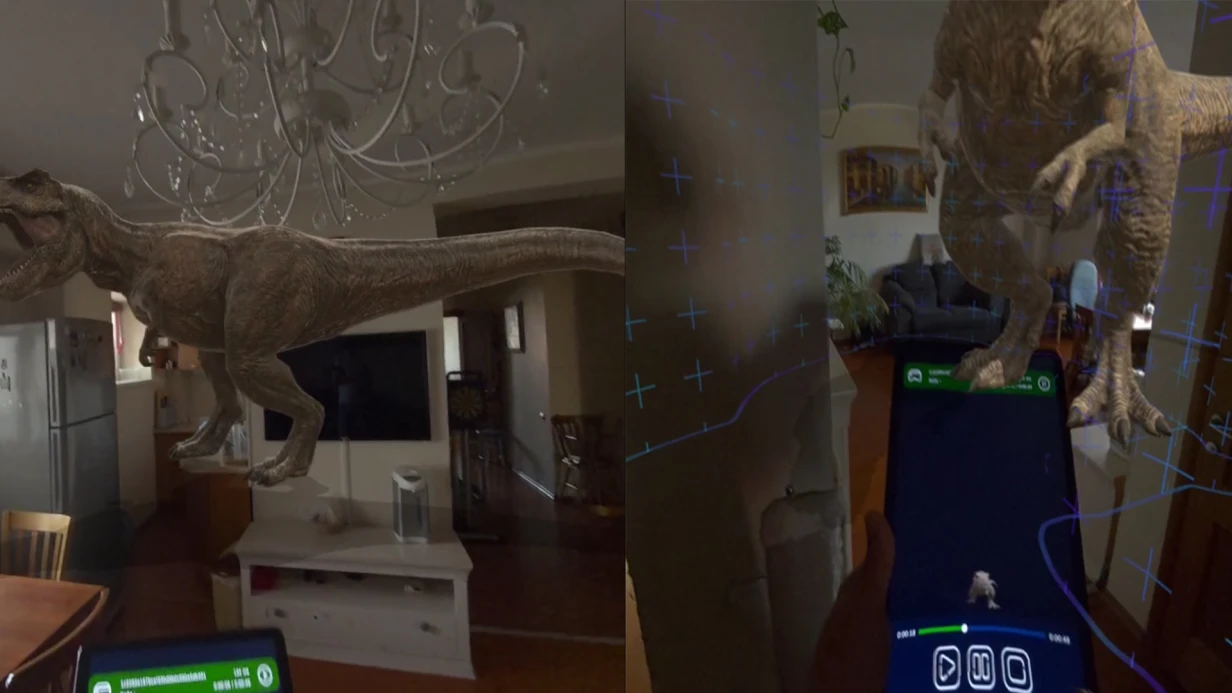
For the client, this means fewer accidents, less downtime, and higher discipline. Augmented reality, in turn, helps assemble and maintain equipment: the operator sees hints directly on the components without opening a stack of instructions.
Digitalization has become not a fad but a survival condition. Oil and gas giants and mid-size companies are already including VR/AR in tender requirements — this is an indicator of a contractor's maturity.
Those who arrive at negotiations with physical models and presentations instead of an interactive prototype lose bids. The buyer wants to see the future facility with their own eyes, walk through it, check the ergonomics — already at the deal stage.
We help oil and gas companies not to catch up with the market but to set its rules. We create VR simulators for personnel training and AR solutions for supporting production processes.
One project can solve several tasks at once: reduce injuries, accelerate onboarding of new employees, and increase client trust. While competitors calculate budgets on paper, your company shows results in a virtual environment — and that decides the outcome of the tender.
What VR/AR Implementation Gives Your Business
Employee and Guest Engagement
In the oil and gas industry, it's hard to explain production processes with words. A VR simulator lets you "visit" a facility and practice actions in a safe environment, while AR instructions overlay hints directly onto equipment.
This way, material is absorbed faster, and attention is held many times longer than with a lecture or a poster.
Brand Recognition and Reach
An interactive booth attracts visitors and creates a reason for photos and discussions. Each participant shares their impression on social media and with colleagues — the brand gets additional reach without an advertising budget. This effect continues to work after the exhibition or conference ends.
Leads at Exhibitions and Conferences
A VR/AR presentation turns the booth into a center of attraction: more contacts, longer conversations with potential clients. Instead of general words, you show the product in action — this makes it easier to identify interest and schedule a meeting. The result is concrete inquiries, not just a pile of collected business cards.
Competitive Advantage
Companies that use modern formats are perceived as tech-savvy leaders. This helps win tenders and strengthen partnerships when clients compare suppliers. You show that your company is looking to the future and is ready to invest in quality.
We are a team — for over 10 years we have been implementing VR/AR for industrial tasks. Professional equipment and well-tuned scenarios deliver consistent results — from training to exhibition booths. Contact us to discuss your task.
VR/AR Project Formats for Your Task
In the oil and gas industry, VR and AR address different business tasks: showing a facility to an investor without a business trip, attracting attention at an exhibition, training employees without risk to life.
The format determines the outcome — the same product can be presented as a virtual tour, AR exhibit, or simulator. We work on Unity, a platform compatible with most VR/AR devices, so the project won't lose quality when equipment changes.
The table below shows the main formats we implement for oil and gas companies' tasks. It will help you choose a solution that delivers quick results and pays off in your scenario.
| Format | For Whom | What It Gives the Client |
|---|---|---|
| Virtual tour of a field or plant | Managers, investors, contractors | Shows the facility without a site visit, accelerates approvals, and reduces negotiation costs |
| AR for exhibitions and conferences | Marketing, sales department | Clear demonstration of equipment in action, more visitors at the booth, contact collection |
| VR simulator for personnel training | Training services, occupational safety | Practicing actions in a safe environment, skills assessment, savings on training grounds |
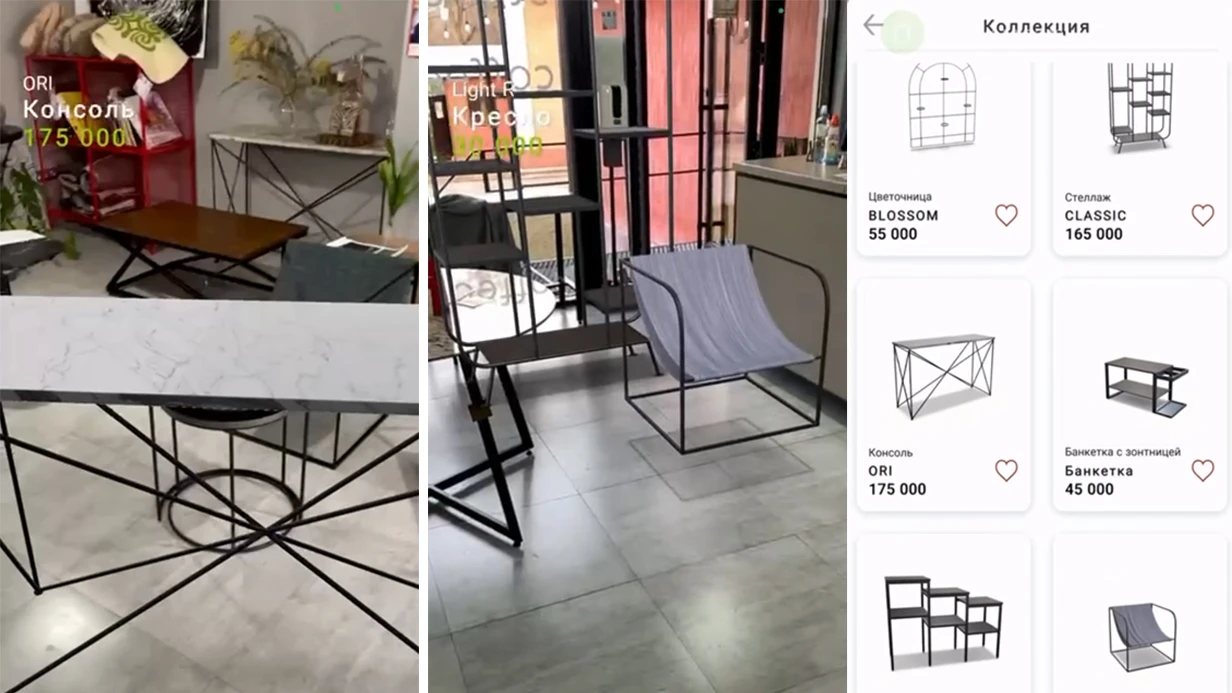
| Interactive 3D product catalog | Sales, tender department | Showing specifications without physical samples, impressive presentations for clients and partners |
How Project Work Proceeds
We understand: in the oil and gas industry, the cost of a mistake is high, and downtime and mismatches are expensive. That's why the development process is built as a transparent route — you always know what stage the project is at, what you'll get, and when.
No "black boxes" or unexpected revisions: every step is coordinated with you and takes industry regulations into account.
-
Brief and interview with your team. We record not only the task but also the constraints: conditions at facilities, safety requirements, regulations. We understand who will use the solution and what matters to them.
-
Prototype and concept approval. We show what the product will look like and how it will work before full development. You see the scenarios, evaluate usability, and make edits without redoing finished code.
-
Detailed work plan and estimate. We agree on timelines, stages, and cost. You understand what you're paying for and can control the work progress — no hidden surcharges or "sudden" budget increases.
-
Development with regular demos. We work in iterations: every few weeks we show intermediate results. This allows timely course correction and risk reduction.
-
Testing on your scenarios. We verify the solution on real tasks of your employees — from training to emergency response practice. We make sure the product works in your specific conditions.
-
Launch and commissioning. We deploy the system, integrate it with your processes, and train personnel. Employees get clear instructions, and you get a solution ready for work.
-
Support and development. After launch, we stay in touch: answer questions, fix issues, refine functionality for new tasks. Your product lives and grows with your business.
In the end, you get not a "development report" but a working tool that is embedded in your processes and delivers measurable results. Transparency at every stage is our guarantee that the project will be delivered on time and solve exactly your task.
What's Included in VR/AR Application Delivery
You get not just a working application but a complete package with which your team can develop the project even without us. We hand over everything needed for transparent operation, quick launch, and confident use of the VR/AR solution at oil and gas facilities.
- Project source files — all code and resources remain with you; you're not tied to one contractor and can bring in any specialists.
- Ready installation package — the application is immediately deployed on your equipment, configured for your scenarios, and works in field conditions.
- Technical documentation — clear instructions for installation, configuration, and maintenance, so your employees can get up to speed without a long introduction.
- Personnel training — hands-on sessions for operators and administrators, after which your team works with the system independently.
- Usage scenarios — descriptions of typical scenarios: from personnel training to process control, with templates for quick replication.
- Development recommendations — a plan for scaling the solution to other areas or tasks of the enterprise.
- On-site test verification — final configuration and functionality check at your location before signing the acceptance certificate.
This delivery scope addresses the client's main fear: you won't be left alone with an incomprehensible system. Everything needed for launch is placed in your team's hands, along with support during the implementation phase.
Case Study: VR Simulator for Training Oil Workers
Every minute of downtime at a facility is expensive, and an employee's mistake can result in an accident.
Traditional training of newcomers requires experienced mentors on site and risky trial-and-error — the cost of such preparation is high, and the result is not always predictable.
For a large oil production enterprise, we developed a VR simulator that moves training into a safe virtual environment. Employees practice actions in routine and emergency situations until they become automatic — without risk to life or equipment.
What the Client Got
Full immersion in a realistic copy of the production site. The trainee sees control panels, hears the sounds of operating machinery, and acts under conditions as close to real as possible.
A mistake doesn't cause an accident — it's reviewed by the instructor and reinforced with the correct scenario.
Measurable results speak for themselves: the control group that completed VR training showed half as many errors when passing the standards compared to colleagues with classical preparation.
At the same time, the time to bring a newcomer up to speed was cut by three times — the enterprise gets a job-ready specialist faster.
Client Feedback
Oil and Gas Company also noted the convenience of monitoring: the manager sees detailed statistics for each employee — where mistakes were made and which skills need improvement. This removes subjectivity from evaluation and makes the training process transparent.
"Previously, training one operator took several months and constant mentor involvement. With the VR simulator, we cut this process to three weeks, and the number of errors among newcomers dropped by half.
What's especially valuable is that employees themselves ask for access to the simulator — they find learning interesting." — Head of the client's training center.
The result is a repeat order for developing simulators for other production areas. We work with professional equipment and proven tools, so the result is stable at every stage: from prototype to implementation in the training process.
Oil and Gas Industry: How to Choose VR/AR?
The choice between VR and AR for the oil and gas industry is not a matter of fashion but of a specific business task.
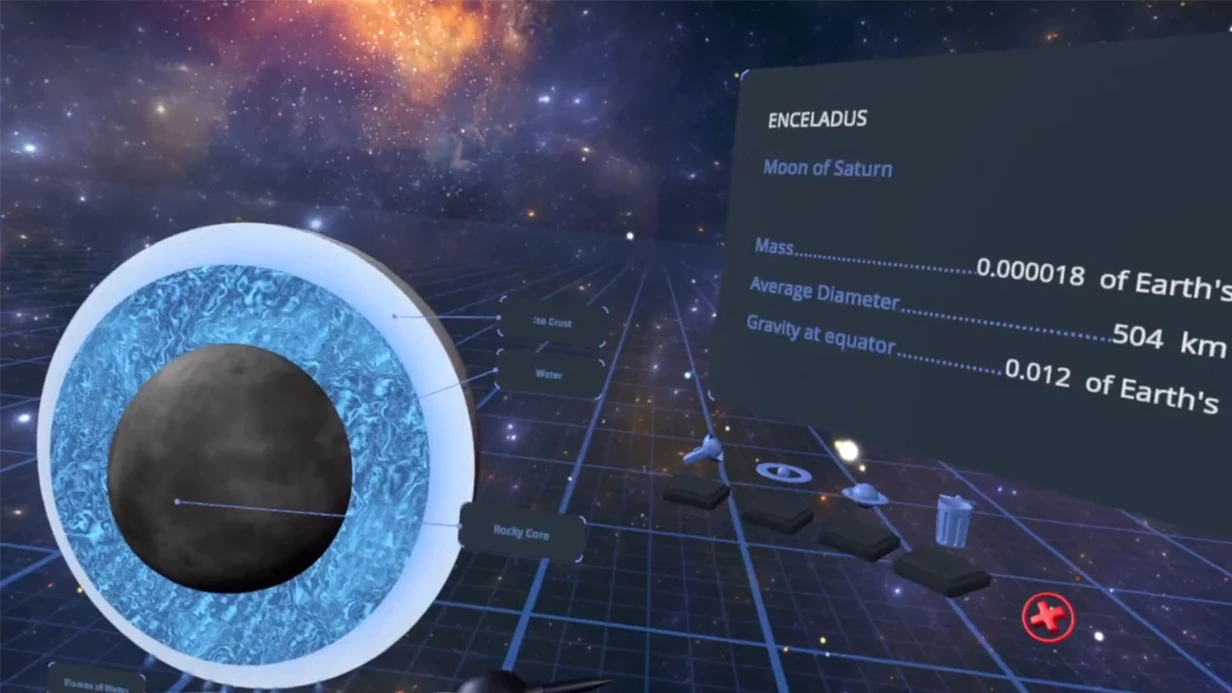
VR is needed where it's important to safely immerse an employee in an environment that can't be recreated at a real facility: training with equipment, practicing emergency response, studying technological processes before launch.
AR works at a real facility and helps in the moment — overlaying instructions, diagrams, and hints directly onto equipment during repair, assembly, or inspection.
Before choosing a format, define the main criterion.
If your goal is to reduce the number of personnel errors and cut the time of introductory briefing, look toward VR simulators: they provide the very experience that previously could only be gained at a hazardous production site.
If you need to speed up and control work at an operating facility — AR would be more appropriate: the specialist sees the needed information not in a paper instruction but right before their eyes.
The next criterion is the scale and conditions of implementation. For remote rotations and offshore platforms, autonomy and ease of deployment matter; for training centers — the ability to train groups and track progress statistics.
It's worth considering the environments where the solution will be used: a regular office, a workshop, or an explosive zone — this determines the choice of protected equipment, but that's already our concern.
We don't sell a "box." First, we analyze your process, identify points of loss, and only then propose an option — VR, AR, or a combination of both.
With more than ten years of industrial projects behind us, we know where technology delivers measurable results and where a simple briefing is enough.
Ultimately, the right solution selection comes down to three questions: what should a person learn, where do they apply the skill, and how will the result affect safety and operational speed. The answers to these questions are the basis for choosing VR/AR for the oil and gas sector.
Frequently Asked Questions About VR/AR Implementation
Before implementing VR/AR in the oil and gas industry, clients have similar questions: timelines, integration with existing processes, guarantees, and return on investment. We answer the main ones.
How long will development take?
The timeline depends on the complexity of the scenarios. A typical project — from a simulator to training the first group — takes from a few weeks to two or three months. Stages and milestones are fixed at the start so you can see progress and influence the process.
Is it difficult to integrate VR/AR into current processes?
Implementation doesn't require changing regulations: we adapt virtual scenarios to your instructions and standards. Employees train in the usual order, and we configure the equipment for the enterprise's tasks — the technical side remains our concern.
What guarantees are there after launch?
We support the project after implementation: update scenarios, connect new groups, refine the interface. During the warranty period, we fix user errors and feedback within the contract — you get a stable tool, not a "box" left to your own specialists.
How is the cost determined and when will it pay off?
The cost is calculated individually: it depends on the number of scenarios, the number of workstations, and the level of customization. The effect is visible already with the first groups — less time on instruction, higher retention, fewer errors and downtime. These are exactly the metrics that pay off the investment.
Doubts before starting are normal: VR/AR for the oil and gas industry is still approached with caution. We've worked with production companies for over ten years, so in every project we address timeline, reliability, and return on investment concerns at the brief stage.Submit a Request for VR/AR Development
The oil and gas industry demands high precision in personnel training and operations control. VR/AR solutions make it possible to practice emergency scenarios, study complex equipment, and improve safety without stopping production.
We've been developing such projects for over 10 years — from simple training applications to comprehensive simulators for field facilities.
To get exactly what your enterprise needs, start with a development request. We'll conduct a consultation, clarify your tasks, and propose the optimal solution format — from a pilot prototype to full implementation in processes. Within a short time, you'll receive a project estimate with clear stages and timelines.
What you get after reaching out:
- Review of your task and expert recommendation on the VR/AR format
- Project plan with stages, timelines, and results
- Budget estimate for your scale — from one site to an entire holding
- Prototype or demo version for testing with key employees
- Implementation support and training for your team
- Long-term support, updates, and refinement for changing requirements
Submit a VR/AR development request right now — it's non-binding. You'll get a qualified consultation and a clear action plan. And after launch, we stay by your side: supporting, updating, and growing the solution together with your business.