


Psychotherapy Worth Waiting For: Why Do Clients Leave the Office?
Clients come to a psychologist expecting change, but often get just another hour of talking about the same things. After a few sessions, motivation fades, and appointment bookings drop — the practice turns into a struggle for every visitor.
The reason is not the specialist's competence, but the monotony of the format: the market is saturated with identical consultations.
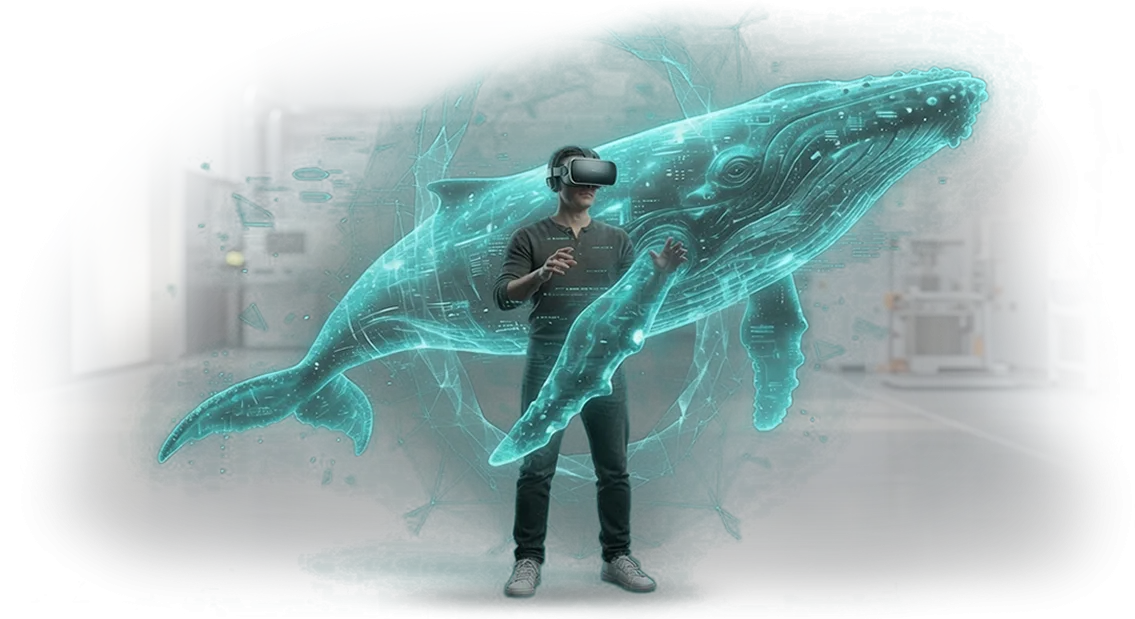
This is why virtual reality in psychology is becoming not an experiment, but a working tool. Immersive psychotherapy lets the client not just describe fear or trauma in words, but relive a safe situation — under the therapist's control. This increases engagement: the person sees their own progress rather than merely discussing it.
Adopting VR technologies also gives psychologists a business effect. The practice gains differentiation from competitors, a reason to be mentioned on social media, and a steady flow of referrals from patients who got quick results.
Innovations in psychotherapy are perceived by clients as care for quality — they are willing to pay more and come back.
We — our team — have been connecting technology and practice for over ten years so that psychologists get exactly these kinds of tools. We develop VR/AR applications for your scenarios: from simple phobia sessions to comprehensive rehabilitation programs. You focus on therapy, and we take care of the rest.
Benefits of VR Applications for Psychotherapy: From Trust to Revenue Growth
Client Trust and Engagement
Immersing into a virtual environment removes the "office" barrier: the patient opens up faster and is less embarrassed to talk about symptoms. Ready-made VR scenarios allow the psychologist to work with fears, anxiety, and social adaptation — without risk to the person.
We use Unity — a reliable engine for such projects, so scenarios run flawlessly on any modern headset. The client feels safe, and trust in the specialist is cemented after the very first session. The tools are easily adapted to the request: public speaking, panic attacks, post-traumatic stress.
Loyalty and Repeat Bookings
Virtual reality in therapy turns a one-time consultation into a regular series of meetings: the patient sees progress over time and comes back on their own.
Psychologists and clinics report increased client loyalty and a higher share of repeat bookings — the schedule becomes predictable weeks ahead.
Average Check and Revenue Growth
Immersive VR sessions are a separate service that can easily be added to a standard consultation or sold as a package. This raises the average check by 20–30% without expanding staff, while office utilization grows.
Our specialists provide system support remotely — the clinic doesn't need to hire a technical employee.
Word of Mouth and New Clients
Patients share their impressions of virtual scenarios with family and friends — word of mouth brings in new clients without an advertising budget. The unusual therapeutic format sets the clinic apart from competitors and creates a topic for social media discussions. As a result, not only loyalty grows, but also the overall flow of inquiries.
VR Solution Formats for Your Specialization
Every case in psychotherapy is unique: someone needs a calm environment to relieve tension, someone needs a controlled encounter with a frightening situation. VR makes both possible in the safe space of the office, where you fully control the process.
We select a format for your specialization — from short relaxation sessions to multi-stage exposure therapy programs. Complexity and instructions are adjusted for each patient.
Main VR Solution Formats
| Format | Who It Suits | What It Gives the Client |
|---|---|---|
| Exposure therapy scenarios | Specialists working with phobias, panic attacks, and anxiety | Controlled immersion into a frightening situation without risk; gradual increase in difficulty and reinforcement of new responses |
| Relaxation in virtual reality | Psychologists working with stress, burnout, and psychosomatics | Rapid anxiety reduction in the office; noticeable results within a single session |
| Social phobia simulations | Therapists dealing with social anxiety and fear of public speaking | Safe practice of dialogues and presentations; the patient trains skills without consequences |
| Game-based simulators for psychologists | Child psychologists and cognitive rehabilitation specialists | Hold the child's attention; exercises become a game with clear progress |
Formats can be combined: start with relaxation, then move to exposure or social phobia. This expands your service line without purchasing new equipment — the solution is configured to fit your current workflow.
How We Implement VR in Psychotherapy: Project Stages
We've structured the process so that VR implementation in a clinic doesn't distract you from your core work or require technical knowledge. You work with patients, and we handle development, integration, and support.
In the end, you get a tool that easily fits into therapists' schedules and delivers results quickly.
- Brief and task analysis. We clarify which methods and patient groups need virtual reality, which symptoms we'll address, and what equipment you already have. We form an implementation plan based on your work protocols.
- Scenario prototype. We create a short demo version: you and your specialists test it before full development. We align the visual style, session duration, and difficulty level so the application is comfortable for patients.
- Turnkey VR application development. We design safe scenarios, adapt exercises to therapeutic goals, and configure an interface that is intuitive for the clinician. We build in an admin panel for launching sessions and monitoring patient progress from the start.
- Installation and setup. We select equipment for your office, install and verify the system so staff can launch sessions without an IT specialist. We provide a complete manual and short cheat sheets for each office.
- Staff VR training. We conduct in-person or online training for your team: how to run a session, explain the rules to the patient, work with reports, and respond to unusual situations.
- VR project support. We stay in touch after launch: update scenarios on your request, quickly resolve issues, and help expand VR use into new therapy directions.
What Is Included in the VR Psychotherapy Package
You receive not just an application, but a ready-made working solution for the psychologist's office. We assemble the kit so you can start sessions right after installation, without digging into technical details.
The package includes everything needed for launch and stable operation: from the scenarios themselves to usage rights and training materials for the specialist. This saves you from having to find developers, methodologists, and lawyers separately — you get a turnkey package.
What's in the Package
- Ready-made therapy scenarios. A library of exercises: relaxation, work with fears, social situations, and anxiety. The scenarios are adapted to different methods — you can choose the right one for each client.
- Content rights. An official license to use all scenarios in your practice. You work with the material legally and can use it in commercial activity without restrictions.
- Instructions for the psychologist. Clear guides: how to prepare the client, run the session, and end it properly. No self-study of technical documentation — only practical steps.
- Methodological materials. Descriptions of exercises, indications and contraindications, recommendations for working with different client categories. This is the foundation for building the therapeutic process.
- Scenario updates. We regularly refine and expand the library. You receive new exercises and improvements as part of the subscription — therapy doesn't stand still, it evolves.
- Technical support. We help with installation, setup, and resolving any questions. If something doesn't work as expected, we respond quickly and see it through to a result.
Each element of the package addresses a specific task: you save time on launch, get legal protection, and gain confidence in the quality of the materials. You don't need to oversee development or study technical details — you simply use a tool that delivers value immediately.
Case Study: How VR Helped a Clinic Double Appointment Bookings
We worked with the psychiatric clinic "Balance", which specialized in treating anxiety disorders.
The psychologists complained about two things: patients often cancelled initial sessions — they were afraid to talk about their problems — and the meetings themselves took a lot of time on "warming up" and explaining techniques. Many postponed visits for months, and those who did come closed up during the first consultation.
The clinic's management wanted to increase patient flow, not through advertising, but by boosting trust and engagement. We proposed using VR scenarios for exposure therapy.
In a safe virtual environment, the patient worked through frightening situations — public speaking, subway rides, social contacts — under the psychologist's supervision.
How the Launch Went
First, we conducted two training seminars for the clinic's specialists. The psychologists mastered VR session control and learned to match scenarios to diagnoses. Then, for a month, we accompanied the first sessions live, and afterward handed the clinic full autonomy.
The installation itself took one day: two VR sets, a server with the scenario library, and individual settings for each office.
Results After Three Months
The standout figure — the number of new patients grew by 70%. Appointment bookings nearly doubled: even those who had hesitated before scheduled visits after a trial VR session.
The average consultation duration dropped by 25% — the psychologist spent less time on explanations and got to the core faster. The share of repeat visits increased from 40% to 65%.
The clinic director also noted time savings: previously, preparing for a complex session took about half an hour; now everything is ready in a couple of clicks. Patients were more willing to come for follow-up appointments — VR removed the fear of the office.
After three months, the clinic contacted us again, asking to expand the scenario library for new therapy directions. We received a repeat order and are ready to deliver the same result for your project.
Frequently Asked Questions Before Ordering a VR Solution
Implementing VR in psychotherapy raises questions: will the technology do any harm, how much will it cost, and when will the investment pay off. We answer the main concerns of clinic owners and private practitioners.
Is VR safe for patients?
Sessions are conducted under the supervision of a psychotherapist, and the intensity of immersion is adjusted to the patient's age and condition. The scenarios are tested, and the session can be stopped at any moment, so the risk of discomfort is minimal.
How much does VR solution development cost?
The cost depends on the number of scenarios and the analytics features required. We offer stage-by-stage payment — from prototype design to final launch — so you see the result and adjust tasks without losing budget.
Is it compatible with the clinic's equipment?
We select a VR package for your setup: from standalone headsets to stationary systems. If you don't have equipment, we'll help you choose it for your office and the number of specialists, and we handle setup and testing ourselves.
How quickly will the VR system pay for itself, and who will support it?
VR therapy expands the range of services and raises the average check — sessions are held individually or in small groups. The payback period depends on office utilization, but clinics typically turn a profit within the first months.
After launch, we update scenarios, answer technical questions, and adapt the system to new requests from your patients.
Discuss Your VR Application Development Project
If you want to order a VR application but haven't decided which format fits your task, start with a free audit. We've already helped dozens of companies implement VR in their work — we'll review your situation, show real examples, and propose a clear plan.
You don't need to prepare a technical specification: just describe your goal, and we'll ask the right questions and highlight all the options.
A consultation on VR therapy, training, marketing, or events is not just a conversation. We'll help you assess the technology's potential for your business, calculate a suitable VR solution cost, and understand what resources you'll need. No empty theory — only practical recommendations and an estimate before work begins.
What you get after reaching out:
- A clear implementation plan tailored to your budget and timeline.
- An effect assessment: how VR will impact the outcome of your project.
- A format selection: custom development or adaptation of a ready-made solution.
- A transparent estimate with no hidden fees — we calculate the cost in advance.
- Recommendations on equipment and launch, including team training.
- Examples of projects and client contacts for references.
- Specialist support at every stage of implementation.
Leave a request for a free VR audit — we'll get in touch within one business day, discuss your tasks, and suggest the optimal format. There's no obligation: you'll get expert insight and can make an informed decision.
How to Choose the Right VR Solution for Your Task?
When choosing a VR solution for psychotherapy, look first not at equipment specs, but at the clinical task. Find out which protocols the scenarios are based on: evidence-based exposure therapy, cognitive-behavioral approaches, work with anxiety and phobias.
If the methodology is unclear, the technology won't deliver the desired result — only an illusion of novelty.
The second criterion is patient engagement and the ability to control it from the office. A good VR system holds attention but allows the therapist to lower intensity, stop the session, and track the patient's reactions. This directly affects safety and the regularity of therapy, and therefore the long-term effect.
The third point is compatibility with existing equipment and processes. A professional headset should easily fit into the appointment schedule, not require a dedicated IT specialist, and be able to save session results into your records system. The fewer technical obstacles, the faster you'll start using VR in practice.
Finally, assess scalability. If the method proves successful, you'll want to roll it out across multiple offices or branches. Look for a solution where you don't need to buy everything from scratch: one package with updatable scenarios and centralized management is enough. That way, a pilot launch easily becomes a full-fledged therapy direction.
All four criteria — clinical validity, engagement, compatibility, and scalability — should be checked before purchase.
Our specialists help conduct such an audit: they select VR equipment for your practice's needs, configure scenarios, and support the launch so that your first sessions happen within one to two weeks.