

Rehabilitation: How VR/AR Increase Patient Engagement
Most patients stop rehabilitation not because of pain, but because of monotony. Day after day repeating the same movements in a physical therapy office is boring, and motivation for rehabilitation fades by the second week. The person stops believing that exercises bring recovery closer and simply skips sessions.
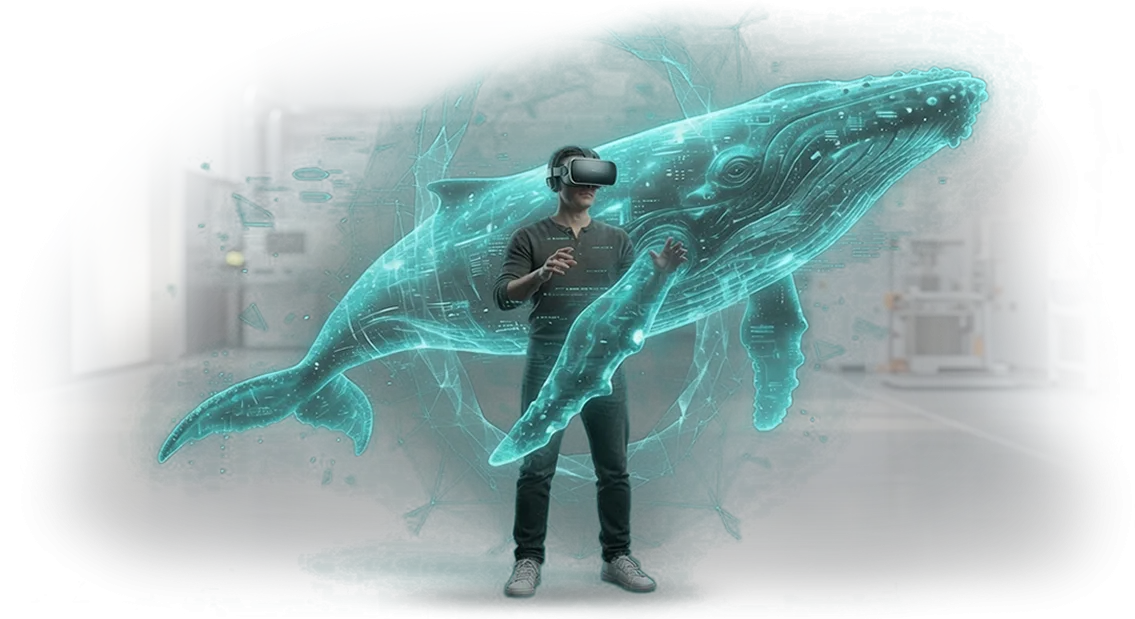
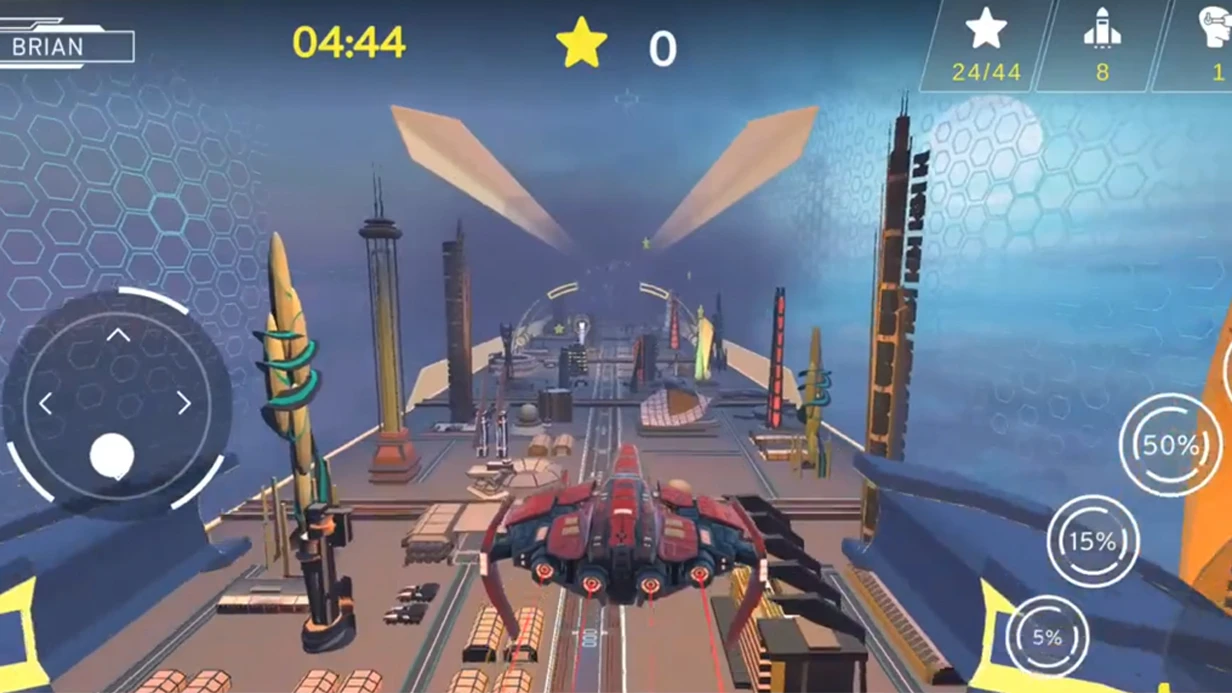
VR and AR solve this problem differently: they turn recovery from injuries into a clear goal. The patient isn't "doing a set" — he reaches for an object in virtual space, catches parts, passes a level.
Patient engagement grows because the brain receives instant feedback: every movement changes the picture around him, not just "the trainer displayed a number."
Game mechanics here serve the medical task. Bending the torso, turning the wrist, stepping aside — all this becomes part of the story, not meaningless repetition. The patient himself wants to continue because he's curious what's next. The doctor sees objective progress data and can adjust the load without pressuring the patient.
We help clinics and rehabilitation centers build such programs from scratch: from choosing scenarios for a specific injury to adjusting them to the current treatment plan.
The result is a lasting effect even at late recovery stages, when standard methods no longer hold the patient's attention. The same set of exercises can be presented in different visual worlds — and the person returns to sessions with renewed interest, not under compulsion.
What You Get from Implementing VR/AR in a Rehabilitation Center
Implementing VR/AR in rehabilitation is no longer an experiment. Centers using such programs get measurable results: patients restore motor functions faster, get less tired from monotonous exercises, and are more willing to complete the course. This directly affects the clinic's reputation and occupancy.
We, the team of our team, develop VR/AR applications for rehabilitation tailored to the specific center's tasks.
We work on Unity and professional equipment — this provides stable program performance and precise interaction with patient movements, and for you, a predictable therapy outcome. We refine each solution together with doctors, so programs match the real treatment methodology.
The main economic effect is filling existing rooms without expanding staff or space. The same VR complex is used for different patient groups: neurology, traumatology, orthopedics, geriatrics.
Sessions run according to a set program with automatic performance recording — staff workload decreases and assessment subjectivity is eliminated.
Treatment effectiveness increases through engagement. In a virtual environment, the exercise becomes a game, so the patient performs more repetitions with the right amplitude.
The brain restores neural connections faster, and recovery time is reduced by 20–30% — global practice confirms this.
Patients tell friends and relatives about the unusual session format — this creates a free channel for attracting new patients. You stand out from other clinics, increase loyalty, and get repeat visits.
We help calculate the payback forecast for your specialization and select scenarios that deliver results from the first month. The cost of a session compensates for the investment, and free equipment hours turn into additional revenue.
VR/AR Formats for Rehabilitation: Choose According to Your Task
Rehabilitation after injuries, stroke, or surgeries addresses different goals: restoring movement, motor skills, coordination, or cognitive functions. There is no universal VR solution equally effective in all cases.
The equipment format determines how deeply the patient is immersed in the environment, how much space the system takes up, and whether it can be used outside the clinic.
We select a format for your clinic, patient category, and budget. Compare the main options:
| Format | Suitable for | What you get |
|---|---|---|
| Desktop AR solutions | Physical therapy in a small office, work with motor and cognitive functions | Quick start, simple staff training, careful integration into processes |
| Standalone VR headsets | Individual training, home rehabilitation, mobile programs | Mobility, sessions at convenient times, patient progress data |
| Full-immersion VR rooms | Complex cases, balance work, post-stroke recovery | Full motion tracking, maximum session effectiveness, dedicated room area |
The main selection criterion is the clinical task, not the price of the equipment. For fine motor skills and cognitive rehabilitation, desktop AR is often sufficient. To restore coordination and balance, a headset or full-immersion room is needed.
For home rehabilitation, a standalone headset that the patient can use without your presence is more convenient — while you monitor the process via an application.
Sometimes clinics use several formats simultaneously: desktop for initial evaluation, a room for intensive therapy, and a headset for continuing therapy at home.
We develop a single platform where all formats synchronize through the cloud, and the doctor sees the full patient history. This simplifies staff work and makes the rehabilitation process transparent for the patient and family.
Tell us about your task — we'll advise which format will deliver maximum results for your patients and fit naturally into the clinic's workflow.
How VR/AR Development for Rehabilitation Works: Stages
Implementing VR/AR in rehabilitation is not buying a "box" but a structured process. We accompany the clinic from the first brief to the moment when the doctor independently prescribes VR sessions to patients. Below is the path the client goes through.
- Brief and immersion. We study patient profiles, rehabilitation areas, and current methods. We record goals: restoring motor skills, cognitive functions, working with balance or pain.
- Scenario concept. We define exercise formats, story, and difficulty levels. We plan how the doctor will see results and adjust load.
- Prototype. We show a working sample at an early stage. You try the scenario and make edits before major resources are invested.
- Development and tuning. We refine stability, adapt to the clinic's equipment and patient characteristics. We prepare an interface understandable to both doctor and patient.
- Schedule integration. We install the system, configure the room, and embed VR sessions into the daily schedule. We minimize downtime: patients start sessions immediately after launch.
- Staff training. We conduct a practical session for doctors and methodologists. Specialists receive instructions and templates — a technical specialist is not required for launch.
- Support. We stay in touch: updates, consultations, feedback analysis. If needed, we refine scenarios for the clinic's new tasks.
This sequence reduces risks: the clinic understands what it will receive as early as the prototype stage, and staff become independent in a few days. As a result, VR/AR becomes a working tool, not a one-off experiment.
What Is Included in the Delivery of a VR/AR Application for a Clinic
When a clinic orders a VR/AR solution for rehabilitation, it's important to understand what you get in the end. This is not just an installed program, but a complete delivery package — documents, training, support, and product rights.
Everything is ready for implementation as early as the week after the acceptance certificate is signed.
Here's what is included in the application delivery for a clinic:
- Ready-made application for your tasks. Adapted to your profile's rehabilitation protocols, tested on patients, and requires no technical knowledge from the doctor.
- Source code and all usage rights. You are not dependent on the developer: you can develop the product yourself or engage any contractor.
- Staff training. We conduct trainings for doctors and methodologists — from first startup to independently building a session scenario. Usually 2–3 hours are enough.
- Methodological materials. Operating instructions, recommendations on session length and load, session templates, and handouts for patients — everything so a methodologist can start working without a "debriefing."
- Access to updates and additional modules. The system evolves: new exercises, scenarios, and settings come via subscription without paying separately for each update.
- Warranty for the application and stable operation. We fix the warranty period, response time for requests, and the procedure for free refinements. If something goes wrong — you don't face the problem alone; you get technical support in Russian.
- Connection to the clinic's infrastructure. We'll set up workstations, create staff accounts, and, if necessary, integrate with your medical system.
Such a package addresses the main fears of a manager: "what if staff can't work" and "what if the developer disappears." You get not a "raw program" but a working solution with a trained team, documentation, and warranty.
If you want to clarify the composition for your specifics, request a detailed list after a short brief: we'll send it within a day.
Case Study: How VR Helped a Patient Recover After a Stroke
We developed a program for one rehabilitation center to help post-stroke patients relearn how to control their hands. The story began with a request from doctors: ordinary exercises quickly became boring, and people lost motivation as early as the second week of sessions.
How the Rehabilitation Went
Over four weeks, the patient completed a course of 12 sessions of 20 minutes each. In the virtual environment, he collected glowing objects by moving his hand in front of a camera — without wires or complex setup.
Rehabilitation Medical Center integrated these sessions into the regular schedule, replacing part of the monotonous repetitions. Real-time motion control allowed the doctor to immediately see progress and correctly adjust the load.
Results the Medical Team Saw
By the end of the course, the range of motion in the shoulder and elbow increased by 30%, and hand grip strength increased 1.5 times. The patient could again independently hold a cup and write with a pen — something that seemed unattainable in the first session.
The rehabilitation director noted: "For the first time in a long time, the patient was looking forward to the next session and asked to extend the course."
For the clinic, this means not only better results but also higher equipment utilization. The average course duration shortened by two weeks, and patients are more willing to return for repeat rehabilitation.
We supported the project at all stages — from scenario setup to staff training — so the clinic received a ready solution without distracting its employees.
How to Choose a VR/AR Format for Your Rehabilitation?
A VR/AR format for rehabilitation is chosen not by catalog, but by the center's task. Post-stroke patients need some scenarios, children with developmental delays need others, elderly people need simple steps and doctor supervision.
So first we look at who you work with, how much space you have, and what budget you're ready to allocate.
Budget determines the class of devices. A stationary VR complex provides maximum engagement and precise feedback — it's justified with large patient flows and serious motor rehabilitation.
Standalone headsets are cheaper and more mobile: they can be used in several rooms for cognitive training and light motor skills.
Facility is the second factor. A stationary installation needs several meters of free space, and we adapt scenarios to your room, rather than suggesting you rebuild the office.
Mobile headsets and AR scenarios overlaying prompts on the real world are suitable for working at the patient's bedside or in the admissions department.
Patient type dictates the interface. Elderly people are often wary of virtual reality — they need large hints and a quick way to exit the session. Children need game elements: mechanics hold attention and make them repeat the exercise again and again. We adjust difficulty by age, diagnosis, and group reaction speed.
The right format is confirmed by testing with your patients. We bring a prototype, conduct trial sessions, and show changes in condition. Solutions are developed on the professional Unity platform and compatible with different equipment — future upgrades won't limit you.
Book a free demonstration: in one meeting, we'll choose a format for your budget, facility, and patients.
Frequently Asked Questions About VR/AR Rehabilitation
Heads of rehabilitation centers and clinic marketers often doubt: will virtual reality harm patients, can elderly people handle it, will the investment pay off? We answer the main fears — based on the experience of dozens of implementations.
Is VR rehabilitation safe for patients?
Yes, if the protocol is followed: the session is conducted sitting or with support, the load increases gradually, and the system stops if dizziness or anxiety occurs. We use professional systems and work on proven equipment from our team — so the risk is minimized.
Are there any contraindications?
They are standard for active exercise: acute inflammation, epilepsy, severe hypertension. Before the course, we conduct a short condition assessment — this helps rule out risks and select a safe scenario for each patient.
Can an elderly person with no gadget experience cope?
Yes, scenarios are built so that an older patient feels confident: large prompts, voice instructions, minimal clicks. After 2–3 sessions, the person performs exercises independently, and the specialist only monitors the process.
Is implementation too expensive?
The implementation pays off through patient flow: one system serves dozens of people per month, and engagement increases the regularity of sessions and reduces drop-off from programs. We select a configuration for the clinic's budget and show a benefit calculation before the start.
Application for the Development of a Rehabilitation App
Starting a project is simple: leave a request, and we'll take over the whole path — from idea to a working application. You communicate directly with the team responsible for the result, not with managers relaying your wishes.
After your inquiry, we provide a free consultation and prepare a plan within a couple of days: which VR scenarios fit your rehabilitation program, what is needed for launch, and how long implementation will take. This lets you immediately see the scope of work and make a decision without pressure.
What you get after your request:
- A free consultation — we'll review your task and advise where VR/AR can truly enhance the rehabilitation process.
- Cost and timeline estimate for your request — a transparent quote without hidden work or "surprises" along the way.
- Trial access to a demo scenario — you'll see how patients will interact and evaluate the convenience before full development.
- An individual implementation plan — we'll take into account your equipment, facility, and the specifics of your patients.
- Support at all stages: preparation, launch, staff training, and post-implementation support.
- Guarantee of the result — we test on real users and refine until stable operation.
Leave a request right now — within a few minutes we'll contact you and answer questions. You'll get a concrete action plan, not abstract promises.