

Telecom Clients Are Leaving for Competitors: How to Stop It?
Telecommunications is a market where rates and terms look the same everywhere, and clients choose the provider they remember. Events — exhibitions, conferences, presentations — are a rare chance to meet your audience face to face.
But this is exactly where companies lose attention: booths blend into one row, banners go unread, and standard presentations fail to spark emotion.
After such an event, visitors won't remember what makes your brand different from the neighbor in the hall. The participation budget is spent, but there are no leads. In the end, potential clients move to competitors who managed to surprise them.
This isn't a one-time setback — it's a systematic loss of clients at every event, and it continues year after year.
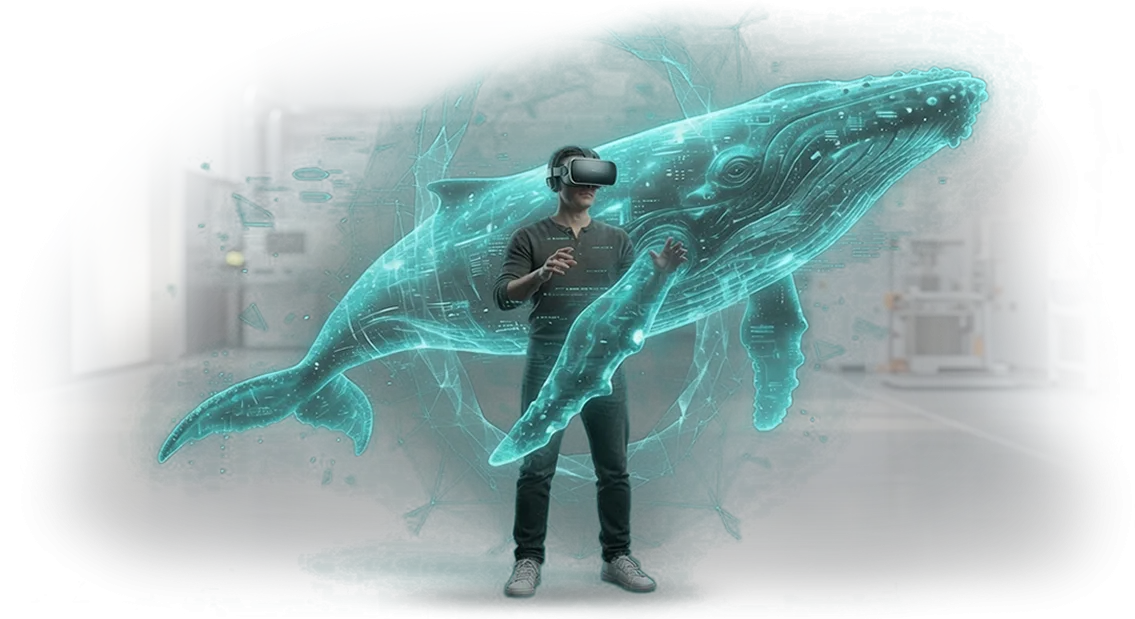
VR for business helps stop this. Instead of a static booth — an interactive zone where visitors explore your product themselves: coverage area, speed, services, digital solutions. People don't just look at a picture — they live through a scenario.
This holds audience attention 5–10 times longer than a typical walk-by and creates genuine interest in the brand.
Telecommunications is about trust, and VR builds it through a memorable experience. Visitors remember you, share impressions on social media, and return to the conversation after the event.
That's how an event turns from an expense into a growth point: more contacts, higher brand awareness, real leads. Stop the attention drain — and clients will stop leaving for competitors.
What Benefits Does VR/AR Bring to Your Business and Clients?
Telecom operator clients see no difference between plans — the same gigabytes, minutes, and messages. Retention is built on price, not loyalty.
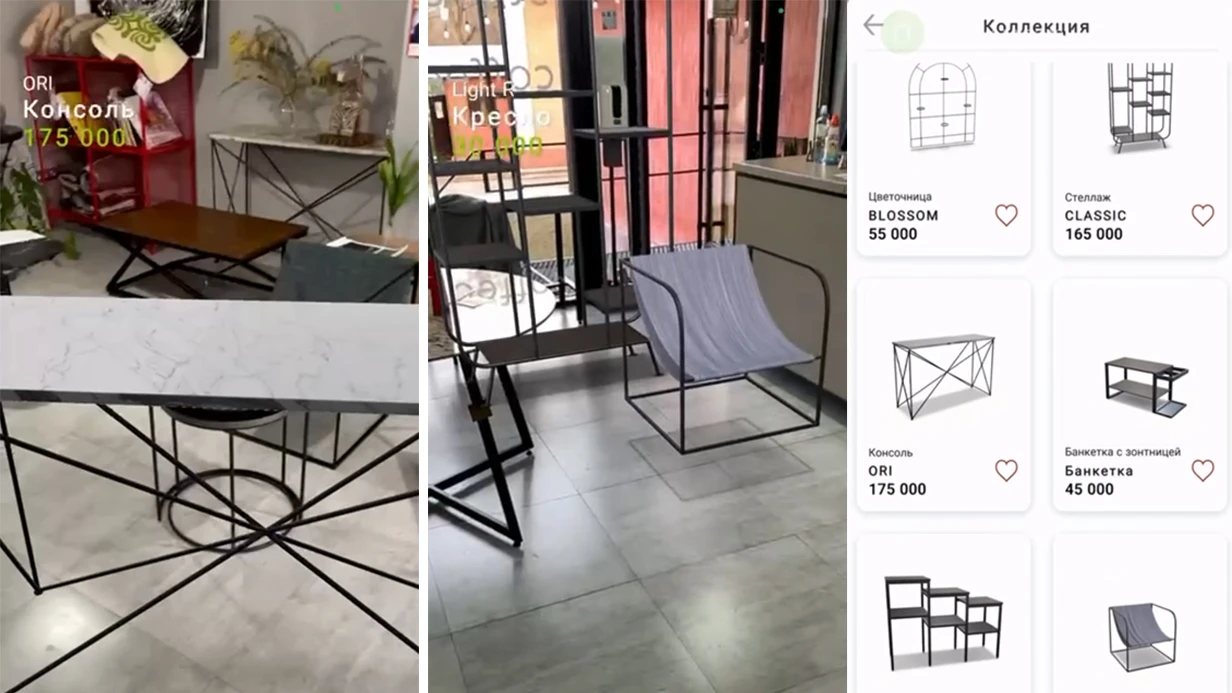
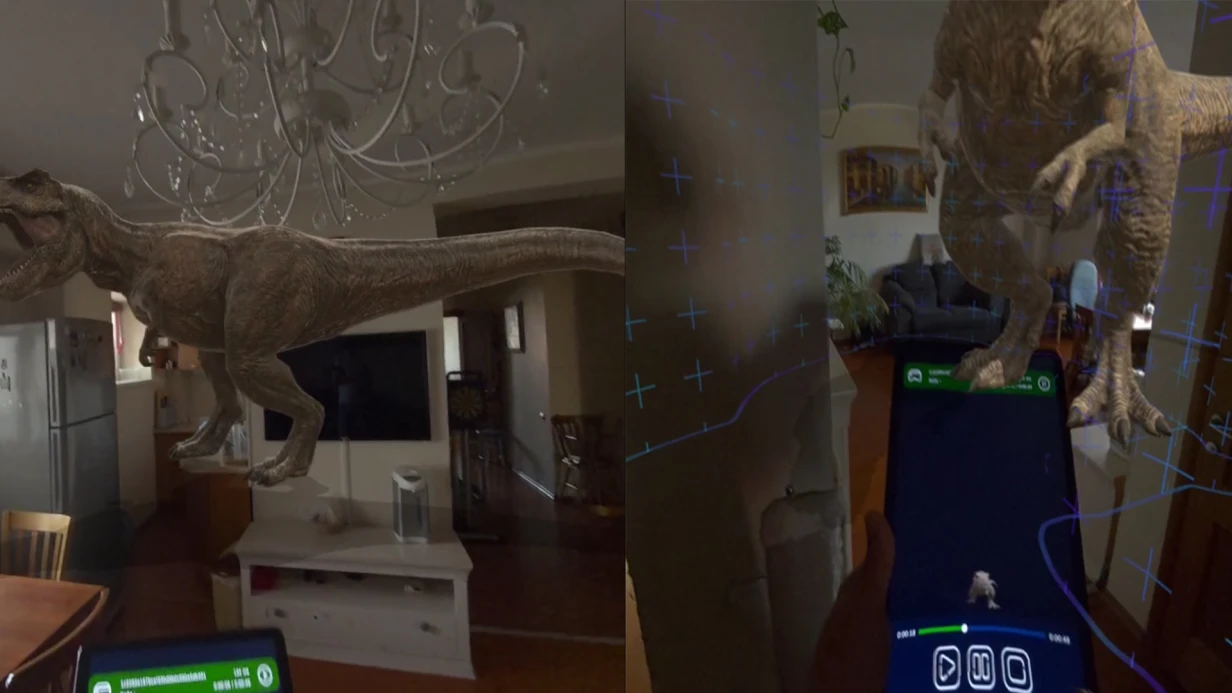
VR and AR turn the boring choice of a plan into an experience: hold the phone to a SIM card or take a virtual "walk" through the network coverage area — and the client stops comparing you with competitors by price.
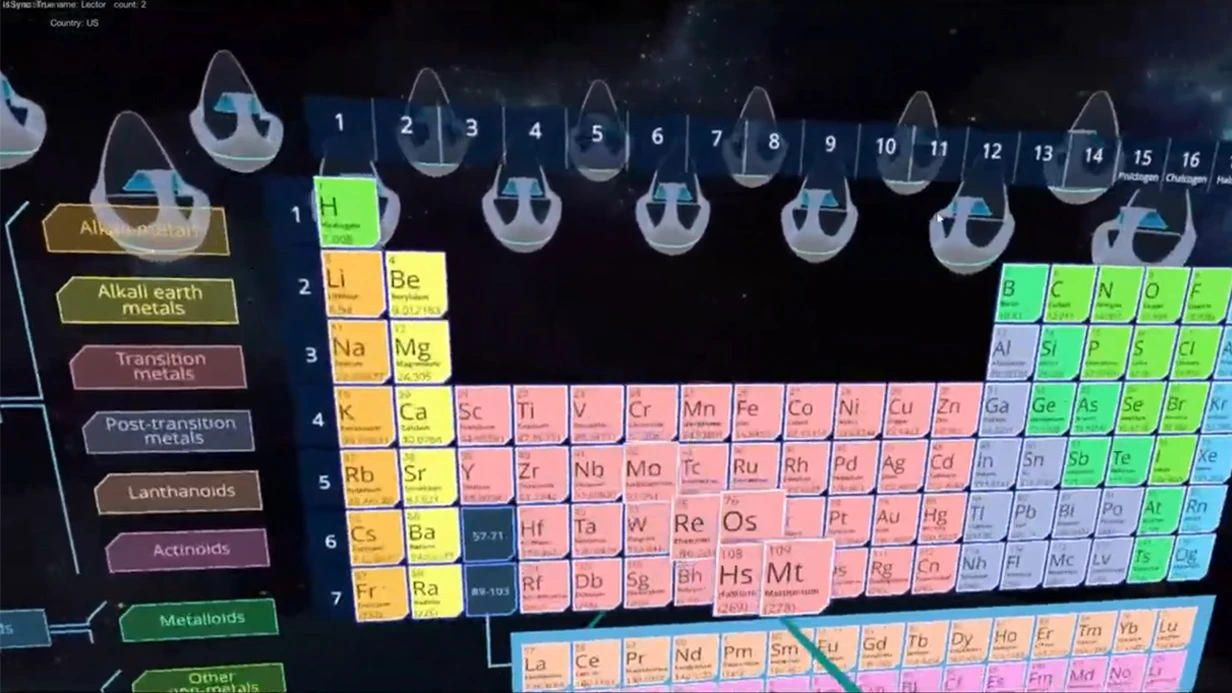
Engagement grows through interactivity. Instead of a static banner, a person interacts with a 3D object, tries on a virtual assistant, or explores a coverage map in augmented reality. Such formats hold attention far longer, which means the brand has time to be remembered.
AR masks and filters spread across social media, providing free reach and brand mentions without an advertising budget.
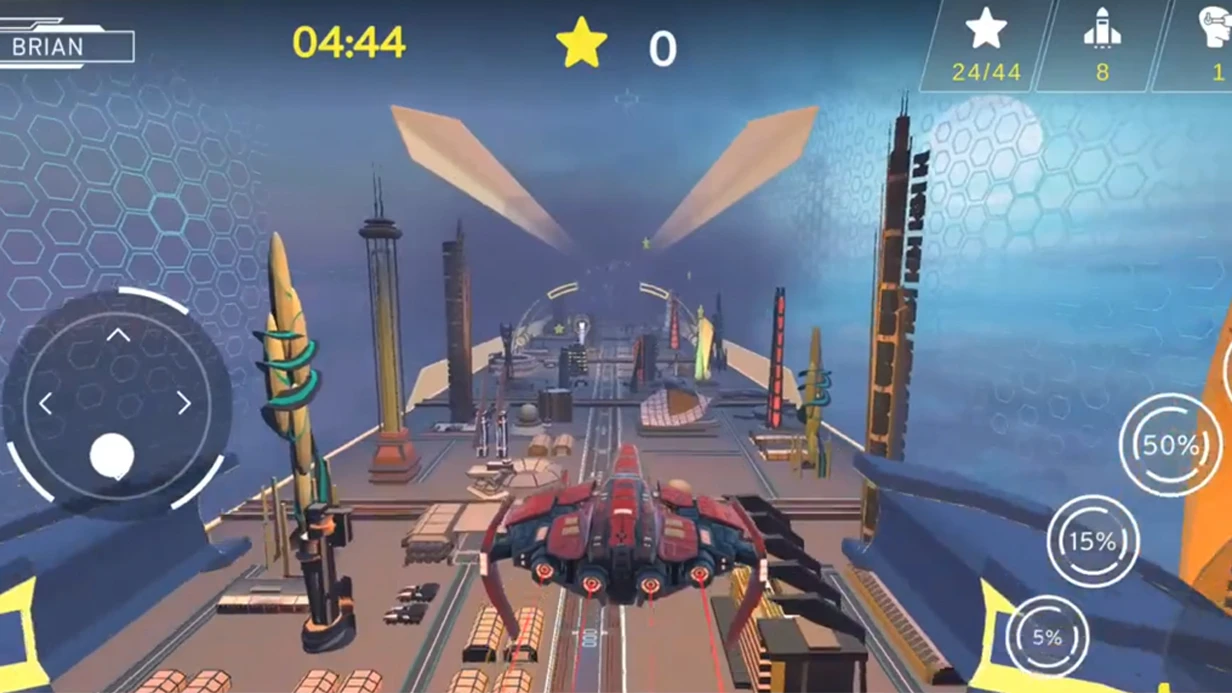
Lead generation becomes a game mechanic. An interactive quiz, a quest to find the best plan, or a virtual tour of network technologies ends with a lead capture form — people leave their contact not because of a discount, but because they're genuinely interested.
The conversion of such formats is several times higher than that of standard landing pages, and the collected database immediately enters your CRM for further touchpoints.
We are a team with over 10 years of experience developing VR/AR for telecom business challenges. We work on Unity — this allows us to ship applications for both mobile devices and VR headsets without quality loss and with a single development cycle. You get a working tool, not technology for technology's sake.
VR/AR Project Formats for Telecommunications: Choosing by Task
Telecom infrastructure is invisible to the eye: the network, coverage, plans, and server capacity are hard to show in words. That's why VR and AR applications become a working sales tool — they turn abstract characteristics into a visual image that sticks in the mind.
But each format has its own task. An interactive booth works at an exhibition, a virtual showroom — in the sales department, AR navigation — in service offices. We select a format for a specific goal rather than pushing a one-size-fits-all solution.
| Format | For Whom | What It Gives the Client |
|---|---|---|
| Interactive booth | Exhibitions, forums, corporate presentations | Attracts visitor traffic, visually demonstrates coverage map and plans, increases the number of inquiries |
| Virtual showroom | Sales department, corporate clients | Introduces equipment and services without an on-site visit, shortens the deal cycle |
| AR navigation | Subscriber service centers | Clients find the right department themselves, staff workload decreases, service improves |
| VR trainer | Training centers, technical teams | Teaches installation and configuration without risk, accelerates employee time-to-line |
At the start, we conduct a brief, study the audience, and choose the format together with you. We develop on Unity — finished applications run on headsets, tablets, and smartphones. This way, you get a tool that attracts subscribers, helps salespeople, and trains staff.
How VR/AR Application Development Works: 6 Steps
Before VR/AR work begins, it's important to know that we document every stage and show you intermediate results. You always know where the project stands, what's already done, and which decisions require your input — this eliminates surprises and unnecessary costs.
-
Brief and task immersion. We study your business, target users, and scenarios where VR/AR will bring value: employee training, product demonstration, remote customer support. The result is a technical specification that captures goals, timelines, and acceptance criteria.
-
Prototype and scenario. We build an interactive mockup of the future application: screens, action logic, key interactions. You see how a user will interact with the content and can adjust the scenario at an early stage, while it's still inexpensive.
-
Design concept and approval. We choose a visual style that matches your brand: interface, graphics, animations. An approved concept is the visual image of the future application before the main development begins, so there are no disputes at the final stages.
-
Production development of VR/AR. The team creates a stable version of the application using professional equipment and tools. You receive intermediate demos at each sprint and see how the application performs in reality, not just on paper.
-
Testing and refinement. We test the application on target devices and with a focus group. We eliminate rough edges and bring stability and response speed to a level where the user doesn't think about the technical side.
-
Project launch and support. We roll out the application, set up distribution for your employees or clients, and train your team. After launch, we stay in touch: we take on maintenance, quickly update content, and evolve the product as your tasks grow.
This process guarantees you get a working tool, not a "pretty presentation." At every stage, you control the budget and timelines, and we are responsible for the result.
What's Included in Project Delivery: The Complete Package
VR project development doesn't end with a demo of the finished scene. We hand over a complete package that turns the project result into a working tool: from source code to staff training.
You get a solution you can use, develop, and maintain without being permanently tied to the contractor.
For a telecom company, this is especially important: products change, new services appear, and different departments connect to processes. That's why the delivery package is assembled so your specialists can work with it independently. Here's what you get after the project is completed:
- A finished VR/AR application for telecom tasks — virtual trainers for staff, interactive equipment showrooms, systems for visual product demonstration to clients. It runs on your equipment and target devices.
- The project's source code — all logic, interfaces, integrations, and 3D scenes. You're not tied to a specific studio and can develop the product with your own team or hand it to another developer.
- Technical documentation — architecture description, instructions for deployment, configuration, and updates. An employee with basic technical knowledge can navigate the system without diving into every file.
- Admin panel and content management tools — you change texts, models, scenarios, and content yourself without a new development cycle.
- Staff training — we conduct training sessions for administrators and end users and provide clear instructions and practical skills for working with the system.
- Test scenarios and verification methodology — you can independently confirm the application works correctly after changes and control quality during updates.
With this package, you're protected from contractor dependency and can scale your VR direction: connect new departments, add modules, and embed the application into existing training systems. All project results stay with you — from idea to final documentation.
Case Study: How We Increased Conversion at a Telecom Operator's Exhibition
The client was a federal telecom operator that had invested in exhibition booths for years but saw no measurable return. Visitors walked past, promoters handed out hundreds of flyers, and real leads from business clients could be counted on one hand. We proposed turning the booth into an interactive adventure instead of a static display.
SvyazTelecom agreed to a pilot, and we developed a VR zone where guests, playing the role of a "network engineer," laid fiber-optic cables, connected districts, and watched data transfer speeds grow.
The session lasted seven minutes — during that time, booth staff managed to ask participants about their business needs and immediately pass the contact to the sales department.
The results were impossible to ignore: over three days of the exhibition, 1,200 guests went through the zone — 60% more than the booth's usual traffic. Of those, 320 left contacts, and conversion into qualified connection requests grew 2.2 times compared to the previous event.
People didn't just walk by — they engaged in conversation, took photos, and told colleagues about the zone.
Most importantly, the effect was lasting. The operator ordered the same format for a regional exhibition, and six months later, we added AR mechanics to the booth's frame. Now even the queue at the zone has become a brand touchpoint.
Want the same result at your event? We handle all stages — from idea to installation — and you get measurable conversion instead of "there were a lot of people."
Frequently Asked Questions About VR/AR Application Development
Clients from the telecommunications industry usually have the same concerns: realistic timelines, solution reliability, and whether the project will turn into a "toy" that doesn't align with business goals. Below, we answer the main doubts before they have a chance to slow down your project.
How long does VR/AR application development take?
A standard project from brief to working prototype takes 3–4 weeks. If you need a large-scale solution — for example, a training simulator for staff working with telecom equipment or a virtual showroom — plan for 2–3 months.
On the first call, we lock in the scope and immediately give you an exact delivery date. The path from "brief → plan → implementation → launch" is transparent: each stage has its own timeline and a result you personally approve. No surprises in the middle of the project — only an agreed deadline.
Can VR/AR be adapted to my specific tasks?
Yes, and that's our specialty. We don't make "just a game" — we build a solution around your business logic.
If your task requires visualizing network coverage, presenting complex infrastructure to investors, or teaching an employee to service equipment without risk — the interface, scenarios, and logic are developed individually.
Virtual and augmented reality technologies prove their value precisely in specific scenarios, so adaptation to your industry is a core part of the process, not an add-on option.
What about reliability and support after launch?
You get not a static project but a well-tuned system. After release, a warranty period applies, which includes fixing any potential issues. After that, you can choose a maintenance plan: we make sure the application runs stably and refine functionality as your tasks evolve.
For telecom, this is critical: a VR trainer for equipment inspection standards or AR instructions must start instantly and never fail at a crucial moment. We take responsibility for this at every stage — from the first brief to every subsequent version.
In short: reasonable timelines, clear adaptation, and guaranteed support — three components we build into every project. We work on professional equipment and proven solutions, which ensures the application runs stably in your real-world conditions. Still have questions? Contact us — in a 15-minute conversation, you'll understand how VR/AR fits into your processes.Get Your Project Cost Calculated in 1 Day
A project calculation delivered in one working day is not just an estimate — it's a clear action plan. We break down your task, propose solution options, and show how VR/AR can help a telecom business: from employee training to interactive presentations for clients.
Leave a request, and you'll get a substantive conversation on the first consultation — no technical jargon, no fluff.
On a short call, we'll walk through a checklist together so the calculation is accurate and useful specifically for you:
- Project goal. What task are we solving: accelerate staff training, visually demonstrate equipment, increase service awareness.
- Solution format. VR trainer, AR instruction, or 3D visualization — what fits your scenario and will deliver fast results.
- Audience and reach. Who will use the solution, how many people are involved, and how to measure effectiveness.
- Integration with current processes. How the application will fit into your CRM, training system, or sales process without creating extra manual work.
- Timelines and stages. What we do first, when a working prototype will appear, and when the solution can be launched.
- Return on investment and impact. Savings on training, conversion growth, reduced sales time — what will change in numbers.
After the conversation, you receive a free development plan with recommendations and a project cost calculated after audit. If you don't need VR/AR — we'll honestly tell you and offer an alternative. If you do — you'll know exactly what to do, why, and in what order.
How to Choose a VR/AR Format for Non-Standard Tasks?
When a company faces a non-standard challenge — not typical training, but, for example, assessing employee skills in the field or visually demonstrating complex network infrastructure — the question arises: which format to choose?
There's no universal answer: VR, AR, and MR solve different problems, and the cost of a mistake here is lost time and budget.
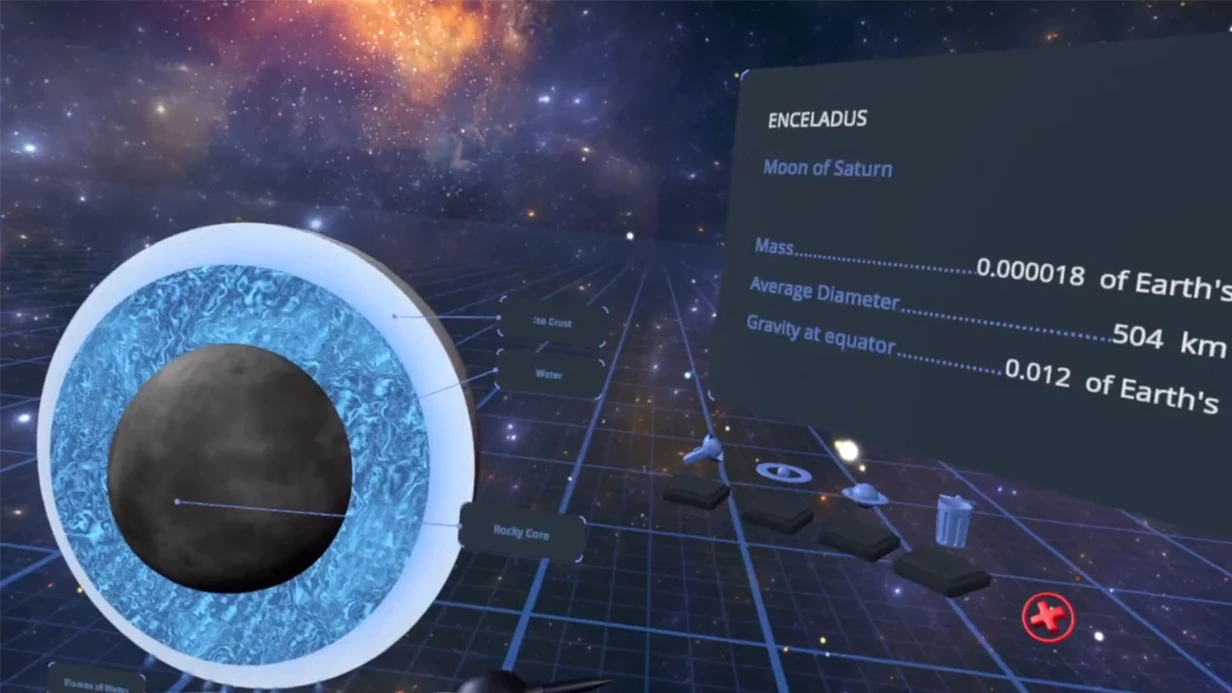
A VR solution should be chosen when you need to fully immerse an employee in a simulated environment: practicing actions during a network outage or conducting training in conditions that are impossible or dangerous in reality.
This provides safe practice without downtime and risks. An AR format, on the other hand, works in real time: instructions, diagrams, and hints appear over real equipment. This approach speeds up installation, diagnostics, and repairs, and reduces the number of errors among staff.
For non-standard tasks, this is just a starting point. A hybrid solution is often more effective: VR for practicing complex scenarios, AR for supporting employees at the workplace. That's why we use an individual approach and don't offer template options.
First, we study your processes: where losses occur, what slows down work, what outcome matters to the business. Then we choose a format that delivers measurable value, not just looks high-tech.
In telecommunications, such solutions are especially in demand: from simulators for working with network equipment to remote assistance systems for field teams.
The correctly chosen format directly affects the speed of employee onboarding, subscriber service quality, and the reduction of costs for specialist site visits.
If you're unsure which format suits you — that's normal. Describe your task, and we'll help determine the option that will be effective for your company.